
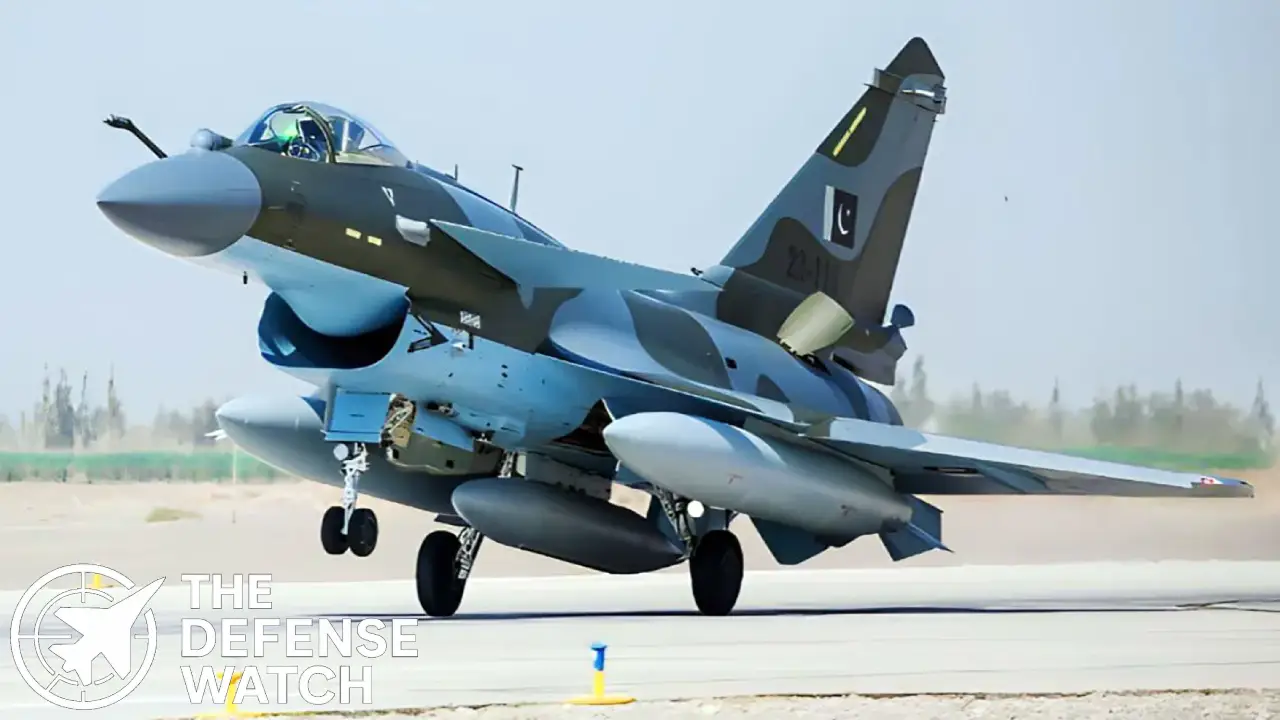
Pakistan’s Strategic Leap with J-10C Induction
Pakistan’s air force has taken a decisive step in advancing its aerial combat capabilities with the induction of the Chinese Chengdu J-10C (export variant: J-10CE) fighter jet. First announced in December 2021, a batch of 25 aircraft was contracted, of which six arrived in March 2022 at PAF Base Minhas and were inducted into No. 15 Squadron on March 11, 2022.
Each aircraft, priced at approximately $35–40 million, marked a major defense acquisition and cemented the J-10C’s status as Pakistan’s first foreign customer—a landmark export for China’s aviation industry.
Technological Edge: Radar, Missile, and Network Capabilities
The J-10C brings to the PAF a suite of modern features: a delta-canard design, fly-by-wire controls, composite construction for reduced weight, and an AESA radar suite that significantly enhances detection, targeting precision, and resistance to jamming.
Most importantly, it is armed with the PL-15 beyond-visual-range (BVR) missile, capable of engaging targets beyond 200 km. This weapon offers Pakistan a substantial BVR reach advantage, especially over Western systems like the Meteor or older AMRAAM variants.
Combat Debut and Regional Implications
In May 2025, during heightened India–Pakistan tensions, Pakistan claimed that J-10CEs, supported by long-range PL-15 missiles, downed multiple Indian aircraft—including Rafales. Some reports suggest a world-record BVR kill at approximately 182 km, though independent verification remains elusive.
Chinese analysts and media have lauded the event as a validation of combat readiness and a newfound balance in South Asian aerial power.
A Turning Point in Export Dynamics
The J-10C’s success in real-world combat serves as a powerful marketing asset for China’s arms export ambitions. The fighter’s demonstrated effectiveness reportedly boosted the stock price of its manufacturer, Chengdu Aircraft, by over 40 percent.
Countries like Bangladesh and Indonesia are already showing interest, viewing the cost of acquisition and operation—far below Western fighters—as strategically attractive.
Strategic Context and Forward Path
Beyond hardware, the J-10C integrates seamlessly with Pakistan’s growing network-centric architecture, pairing with airborne early warning systems like Saab’s Erieye and Chinese ZDK-03 AWACS for off-board targeting.
Moving forward, the J-10C is expected to underpin Pakistan’s 2030 vision for a modern, digitally-enabled air force—including JF-17s, drones, and electronic warfare systems—marking a clear pivot toward becoming an advanced, sovereign air power.
FAQs
The J-10C (export variant: J-10CE) is a Chinese 4.5-generation, single-engine multirole fighter featuring AESA radar, fly-by-wire controls, and PL-15 BVR missiles.
Pakistan signed the deal in December 2021 and received the first six jets in March 2022, inducting them on March 11
Yes. During May 2025 clashes with India, Pakistan claimed multiple shootdowns using J-10CEs and PL-15 missiles. Independent confirmation is limited.
The J-10C is significantly more affordable—around $35–40 million per unit—compared to over $200 million for a Rafale, making it a competitive alternative for many states.
Pakistan is China’s first export customer for the J-10C. Combat success and rising demand mark a milestone in China’s ambitions to challenge Western dominance in the arms market.
Summary
This analysis-style story presents Pakistan’s J-10C induction not only as a hardware upgrade but as a strategic shift in South Asia. It underscores modernization, networked warfare, and geopolitical reconfiguration, with SEO elements integrated in headline, intro, and subheadings for maximum discoverability.
Get real time update about this post category directly on your device, subscribe now.

1 comment
[…] in stealth, situational awareness, and coalition warfare, making it the backbone of Western air power. The Su-57, while impressive on paper, still lags behind in production, stealth, and proven combat […]