Table of Contents
USS Midway Legacy and Modern US Airpower
The F-22 Fighter Jet stands at the center of current US airpower, but its story connects to a longer lineage that began with aircraft carriers like USS Midway. Commissioned in 1945, USS Midway shaped how the US Navy projected airpower across oceans for decades. That legacy still matters today as the Pentagon balances fighter jet contracts, base readiness, and pilot training across the Air Force and Navy.
While USS Midway itself is now a museum, the operational concepts it supported, sustained sortie generation, forward deployment, and joint force integration, remain core to US fighter operations. Modern stealth fighters now deploy from land bases rather than decks, but the strategic logic is familiar.
USS Midway and the Evolution of Carrier-Based Airpower
USS Midway was designed to operate heavier and faster aircraft than earlier carriers. During the Cold War, it supported jets such as the F-4 Phantom II and later the F A 18 Hornet. These aircraft represented major steps in speed, radar capability, and weapons integration.
The carrier’s long service life reflected continuous adaptation. Flight deck modifications, improved arresting gear, and updated command systems allowed Midway to remain relevant as aircraft grew larger and more complex. This adaptability set a pattern the US military still follows when integrating new fighter platforms.
Although the f-22 fighter jet is not carrier capable, its development benefited from lessons learned in earlier eras about sustainment, sortie rates, and pilot workload, many of which were refined aboard carriers like Midway.
F-22 Fighter Jet Role in Today’s Force Structure
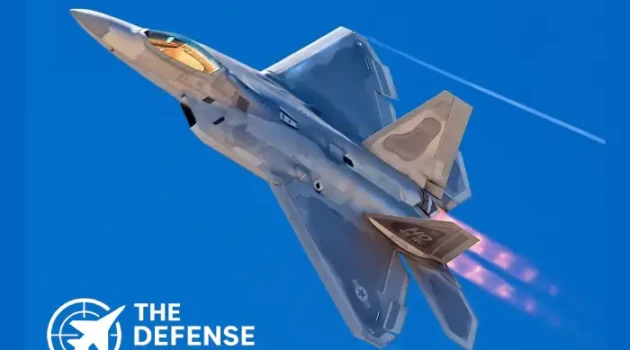
The F-22 fighter jet remains the primary US air dominance platform. Entering service in the mid 2000s, it was designed to counter advanced adversary aircraft through stealth, supercruise, integrated sensors, and high agility.
Unlike multirole fighters, the F 22 focuses on air superiority first. It can strike ground targets, but its main mission is to control contested airspace, escort other assets, and deny adversaries the ability to operate aircraft or cruise missiles.
Key characteristics include:
- Low observable airframe optimized for radar evasion
- Supercruise capability above Mach 1 without afterburner
- Advanced avionics that fuse radar, electronic support, and data links
- High maneuverability for close range engagements
These features place the F 22 among the fastest US fighter jet platforms in operational service, especially when sustained speed and combat effectiveness are considered together.
Fastest US Fighter Jet Claims and Reality
The phrase fastest US fighter jet is often used loosely. Historically, aircraft like the F 15 and retired F 14 reached very high top speeds under specific conditions. The F 22 does not chase raw speed records, but its ability to supercruise gives it a real operational advantage.
Sustained supersonic flight without afterburner reduces fuel consumption and infrared signature. This allows the f-22 fighter jet to arrive earlier, remain longer, and engage with less warning. In modern air combat, this matters more than peak speed numbers.
Pentagon officials have consistently emphasized that speed, stealth, sensors, and networking must be evaluated as a system rather than isolated statistics.
Fighter Jet Pilot Training and Readiness
Operating the f-22 fighter jet requires extensive pilot training. F 22 pilots transition from other advanced fighters and undergo specialized instruction focused on sensor management, beyond visual range tactics, and joint operations.
Unlike earlier eras, pilots now manage large volumes of data while flying. Sensor fusion reduces workload, but decision making remains complex. Training exercises increasingly integrate cyber, electronic warfare, and space based inputs.
Readiness is also shaped by flight hours, maintenance availability, and simulator access. High fidelity simulators now play a central role, allowing pilots to rehearse scenarios that cannot be safely replicated in live flights.
Selfridge Base Fighter Jets and National Guard Readiness
Selfridge Air National Guard Base in Michigan is a key node in US air defense and readiness. While it does not host F 22 aircraft, its fighter jets support homeland defense missions and joint exercises.
Selfridge base fighter jets readiness has drawn attention in recent years due to aircraft transitions and infrastructure investments. The base supports air sovereignty alert missions, training deployments, and integration with active duty forces.
From a strategic perspective, bases like Selfridge free high end assets such as the f-22 fighter jet to focus on overseas contingencies while maintaining credible domestic coverage.
Pentagon Fighter Jet Contract Landscape
The Pentagon fighter jet contract environment remains active as the US balances legacy sustainment with future platforms. Production of the F 22 ended in 2012, but contracts continue for upgrades, maintenance, and capability enhancements.
Current efforts include:
- Sensor and avionics modernization
- Improved data links for joint and allied operations
- Sustainment initiatives to raise mission capable rates
At the same time, investment is shifting toward next generation air dominance programs. Lessons from the F 22 program strongly influence these efforts, especially in cost control, modular upgrades, and industrial base resilience.
USS Midway Lessons Applied to Modern Deployments
The connection between USS Midway and modern fighters is not symbolic alone. Midway demonstrated how forward presence, logistics, and trained personnel create deterrence. Today, the same logic applies to rotational deployments of the f-22 fighter jet to Europe, the Indo Pacific, and the Middle East.
These deployments reassure allies and complicate adversary planning. They also stress test sustainment chains and command structures, much like extended carrier deployments once did.
Analysis: Strategic Value of the f-22 Fighter Jet Today
Despite its limited numbers, the f-22 fighter jet continues to deliver outsized strategic value. Potential adversaries must account for its presence even when it is not forward deployed. This uncertainty shapes air defense planning and investment decisions.
However, challenges remain. Aging airframes, supply chain constraints, and workforce issues affect readiness. The Air Force must balance near term upgrades with long term transition planning.
In this context, the F 22 mirrors the late career phase of USS Midway. Both platforms remained highly capable, but required careful management to extend relevance without overcommitment. The key lesson is that dominance platforms demand sustained investment long after initial procurement ends.
FAQs
What makes the f-22 fighter jet different from other US fighters?Its combination of stealth, supercruise, sensor fusion, and agility is unmatched in the US inventory.
Is the f-22 fighter jet the fastest US fighter jet?It may not have the highest top speed, but its sustained supersonic capability gives it a practical speed advantage.
Why was F 22 production stopped?Budget constraints and shifting priorities led the Pentagon to cap production at 187 aircraft.
Do fighter jet pilots need different training for the F 22?Yes, F 22 pilots require specialized training focused on data management and advanced air combat tactics.
How does USS Midway relate to modern fighter deployments?Midway established operational concepts of forward presence and sustained airpower that still guide deployments today.
Get real time update about this post category directly on your device, subscribe now.