

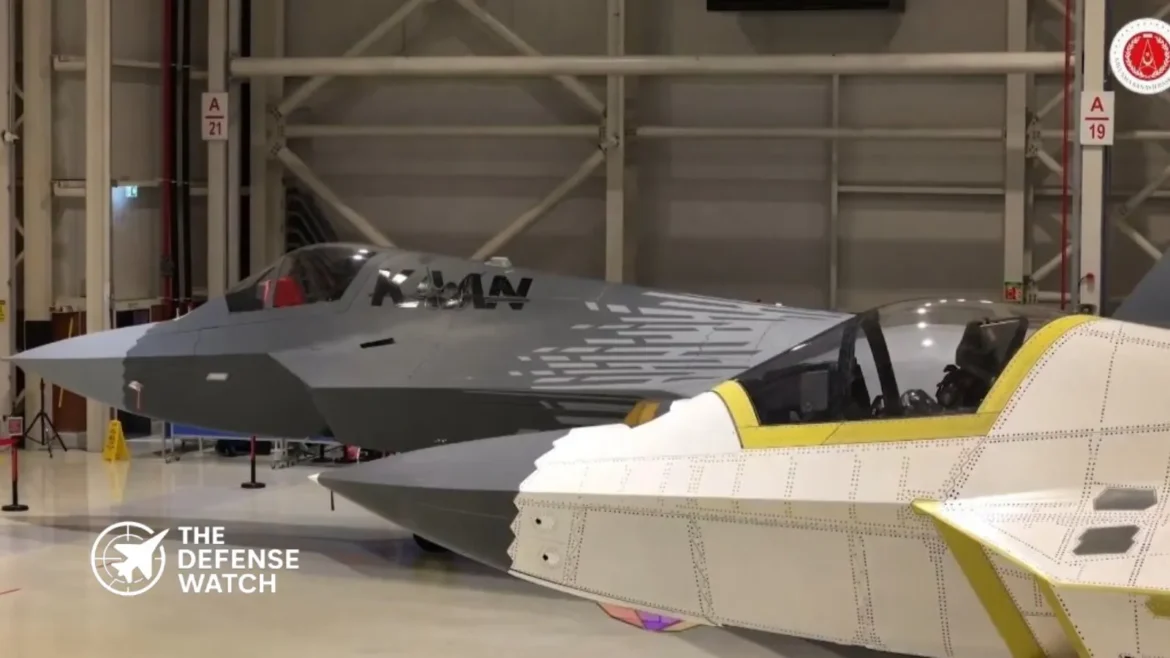
- ► KAAN-1 prototype planned to make its first flight in May or June.
- ► Aircraft expected to conduct initial flight tests with operational onboard systems.
- ► KAAN-0 completed two takeoffs focused on basic airframe and flight safety validation.
- ► Prototypes 2 and 3 scheduled to follow in 2026.
- ► Program led by Turkish Aerospace as part of Turkey’s indigenous fifth generation fighter effort.
KAAN-1 Prototype Moves Toward Operational Flight Testing
The KAAN-1 prototype is expected to make its first flight in May or June, marking a significant step in Turkey’s indigenous fifth generation fighter program.
(adsbygoogle = window.adsbygoogle || []).push({});Unlike the earlier KAAN-0 prototype, which conducted two takeoffs primarily focused on validating basic flight characteristics and airframe integrity, the KAAN-1 prototype is planned to fly with operational systems integrated. This shift signals the program’s transition from initial proof of flight to structured systems testing.
The KAAN fighter, developed by Turkish Aerospace, is Turkey’s flagship combat aircraft program, previously known as TF-X. It is intended to replace aging F-16 fleets and position Ankara among nations developing advanced, stealth-capable multirole fighters.
From KAAN-0 To KAAN-1
The KAAN-0 prototype achieved its first flight in early 2024, a milestone widely reported by Turkish officials and confirmed by defense media including Anadolu Agency. Those initial flights were limited in scope. They focused on validating basic aerodynamics, landing gear performance, propulsion integration, and flight control laws.
The upcoming KAAN-1 prototype represents a more advanced configuration. According to program updates, this aircraft is expected to carry a broader suite of onboard systems, potentially including radar, avionics, and mission computers closer to intended operational standards.
This progression mirrors typical fifth generation fighter development cycles seen in programs such as the F-35 and other advanced combat aircraft. Early prototypes verify that the platform can safely fly. Subsequent prototypes begin the far more complex process of systems integration and performance validation.
(adsbygoogle = window.adsbygoogle || []).push({});What Operational System Testing Means
For the KAAN-1 prototype, flying with operational systems changes the scope of testing significantly.
Flight trials will likely evaluate sensor fusion, avionics stability, power management, and electronic systems behavior under dynamic conditions. Even at this stage, these systems may not represent final production standards, but they provide critical data for refining software and hardware integration.
This phase is often the most technically demanding part of fighter development. Integrating advanced avionics into a stealth airframe requires balancing cooling, power supply, electromagnetic compatibility, and software architecture.
Industry experience shows that issues often emerge during this transition. As seen in other fifth generation programs, debugging mission systems and ensuring stable flight control integration can extend timelines. The move to operational system testing therefore signals both progress and the beginning of a more complex testing environment.
Additional Prototypes Planned For 2026
Within the same framework, prototypes numbered 2 and 3 are planned to follow in 2026.
(adsbygoogle = window.adsbygoogle || []).push({});Expanding the prototype fleet allows parallel testing. One aircraft may focus on envelope expansion, another on avionics, and another on weapons integration or structural stress evaluation. This approach accelerates data collection and reduces overall program risk.
The KAAN program timeline suggests a structured ramp-up in flight testing over the next two years. If maintained, this schedule would position the aircraft for continued development toward initial operational capability later in the decade.
Strategic Context
The KAAN fighter program carries strategic weight for Ankara. Turkey’s removal from the F-35 program in 2019 reshaped its combat aviation roadmap. Since then, officials have emphasized domestic fighter development to reduce reliance on foreign suppliers.
The KAAN-1 prototype’s planned first flight with operational systems reflects that broader strategic objective. Moving beyond symbolic milestones toward systems validation indicates a focus on practical capability development.
At the same time, fifth generation fighter development remains resource intensive and technically demanding. Nations pursuing such programs must sustain funding, industrial expertise, and long term political commitment.
(adsbygoogle = window.adsbygoogle || []).push({});Program Outlook
If the KAAN-1 prototype flies as planned in May or June, it will mark a measurable shift from basic airframe validation to systems oriented testing.
The introduction of additional prototypes in 2026 will further test the program’s maturity. The coming flight test campaigns will reveal how effectively the platform integrates avionics, propulsion, and stealth characteristics into a coherent operational design.
For defense observers, the next phase will be defined less by symbolic first flights and more by sustained, transparent testing progress.


B-52 radar upgrade aircraft arrives at Edwards Air Force Base
A U.S. Air Force B-52 Stratofortress fitted with a major radar upgrade has flown to Edwards Air Force Base in California for dedicated flight testing. The deployment took place in mid December 2025 and marks a key step in validating new sensor capabilities for the aging but still central U.S. strategic bomber fleet.
The aircraft will support a structured test campaign led by the Air Force Test Center, focusing on radar performance, integration, and reliability. Edwards AFB is the primary hub for developmental flight testing of advanced U.S. military aircraft systems.
Why the B-52 radar upgrade matters
The B-52 radar upgrade is a core element of the U.S. Air Force plan to keep the Stratofortress operational into the 2050s. First introduced in the 1950s, the B-52 has undergone multiple modernization efforts, but its legacy radar has long been considered a limitation in contested airspace.
The new radar is derived from the AN APG 79 family, a proven active electronically scanned array system already used on U.S. Navy aircraft. By adapting this technology for the B-52, the Air Force aims to deliver improved target detection, higher resolution mapping, and stronger resistance to electronic attack.
Background on B-52 modernization efforts
The radar effort sits alongside several other major upgrades underway for the bomber. These include new commercial derivative engines, updated communications, improved navigation systems, and the integration of future long range weapons.
Together, these changes are designed to extend the aircraft service life while keeping operating costs under control. Air Force officials have repeatedly stated that the B-52 will operate in tandem with newer platforms such as the B-21 Raider, rather than being replaced outright.
Testing objectives at Edwards AFB
At Edwards, engineers and test pilots will evaluate how the B-52 radar upgrade performs across a wide range of flight conditions. This includes high altitude cruise, long range navigation, and target tracking scenarios relevant to both conventional and nuclear missions.
Testing will also examine how the radar integrates with existing avionics and mission systems. Because the B-52 airframe was not originally designed for modern digital sensors, ensuring stable power, cooling, and data flow is a major focus of the program.
According to U.S. Air Force testing practices, early flight tests typically emphasize safety and basic functionality before moving into advanced mission profiles later in the campaign.
Operational benefits for the U.S. Air Force
Once fielded, the B-52 radar upgrade is expected to significantly improve situational awareness for bomber crews. The new system offers faster scan rates and better performance against moving and low visibility targets.
These improvements support both stand off strike missions and maritime operations, where accurate long range sensing is critical. Enhanced radar capability also strengthens the bomber ability to operate in environments with advanced air defense systems.
From a strategic standpoint, the upgrade reinforces the credibility of the U.S. bomber leg of the nuclear triad by ensuring the aircraft can operate effectively well into the future.
Industry and program context
The radar effort reflects a broader trend within the U.S. Department of Defense to reuse mature technologies across platforms. By leveraging an existing radar design, the Air Force aims to reduce development risk and accelerate deployment timelines.
Defense industry partners are supporting the integration and test phases, working closely with Air Force engineers at Edwards. The program remains part of a wider bomber modernization budget approved under recent defense authorization acts.
What comes next after flight testing
Following the Edwards test phase, data will be reviewed to confirm performance thresholds and identify any required design changes. If results meet expectations, the Air Force will proceed toward low rate initial production and fleet wide installation.
Operational B-52 units are expected to begin receiving the upgraded radar later in the decade. Full fleet integration will take several years, aligning with other major upgrades such as the new engine replacement program.
The successful completion of this test phase will be a critical milestone for ensuring the B-52 remains a viable and effective asset for U.S. global strike missions.
