
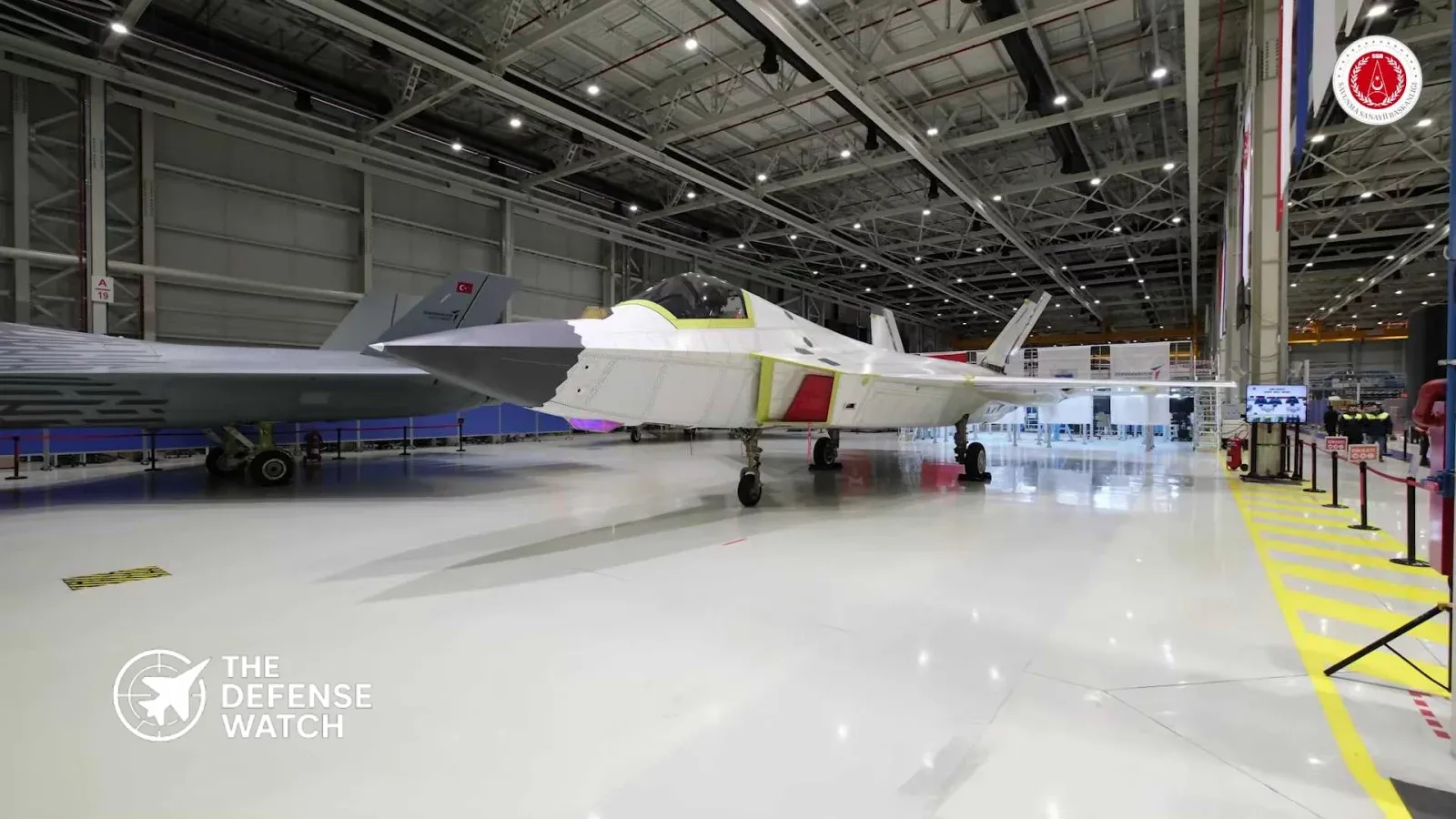
- ► Türkiye has unveiled its second KAAN fighter prototype to refine stealth capabilities before mass production.
- ► The prototype focuses on low-observable design elements including radar cross-section reduction.
- ► First prototype completed initial flight tests in 2025; the second prototype introduces updated stealth features.
- ► Türkiye aims to integrate the KAAN fighter into its Air Force fleet once development is complete.
- ► The program is part of Türkiye’s broader initiative to strengthen domestic aerospace and defense capabilities.
Türkiye Advances KAAN Fighter Stealth Ahead Of Mass Production
Türkiye has officially unveiled the second prototype of its indigenous KAAN fighter, signaling a significant step in the nation’s efforts to produce a next-generation stealth combat aircraft. The new prototype focuses on advanced low-observable technologies designed to reduce radar cross-section and enhance survivability in contested environments, according to Turkish defense sources.
The first KAAN prototype, which completed initial flight testing in 2025, provided critical insights into aerodynamics and systems integration. This second aircraft incorporates refinements to stealth shaping, radar-absorbing materials, and internal weapon bay configurations.
Turkish Aerospace Industries (TAI) leads the program, coordinating with domestic suppliers to integrate avionics, flight control systems, and mission-critical sensors. Officials emphasize that the KAAN project represents a milestone in Turkey’s strategic goal of achieving self-reliance in fighter aircraft production.
Program Goals And Timeline
The KAAN fighter is designed to serve as a multirole platform, capable of air superiority and strike missions. Mass production is targeted for later in the decade following completion of prototype testing and certification. Defense experts note that incorporating stealth elements from the early stages of development can shorten integration timelines and reduce future modifications.
Domestic Innovation And Global Ambitions
Türkiye’s push for indigenous aircraft development aligns with broader defense industry initiatives aimed at reducing reliance on foreign suppliers. The KAAN program also positions Ankara to participate in regional aerospace markets while advancing technological expertise in high-performance fighter jets.
TAI has stated that ongoing testing will evaluate radar cross-section reduction, sensor fusion, and internal weapons carriage. Flight trials for the second prototype are expected to continue throughout 2026, with performance data feeding into final design adjustments before production.
Strategic Implications
The KAAN fighter program enhances Türkiye’s operational independence and strengthens its ability to respond to regional threats. Analysts suggest that an operational KAAN fleet could complement existing F-16 assets, providing advanced stealth capabilities for air defense and strike operations.
By advancing stealth technology domestically, Türkiye can also inform future export opportunities while reinforcing the capabilities of its defense industrial base.
Get real time update about this post category directly on your device, subscribe now.

