
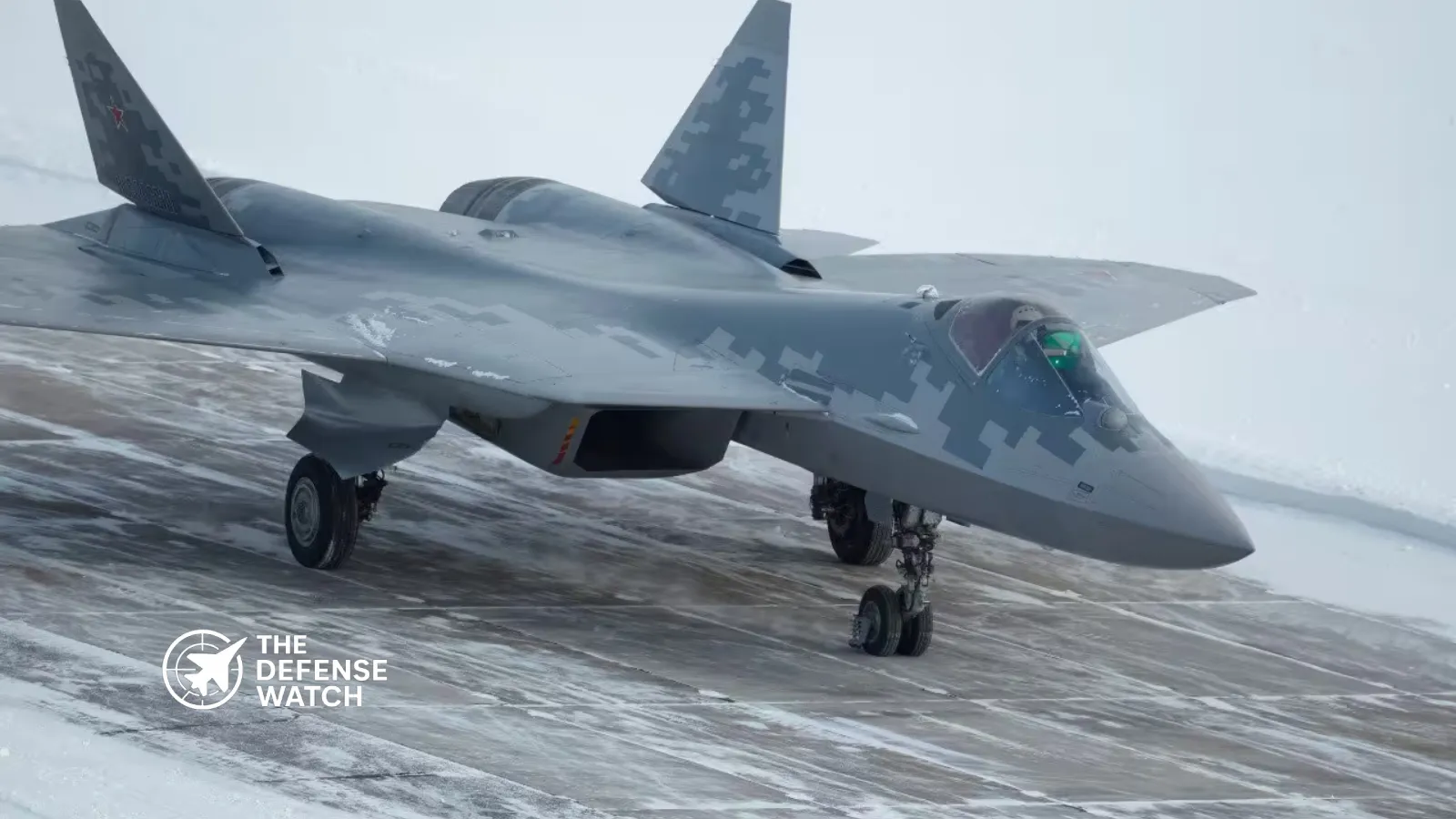
Su-57: From Fighter Jet to Tactical Aviation Complex
The Russian Su-57 has entered a new phase of operational capability, evolving from a traditional fighter aircraft into a comprehensive tactical aviation complex, according to Hero of Russia and Major General Sergey Lipovoy.
Lipovoy, head of the presidium of the All-Russian organization Officers of Russia, emphasized that the Su-57 now integrates advanced weaponry and onboard systems, making it capable of engaging land, air, and naval targets with unprecedented efficiency. He stated, “The Su-57 is no longer even classified as just an aircraft in official documents. It is an aviation tactical complex equipped with the most advanced and necessary weaponry.”
The Major General highlighted the Russian defense industry’s adaptability, noting that continuous upgrades and rapid modifications are applied to the Su-57 based on operational feedback. These enhancements ensure the platform remains flexible and highly responsive to evolving combat requirements.
Modernization and Operational Flexibility
The United Aircraft Corporation (UAC) recently delivered a batch of Su-57s featuring upgraded combat systems and weapon complexes. These updates reinforce the aircraft’s multi-role capabilities, improving both offensive and defensive performance. This modernization aligns with broader Russian military aviation objectives to maintain strategic air superiority.
Multi-Domain Combat Potential
With its new technical configuration, the Su-57 can perform precision strikes against ground installations, counter enemy aircraft, and engage surface vessels effectively. Lipovoy’s assessment underscores a shift in doctrine, positioning the Su-57 not just as a fighter but as an integrated combat tool capable of complex mission profiles.
The platform’s enhancements reflect lessons learned from testing and operational deployments, emphasizing the role of feedback-driven development in sustaining combat effectiveness.
Looking Ahead
The evolution of the Su-57 demonstrates Russia’s focus on producing aircraft that operate as full tactical complexes rather than standalone fighters. Analysts suggest this approach may influence future fifth-generation aircraft design globally, where multi-role adaptability and rapid system upgrades become increasingly important.
Get real time update about this post category directly on your device, subscribe now.

