
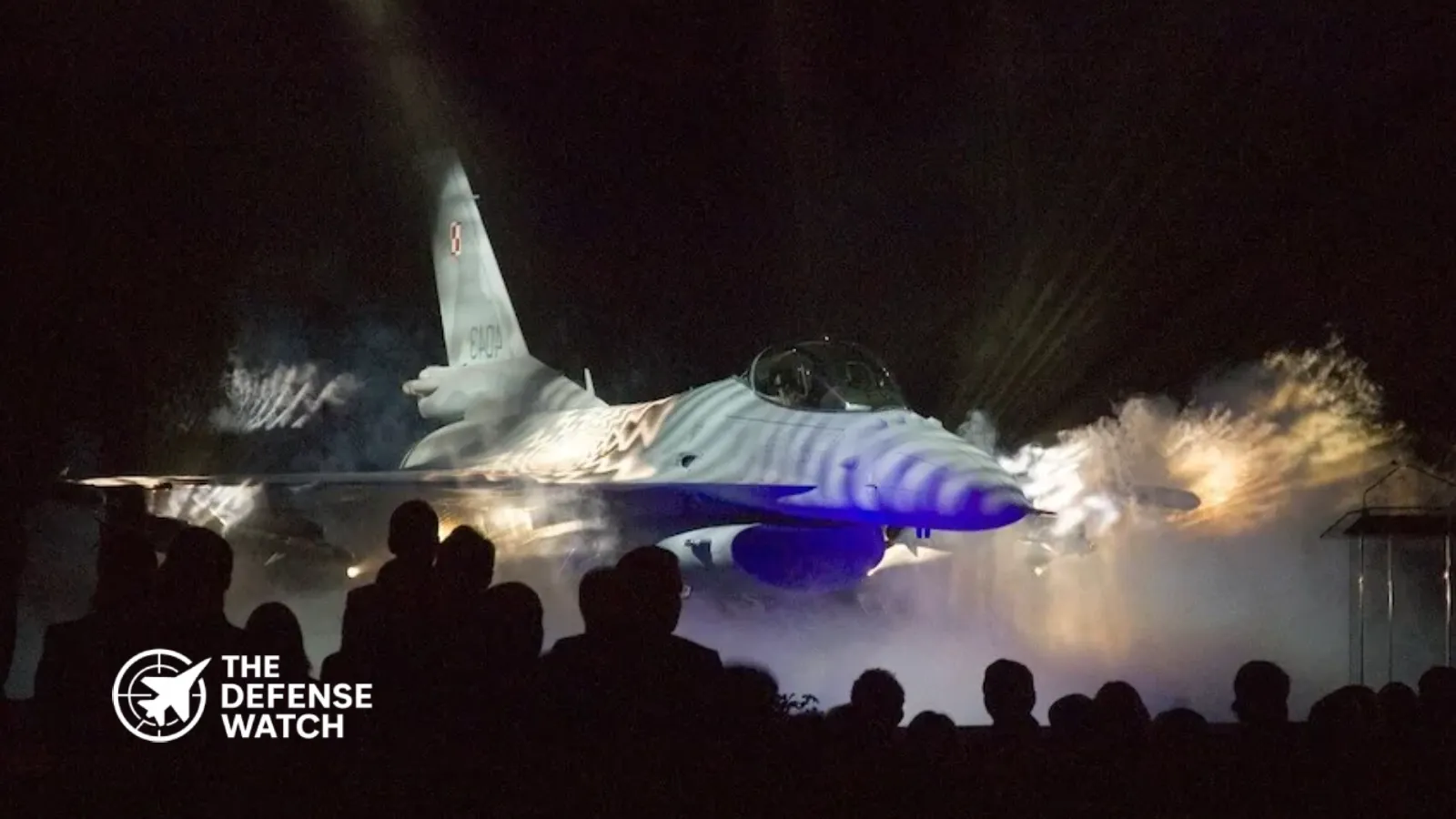
- Poland has operated F-16 fighter jets for 20 years, forming the backbone of its modern air force.
- The fleet supports NATO missions, including air policing and joint exercises in Eastern Europe.
- Lockheed Martin highlights interoperability and modernization as key advantages of the platform.
- Polish F-16s have been upgraded to maintain compatibility with evolving NATO standards.
- The milestone reflects Poland’s growing role in NATO’s eastern flank defense strategy.
Polish F-16 Service Strengthens NATO Airpower
The Polish F-16 service NATO milestone has reached a significant point as Poland marks 20 years of operating its F-16 fighter fleet, with Lockheed Martin emphasizing the aircraft’s role in strengthening NATO airpower and regional security. Since entering service in the mid-2000s, Poland’s F-16s have become a central pillar of its air defense and a key contributor to alliance operations across Eastern Europe.
According to the original report, Lockheed Martin highlighted how Poland’s investment in the F-16 platform has enhanced interoperability within NATO while ensuring a credible deterrent posture along the alliance’s eastern flank.
Two Decades of Polish F-16 Operations
Poland introduced the F-16 Fighting Falcon as part of a broader modernization effort to transition from Soviet-era platforms to NATO-compatible systems. The aircraft quickly became a cornerstone of the Polish Air Force, enabling the country to participate fully in allied missions and joint operations.
Over the past two decades, Polish F-16s have taken part in air policing missions, multinational exercises, and deterrence operations. Their presence has been particularly important in reinforcing NATO’s eastern defenses, especially amid heightened tensions in Eastern Europe.
The aircraft’s multirole capability allows Poland to conduct air superiority, ground attack, and reconnaissance missions using a single platform. This flexibility has proven critical as NATO adapts to a more complex threat environment that includes both conventional and hybrid warfare.
Interoperability and NATO Integration
One of the most important aspects of the Polish F-16 service NATO framework is interoperability. From the outset, Poland’s F-16 fleet was designed to integrate seamlessly with NATO command structures, communication systems, and operational procedures.
This compatibility allows Polish pilots to operate alongside other NATO air forces without technical or procedural barriers. Joint exercises, such as large-scale air drills across Europe, have further strengthened coordination and readiness.
Lockheed Martin noted that the F-16 platform continues to evolve through upgrades in avionics, weapons integration, and data-sharing capabilities. These enhancements ensure that the aircraft remains relevant in modern network-centric warfare environments.
Modernization and Capability Enhancements
To maintain operational effectiveness, Poland has pursued continuous upgrades to its F-16 fleet. These improvements include advanced radar systems, precision-guided munitions, and enhanced electronic warfare capabilities.
Modernization efforts also focus on improving survivability and mission effectiveness in contested environments. As threats evolve, particularly in the form of advanced air defense systems and electronic warfare, maintaining a technological edge remains essential.
The ongoing upgrades align with NATO’s broader push to modernize its air forces and ensure collective defense capabilities remain credible. Poland’s commitment to upgrading its F-16s reflects a long-term strategy to sustain high readiness levels.
Strategic Importance for Eastern Europe
Poland’s geographic position places it at the center of NATO’s eastern flank, making its airpower capabilities especially critical. The Polish F-16 service NATO framework contributes directly to regional stability by providing rapid response and deterrence capabilities.
The presence of a capable and modern air force helps deter potential adversaries and reassures neighboring NATO members. In recent years, the importance of airpower in Eastern Europe has grown significantly due to shifting geopolitical dynamics.
Poland’s F-16 fleet also supports rotational deployments and allied exercises, reinforcing NATO’s collective defense posture. This role has become increasingly important as the alliance seeks to maintain readiness in a rapidly changing security environment.
Analysis: Why the F-16 Still Matters in NATO
Even as fifth-generation aircraft like the F-35 Lightning II enter service, the F-16 remains a critical asset for NATO. Its proven reliability, lower operating costs, and upgrade potential make it a practical choice for many member states.
For Poland, the F-16 provides a balance between capability and affordability. While newer platforms offer advanced stealth features, the F-16 continues to deliver strong performance in most operational scenarios, especially when supported by modern upgrades.
This layered approach, combining legacy platforms with next-generation systems, reflects NATO’s broader strategy. It allows the alliance to maintain a large, capable force while gradually integrating more advanced technologies.
Analysis: Long-Term Implications for NATO Airpower
Looking ahead, Poland’s experience with the F-16 highlights the importance of sustained investment in airpower. Rather than relying solely on new acquisitions, continuous modernization of existing fleets can deliver significant strategic value.
The Polish F-16 service NATO model demonstrates how mid-life upgrades can extend the operational life of aircraft while maintaining high levels of readiness. This approach is particularly relevant for countries balancing budget constraints with growing security demands.
At the same time, Poland’s ongoing defense investments, including future integration of advanced platforms, suggest a dual-track strategy. Maintaining a strong F-16 fleet while preparing for next-generation capabilities ensures long-term resilience within NATO.
FAQs
How long has Poland operated F-16 fighter jets?Poland has operated F-16 aircraft for approximately 20 years since their introduction in the mid-2000s.
Why are Polish F-16s important for NATO?They enhance interoperability, support joint missions, and strengthen NATO’s eastern flank defense.
Are Poland’s F-16s still modern?Yes, they have undergone continuous upgrades to remain compatible with modern NATO standards.
Will Poland replace its F-16 fleet?Poland is adding newer platforms but is expected to keep upgraded F-16s in service for years.
What role do F-16s play in modern warfare?They provide multirole capabilities including air defense, strike missions, and reconnaissance.
Get real time update about this post category directly on your device, subscribe now.


