
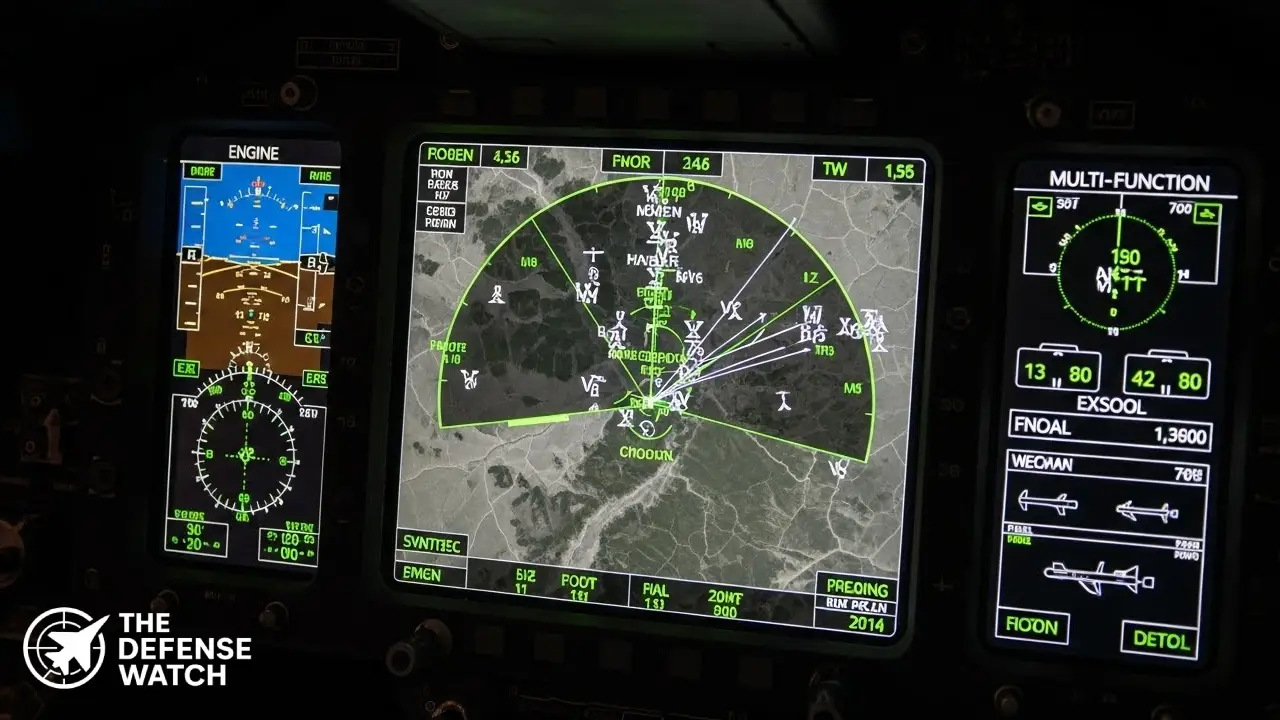
How Fighter Jets Identify Threats at Extended Ranges
Modern fighter jets detect threats from over 100 km away through sophisticated sensor systems that have revolutionized air combat capabilities. These platforms combine Active Electronically Scanned Array (AESA) radar technology, infrared search and track (IRST) sensors, and advanced data fusion systems to provide pilots with comprehensive situational awareness well before hostile aircraft enter engagement range.
The ability to identify and track adversaries at extended distances represents a fundamental shift in aerial warfare doctrine. Where previous generations of fighters relied primarily on mechanically scanned radars with limited detection ranges, today’s combat aircraft employ multiple overlapping sensor systems that create a detailed picture of the battlespace in three dimensions.
AESA Radar Technology Extends Detection Beyond 150 Kilometers
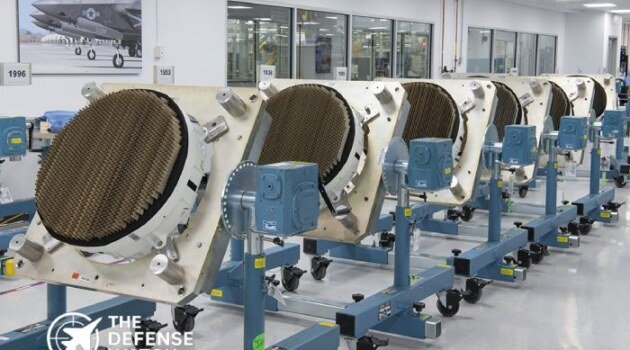
Active Electronically Scanned Array radars scan electronically without mechanical movement, detecting targets beyond 150 kilometers. Unlike traditional mechanically scanned systems that required physical antenna movement, AESA technology uses thousands of individual transmit/receive modules (TRMs) arranged in a fixed array.
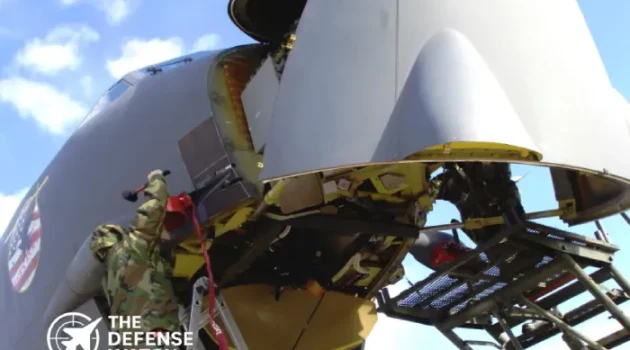
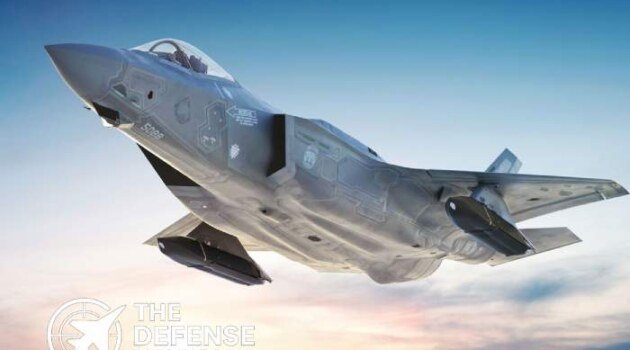
The Lockheed Martin F-35’s AN/APG-81 AESA radar tracks up to 23 targets simultaneously while engaging multiple threats, with detection ranges exceeding 150 kilometers for air-to-air targets. The system incorporates 1,676 transceivers that work in concert to provide unprecedented targeting precision and resistance to electronic countermeasures.

Fifth-generation platforms demonstrate even more impressive capabilities. The Sukhoi Su-57’s N036 Byelka AESA radar complex achieves claimed detection ranges up to 400 kilometers for large targets, with the ability to track 60 threats and engage 16 simultaneously. The Russian system features forward-facing, side-looking, and rear arrays for complete spherical coverage.
South Korea’s Hanwha Systems unveiled its first mass-produced AESA radar unit in August 2025 for the KF-21 fighter jet, with deliveries of 40 units scheduled between 2025 and 2028. The development highlights the global proliferation of AESA technology beyond traditional Western manufacturers.
Gallium Nitride Components Boost Performance
By 2025, gallium nitride (GaN) components have become standard in many systems, boosting power efficiency and range. GaN-based transmitters deliver superior thermal performance and power output compared to earlier gallium arsenide technology, enabling radars to operate at higher power levels while maintaining compact dimensions.
The Boeing F-15EX Eagle II employs the Raytheon AN/APG-82(V)1 AESA radar with GaN technology. This system tracks more than 30 targets at once and engages up to eight simultaneously, with ranges extending beyond 200 kilometers in optimal conditions. Recent tests in 2025 demonstrated its integration with hypersonic missile detection capabilities.
Multi-Spectrum Sensor Coverage Provides 360-Degree Awareness
Forward-looking, side-looking, and rear radars provide 360-degree coverage around the jet, ensuring threats can be detected from any direction. This spherical coverage eliminates blind spots that adversaries might exploit during engagement maneuvering.
Modern fighters supplement radar with complementary sensor systems that operate across different electromagnetic wavelengths. Infrared cameras, electronic warfare sensors, and data links detect and classify threats from long distances, creating a comprehensive battle picture. The integration of multiple sensor types compensates for individual system limitations while maximizing detection probability.
Infrared Search and Track Systems Operate Passively
IRST technology provides critical capabilities that complement active radar systems. The F-35’s AN/AAQ-37 Distributed Aperture System consists of six IR sensors around the aircraft for full spherical coverage, providing day/night imaging and acting as an IRST and missile approach warning system.
These passive sensors detect heat signatures without emitting detectable energy, allowing fighters to track adversaries while maintaining electromagnetic silence. The Eurofighter Typhoon’s PIRATE IRST can detect subsonic fighters from 50 km from the front and 90 km from the rear, with even greater increases possible if the target uses afterburners.
The U.S. Air Force awarded Lockheed Martin a $270 million contract in January 2025 to integrate the Infrared Defensive System (IRDS) with embedded TacIRST sensors on F-22 Raptors. The distributed system will provide 360-degree situational awareness for detecting and tracking both surface-to-air and air-to-air threats.
The U.S. Navy declared Initial Operating Capability for the IRST21 sensor system on F/A-18 Super Hornets in January 2025, with the long-wave infrared system passively detecting airborne targets well beyond visual range. The system integrates into the nose of the centerline fuel tank and significantly increases threat-detection range.
Data Fusion Delivers Refined Targeting Information
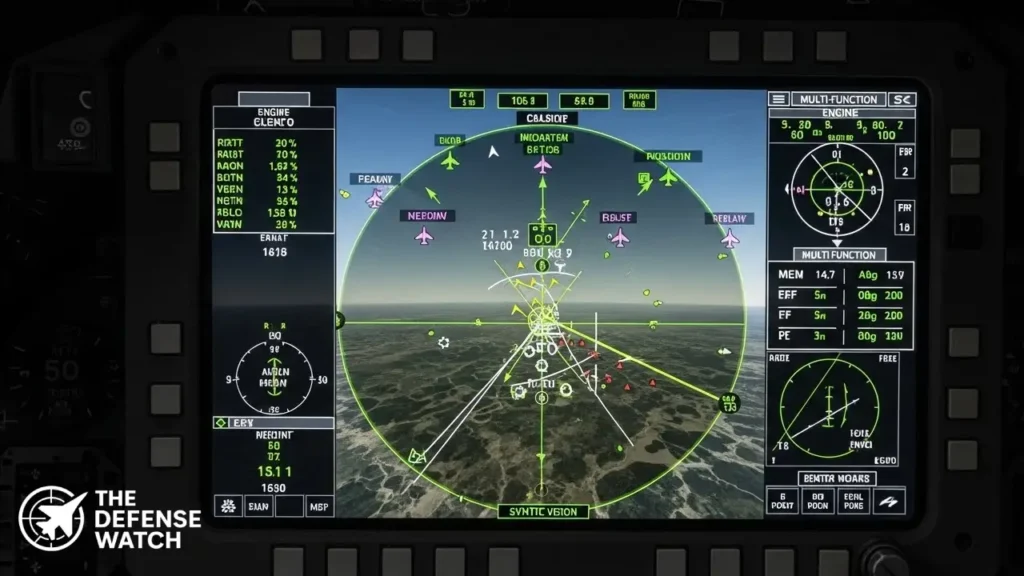
Computers fuse data from radar, infrared, and other sensors, filtering noise and false targets, and delivering precise information to the pilot’s display. Advanced algorithms correlate returns from multiple sources to eliminate ambiguities and present actionable intelligence to aircrew.
The F-35’s sensor fusion architecture sets the benchmark for integration capabilities. The system seamlessly combines inputs from the AN/APG-81 radar, Distributed Aperture System, Electro-Optical Targeting System, electronic warfare suite, and datalinks to generate a unified tactical picture. This synthesis reduces pilot workload while accelerating decision-making timelines.
Sensor fusion addresses one of the fundamental challenges in modern air combat: information overload. By automatically prioritizing threats based on range, aspect angle, and trajectory, these systems allow pilots to focus on tactical employment rather than raw data interpretation. The fusion algorithms continuously update as new information becomes available, maintaining currency even in rapidly evolving scenarios.
Electronic Warfare Resistance Maintains Detection Capability
Sophisticated sensors detect enemy jamming attempts and adjust radar modes to sustain detection capability over 100 km despite electronic countermeasures. AESA technology provides inherent advantages in electronically contested environments through frequency agility and low probability of intercept waveforms.
Unlike mechanically scanned radars that operate on fixed frequencies, AESA systems can rapidly change transmission characteristics across wide bandwidths. This frequency hopping makes jamming significantly more difficult, as adversary systems must distribute their limited power across broader spectrums to maintain effectiveness.
The electronic protection capabilities extend beyond simple anti-jamming. Modern AESA radars can classify jamming signals, providing intelligence on adversary electronic warfare systems while simultaneously adapting transmission parameters to counter specific threat techniques. This cat-and-mouse dynamic continues to drive developments in both radar and countermeasure technology.
Detecting Stealth Aircraft Through Advanced Waveforms
Stealth aircraft reduce radar reflections but can often be detected by low-frequency radar bands, with advanced radars using waveforms to detect and track such stealth targets at long ranges. While low-observable designs minimize returns in high-frequency bands, physical limitations prevent equivalent signature reduction at longer wavelengths.
The challenge of counter-stealth detection drives ongoing investment in radar signal processing. Modern systems employ sophisticated waveforms that maximize energy on target while minimizing vulnerability to detection or jamming. Algorithms analyze subtle return characteristics that distinguish stealthy platforms from background clutter or false targets.
IRST systems provide another counter-stealth capability by detecting heat signatures that low-observable aircraft cannot eliminate. Engine exhaust produces infrared emissions regardless of radar cross-section, making passive infrared tracking a valuable complement to radar detection. The combination of multi-spectral sensors increases detection probability against adversary stealth platforms.
Network-Centric Warfare Extends Sensor Range
Jets receive target data from airborne early warning aircraft and ground radars, extending their detection range beyond onboard sensors. This networked approach transforms individual fighters into nodes within a broader surveillance architecture that leverages sensors across multiple platforms.
The E-3 Sentry AWACS and E-2D Advanced Hawkeye provide long-range surveillance that supplements tactical fighter sensors. Their elevated positions and powerful radars detect aircraft at ranges exceeding organic fighter capabilities, transmitting cueing data via Link 16 and other tactical datalinks. This off-board information allows fighters to maneuver for intercept before adversaries appear on their own sensors.
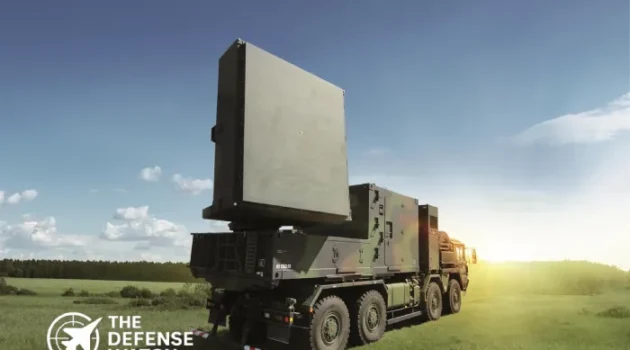
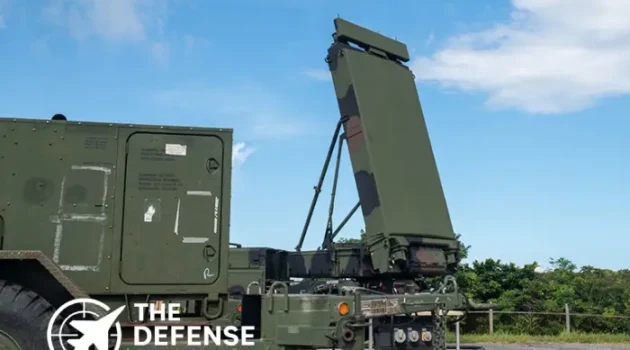
Ground-based radar systems contribute additional coverage, particularly for air defense of fixed sites and critical infrastructure. Integration between airborne and ground sensors creates redundant coverage that complicates adversary penetration planning. Even if hostile forces neutralize one element of the detection network, others maintain surveillance continuity.
Tactical Advantages of Early Threat Detection
Early detection gives pilots time to plan engagement or evasion, significantly increasing survival chances in contested airspace The temporal advantage provided by long-range sensors translates directly into tactical options unavailable to pilots who detect threats late.
Aircrew with comprehensive early warning can select optimal weapons employment ranges, maneuver for favorable geometries, or disengage entirely if conditions prove unfavorable. This flexibility represents the practical manifestation of information superiority in aerial combat. Platforms that see first can shoot first, determining engagement conditions before adversaries recognize they face threats.
The psychological dimension deserves consideration alongside tactical benefits. Pilots operating with reliable situational awareness demonstrate greater confidence and effectiveness than those uncertain about threat locations. This intangible advantage compounds the technical capabilities provided by advanced sensors, creating combat effectiveness multipliers that extend beyond raw performance specifications.
Artificial Intelligence Accelerates Threat Assessment
Next-generation radars and sensor fusion technologies will further improve detection range and accuracy, integrating AI for faster threat assessment. Machine learning algorithms show promise for classifying radar returns, predicting adversary behavior, and recommending tactical responses.
Aselsan’s AESA radar features automatic target limitation with artificial intelligence-supported algorithms, demonstrating the integration of AI processing into operational systems. These capabilities reduce human workload while accelerating the observe-orient-decide-act cycle that determines air combat outcomes.
Future developments will likely incorporate AI across multiple aspects of sensor management. Predictive algorithms could optimize scan patterns based on threat likelihood, automatically prioritizing high-value targets while maintaining surveillance across the broader battlespace. Electronic warfare systems might employ machine learning to classify and counter novel jamming techniques without human intervention.
The integration of quantum computing technologies promises additional capabilities over longer time horizons. Quantum sensors could provide unprecedented precision for range and velocity measurements, while quantum-resistant encryption would secure datalinks against future computational threats. These developments remain largely experimental but indicate potential trajectories for sensor evolution.
Analysis: Sensor Technology Reshapes Air Combat Doctrine
The proliferation of advanced detection systems fundamentally alters air combat dynamics. Historical engagements favored platforms with superior kinematic performance—speed, acceleration, and maneuverability determined outcomes when opponents merged into visual range. Modern sensors push initial detection points well beyond visual distances, emphasizing information warfare over traditional dogfighting skills.
This technological shift drives doctrinal evolution across air forces worldwide. Training programs now emphasize sensor management, electronic warfare, and network integration alongside conventional combat maneuvering. Pilots must understand how to exploit their sensor advantages while denying adversaries equivalent capabilities through tactics and electronic countermeasures.
The economic implications merit attention. AESA radars, IRST pods, and sensor fusion processors represent substantial investments that constrain acquisition budgets. Nations must balance quantities of aircraft against individual platform capabilities, with higher-end sensors concentrating on premium platforms while more austere systems equip secondary fighters. This capability stratification influences force structure decisions and alliance interoperability planning.
Proliferation concerns arise as these technologies mature and diffuse globally. What began as advantages exclusive to American and Western European forces now appears in South Korean, Turkish, Indian, and Chinese systems. India’s DRDO unveiled a scaled model of the AESA radar for the Advanced Medium Combat Aircraft at Aero India 2025, featuring Gallium Nitride-based transmit/receive modules. This democratization of sensor technology compresses capability gaps between first-tier and emerging air forces.
The counter-stealth implications deserve emphasis. Fifth-generation fighters achieved temporary advantages through reduced radar signatures, but advanced sensors increasingly negate those benefits. Long-wave infrared detection, low-frequency radar bands, and multi-static configurations complicate penetration planning for stealth platforms. Future combat aircraft will require not just signature reduction but comprehensive spectrum management across all detection domains.
Electronic warfare assumes growing importance as both detection and countermeasure capabilities advance. The electromagnetic spectrum becomes a contested domain where advantage shifts based on technical sophistication and tactical employment. Platforms with superior electronic protection and attack capabilities gain decision advantage regardless of traditional metrics like speed or weapons payload.
FAQs
How do AESA radars differ from traditional mechanically scanned radars?AESA radars use thousands of individual transmit/receive modules in a fixed array that electronically steer the beam without physical movement. This provides faster scanning, better reliability, multiple simultaneous beams, and enhanced resistance to jamming compared to mechanically scanned systems that physically rotate their antennas.
Can modern fighters detect stealth aircraft at long ranges?While stealth aircraft significantly reduce radar cross-sections in high-frequency bands, advanced radars using low-frequency waveforms and infrared sensors can detect them at extended ranges. IRST systems track heat signatures that stealth designs cannot eliminate, while long-wavelength radars exploit physical limitations of radar-absorbing materials.
Why are infrared sensors important when fighters already have radar?IRST systems operate passively without emitting detectable signals, allowing aircraft to track threats while maintaining electromagnetic silence. They complement radar by providing detection in heavy electronic warfare environments, tracking stealth aircraft through heat signatures, and offering redundant surveillance when radar faces jamming.
How far can modern fighter jet radars detect other aircraft?Detection ranges vary by radar type and target characteristics. Advanced AESA systems like the F-35’s AN/APG-81 detect fighter-sized targets beyond 150 kilometers, while systems like the Su-57’s N036 Byelka claim ranges up to 400 kilometers for large targets. Actual performance depends on target radar cross-section, altitude, and atmospheric conditions.
What is sensor fusion and why does it matter in air combat?Sensor fusion combines data from radar, infrared sensors, electronic warfare systems, and datalinks to create a unified tactical picture. This eliminates false targets, reduces pilot workload, and provides actionable intelligence faster than interpreting individual sensors separately. Modern fighters like the F-35 excel at sensor fusion, giving pilots superior situational awareness.
Get real time update about this post category directly on your device, subscribe now.




This website uses cookies to improve your experience. We'll assume you're ok with this, but you can opt-out if you wish. Accept Read More
2 comments
[…] coverage with high-resolution tracking and can operate in complex environments. It is designed to detect and classify threats such as UAS, cruise missiles, rotary wing aircraft, artillery, rockets and […]
[…] (effectors) across land, sea, air and other domains. The goal is to shorten the decision cycle from threat detection to effect, applying advanced data connectivity and automation in the […]