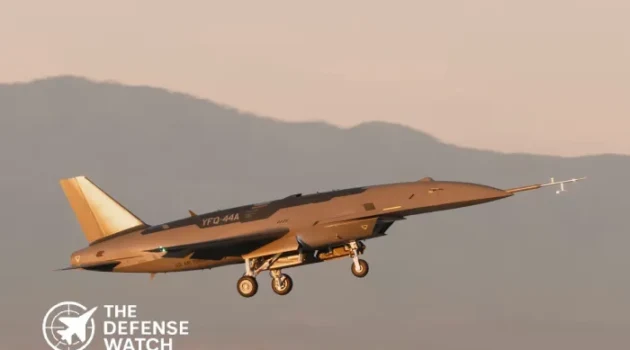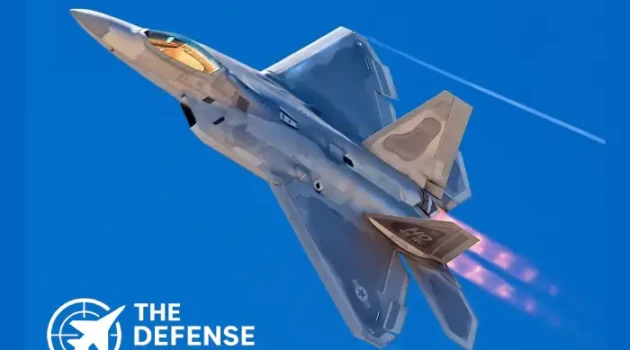
A U.S. Air Force F-22 Raptor pilot has directed an Anduril YFQ-44A Fury uncrewed aircraft during an airborne test involving simulated combat tasks, demonstrating how a crewed fighter could command an autonomous wingman without remotely flying it. The Air Force announced the achievement on October 16, 2026, following a flight demonstration conducted earlier in the month.
The test advances the service’s Collaborative Combat Aircraft (CCA) program, which aims to pair crewed fighters with lower-cost uncrewed aircraft that can extend the force’s capacity to carry weapons, gather information and perform assigned missions.
The important distinction is how the two aircraft shared responsibilities. The F-22 pilot issued tactical instructions, while the Fury’s onboard autonomy software interpreted those instructions and executed the required flight maneuvers. The demonstration involved simulated combat tasks, not a confirmed operational engagement against an enemy aircraft.
From remote control to tactical command
According to reporting on the Air Force announcement, the test involved an F-22 and a pre-production YFQ-44A operating together in flight from Edwards Air Force Base, California. The pilot directed the uncrewed aircraft through tactical commands rather than continuously controlling its flight path.
That distinction is central to the CCA concept. A fighter pilot must already manage the aircraft, interpret sensor information, assess threats and make weapons decisions. Requiring the same pilot to manually fly a second aircraft would add considerable workload and could undermine the intended advantage of autonomous wingmen.
Under the approach demonstrated, the human pilot sets the tactical objective while the uncrewed aircraft handles the detailed execution. The precise cockpit interface, communications configuration and autonomy software used in this particular flight have not been fully disclosed in the available public reporting.
The test therefore establishes an important integration milestone, but it does not yet show how many uncrewed aircraft one pilot could control effectively in a complex combat environment.
Why the Fury matters to the Air Force
The aircraft is part of the U.S. Air Force’s Collaborative Combat Aircraft Increment 1 effort.
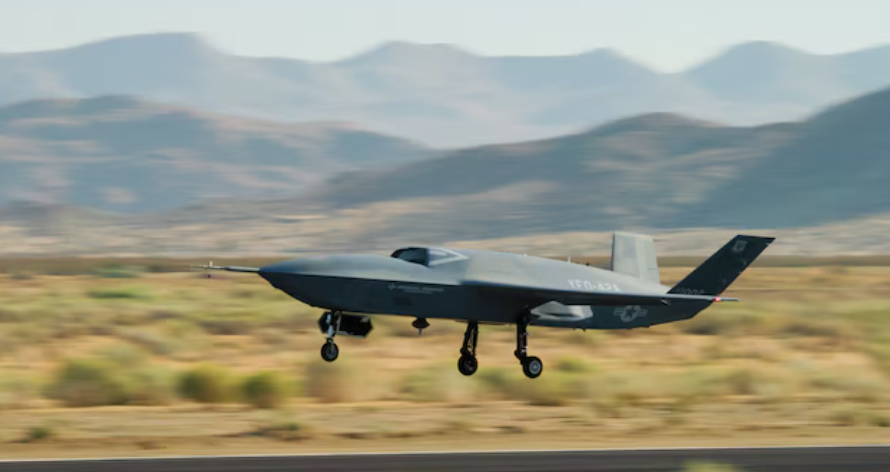
The YFQ-44A Fury is being developed by Anduril Industries as one of the aircraft selected for the Air Force’s first CCA increment. The other selected design is General Atomics’ YFQ-42A, also known as the Vengeance.
The Fury traces its origins to a design developed by Blue Force Technologies. Anduril acquired that company in 2023 and continued development of the aircraft for the Air Force’s uncrewed combat aircraft effort. The Fury first flew in October 2025, according to published program reporting.
The Air Force’s interest extends beyond building a drone that can fly alongside a fighter. It wants an aircraft that can operate as part of a coordinated combat formation, receive mission updates, and potentially contribute additional weapons capacity or sensing capability.
That could allow a force to distribute some missions across several aircraft instead of relying entirely on expensive crewed fighters. In a future engagement, an uncrewed aircraft might be assigned to a specific tactical role while the pilot remains focused on the overall mission. The exact roles will depend on the aircraft’s final configuration, available sensors, weapons integration and approved autonomy functions.
The October demonstration did not establish that the Fury can independently make every decision required for air combat. Tactical autonomy, safe flight control and authorization to use weapons are separate functions, and the public account of the test does not establish the full limits of each.
A test milestone, not yet a combat-ready capability
The F-22 and Fury demonstration builds on earlier U.S. efforts to develop communications and autonomy systems that allow crewed fighters to work with uncrewed aircraft.
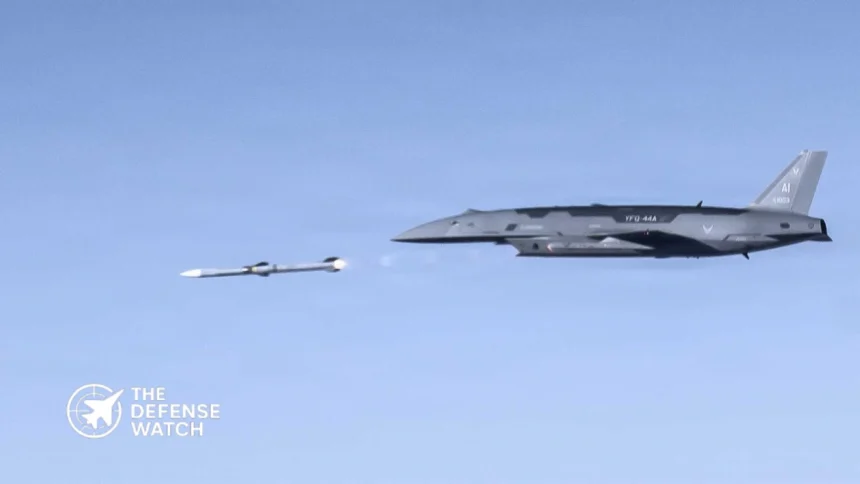
In July 2026, the Air Force reported that a YFQ-44A had conducted a live-fire test involving an AIM-120 air-to-air missile and a digital target over the Mojave Desert. That test addressed a different part of the program: weapons integration rather than airborne tactical command from a crewed fighter.
The Air Force has also tested the Fury in operationally oriented exercises. In July, its Collaborative Combat Aircraft Experimental Operations Unit conducted activities at Creech Air Force Base, Nevada, examining aircraft servicing, weapons handling, deployment and the procedures needed to operate uncrewed aircraft from locations with limited support infrastructure.
Together, these efforts address several requirements that must be met before the aircraft can become a dependable part of combat formations. An aircraft must not only fly autonomously, but also receive reliable commands, share relevant information, operate safely alongside other aircraft and integrate with weapons and mission systems.
The October flight does not publicly resolve several important questions. The Air Force has not disclosed the communications range achieved during the demonstration, the system’s performance under deliberate electronic interference or whether a single pilot can direct multiple Fury aircraft simultaneously.
Those details matter because operational environments can include disrupted communications, rapidly changing threats and limited time for pilots to make decisions. An uncrewed aircraft may retain some ability to fly if its communications link is interrupted, but its ability to respond to new tactical instructions could be reduced.
What the demonstration means for future fighter operations
The Air Force’s CCA effort is intended to change how it generates combat airpower. Rather than assigning every mission to a crewed fighter, the service is developing a force in which crewed aircraft can coordinate with uncrewed teammates.
For the F-22, that could eventually mean directing an uncrewed aircraft to perform an assigned task while the pilot concentrates on other threats. Additional aircraft could potentially carry weapons or sensors, although the precise operational configuration of the Fury remains under development.
The approach also has implications for the wider fighter fleet. The Air Force is pursuing CCA integration as part of a broader modernization effort, alongside the F-35 and the future F-47 program. However, compatibility with one aircraft does not automatically establish that the same command system can be transferred to every other fighter without additional integration and testing.
Cost will be another consideration. Uncrewed aircraft are intended to provide additional combat capacity at a lower cost than fielding more crewed fighters, but the overall value depends on production costs, autonomy software, maintenance, weapons, communications infrastructure and the number of aircraft required to support each mission.
The latest demonstration provides evidence that an F-22 pilot can direct a Fury through simulated combat tasks in flight. It does not establish the cost or combat effectiveness of a future operational fleet.
For now, the key achievement is the move from testing autonomous aircraft alongside crewed fighters toward testing how pilots can command them during flight. Turning that capability into a useful combat formation will require further work on software, communications, pilot workload and operational procedures.