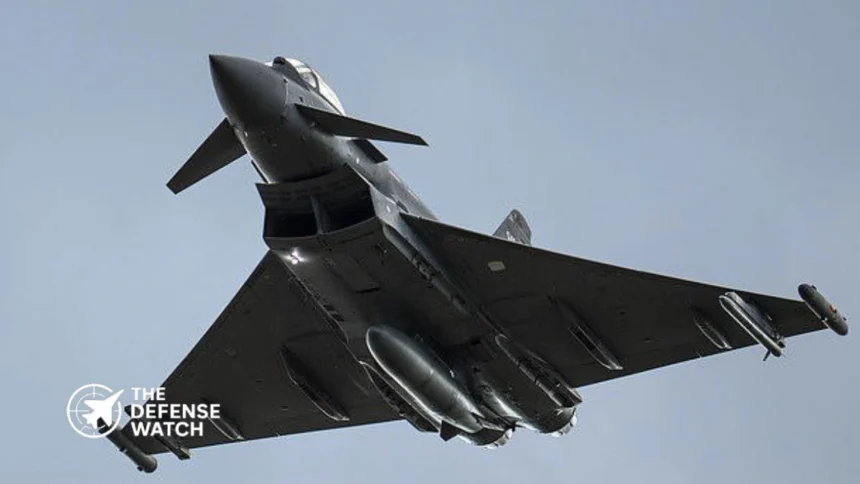
Royal Air Force crews reported two close encounters with unidentified airborne objects during military training flights over the North Sea in February 2026. The incidents occurred within days of each other and involved aircraft conducting aerial refuelling and simulated air combat, according to published aviation incident reports and media reporting.
The objects were not positively identified, and neither appeared on the radar displays consulted by air traffic controllers. Although the encounters were reported as possible drone incidents, the available evidence does not establish who or what operated the objects.
The cases raise a practical aviation safety concern: even a brief encounter with an unidentified object can create a collision risk when military aircraft are operating close together during demanding training manoeuvres.
First encounter occurred during aerial refuelling
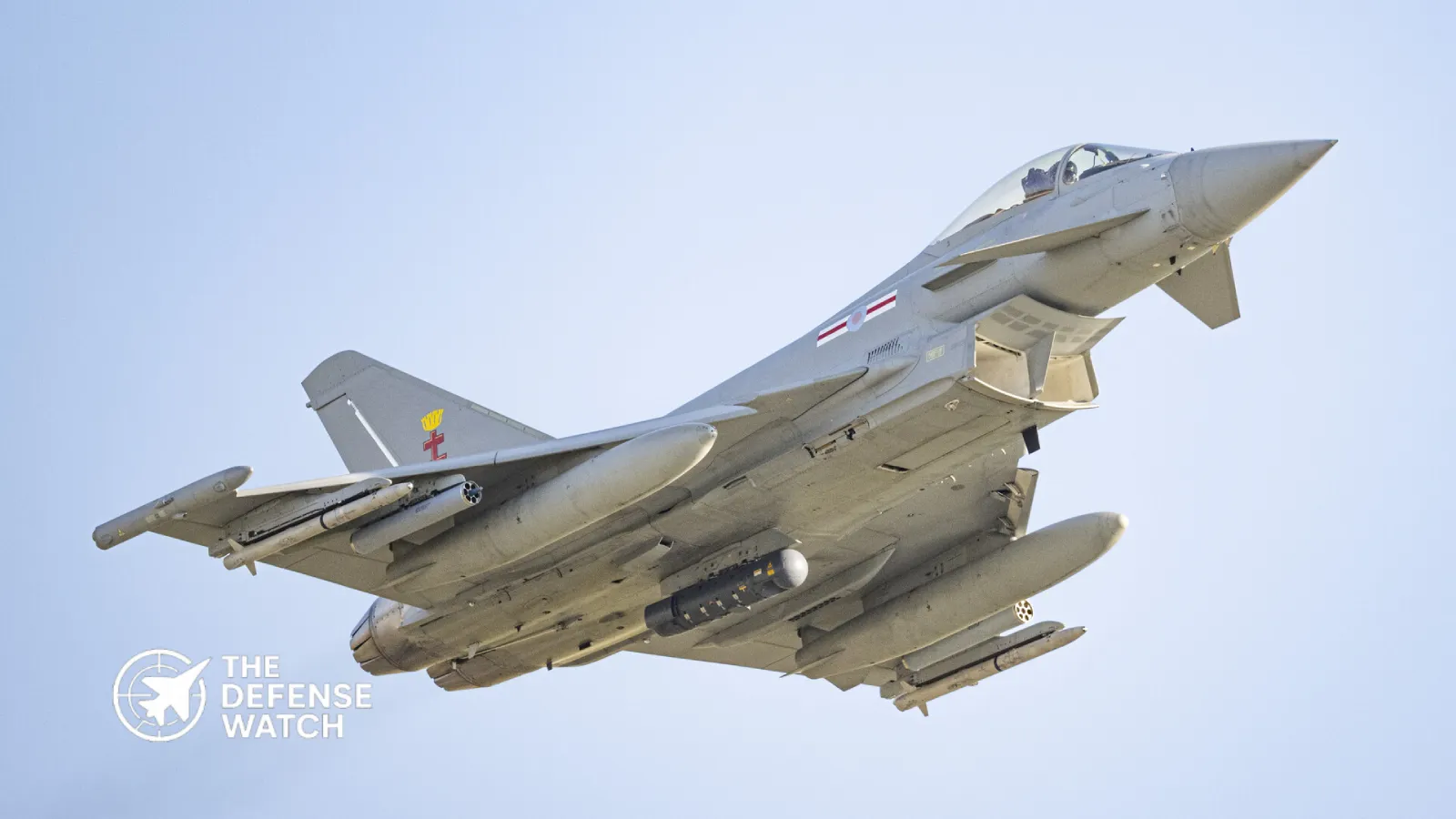
The first reported incident took place on February 18, north-northeast of Cromer, Norfolk, while an RAF Airbus Voyager tanker was refuelling a Typhoon fighter.
According to the UK Airprox Board’s published account, the Voyager crew spotted a black, circular object passing approximately 100 to 150 feet above the tanker. The object was visible for only a few seconds, and its proximity prompted an instinctive reaction from the pilot.
The crew reported the sighting to air traffic control and asked whether the object appeared on radar. The controller reported no corresponding radar contact. A Typhoon pilot involved in the same refuelling formation also saw the object and agreed with the description and direction of travel.
The crew considered a drone a possible explanation, but the incident report did not establish the object’s identity. A balloon or another airborne object could not be ruled out.
That distinction matters. A pilot’s visual observation can establish that an object was present, but it may not be sufficient to determine its construction, operator, purpose or method of flight.
Second sighting involved an RAF Typhoon
A second encounter was reported on February 23, when an RAF Typhoon was operating in a designated military training area over the North Sea.
The UK Airprox Board’s April 2026 report records the incident as Airprox 2026014. The pilot was manoeuvring during training when a black, circular object, described as being similar in size to a car tyre, passed approximately 300 feet above the fighter.
The Typhoon was reported to be flying at around 12,000 feet. The pilot moved away from the location where the object had been seen and reported the incident to military air traffic control. The object was travelling east, according to the report.
Unlike the first encounter, the board assessed this incident as presenting no risk of collision, although it concluded that safety had been reduced. The object remained unidentified.
The two cases therefore differed in their reported circumstances and risk assessments. The first involved an object passing close to a tanker during refuelling, while the second occurred during fighter training.
Why radar did not provide an answer
Neither encounter produced a corresponding radar contact, according to the published accounts. That absence limited the information available to controllers and investigators, but it does not establish that the objects were designed to evade detection.
Radar performance depends on several factors, including an object’s size, materials, shape, distance and the characteristics of the radar system being used. Small objects can be difficult for some systems to detect consistently, but the public reports do not provide enough technical evidence to determine why these particular objects were not detected.
Visual observations also have limitations. An object seen briefly from a fast-moving aircraft may be difficult to identify accurately, particularly when the crew is occupied with a complex training task.
The appropriate conclusion is therefore narrow: RAF aircrew reported objects close to their aircraft, controllers did not see corresponding radar contacts, and investigators could not positively identify the objects in the published reports.
There is no verified public evidence in these reports establishing that either object belonged to a hostile state or was conducting surveillance.
The altitude issue and UK drone rules
The reported altitude of the first object is particularly noteworthy because it would place the object far above the normal operating limit for civilian drones.
The UK Civil Aviation Authority says drones operating in the open category must generally remain below 120 metres, or 400 feet, above the surface. Higher operations may be permitted under specific authorisations and applicable rules.
Some media reports have described the first object as flying at 17,000 feet. However, the UK Airprox Board’s published account records the Voyager at flight level 160, with the unidentified object approximately 100 to 150 feet above the tanker. The available public record does not independently establish a precise altitude for the object, so the reported 17,000-foot figure should be treated cautiously.
An object at that altitude would be far outside normal civilian drone operations. It would not, by itself, establish whether the object was an unauthorised drone, a balloon or another airborne object.
Why the encounters matter for military aviation
Aerial refuelling and simulated air combat require pilots to maintain close coordination while monitoring other aircraft and following mission instructions. An unexpected object can force a crew to divide attention between the training task and collision avoidance.
For the Voyager incident, the UK Airprox Board classified the reported risk as category B, meaning safety had been significantly reduced. For the Typhoon encounter, the board assigned category C, indicating reduced safety but no risk of collision in its assessment. These classifications describe the individual encounters, not the identity or intent of the objects.
The cases also illustrate a challenge for airspace security. Radar, visual observation and reports from aircrew provide different types of evidence, and no single source necessarily resolves an unidentified-object incident. Investigators may need additional information, including other sensor records, flight data and witness accounts, to reach a firm conclusion.
The reports do not establish that the objects were part of a coordinated operation or that they were linked to the separate drone sightings reported near military facilities elsewhere.
For the RAF, the immediate issue is aviation safety rather than attribution. Until investigators can establish what the objects were and how they entered the training area, their origin and purpose remain unresolved.