
Why This Matters
China’s H 20 stealth bomber and the rumored JH XX strike aircraft matter because they show a clear shift in Beijing’s military goals. These programs suggest China wants a true long range strike force that can hold US bases, ships, and allies at risk from the opening hours of a conflict. Even if some details remain unclear, the direction is not. China is building tools meant to compete directly with US strategic airpower.
What It Is
The H 20 Stealth Bomber
The China H 20 stealth bomber is expected to be the country’s first true strategic bomber. Chinese officials have described it as a long range, stealthy platform designed for both nuclear and conventional missions. Most analysts compare it to the US B 2 Spirit or the newer B 21 Raider.
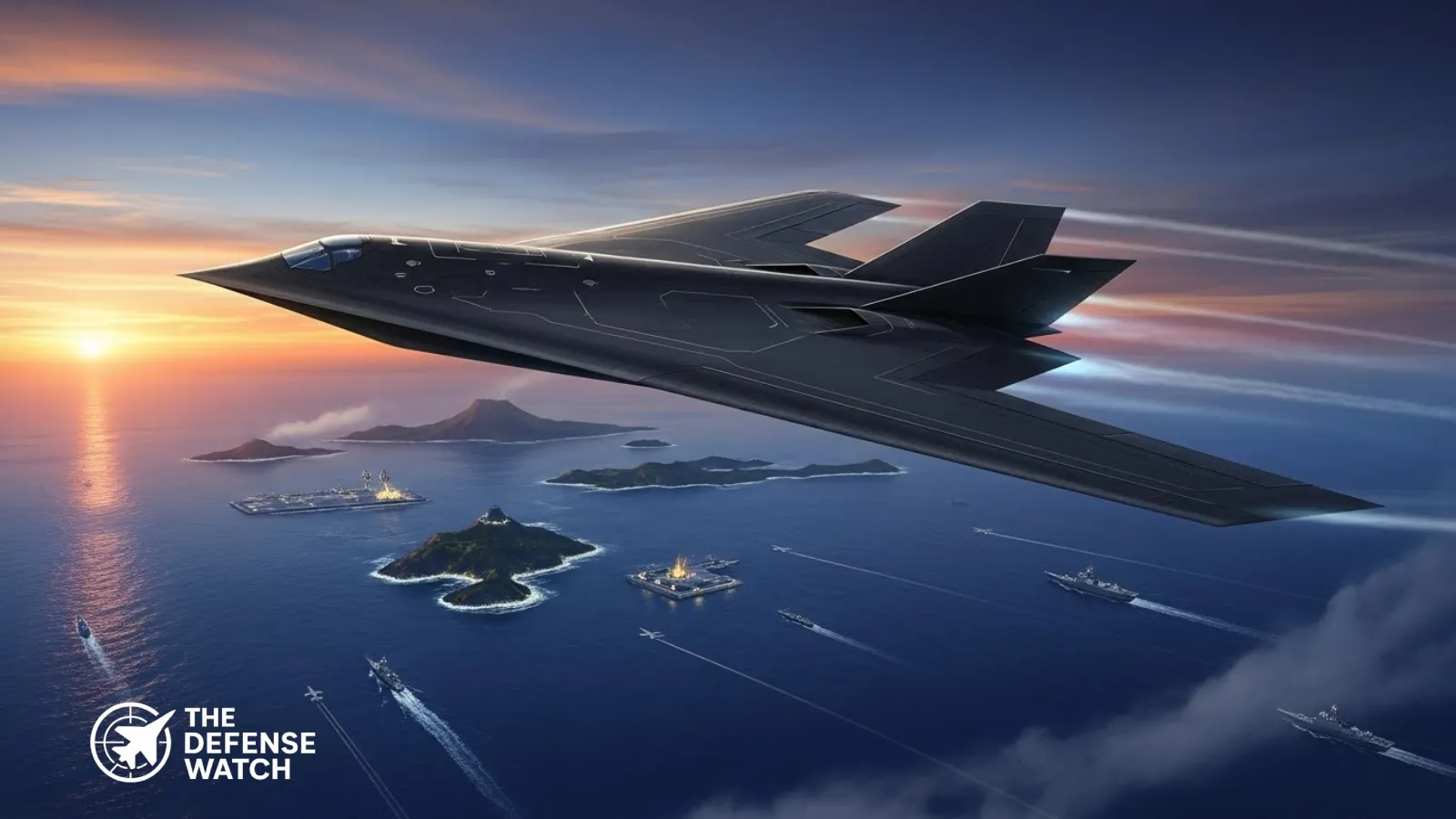
Public images have not been released, but official statements and credible reporting suggest a flying wing design. This shape reduces radar visibility and supports long range missions. The H 20 is likely intended to give China an air based nuclear deterrent, completing its nuclear triad alongside missiles and submarines.
The JH XX Strike Aircraft
The JH XX is more speculative. It is often described as a regional stealth strike aircraft rather than a global bomber. Analysts believe it could be designed to penetrate air defenses around the first island chain, striking targets such as airfields, logistics hubs, and naval forces.

Some compare the JH XX to a blend of a tactical bomber and a heavy strike fighter. If real, it would sit between the H 20 and existing aircraft like the J 20, focusing on deep strike rather than air combat.
How It Works
Stealth and Range
Both platforms are expected to rely on stealth shaping, internal weapons bays, and advanced materials to reduce detection. This mirrors US practice with the B 2 and B 21. Range is central. The China H 20 stealth bomber is often estimated to have a combat radius of several thousand miles, enough to reach Guam and possibly parts of the continental United States with refueling.
Sensors and Networks
Modern bombers are not just about bombs. They are nodes in a wider system. Chinese doctrine emphasizes integrated operations, linking aircraft with satellites, ground sensors, and long range missiles. Even if the H 20 never flies as far as US bombers, it could cue missile strikes or support naval operations.
What Is Still Unclear
Much of this remains based on analysis rather than confirmed data. China has not released performance figures, timelines, or weapons details. The JH XX in particular may still be in development or could emerge under a different designation.
Why It Matters
Pressure on US Airpower
For decades, the United States relied on uncontested access to airspace in the Western Pacific. The China H 20 stealth bomber challenges that assumption. Even a small fleet could force the US Air Force to spend more on air defense, dispersal, and hardening of bases.
Regional Impact
For allies like Japan, South Korea, and Australia, these aircraft raise the stakes. Long range Chinese strike platforms mean rear areas may no longer be safe. This could push allies to invest more in missile defense, early warning, and their own long range strike systems.
Strategic Competition
The broader point is intent. China is not just defending its coastline. It is preparing for power projection and strategic signaling. The H 20 fits into a pattern that includes aircraft carriers, hypersonic missiles, and space based systems.
Comparison With Known Systems
The H 20 is most often compared to the US B 2 and B 21. Unlike the B 52 or B 1, it appears designed from the start for stealth. The JH XX, if confirmed, would have no direct US equivalent today, though it shares some mission space with concepts once explored by the US Air Force for regional bombers.
China is likely still behind the United States in engine efficiency, stealth coatings, and combat experience. But the gap is narrower than it was twenty years ago.
Strategic Impact Going Forward
For China, these aircraft would strengthen deterrence and expand military options. For the United States, they reinforce the need to invest in next generation air defense, long range sensing, and its own bomber fleet. For the region, they add urgency to alliance planning and burden sharing.
The key takeaway is not whether the H 20 matches the B 21 one for one. It is that China is clearly building systems meant to challenge US strategy at a fundamental level.
Get real time update about this post category directly on your device, subscribe now.


1 comment
[…] The report says Trump told advisers he would only authorize military action if it produced a clear and decisive result. Officials reportedly warned that a limited strike could not guarantee regime collapse or a lasting strategic shift. […]