

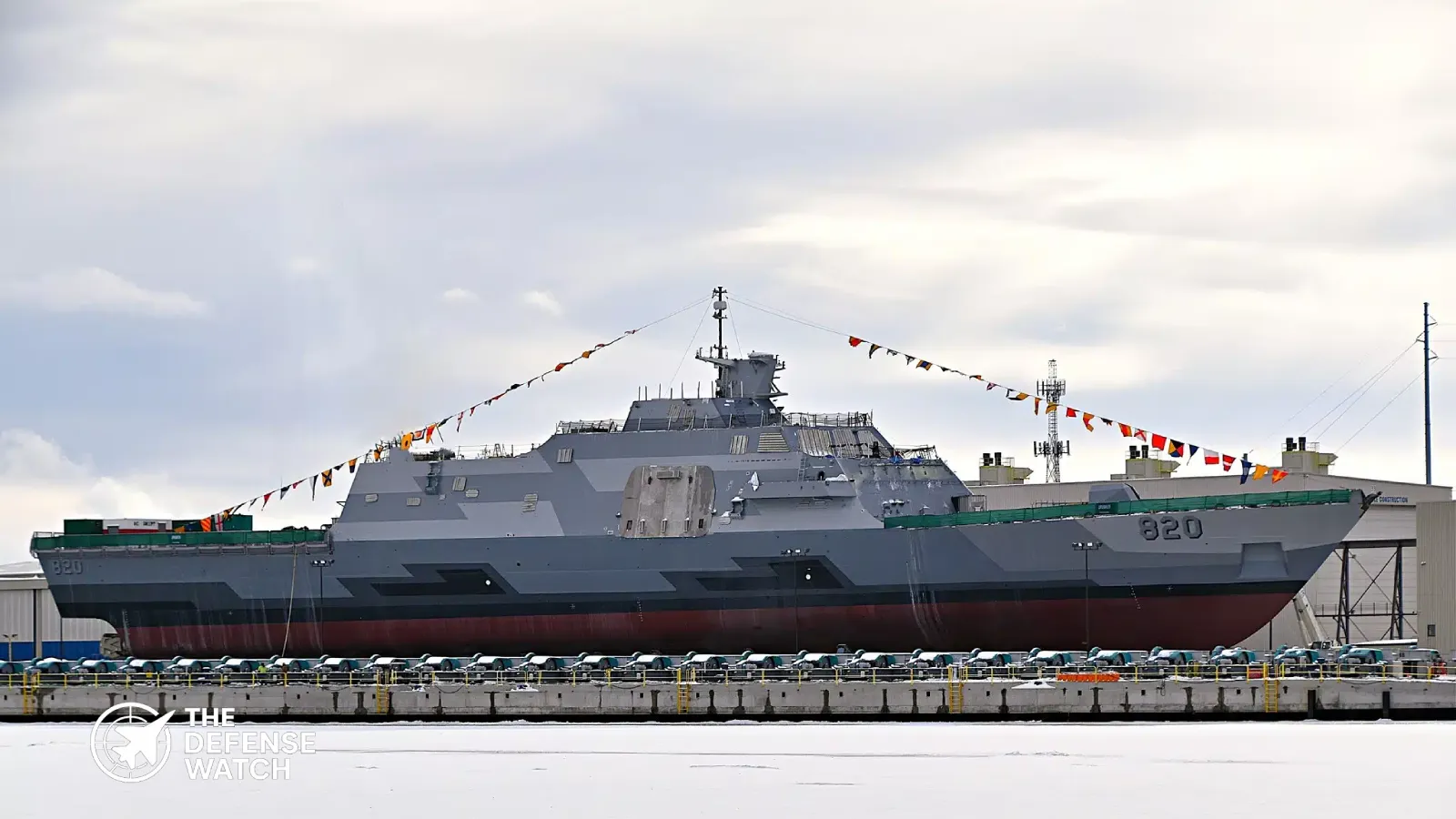
The Royal Saudi Naval Forces marked a major milestone this month with the launch of the first Multi-Mission Surface Combatant (MMSC) frigate at Fincantieri Marinette Marine in Wisconsin. The vessel, named HMS Saud (820), is the first of four ships being built under Saudi Arabia’s Project Tuwaiq, designed to modernize the kingdom’s naval fleet.
A traditional blessing ceremony for the new ship was held on December 13. The frigate was moved from the construction hall to the waterfront and entered the water on December 20, using a new syncrolift system installed at the shipyard.
The launch puts HMS Saud into the next phase of outfitting, system installation and sea trials ahead of eventual delivery to the Royal Saudi Naval Forces. This event comes after long schedule delays due to design refinements, workforce challenges, and changes requested by the Saudi customer.
Project Tuwaiq and MMSC Background
Project Tuwaiq is the name given to Saudi Arabia’s effort to procure four new Multi-Mission Surface Combatants for its navy. These ships are being built at Fincantieri’s Marinette Marine yard in Wisconsin under the United States Foreign Military Sales program. The order traces back to contracts signed years ago, reflecting a broader effort to enhance the RSNF surface fleet.
The MMSC design is based on the U.S. Navy’s Freedom-variant Littoral Combat Ship hull, adapted with a full combat suite and a focus on multi-mission capability. The vessels are larger, more heavily armed and equipped for extended missions compared with the base LCS design.
Lockheed Martin serves as prime contractor for combat systems integration, with Gibbs & Cox responsible for functional design, while Fincantieri Marinette Marine handles construction. The contract also includes training for Saudi crews and shore support preparation.
Technical Details and Capabilities
The Tuwaiq-class MMSC frigates are equipped with a wide range of sensors and weapons. Changes from the basic Freedom hull include a full multi-mission combat system that supports anti-air, anti-surface and anti-subsurface warfare missions. The ships will operate a helicopter and unmanned systems, and are designed to carry missiles and guns suited for diverse maritime roles.
The design departure from the original mission-module concept of the LCS gives these Saudi vessels a more traditional frigate role, with fixed combat systems and vertical launch cells. This makes them capable of integrated fleet operations and independent missions across wider maritime areas.
Saudi Naval Modernization Context
The launch arrives at a time when the Kingdom is investing heavily in its defense forces, with naval expansion a strategic priority. Project Tuwaiq is meant to strengthen the RSNF’s ability to guard key maritime routes in the Red Sea, Arabian Gulf, and Indian Ocean approaches. It also plays a part in broader regional security cooperation.
The program includes not just the ships themselves, but also shore support infrastructure, crew training and logistics preparation to ensure the vessels can operate efficiently once delivered. Saudi officials have highlighted the strategic importance of building a modern, professional naval force.
Outlook and What Comes Next
With HMS Saud now in the water, the focus shifts to outfitting and testing. Sea trials will validate systems performance and help prepare the vessel for delivery to Saudi Arabia. The remaining three frigates in the series are under construction, with keel laying already done on the next hull and work progressing at the Wisconsin yard.
Saudi authorities and Fincantieri officials expect deliveries over the next few years. Completion of Project Tuwaiq will significantly expand the RSNF’s surface combatant fleet and contribute to regional maritime security capabilities.
