

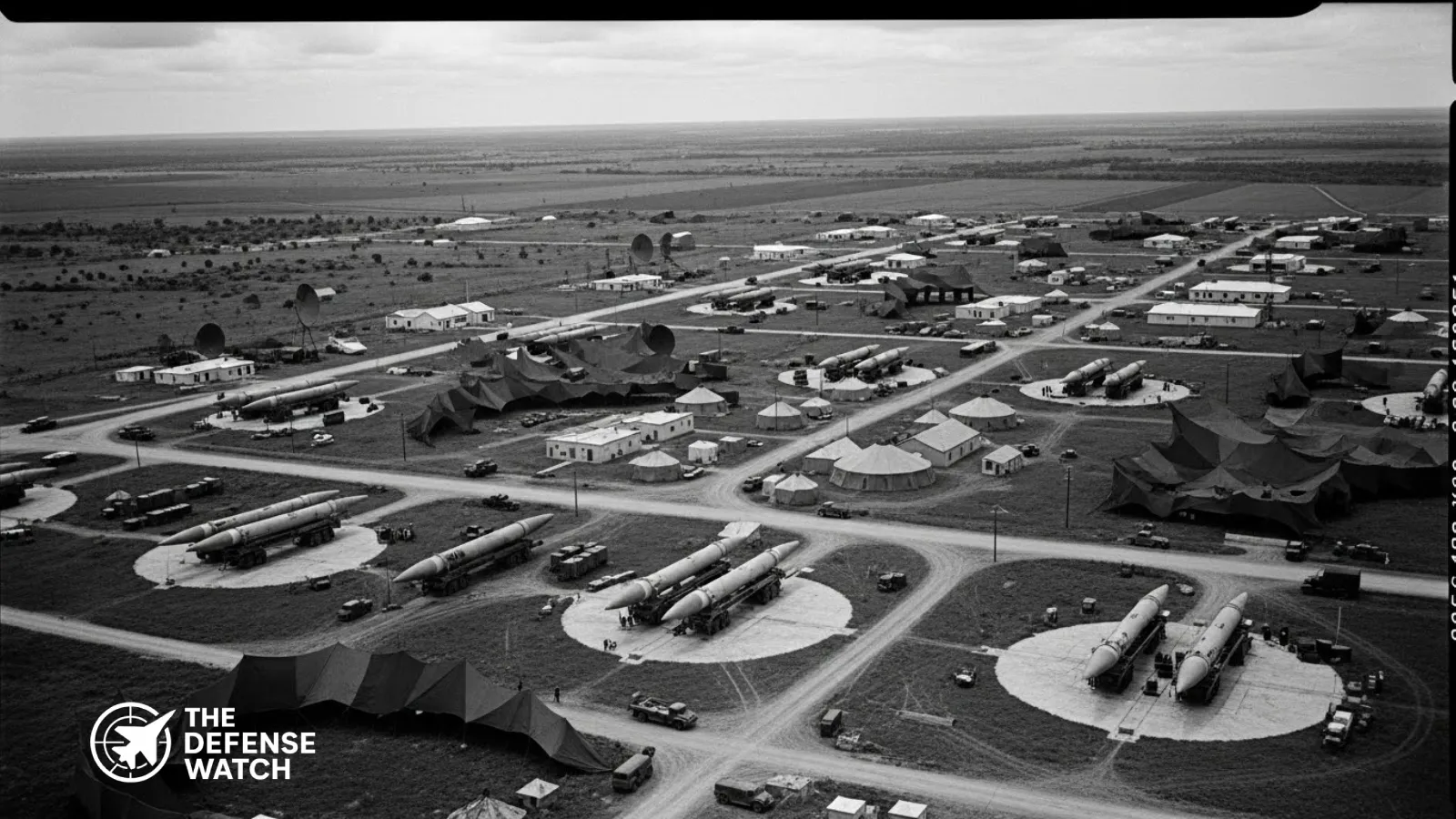
The Cuban missile crisis remains one of the most dangerous moments in modern history, when the United States and the Soviet Union came close to nuclear war. In October 1962, the discovery of Soviet nuclear missiles in Cuba triggered a fast moving confrontation that tested military planning, political control, and crisis management at the highest level. More than six decades later, the episode still shapes how nuclear powers think about deterrence, escalation, and communication under pressure.
This explainer reviews what happened, why it mattered, and how the lessons of the Cuban missile crisis continue to influence defense policy and strategic thinking today.
Cold War Background and Strategic Setting
By the early 1960s, the Cold War rivalry had hardened into a global contest between two nuclear armed blocs. The United States had deployed nuclear forces across Europe and Turkey, including Jupiter ballistic missiles within range of Soviet territory. The Soviet Union lagged behind the United States in long range missile numbers but sought ways to offset that imbalance.
Cuba became central to this effort after Fidel Castro’s 1959 revolution aligned the island with Moscow. Following the failed Bay of Pigs invasion in 1961, the Cuban leadership expected further US attempts to overthrow the regime. Soviet leader Nikita Khrushchev saw an opportunity to protect Cuba, strengthen deterrence, and shift the strategic balance by secretly deploying nuclear missiles to the island.
Discovery of the Missiles
The crisis began on October 14, 1962, when a US U 2 reconnaissance aircraft photographed Soviet medium range ballistic missile sites under construction in Cuba. The missiles, once operational, could strike much of the continental United States with little warning.

President John F Kennedy was briefed two days later and convened the Executive Committee of the National Security Council, known as ExComm. Over the next several days, US leaders debated options that ranged from diplomatic pressure to air strikes and a full scale invasion of Cuba.
US Response and Naval Quarantine
The Kennedy administration chose a measured but firm approach. On October 22, the president announced the discovery of the missiles and declared a naval quarantine of Cuba to prevent further deliveries of offensive weapons. The term quarantine was used instead of blockade to avoid the legal implication of an act of war.
US Navy forces moved to intercept Soviet ships heading toward Cuba. At the same time, US strategic forces were placed on elevated alert, and preparations were made for possible military action if diplomacy failed.
Soviet Decision Making and Escalation Risks
Inside the Soviet leadership, the crisis produced confusion and debate. Some Soviet commanders in Cuba had tactical nuclear weapons under their control, a fact unknown to US planners at the time. This raised the risk that even a limited US strike could have triggered nuclear use on the battlefield.
As Soviet ships approached the quarantine line, tension peaked. Several vessels slowed or turned back, signaling Moscow’s willingness to avoid a direct naval clash. Behind the scenes, diplomatic messages moved rapidly between Washington and Moscow, including private letters between Kennedy and Khrushchev.
Resolution and Secret Concessions
On October 28, Khrushchev announced that the Soviet Union would dismantle and remove the missiles from Cuba under United Nations supervision. In return, the United States pledged not to invade Cuba.
Less publicly, the United States also agreed to remove its Jupiter missiles from Turkey and Italy within a few months. This concession was kept secret at the time to preserve alliance politics and domestic credibility, but it played a key role in securing Soviet agreement.
The immediate crisis ended after thirteen days, but its consequences were lasting.
Military and Nuclear Lessons
The Cuban missile crisis reshaped how military and political leaders approached nuclear confrontation.
First, it highlighted the danger of miscalculation. Both sides came close to irreversible escalation due to incomplete information, technical accidents, and rigid military plans.
Second, it showed the limits of military solutions in a nuclear environment. Air strikes or invasion plans carried unacceptable risks once nuclear weapons were involved.
Third, it reinforced the value of civilian control over nuclear forces. Kennedy and Khrushchev both resisted pressure from military advisers who favored more aggressive actions.
Impact on Arms Control and Communication
One of the most direct outcomes of the Cuban missile crisis was the creation of the Moscow Washington hotline, designed to allow direct communication between leaders during emergencies. The goal was to reduce delays and misunderstandings in future crises.
The episode also helped pave the way for arms control agreements. The 1963 Limited Test Ban Treaty, which banned nuclear tests in the atmosphere, outer space, and underwater, reflected a shared interest in managing nuclear risks. Later agreements on strategic arms limits drew on the recognition that unchecked competition increased the danger of catastrophe.
Role of Intelligence and Surveillance
The crisis underscored the importance of intelligence collection and analysis. The U 2 flights that detected the missiles demonstrated the value of aerial reconnaissance, while gaps in understanding Soviet intentions revealed the limits of intelligence estimates.
Over time, this drove investment in satellites, signals intelligence, and analytic tradecraft. Today’s space based surveillance and early warning systems trace part of their institutional logic to lessons learned in 1962.
The Cuban Perspective
Cuba itself had limited influence over the final outcome. Cuban leaders were not directly involved in the US Soviet negotiations that resolved the crisis. The experience left Havana wary of being treated as a pawn by larger powers.
For Cuba, the non invasion pledge was a critical gain. The episode also hardened its defensive posture and reliance on deterrence by association with stronger allies.
Modern Relevance and Strategic Parallels
The Cuban missile crisis remains a reference point in discussions about contemporary flashpoints, including tensions involving nuclear armed states in Europe and Asia. Analysts often compare it to modern crises involving missile deployments, military exercises, or ambiguous signaling.
However, important differences exist. Today’s strategic environment includes more nuclear armed actors, faster information flows, cyber operations, and space assets that add complexity to crisis management. At the same time, some arms control frameworks established during the Cold War have weakened or expired, raising concerns about renewed instability.
Analysis, Why the Crisis Still Matters
From a defense and policy perspective, the Cuban missile crisis matters because it offers a real world case study in escalation control. It shows that rational leaders can still stumble toward disaster when systems and doctrines narrow their choices.
The crisis also illustrates the importance of off ramps. The secret missile trade and public non invasion pledge gave both sides a way to step back without humiliation. Modern crises often lack such clear bargaining space, making resolution harder.
Finally, the episode reminds policymakers that deterrence is not just about weapons numbers. It depends on perception, communication, and the ability to manage fear and uncertainty under extreme pressure.
FAQs
The crisis was triggered by the US discovery of Soviet nuclear missiles being deployed in Cuba in October 1962.
Declassified records suggest multiple moments when nuclear use was possible, including incidents involving submarines and air defense forces
Moscow sought to protect Cuba, counter US missiles near Soviet borders, and improve its strategic position.
Yes. In addition to pledging not to invade Cuba, the United States quietly agreed to remove Jupiter missiles from Turkey and Italy.
The crisis led to improved communication, early arms control efforts, and greater awareness of nuclear escalation risks.
