• Home
  • About
  • Defense Systems
  • Manufacturer
  • Comparisons
  • Compare 
  • Tools
TheDefenseWatch.com
  • Aerospace & Aviation
  • Military & Ordnance
  • Naval & Maritime
  • Cyber & Space Defense
  • Policy & Strategy
  • Global News
  • Tools Library
    • Smart Calculator
    • Drone Flight Time Calculator
    • Drone Range Calculator
    • Counter-Drone Jammer Effective Range Calculator
    • Counter-Battery Radar Detection Calculator
    • Artillery Fire Correction Calculator
    • Thermal Camera Detection Range Calculator
    • Missile Range & Time-of-Flight Calculator
    • Radar Detection Range Calculator
    • FPV Strike Drone Payload vs Range Calculator
    • Loitering Munition Endurance Calculator
    • Sniper Ballistic Drop & Windage Calculator
    • Bullet Drop Calculator
    • U.S. Army Combat Fitness Test (ACFT) Calculator
    • Military Pension Calculator
    • Military Retirement Calculator
    • Military Pension Calculator
    • Large Number Calculator
Font ResizerAa

TheDefenseWatch.com

The Defense Watch | U.S. & Global Defense News, Analysis & Military Updates

Search
  • Home
  • About
  • Defense Systems
  • Manufacturer
  • Comparisons
  • Compare 
  • Tools

Stay Updated

Get the latest update

Subscribe

Explore

  • Drone
  • Fighter Jets & Military Aircraft
  • Hypersonic Weapons
  • Aircraft Carriers
  • Strategic History & Missions
  • Tools Library
Home » Japan Moves to Deploy SAMs on Yonaguni — Just 70 Miles From Taiwan
Asian Defense & Security

Japan Moves to Deploy SAMs on Yonaguni — Just 70 Miles From Taiwan

TeamDefenseWatch
Last updated: September 9, 2026 3:30 am
TeamDefenseWatch
Share
2 Min Read
Japan deploys SAM missiles near Taiwan
SHARE

Japanese Defense Minister Shinjiro Koizumi confirmed that plans are underway to deploy medium-range surface-to-air missiles (SAMs) on Yonaguni Island — Japan’s westernmost territory, located roughly 70 miles (about 110 kilometres) east of Taiwan.

Contents
  • Background: Why Yonaguni Matters
  • Strategic and Regional Implications
    • Enhancing Air Defense in the South
    • Impact on Regional Dynamics
  • Reaction and Regional Response
  • What Comes Next

Yonaguni already hosts radar and electronic-surveillance facilities. The deployment aims to enhance Japan’s defensive posture as regional tensions escalate.

Background: Why Yonaguni Matters

Yonaguni occupies a critical position along the so-called “First Island Chain” — a string of islands stretching from Japan down toward Taiwan and the Philippines. Historically, this chain has been viewed as a strategic buffer zone. Recent years have seen increasing military activity, including maritime, airborne, and electronic surveillance operations, in the East China Sea and Taiwan Strait region.

In addition, Tokyo has already expanded missile deployments on other southern islands — such as Ishigaki Island — as part of a broader effort to reinforce its southwestern defenses..

- Advertisement -

Yonaguni’s proximity to Taiwan means that any conflict involving the island would place Yonaguni near the frontlines. In that context, adding SAM systems significantly alters the strategic calculations for any operations near the Taiwan Strait.

The Plan: Details of the SAM Deployment

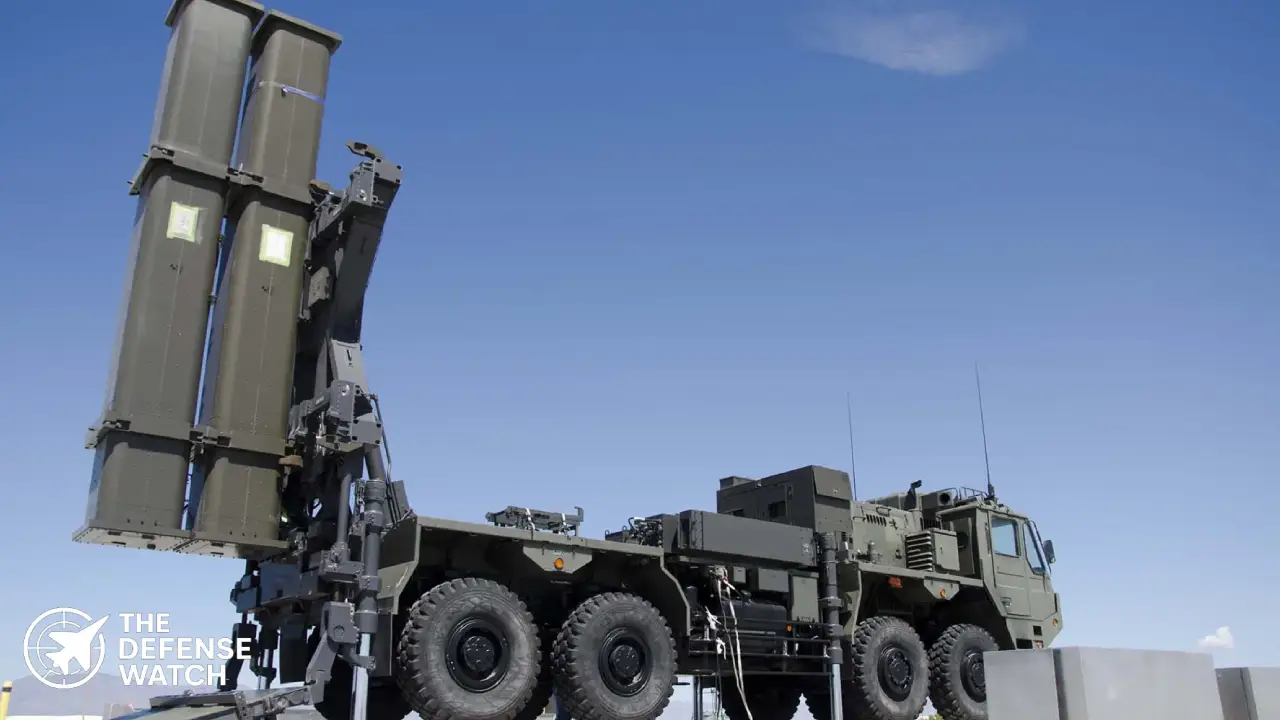
The missile system to be deployed on Yonaguni is the domestically developed Type 03 Chū-SAM — a medium-range surface-to-air missile system operated by the Japan Ground Self‑Defense Force (JGSDF).

Key characteristics of the Type 03 Chu-SAM:

  • Mobility: launchers are truck-mounted, enabling quick repositioning.
  • Radar: uses an active electronically scanned array (AESA) radar capable of tracking many aerial targets.
  • Capability: designed to intercept aircraft, helicopters, and cruise missiles at medium altitude and ranges typically cited around 48 km (approximately 30 miles).

According to Okinawa-area media and defense-ministry statements, the deployment constitutes a full missile battery, though Tokyo has not yet published a firm timetable.

During his visit, Koizumi said the deployment intends to bolster deterrence and help reduce the risk of an armed attack on Japan. He also dismissed suggestions that the move would escalate regional tensions.

Strategic and Regional Implications

Enhancing Air Defense in the South

By adding Type 03 Chu-SAM to Yonaguni, Japan establishes a forward-looking air-defense node — extending surveillance and interception capabilities deep into the southwestern archipelago. This strengthens airspace control over critical sea lanes and islands in the East China Sea. Experts say the move complicates the planning of any adversary attempting to operate aircraft or drones near the First Island Chain.

Further, a missile battery on Yonaguni could protect other assets placed there in a crisis — including radars, maritime sensors, or refuelling/storage points used by Japanese or allied forces.

- Advertisement -

Impact on Regional Dynamics

The deployment inevitably adds another layer of strategic significance to what has traditionally been a quiet, remote island. Local populations in Yonaguni and surrounding Ishigaki have voiced concerns that their communities could become frontline areas if conflict breaks out.

From a broader geopolitical standpoint, Japan’s south-island missile build-up signals a deepening shift in Tokyo’s security posture — reflecting growing concern over possible conflict in the Taiwan Strait.

Reaction and Regional Response

Unsurprisingly, the missile deployment plan has drawn sharp criticism from Beijing. The People’s Republic of China Ministry of Foreign Affairs denounced the move as reckless and provocative, accusing Tokyo of exacerbating regional tensions and undermining stability in East Asia.

On the other hand, officials in Taipei have signalled that Tokyo’s efforts to bolster island defenses could contribute to broader security in the Taiwan Strait — and stressed that Japan’s deployment does not imply territorial ambitions toward Taiwan. Taipei Times+1

In Tokyo, government statements emphasize that the deployment aims solely at defensive deterrence, countering potential threats and safeguarding Japanese territory.

What Comes Next

As Japan proceeds with the Type 03 Chu-SAM deployment on Yonaguni, attention now turns to timing, force structure, and potential further enhancements. Observers will watch for:

  • The number of batteries deployed and their exact configuration (radar coverage, launcher density, integration with other air-defense assets).
  • Whether additional missile types — such as long-range or anti-ship systems — are brought to the southern islands in future phases.
  • How China responds militarily or diplomatically, particularly if Japan continues to expand its southern perimeter.
  • The extent of cooperation between Japan and allies (notably the United States Marine Corps) in coordinating defence posture across the First Island Chain.

With Yonaguni now evolving from a distant surveillance outpost into a fortified forward base, the strategic balance around the Taiwan Strait and East China Sea is shifting — in ways that may reshape regional deterrence calculations for years to come.


TAGGED:East China SeaJapanTaiwanType 03 Chu-SAMYonaguni
Share This Article
Facebook Copy Link Print
ByTeamDefenseWatch
TeamDefenseWatch is the official editorial byline of TheDefenseWatch.com. Working under one umbrella, TheDefenseWatch.com, the team delivers verified, factual reporting on global defense, military technology, aerospace systems, and security developments. Articles are sourced from official statements, defense industry releases, and trusted media, with editorial review to ensure accuracy and clarity.Contact: info@TheDefenseWtach.com
4 Comments
  • Pingback: China’s Fighters Lock Radar onto Japanese Jets — Tokyo Protests | TheDefenseWatch.com
  • Pingback: Turkey Launches Construction of First Indigenous MILDEN Submarine, Marking Major Naval Milestone
  • Pingback: Japan and U.S. Conduct Joint B-52 and Fighter Jet Drills Over Sea of Japan After China-Russia Aircraft Patrols
  • Pingback: US Aircraft Carrier Strike Groups Mass in Western Pacific Amid China Tensions | TheDefenseWatch.com

Leave a Reply Cancel reply

Your email address will not be published. Required fields are marked *

F-22 Reptor

Latest Defense Systems

  • B61 Nuclear Bomb B61 Nuclear Bomb
  • Japan E-767 Airborne Japan E-767 Airborne
  • Remington 870 Shotgun Remington 870 Shotgun
  • RUTA B1 Cruise Missile RUTA B1 Cruise Missile
  • XQ-67A Drone XQ-67A Drone
  • B-25 Mitchell Bomber B-25 Mitchell Bomber
  • F-100 Super Sabre F-100 Super Sabre
  • North American F-86 Sabre North American F-86 Sabre
  • North American XB-70 Valkyrie North American XB-70 Valkyrie

Recent Compares

  • J-10C vs JF-17 Thunder: Which Fighter Is More Capable? J-10C vs JF-17 Thunder: Which Fighter Is More Capable? View Comparison →
  • Tejas vs Gripen: Key Differences and Capabilities Tejas vs Gripen: Key Differences and Capabilities View Comparison →
  • Tejas vs MiG-21 Bison: How India Replaced Its Iconic Supersonic Fighter Tejas vs MiG-21 Bison: How India Replaced Its Iconic Supersonic Fighter View Comparison →
  • F-35 vs F-16: Stealth, Sensors and Combat Roles F-35 vs F-16: Stealth, Sensors and Combat Roles View Comparison →
  • Tejas Fighter Jet vs F-16 Fighting Falcon: Capability Compared Tejas Fighter Jet vs F-16 Fighting Falcon: Capability Compared View Comparison →
  • Rafale Fighter Jet vs F-16 Fighting Falcon : Which Fighter Has the Edge? Rafale Fighter Jet vs F-16 Fighting Falcon : Which Fighter Has the Edge? View Comparison →
  • Su-57 Fighter Jet vs J-20 Fighter Jet: Stealth and Air Combat Compared Su-57 Fighter Jet vs J-20 Fighter Jet: Stealth and Air Combat Compared View Comparison →
  • Mirage 2000 vs Tejas Mk1A: Legacy Combat Power vs Indigenous Modernization Mirage 2000 vs Tejas Mk1A: Legacy Combat Power vs Indigenous Modernization View Comparison →
  • Rafale Fighter Jet vs F-22 Raptor: Which Air Dominance Fighter Has the Edge? Rafale Fighter Jet vs F-22 Raptor: Which Air Dominance Fighter Has the Edge? View Comparison →
  • Tejas Fighter Jet vs. Rafale Fighter Jet: India’s Indigenous Fighter Meets France’s Proven Multirole Combat Aircraft Tejas Fighter Jet vs. Rafale Fighter Jet: India’s Indigenous Fighter Meets France’s Proven Multirole Combat Aircraft View Comparison →

Recent Posts

  • Remington 870 in Military Service: Mark 1 to MCS
  • Boeing Receives $16.9 Million Contract Modification for Japan’s E-767 AWACS Support
  • Lockheed Martin Wins $80 Million Air Force Mission Planning Software Contract
  • Pakistan Tests Indigenous Fa’az Air-to-Air Missile for First Time
  • Operation Unified Resolve Reports 70% Drop in Rio Grande Valley Border Crossings

You Might Also Like

China J-35A stealth fighter Singapore Airshow
Asian Defense & Security

China Showcases Military Aviation Power at Singapore Airshow 2026 as Regional Allies Question U.S. Commitments

September 12, 2026
China South China Sea militarization
Asian Defense & Security

China Militarizes Antelope Reef in South China Sea Expansion

January 27, 2026
China robotic dog missile system
Asian Defense & Security

China Shows Missile-Armed Robotic Dog At World Defense Show 2026 In Riyadh

February 12, 2026
China military drills Taiwan
Asian Defense & Security

China Launches Major Live-Fire Military Drills Around Taiwan

December 29, 2025

Logo

Copyright © 2026 TheDefenseWatch.com

Helpful Links

  • Home
  • About Us
  • Privacy Policy
  • Terms of Use / Disclaimer
  • U.S. Privacy Notice – CCPA Compliance

Defense Systems

  • Defense Systems
  • Comparisons 
  • Manufacturer
  • Tactical Calculators

Popuplar

Which 5 Air Forces Possess the Costliest Fighter Jet Fleets in the World
Evolving Strategic Value: Carrier Strike Groups in the Indo-Pacific’s Future Security Architecture
Autonomous Weapon Systems Spark U.S. Ethics Debate Amid Rapid Military AI Integration

We report on developments involving military forces, governments, defense companies, research organizations, and security institutions around the world. 

Welcome Back!

Sign in to your account

Username or Email Address
Password

Lost your password?