

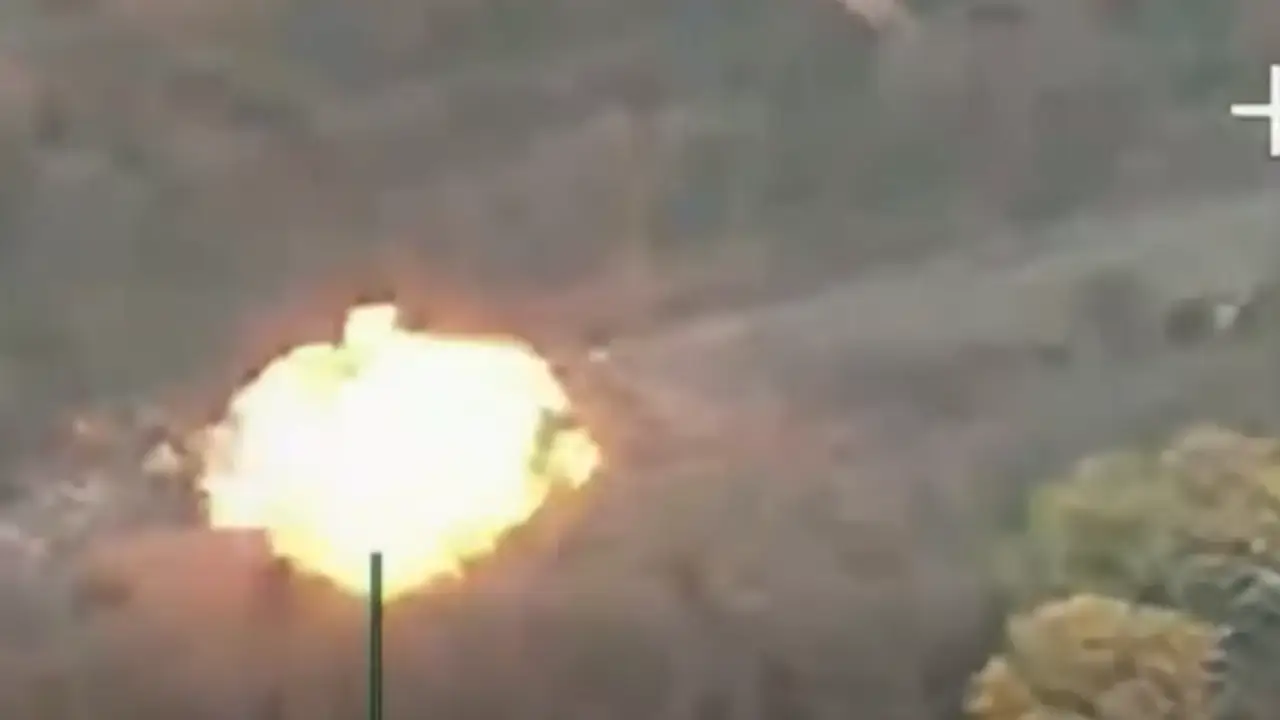
The Russian Ministry of Defense has released new footage alleging that its Iskander-M short-range ballistic missile system successfully struck and destroyed three Ukrainian missile launchers—including a U.S.-supplied HIMARS and two R-360 Neptune mobile coastal-defense launchers—in Ukraine’s Dnepropetrovsk Region. The claim comes amid Moscow’s intensified efforts to degrade Ukrainian long-range strike capabilities and disrupt Kyiv’s precision-fire operations.
According to the MOD statement, Russian reconnaissance drones first detected the Ukrainian launchers operating in an open field. The vehicles were reportedly preparing for—or had just completed—firing operations when they were targeted. The Iskander-M missile, which carries a warhead of up to 700 kg and has a range of roughly 500 km, was then launched to “neutralize the threat.”
The released aerial footage shows a high-altitude view of the impact site, followed by a significant explosion, shockwaves, and a rising fireball. Russia asserts that the strike resulted in the complete destruction of all three missile systems.
Details of the Alleged Strike
Reconnaissance and Target Acquisition
Russian MOD statements emphasize that unmanned aerial vehicles monitored the Ukrainian launchers before the strike, identifying their exact positions. The use of real-time UAV reconnaissance has become a core component of both Russian and Ukrainian strike workflows, enabling rapid sensor-to-shooter engagement cycles.
The Iskander-M Missile System
The 9K720 Iskander-M has remained one of Russia’s most frequently employed precision-strike weapons throughout the conflict. The missile’s quasi-ballistic flight path and maneuvering capability are designed to make interception challenging, even for advanced air defense systems.
Key specifications:
- Range: Approx. 500 km
- Warhead: 480–700 kg (various types, including HE fragmentation, penetrator, and submunitions)
- CEP: Estimated 5–7 meters
- Designed Role: High-value target elimination, command centers, air defense sites, missile systems, logistics hubs
While Russia has repeatedly used Iskander missiles during the war, Ukrainian officials often dispute claims regarding damage assessments, especially when Western-supplied systems like HIMARS are involved.
Targeted Systems: HIMARS and Neptune
The HIMARS (High Mobility Artillery Rocket System) has been one of the most impactful U.S.-supplied platforms for Ukraine, providing precision fires at ranges of up to 80 km with GMLRS rockets. Its mobility has made it difficult for Russian forces to target.
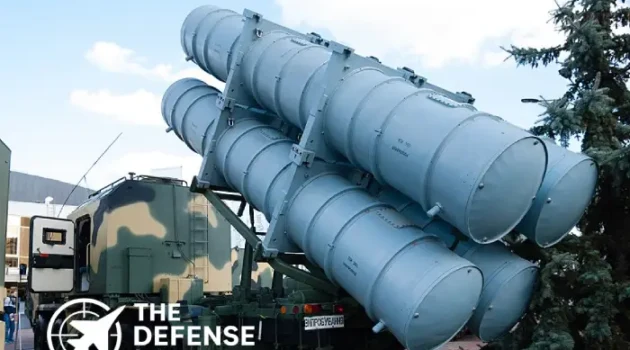
The Ukrainian R-360 Neptune, originally designed as an anti-ship missile and repurposed for land-attack roles, has gained attention since its use against Russian naval assets early in the conflict.
Russia’s claim of destroying both a HIMARS and Neptune launchers, if verified, would represent a meaningful tactical win for Moscow.
Context and Strategic Significance
Russia’s Campaign Against Ukrainian Long-Range Fires
Throughout 2024–2025, Russia has consistently prioritized the destruction of Ukrainian missile platforms, artillery positions, and Western-supplied long-range systems. Moscow views HIMARS, Storm Shadow/SCALP, and Neptune missiles as key enablers of Ukraine’s deep-strike capability—particularly against Russian logistics and command infrastructure.
Information Environment and Verification Challenges
Footage released by the Russian MOD shows the explosion but does not clearly confirm the identity of the systems destroyed. Independent verification remains difficult, a recurring challenge throughout the conflict. Ukraine has not yet commented on the Russian claim.
Western analysts note that both sides routinely publicize strike footage to shape narratives and demonstrate battlefield effectiveness.
Analysis: Implications for U.S. Defense and Global Security
If confirmed, the destruction of a HIMARS launcher would highlight the persistent risk faced by even highly mobile Western systems operating on the modern battlefield. For U.S. defense planners, the incident underscores several trends:
- Growing counter-battery and counter-strike competition driven by drones and precision targeting.
- Increased vulnerability of mobile missile systems, which rely on rapid relocation to survive.
- The accelerating integration of UAVs with ballistic missile operations, an area where Russia continues to refine its doctrine.
From a global security perspective, the incident reflects the shifting nature of modern warfare—where high-value assets can be detected and targeted in minutes, heavily influenced by drone reconnaissance and automated targeting systems. It also highlights the strategic importance of continued Western support to Ukraine, particularly for dispersed operations, survivability enhancements, and air defense coverage against ballistic threats.
Conclusion
The Russian MOD’s claim of destroying a HIMARS and two Neptune missile launchers with an Iskander-M strike, while not independently verified, illustrates the intensifying duel between long-range precision systems in the Ukraine conflict. As both sides continue adapting their tactics, survivability, mobility, and detection avoidance remain central to modern missile warfare.
The coming months will determine whether Ukraine can maintain its long-range strike capabilities—and how effectively Russia can continue targeting them amid an evolving battlefield shaped by drones, precision weapons, and rapid engagement cycles.



3 comments
[…] atmosphere, making it immune to interception by existing anti-missile systems according to Iranian claims. These control surfaces enable the weapon to execute unpredictable flight paths that complicate […]
[…] rapid spread of “oil-leak” claims — and the MoD’s forceful rebuttal — highlights how disinformation and propaganda landscapes can directly affect […]
[…] and enhanced propulsion and control mechanisms to achieve longer reach. It is compatible with both HIMARS and M270 launchers already in U.S Army […]