

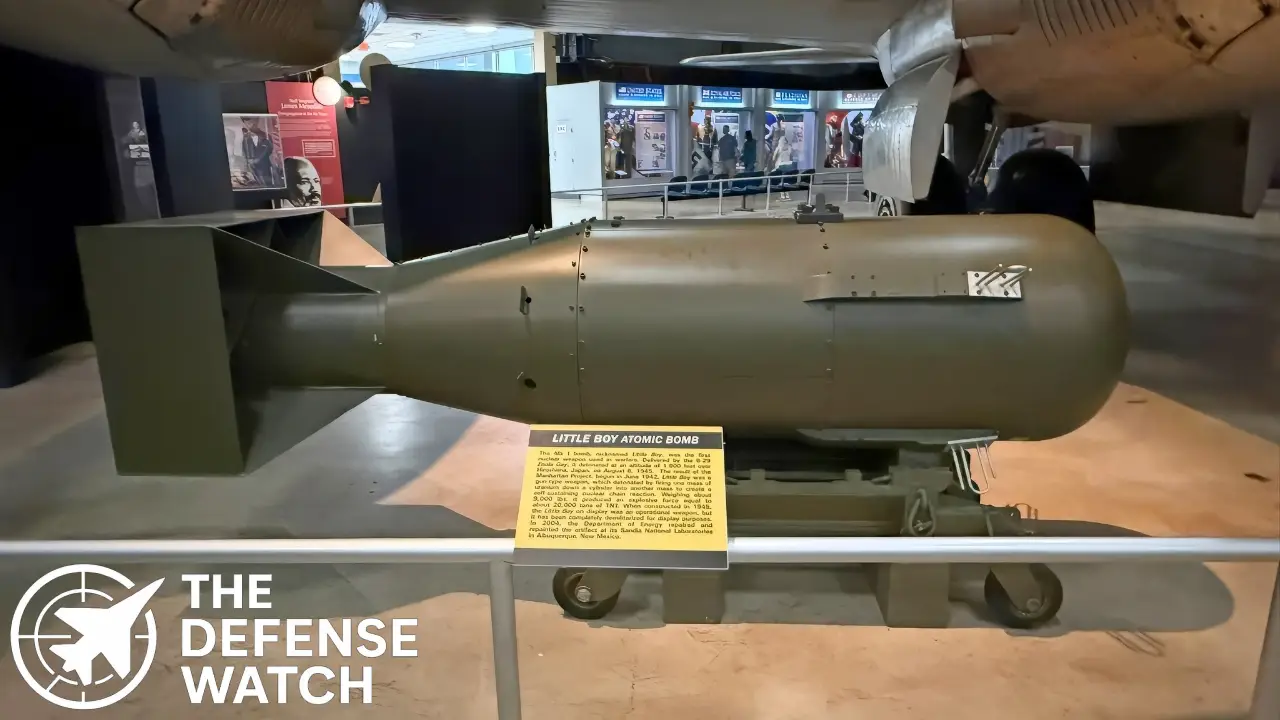
On October 29, 2025, U.S. President Donald Trump announced that the United States Department of Defense (DoD) would begin resuming nuclear weapons testing in order to “operate on an equal basis” with Russia and China. This marks a potential end to a de-facto global moratorium on full-scale nuclear explosive tests that has held since 1992, and has prompted widespread concern about a possible new era of nuclear weapons testing.
Background: Testing Moratorium and Arms-Control Slide
The United States last conducted a nuclear explosive test in September 1992; China’s final confirmed underground test took place in July 1996; Russia’s final test was in October 1990 (under the Soviet Union). Since then, no nuclear-armed state other than North Korea has publicly carried out a new nuclear explosion.
Key treaty-frameworks are under stress. The Comprehensive Test Ban Treaty (CTBT) has been signed by the United States (in 1996) but never ratified in the Senate, and in 2023 Russia revoked its ratification. Meanwhile, the bilateral New START Treaty between the U.S. and Russia is due to expire in February 2026 unless extended, and other agreements such as the Intermediate‑Range Nuclear Forces Treaty (INF) and Open Skies Treaty have already collapsed.
Details: Trump’s Statement and the Testing Question
In the article “Avoiding a New Era of Nuclear Weapons Testing,” analyst Ted Galen Carpenter outlines the Trump administration’s October 29 directive, and highlights the implications for global arms control. According to the piece, President Trump instructed the Pentagon to “start testing our nuclear weapons on an equal basis with Russia and China.”
However, the nature of the testing remains ambiguous. While full explosive tests would be seismic and easily detected, the commentary suggests the U.S. may begin with non-explosive “system tests” such as sub-critical experiments, software/hardware upgrades, or delivery-system trials rather than yield-bearing detonations.
For instance, the author notes:
“Given the president’s notoriously mercurial nature … it’s not entirely certain that Washington will follow through on his order to resume testing. … The evidence for alleged secret tests by Russia and China appears to be sketchy at best.”
From a global context, an analysis by the Institute for Defense Studies & Analyses (IDSA) warns that even resuming non-explosive tests may destabilize arms-control norms and trigger reciprocal moves by other states.
China and Russia have both publicly denied conducting national nuclear explosive tests in recent years. Carpenter’s article remarks that the U.S. accusations of secret Russian or Chinese tests are “unproven.”
Expert & Policy Perspective
Experts warn that any re-opening of nuclear testing — even in non-explosive form — could undermine longstanding testing taboos, giving breathing space for states to embark on new testing programs and weakening verification and monitoring regimes. The IDSA commentary emphasizes:
“The US decision to resume nuclear testing or non-critical explosions may serve immediate strategic objectives, but at the cost of destabilizing the fragile global atomic order that has long sought to prevent another era of unchecked proliferation.”
Meanwhile, a piece from Chatham House underscores how allies’ confidence in U.S. nuclear assurances may wane, potentially prompting them to consider independent nuclear options.
In the U.S., proponents argue that simulation-only methods are no longer sufficient to guarantee reliability of the nuclear stockpile, and that system tests could restore credibility. Opponents counter that advanced modelling, sub-critical tests and stockpile stewardship tools already provide sufficient assurance without the geopolitical risks of full tests.
What’s Next and Implications
If the United States proceeds with testing — whether explosive or not — the consequences are likely to ripple across the global arms-control landscape:
- Treaty credibility: Ratification of CTBT by the U.S. has long been stymied; a decision to resume testing could push ratification further out of reach and erode the treaty’s normative power.
- Reciprocity: Other nuclear-armed states may feel compelled to follow suit, potentially triggering a cascade of testing after more than three decades of relative silence.
- Regional proliferation: Allies and non-nuclear states may recalibrate their deterrence policies, weakening extended-deterrence commitments or reconsidering independent nuclear pathways.
- Verification burden: Monitoring agencies and networks that detect underground tests rely on the assumption of longstanding moratoria; renewed testing would complicate detection, attribution and response.
- Strategic stability: A shift toward active testing may signal the acceptance of new types of nuclear arms and delivery systems, increasing volatility in crisis environments.
In short, what began as a technical decision could turn into a strategic inflection point. For the United States, the choice is between reaffirming the testing moratorium and treaty leadership, or embarking down a path that may herald a new era of nuclear weapons testing.

86 comments
[…] Geopolitical signalling: The combination of B-21 production, forward deployment potential and integration with global strike networks sends a message to peer competitors, including China and Russia. […]
[…] successful, the Warfighting Acquisition System could reshape how the United States develops and deploys future weapons systems, providing faster access to new capabilities and improving readiness across the joint […]
[…] sustaining its long-range nuclear strike capabilities at a time of increasing global competition. China continues to expand its nuclear arsenal, and Russia maintains a diverse inventory of air-, sea-, and ground-launched nuclear […]
[…] counter these advancements, the United States has accelerated development of non-kinetic, reversible space electronic-warfare systems. These […]
[…] accelerating the F-22 upgrade now, the USAF can buy time, preserve dominance and ensure that the United States remains the benchmark of air-superiority into the […]
[…] the United States, having access to a real Su-27 Flanker offered significant advantages in understanding the design […]
[…] The FPRI analysis indicates that Israel has not publicly shared the seeker modifications with allies, including the United States. […]
[…] as tools for deterrence and power projection.While China has advanced flight-test programs, the United States is now increasing funding and joint-service integration to catch […]
[…] were putting in place the security guarantees required for any possible peace agreement with Russia that may be negotiated down the line. This positions military aid not merely as assistance during […]
[…] both nations fielding operational systems. The ability to conduct frequent, affordable hypersonic tests represents a potential game-changer for the United States as it seeks to close capability gaps with peer […]
[…] article examines the United States’ leading fighter aircraft, their roles, capabilities, and strategic importance, providing a clear […]
[…] United States has transferred interceptors and full Patriot batteries to Ukraine, drawing down its own […]
[…] officials and Western experts warn that Russia may be manufacturing a nuclear crisis to justify full integration into the Russian energy […]
[…] involvement has deepened: a significant portion of the manufacturing is now taking place in the United States through co-production […]
[…] nine selected bases span multiple regions in the continental United States, providing a geographically distributed network for testing and deployment of the microreactors. […]
[…] for terrorist violence throughout our hemisphere as well as for trafficking drugs into the United States and […]
[…] debating cost, industrial benefits, and strategic alignment. The F-35 program, led by the United States, attracted Canadian participation through interoperability advantages and alliance […]
[…] ministries are reassessing stockpiles, industrial capacity, and NATO readiness benchmarks. The United States remains the largest provider of military assistance to Ukraine, meaning any shift in Washington’s […]
[…] that the proposed sale “will support the foreign policy and national security objectives of the United States” by allowing Pakistan to maintain interoperability with US and partner forces in ongoing […]
[…] aging F/A‑18C/D Hornets, with the first deliveries expected to support initial training in the United States in 2026 before arrival in […]
[…] the F-35 program in 2019 after it took delivery of the S-400 air defense systems from Russia. The United States argued that operating the S-400 alongside NATO aircraft posed intelligence and security risks, […]
[…] United States Navy first operationalized laser systems aboard vessels like the USS Portland and USS Preble. The […]
[…] and violating ceasefire agreements. Efforts by international mediators, including former United States President Donald Trump and ASEAN partners, have so far failed to produce a lasting […]
[…] stressed that despite a recent trade truce between the United States and China, risks remain because of how quickly geopolitical agendas can reshape markets for key inputs. He […]
[…] acquiring Greenland — a self-governing Danish territory — citing its strategic value against Russia and China. The White House said Trump is considering “a range of options” to secure the island, including […]
[…] emergence of Oreshnik underscores gaps in post-Cold War arms control frameworks. The collapse of the Intermediate-Range Nuclear Forces Treaty in 2019 removed limits on […]
[…] ballistic missiles outside the Earths atmosphere. The system is jointly developed by Israel and the United States, with Boeing playing a key role in the […]
[…] with onward movement planned to Larkhill, army officials said. Crews completed live-fire acceptance testing in the United States to validate digital fire control and launcher systems under realistic […]
[…] Copenhagen’s response to recent geopolitical pressures, as discussions involving the United States, Denmark, and Greenland take place against the backdrop of competing visions for the […]
[…] also raised concerns that the United States may not currently have sufficient regional assets to absorb or deter a large scale Iranian […]
[…] noted recent cooperation with the United States, including support for the interception of the sanctioned vessel Bella 1 in the North Atlantic en […]
[…] the United States already operates facilities on the island with Danish consent, Trump’s proposal to assume […]
[…] delay comes amid growing concerns over hypersonic capabilities, as China and Russia have already fielded operational systems, including Russia’s use in Ukraine. The U.S. Army […]
[…] commitments with global priorities. Analysts note that while the footprint is shrinking, the United States aims to maintain influence through partnerships rather than permanent […]
[…] Zelenskyy said he presented the concept to multiple European leaders in 2025, arguing that Europe needs a unified armed force capable of deterring large scale aggression without relying solely on the United States. […]
[…] advantages of the P 8A Poseidon sale is interoperability. The aircraft is already operated by the United States, Australia, the United Kingdom, India, and several NATO allies. This allows for shared training, […]
[…] enterprise. Work will be performed at contractor designated facilities throughout the contiguous United States and is scheduled to run through Dec. 7, […]
[…] latest action follows similar operations by France, the United States, and the UK against vessels suspected of sanctions evasion. In October 2025, French forces detained […]
[…] signals a clear demarcation: evaluations of specific American defence systems will be made by the United States, while the UK maintains sovereign assurance processes for technologies on its own […]
[…] and space based surveillance are now central priorities for NATO modernization efforts. The United States, Canada, and Nordic allies are investing heavily in cold weather readiness and domain […]
[…] specifically warned the United States and Israel to avoid actions he described as miscalculations that could escalate conflict. The […]
[…] remains fully mission-capable, with battalions executing ongoing construction projects both in the United States and […]
[…] Trump’s tariff threat targets Canadian industrial sectors including metals, automotive, and machinery. He also suggested that China could attempt to use Canada as a “drop-off port” to circumvent U.S. tariffs, warning Ottawa against serving as a transit point for Chinese goods into the United States. […]
[…] Ukraine Russia negotiations United States framework has been under development for several weeks, with Abu Dhabi selected as a neutral venue […]
[…] officials have signaled that the United States is taking the lead on any potential response involving Iran. While Israel remains a central […]
[…] officials have emphasized that the United States seeks to deter conflict, not provoke it, while remaining prepared to respond decisively if […]
[…] will deliver cloud services across contractor designated facilities throughout the contiguous United States. These services are intended to support a wide range of Air Force missions that rely on secure, […]
[…] Diego remains one of the most important naval bases in the United States, hosting more than 50 Navy ships and several aviation squadrons. The concentration of fleet assets […]
[…] parallel engagement with Russia and the United States reflects its long-standing multi-alignment strategy. Rather than committing exclusively to one […]
[…] also threatened a 50 percent tariff on Canadian aircraft exports to the United States if the issue is not swiftly resolved. Airlines, customers, and industry analysts reacted with […]
[…] company’s IP is held outside the United States, which executives say gives it flexibility in positioning products for European defence buyers […]
[…] one fifth of global oil shipments. Naval activity near the strait is closely monitored by the United States, Gulf states, and energy markets […]
[…] actors. While there is no direct military standoff between China and the UK, defense signaling, arms control dialogue, and crisis communication are increasingly […]
[…] access to natural resources are expanding, drawing increased attention from major powers including Russia and China. US defense planners view Greenland as critical to early warning systems and to maintaining freedom […]
[…] contested space environment. The investment reflects concerns about growing threats from Russia and China in orbit, particularly following Moscow’s full-scale invasion of Ukraine in […]
[…] This distributed production approach strengthens domestic defense industrial base capabilities while supporting skilled manufacturing employment across multiple regions. The program also reinforces transatlantic industrial cooperation, with KONGSBERG conducting turret development and partial manufacturing in Norway before final integration in the United States. […]
[…] methods.• Data security measures and ground station locations, with a preference for continental United States […]
[…] made the remarks as the 2010 New START nuclear arms control treaty is set to expire, a pact that has for years limited the United States and Russia to equal […]
[…] Norwegian-led exercise will involve approximately 25,000 personnel from 14 nations including the United States, Canada, Germany, France, Italy, the Netherlands, Spain, Denmark, Belgium, Sweden, Finland, and […]
[…] under the contract will be performed across nine locations in the United States, reflecting the distributed nature of Navy research and testing infrastructure. Locations and […]
[…] talks take place against a backdrop of heightened tensions in the Gulf and wider Middle East. The United States has increased its military presence in the region, and Iranian leaders have issued warnings against […]
[…] to sustaining the fleet at scale. Final assembly and maintenance work performed outside the United States helps balance workload, improve turnaround times, and strengthen allied […]
[…] A major sticking point in recent declarations is the requirement to maintain human control over nuclear weapons decisions Just Security. China has been particularly reluctant to endorse this principle, with some experts attributing this to a broader suspension of nuclear arms control talks with the United States. […]
[…] stockpile. This represents a significant shift from traditional bilateral U.S.-Russia nuclear arms control frameworks that have existed since the Cold War […]
[…] likely respond to neutralize US influence in Cambodia and teach the country a lesson, otherwise the United States might pursue similar arrangements with Laos, another nation with special Chinese […]
[…] launch took place on February 5, with liftoff from the State Test Cosmodrome in Arkhangelsk region. According to the ministry, insertion into target orbits proceeded […]
[…] decision to resume SR-2M production comes as Russia continues to prioritize infantry equipment suited for urban combat, vehicle crews, and specialized […]
[…] provide Ukraine with air defense systems ranging from short-range to high-altitude engagements. The United States, European NATO members, and other partners have sent systems including Patriot batteries, NASAMS, […]
[…] for tests with designated yields in the hundreds of tons. The revelation comes amid deteriorating nuclear arms control frameworks globally and heightened tensions over China’s rapid nuclear […]
[…] Russia Sarma rocket system is designed to strengthen conventional artillery units rather than replace […]
[…] nation and contributions from Albania, Croatia, Greece, Montenegro, North Macedonia, Turkey and the United States. These formations are part of a wider network of battlegroups across Estonia, Hungary, Latvia, […]
[…] its operational command structure, moving leadership of the main Joint Force Commands from the United States to European […]
[…] cooperation between the UK and United States on hypersonic propulsion and test programmes has also shown forward momentum in this technology area. Government research and testing […]
[…] assessment reflects continuing cooperation and intelligence sharing among NATO members, with the United States identified as a key […]
[…] Damen supports the program through its Damen Technical Cooperation licensing model, which the company has applied with partners and shipyards worldwide, including facilities in the United States. […]
[…] aviation. The restriction affected one of the busiest border crossings in the southwestern United States, stranding travelers and disrupting commercial […]
[…] 14 NATO nations operating across Norway’s northern regions, with participation from Norway, the United States, United Kingdom, Germany, Netherlands, France, Italy, Canada, Spain, Turkey, Sweden, Finland, […]
[…] gaining interest globally as threat environments evolve. Armored and tactical police fleets in the United States and allied nations have increasingly sought vehicles that offer meaningful ballistic protection […]
[…] to which the UK’s P150M contribution will go, is designed to ensure a continuous supply of weapons purchased from the United States reaches Ukrainian forces. Total allied contributions to the PURL programme exceed 4.5 billion […]
[…] basing F-22 aircraft outside the continental United States is always deliberate. The platform was built primarily to counter near-peer air threats and […]
[…] development underscores the flexibility of US global strike architecture. By rerouting bombers, the United States preserves freedom of action even when traditional transit routes become politically […]
[…] with the United States highlighted by Israeli […]
[…] United States has long maintained an advantage in fifth-generation aircraft numbers through the F-22 and F-35 […]
[…] United States is executing one of its most critical nuclear modernization programs. The Columbia-class submarine will serve as the backbone of the sea-based […]
[…] outcome in Abu Dhabi occurs against the backdrop of an intensifying conflict involving Iran, the United States, Israel, and allied Gulf states. Independent tracking data shows hundreds of missiles and drones […]
[…] threats. For China and Russia, continued investment in modernizing legacy systems reinforces the United States’ ability to sustain forward presence and complex integration across platforms, even as challenges […]