


On October 29, 2025, U.S. President Donald Trump announced that the United States Department of Defense (DoD) would begin resuming nuclear weapons testing in order to “operate on an equal basis” with Russia and China. This marks a potential end to a de-facto global moratorium on full-scale nuclear explosive tests that has held since 1992, and has prompted widespread concern about a possible new era of nuclear weapons testing.
Background: Testing Moratorium and Arms-Control Slide
The United States last conducted a nuclear explosive test in September 1992; China’s final confirmed underground test took place in July 1996; Russia’s final test was in October 1990 (under the Soviet Union). Since then, no nuclear-armed state other than North Korea has publicly carried out a new nuclear explosion.
Key treaty-frameworks are under stress. The Comprehensive Test Ban Treaty (CTBT) has been signed by the United States (in 1996) but never ratified in the Senate, and in 2023 Russia revoked its ratification. Meanwhile, the bilateral New START Treaty between the U.S. and Russia is due to expire in February 2026 unless extended, and other agreements such as the Intermediate‑Range Nuclear Forces Treaty (INF) and Open Skies Treaty have already collapsed.
Details: Trump’s Statement and the Testing Question
In the article “Avoiding a New Era of Nuclear Weapons Testing,” analyst Ted Galen Carpenter outlines the Trump administration’s October 29 directive, and highlights the implications for global arms control. According to the piece, President Trump instructed the Pentagon to “start testing our nuclear weapons on an equal basis with Russia and China.”
However, the nature of the testing remains ambiguous. While full explosive tests would be seismic and easily detected, the commentary suggests the U.S. may begin with non-explosive “system tests” such as sub-critical experiments, software/hardware upgrades, or delivery-system trials rather than yield-bearing detonations.
For instance, the author notes:
“Given the president’s notoriously mercurial nature … it’s not entirely certain that Washington will follow through on his order to resume testing. … The evidence for alleged secret tests by Russia and China appears to be sketchy at best.”
From a global context, an analysis by the Institute for Defense Studies & Analyses (IDSA) warns that even resuming non-explosive tests may destabilize arms-control norms and trigger reciprocal moves by other states.
China and Russia have both publicly denied conducting national nuclear explosive tests in recent years. Carpenter’s article remarks that the U.S. accusations of secret Russian or Chinese tests are “unproven.”
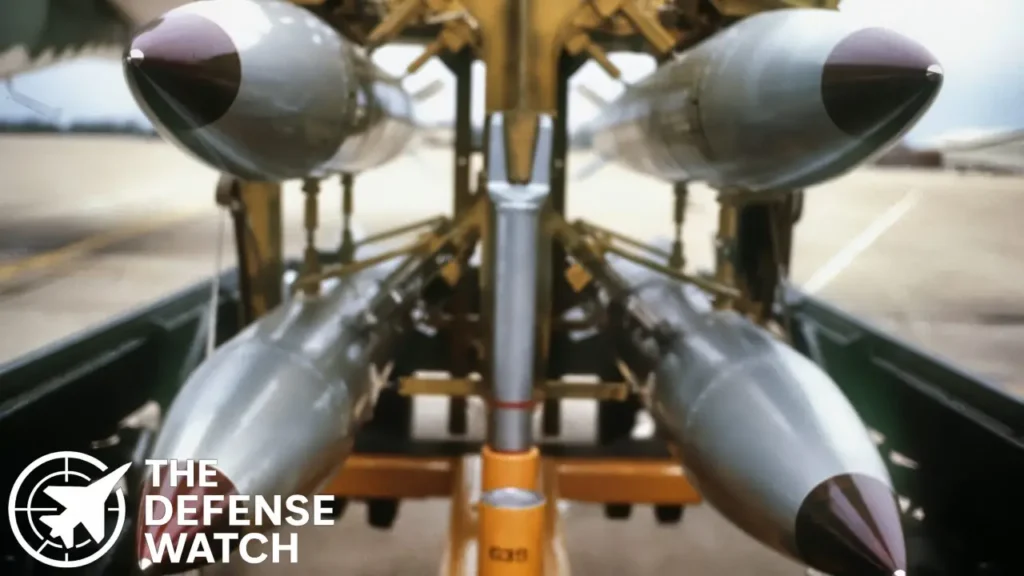
Expert & Policy Perspective
Experts warn that any re-opening of nuclear testing — even in non-explosive form — could undermine longstanding testing taboos, giving breathing space for states to embark on new testing programs and weakening verification and monitoring regimes. The IDSA commentary emphasizes:
“The US decision to resume nuclear testing or non-critical explosions may serve immediate strategic objectives, but at the cost of destabilizing the fragile global atomic order that has long sought to prevent another era of unchecked proliferation.”
Meanwhile, a piece from Chatham House underscores how allies’ confidence in U.S. nuclear assurances may wane, potentially prompting them to consider independent nuclear options.
In the U.S., proponents argue that simulation-only methods are no longer sufficient to guarantee reliability of the nuclear stockpile, and that system tests could restore credibility. Opponents counter that advanced modelling, sub-critical tests and stockpile stewardship tools already provide sufficient assurance without the geopolitical risks of full tests.
What’s Next and Implications
If the United States proceeds with testing — whether explosive or not — the consequences are likely to ripple across the global arms-control landscape:
- Treaty credibility: Ratification of CTBT by the U.S. has long been stymied; a decision to resume testing could push ratification further out of reach and erode the treaty’s normative power.
- Reciprocity: Other nuclear-armed states may feel compelled to follow suit, potentially triggering a cascade of testing after more than three decades of relative silence.
- Regional proliferation: Allies and non-nuclear states may recalibrate their deterrence policies, weakening extended-deterrence commitments or reconsidering independent nuclear pathways.
- Verification burden: Monitoring agencies and networks that detect underground tests rely on the assumption of longstanding moratoria; renewed testing would complicate detection, attribution and response.
- Strategic stability: A shift toward active testing may signal the acceptance of new types of nuclear arms and delivery systems, increasing volatility in crisis environments.
In short, what began as a technical decision could turn into a strategic inflection point. For the United States, the choice is between reaffirming the testing moratorium and treaty leadership, or embarking down a path that may herald a new era of nuclear weapons testing.