

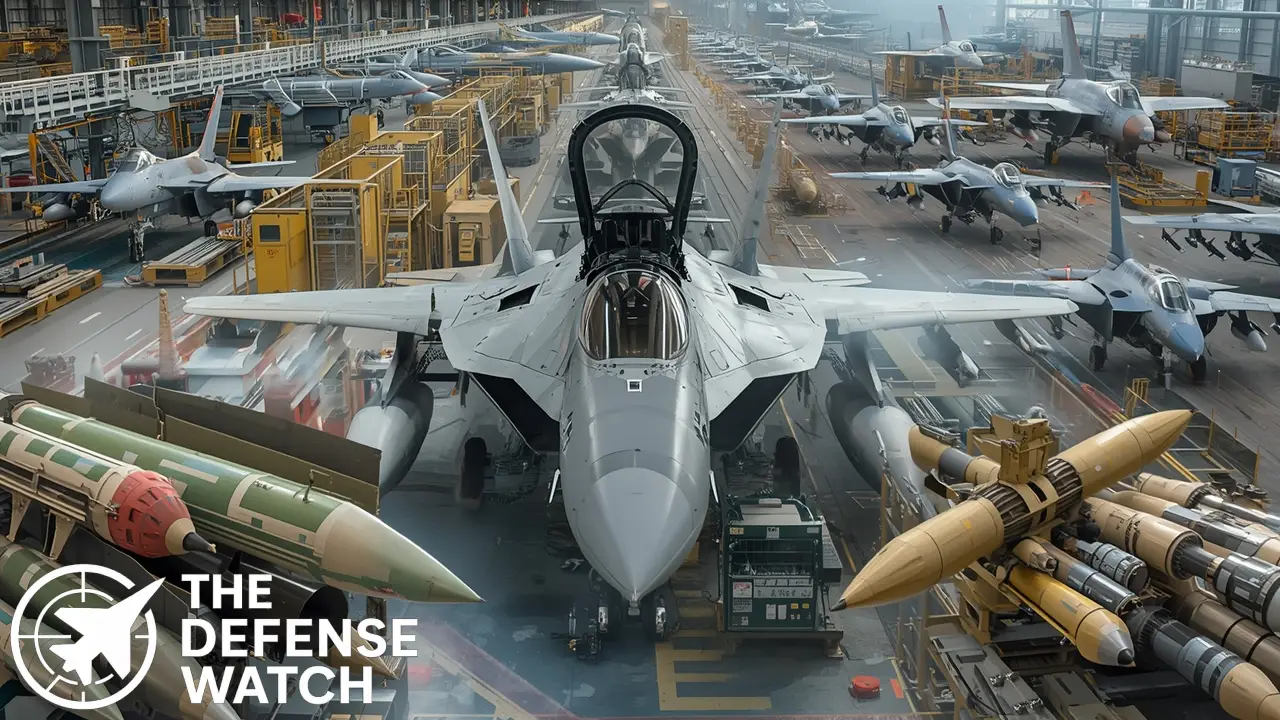
Persistent Supply Chain Issues Undermine Defense Production
Aerospace and defense executives are sounding the alarm over continued supply chain fragility affecting major U.S. and allied weapons programs. Despite the global economy’s recovery from pandemic-era disruptions, critical components for fighter jets, precision missiles, and space systems remain delayed—threatening production schedules and readiness levels.
The warning, shared by multiple industry leaders and highlighted by The Aviationist, underscores that long-term vulnerabilities in defense manufacturing are not yet resolved. Executives point to shortages in advanced microelectronics, propulsion systems, and composite materials as key bottlenecks, compounded by rising geopolitical tensions and labor shortages in specialized manufacturing sectors.
Delays Across Fighter Jet and Missile Programs
The production of next-generation fighter aircraft—such as the F-35 Lightning II, F/A-18E/F Super Hornet, and Eurofighter Typhoon—has been particularly affected. Tier-2 and Tier-3 suppliers continue to struggle with sourcing specialized metals, avionics chips, and radar components, forcing prime contractors like Lockheed Martin, Boeing, and BAE Systems to revise delivery timelines.
Missile and munitions programs have also been hit. Production lines for key systems, including the JASSM-ER, AIM-260 Joint Advanced Tactical Missile, and PAC-3 interceptors, face intermittent component shortages and workforce gaps. The Pentagon has increased contract flexibility and introduced incentives for accelerated production, but executives argue that systemic issues—such as over-dependence on limited suppliers and lack of domestic alternatives—remain unresolved.
Calls for Government Intervention and Long-Term Planning
Industry leaders are urging greater government involvement to stabilize the defense industrial base. Proposed measures include expanding public-private partnerships, increasing funding for raw material stockpiles, and supporting small suppliers with targeted grants or guaranteed contracts.
The Biden administration and Congress have already introduced several initiatives, including the Defense Production Act (DPA) authorities and the National Defense Industrial Strategy, aimed at building a more resilient and distributed manufacturing network. However, industry officials argue that results have been uneven, particularly in sectors reliant on foreign-sourced rare earth elements and semiconductors.
International Implications and Allied Concerns
The problem extends beyond U.S. borders. NATO partners and Indo-Pacific allies dependent on American components are also reporting cascading effects on their own programs. Delays in the delivery of aircraft, missiles, and radar systems are affecting defense readiness in Europe and the Pacific—regions facing heightened threats from Russia and China.
Allied nations are increasingly investing in localized production capabilities to mitigate dependence on U.S. suppliers. The U.K., Australia, and Japan have announced new initiatives to strengthen domestic defense manufacturing, though experts caution that scaling production and certification could take years.
Analysis: Strategic Impact on U.S. Defense and Global Stability
The persistence of supply chain disruptions represents not just an economic challenge but a strategic vulnerability. As the U.S. military seeks to modernize its forces for high-intensity conflict, reliable access to advanced materials and components becomes a cornerstone of deterrence.
Defense analysts warn that adversaries could exploit these weaknesses—either through supply manipulation or cyber disruptions—to delay U.S. and allied force readiness. The Pentagon’s emphasis on “just-in-time” manufacturing, efficient in peacetime, may need to evolve toward “just-in-case” models that prioritize stockpiling and redundancy.
Furthermore, the situation accelerates calls for diversification of suppliers, investment in automation, and reshoring of critical manufacturing processes. The intersection of defense policy, industrial capacity, and national security has rarely been more visible.
Conclusion: Toward a Resilient Defense Industrial Future
While recovery efforts continue, defense executives agree that rebuilding supply chain resilience will require sustained coordination between industry and government. Strengthening domestic production capacity, incentivizing innovation among small manufacturers, and securing access to critical materials are viewed as essential next steps.
As global tensions rise and demand for advanced weapons systems grows, the health of the U.S. defense industrial base will determine not only production timelines—but also America’s strategic advantage in the decades ahead.

10 comments
[…] A blockade or economic strangulation effort (for instance, sealing sea lanes or logistics) which is operationally easier and might attract less immediate global attention — yet would severely impact Taiwan, and by extension, Japan and global supply chains. […]
[…] most strategically vital industries. Yet, the report stresses that this economic strength masks ongoing fragility beneath the […]
[…] note that such transfers could set a precedent for other allied contributions, especially as global missile proliferation accelerates. For the U.S., receiving allied support helps mitigate supply constraints […]
[…] Golden Dome’s architecture also calls for expanded capabilities in sensing, data transport, missile warning and tracking, and integration of fire-control networks to coordinate […]
[…] is considering “a range of options” to secure the island, including force if necessary. Danish leaders warn an attack would end […]
[…] List (PURL) and multilateral initiatives with European partners. He said U.S military hardware and supplies remain vital to Kyiv’s defence against continued Russian missile […]
[…] for maintenance, repair, overhaul, and aerospace engineering. The site hosts major operations for global companies and plays a significant role in Scotland’s aerospace […]
[…] manufacturing to final inspection, reinforcing Derby’s role as a cornerstone of the company’s global aerospace […]
[…] classes, ongoing engineering support will be essential to maintain readiness and adapt to emerging missile threats through the end of the […]
[…] imagery aired by Press TV and cited by Fars News Agency showed the missile inside hardened underground facilities the Islamic Revolutionary Guard Corps (IRGC) refers to as […]