• Home
  • About
  • Defense Systems
  • Manufacturer
  • Comparisons
  • Compare 
  • Tools
TheDefenseWatch.com
  • Aerospace & Aviation
  • Military & Ordnance
  • Naval & Maritime
  • Cyber & Space Defense
  • Policy & Strategy
  • Global News
  • Tools Library
    • Smart Calculator
    • Drone Flight Time Calculator
    • Drone Range Calculator
    • Counter-Drone Jammer Effective Range Calculator
    • Counter-Battery Radar Detection Calculator
    • Artillery Fire Correction Calculator
    • Thermal Camera Detection Range Calculator
    • Missile Range & Time-of-Flight Calculator
    • Radar Detection Range Calculator
    • FPV Strike Drone Payload vs Range Calculator
    • Loitering Munition Endurance Calculator
    • Sniper Ballistic Drop & Windage Calculator
    • Bullet Drop Calculator
    • U.S. Army Combat Fitness Test (ACFT) Calculator
    • Military Pension Calculator
    • Military Retirement Calculator
    • Military Pension Calculator
    • Large Number Calculator
Font ResizerAa

TheDefenseWatch.com

The Defense Watch | U.S. & Global Defense News, Analysis & Military Updates

Search
  • Home
  • About
  • Defense Systems
  • Manufacturer
  • Comparisons
  • Compare 
  • Tools

Stay Updated

Get the latest update

Subscribe

Explore

  • Drone
  • Fighter Jets & Military Aircraft
  • Hypersonic Weapons
  • Aircraft Carriers
  • Strategic History & Missions
  • Tools Library
Home » U.S. Airpower Edge Eroding as China Accelerates Air Force Modernization
Global News

U.S. Airpower Edge Eroding as China Accelerates Air Force Modernization

TeamDefenseWatch
Last updated: November 3, 2025 1:09 am
TeamDefenseWatch
Share
2 Min Read
U.S. airpower
SHARE

Rise of the Challenge: China Gains Momentum

A recent warning from retired Air Force Colonel John Venable — formerly a U.S. fighter pilot — has put a spotlight on the growing concern that the United States Air Force (USAF) may be losing its longstanding air dominance edge. In remarks delivered at the Air & Space Forces Association conference in September, he argued that in terms of capacity, capability and readiness, the U.S. now “falls short, woefully short.”

Contents
  • Rise of the Challenge: China Gains Momentum
  • Key Metrics: Where the Gap Is Widest
    • Shrinking U.S. Fleet and Aging Airframes
    • China’s Production and Training Advantage
    • Strategic Geography: Indo-Pacific Pressure
  • Analysis: What This Means for U.S. Defense
  • Conclusion & Forward Outlook

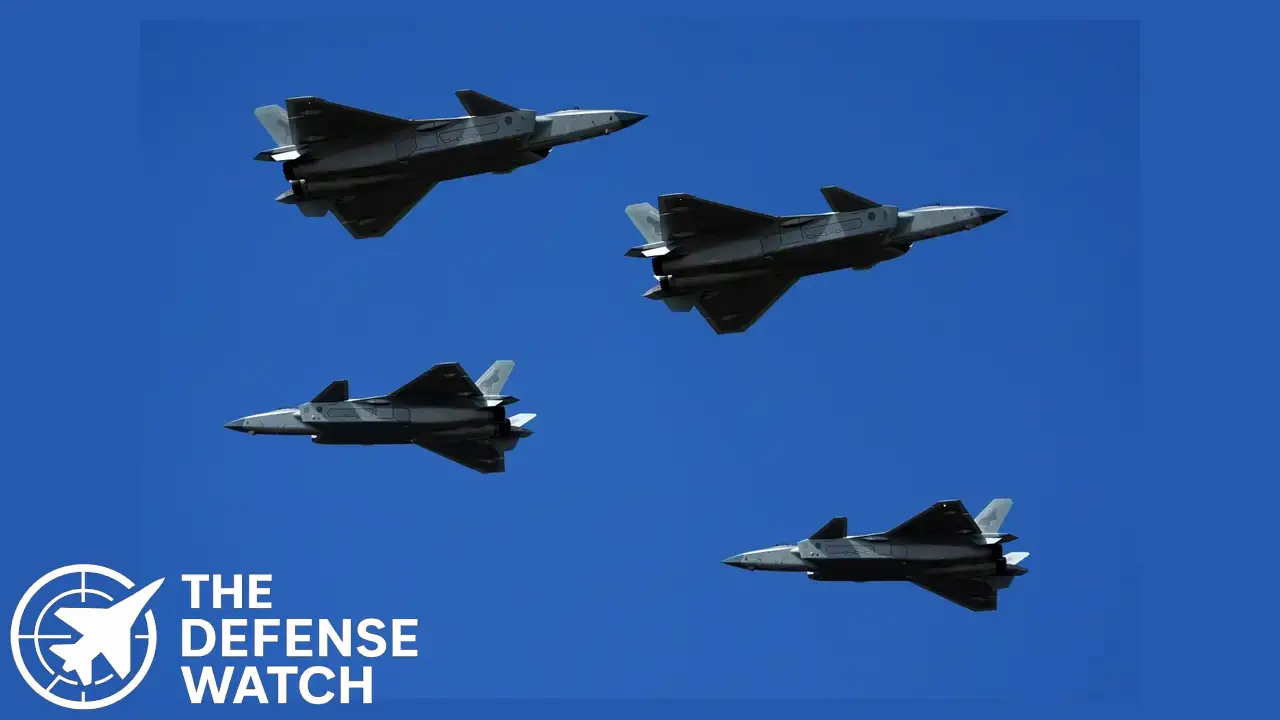
While the USAF still fields more than 2,000 fighters, only a fraction are considered mission-capable, and readiness metrics are lagging. Meanwhile, the People’s Liberation Army Air Force (PLAAF) is rapidly reequipping with fourth- and fifth-generation platforms, expanding pilot training hours and increasing production rates of airframes.

Key Metrics: Where the Gap Is Widest

Shrinking U.S. Fleet and Aging Airframes

The USAF’s fighter and bomber fleet has decreased sharply since the Cold War. A recent report by the Mitchell Institute for Aerospace Studies found that the force is now the smallest, arguably the oldest, and least ready in its history. For example, USAF pilot flying hours have dropped from 18-20 hours/month to 6-8 hours/month in some units.

China’s Production and Training Advantage

China is reportedly producing fighters at a rate of roughly 1.2 for every 1 made by the U.S. Venable noted the PLAAF now has some 1,100 fighters able to sortie over Taiwan without aerial refueling. Meanwhile, Chinese pilots average around 200 flight hours per year, compared with approximately 110 for U.S. counterparts.

- Advertisement -

Strategic Geography: Indo-Pacific Pressure

One of the greatest vulnerabilities is geography. In a conflict scenario over the Taiwan Strait, U.S. forces would operate over extended distances, while China can exploit near-home advantage. U.S. fleets based farther from the battle zone face longer sortie times, more logistic strain and potentially diminished readiness.

Analysis: What This Means for U.S. Defense

The shift in balance carries significant strategic implications:

1. Reduced margin for error. The U.S. has long relied on its air superiority as a foundational enabler for joint operations, expeditionary warfare, and deterrence. As that margin narrows, operational risk rises — miscalculations or initial setbacks could prove more costly.

2. Peer-competition era demands new readiness. The era of counter-insurgency and low-intensity conflict allowed force structures tuned to irregular operations. But the emerging competition with China demands near-peer readiness — high sortie rates, survivable dispersed basing, resilient logistics and integrated multi-domain operations. Venable highlighted the mismatch: “we have not 4,000 fighters but 2,000… They average not 8 years old but 28 years old.”

3. Indo-Pacific and allied posture under stress. The PLAAF’s growing capacity and readiness puts additional pressure on U.S. forward posture, allied basing and regional deterrence. If China can deny or delay U.S. access in the first island chain, the whole campaign dynamic changes.

4. Modernization and industry tempo become critical. The USAF’s “divest to invest” strategy, which retires older systems to fund advanced platforms, may succeed only if new systems arrive at the promised scale and on schedule. Delays and reductions—such as planning to buy only 24 F-35s in FY2026—erode future capacity.

5. Allies and partners matter more than ever. As capacity tightens, the U.S. will rely increasingly on the integration of allied air forces, distributed basing and cooperative logistics. Delays in readiness across the force multiply risk.

Conclusion & Forward Outlook

The warning from Colonel Venable is clear: America’s historic airpower edge is no longer assured. If China continues its aircraft production, pilot training and readiness surge — while the U.S. fleet shrinks and ages — the balance of air power in the Indo-Pacific may shift.

- Advertisement -

Looking ahead, we should expect the U.S. Air Force to accelerate initiatives around distributed operations, increased sortie generation, advanced unmanned systems, enhanced training tempo and closer coordination with allies. Whether these reforms can close the gap in time remains the central question. The coming decade will reveal whether the U.S. can re-establish its overmatch or whether the air superiority margin becomes contested.


Source

TAGGED:Air SuperiorityChina military modernizationdefense readinessIndo-Pacific SecurityU.S. Air Force
Share This Article
Facebook Copy Link Print
ByTeamDefenseWatch
TeamDefenseWatch is the official editorial byline of TheDefenseWatch.com. Working under one umbrella, TheDefenseWatch.com, the team delivers verified, factual reporting on global defense, military technology, aerospace systems, and security developments. Articles are sourced from official statements, defense industry releases, and trusted media, with editorial review to ensure accuracy and clarity.Contact: info@TheDefenseWtach.com
13 Comments
  • Pingback: GA-ASI Showcases Autonomous Fighter Jets, Targets USAF Delivery by 2025
  • Pingback: China Advances Concept of 120-Tonne Strategic Airlifter With Global Reach
  • Pingback: World's First Hydrogen-Powered Hypersonic Jet Targets Mach 12: Hypersonix's Sustainable Breakthrough in Aerospace
  • Pingback: Inside the B-21 Raider Program: How the Future of American Stealth Bombing Compares with the B-2 and China’s H-20
  • Pingback: Boeing Defense Strike Ends After 101 Days as Workers Approve New Contract
  • Pingback: EU Approves Plan to Deepen Defense Industry Cooperation with Ukraine
  • Pingback: U.S. Army Arctic Division Leverages Alaska Drone Trials to Develop Future Electromagnetic Doctrine
  • Pingback: US Approves $686 Million F-16 Upgrade for Pakistan Air Force as Tensions with India Persist
  • Pingback: Sweden Orders Saab Trackfire Remote Weapon Stations in SEK1.5B Contract | TheDefenseWatch.com
  • Pingback: Norway Approves $1.9 Billion K239 Chunmoo MLRS Deal With South Korea | TheDefenseWatch.com
  • Pingback: NATO Forces Build Up in Germany Ahead of Steadfast Dart 2026 Military Exercise | TheDefenseWatch.com
  • Pingback: GDIT Secures $19.1M U.S. Air Force DCGS Contract Modification | TheDefenseWatch.com
  • Pingback: US A-10 Aircraft And Littoral Combat Ship Fire Weapons Together In Gulf Drill | TheDefenseWatch.com

Leave a Reply Cancel reply

Your email address will not be published. Required fields are marked *

F-22 Reptor

Latest Defense Systems

  • B61 Nuclear Bomb B61 Nuclear Bomb
  • Japan E-767 Airborne Japan E-767 Airborne
  • Remington 870 Shotgun Remington 870 Shotgun
  • RUTA B1 Cruise Missile RUTA B1 Cruise Missile
  • XQ-67A Drone XQ-67A Drone
  • B-25 Mitchell Bomber B-25 Mitchell Bomber
  • F-100 Super Sabre F-100 Super Sabre
  • North American F-86 Sabre North American F-86 Sabre
  • North American XB-70 Valkyrie North American XB-70 Valkyrie

Recent Compares

  • J-10C vs JF-17 Thunder: Which Fighter Is More Capable? J-10C vs JF-17 Thunder: Which Fighter Is More Capable? View Comparison →
  • Tejas vs Gripen: Key Differences and Capabilities Tejas vs Gripen: Key Differences and Capabilities View Comparison →
  • Tejas vs MiG-21 Bison: How India Replaced Its Iconic Supersonic Fighter Tejas vs MiG-21 Bison: How India Replaced Its Iconic Supersonic Fighter View Comparison →
  • F-35 vs F-16: Stealth, Sensors and Combat Roles F-35 vs F-16: Stealth, Sensors and Combat Roles View Comparison →
  • Tejas Fighter Jet vs F-16 Fighting Falcon: Capability Compared Tejas Fighter Jet vs F-16 Fighting Falcon: Capability Compared View Comparison →
  • Rafale Fighter Jet vs F-16 Fighting Falcon : Which Fighter Has the Edge? Rafale Fighter Jet vs F-16 Fighting Falcon : Which Fighter Has the Edge? View Comparison →
  • Su-57 Fighter Jet vs J-20 Fighter Jet: Stealth and Air Combat Compared Su-57 Fighter Jet vs J-20 Fighter Jet: Stealth and Air Combat Compared View Comparison →
  • Mirage 2000 vs Tejas Mk1A: Legacy Combat Power vs Indigenous Modernization Mirage 2000 vs Tejas Mk1A: Legacy Combat Power vs Indigenous Modernization View Comparison →
  • Rafale Fighter Jet vs F-22 Raptor: Which Air Dominance Fighter Has the Edge? Rafale Fighter Jet vs F-22 Raptor: Which Air Dominance Fighter Has the Edge? View Comparison →
  • Tejas Fighter Jet vs. Rafale Fighter Jet: India’s Indigenous Fighter Meets France’s Proven Multirole Combat Aircraft Tejas Fighter Jet vs. Rafale Fighter Jet: India’s Indigenous Fighter Meets France’s Proven Multirole Combat Aircraft View Comparison →

Recent Posts

  • Remington 870 in Military Service: Mark 1 to MCS
  • Boeing Receives $16.9 Million Contract Modification for Japan’s E-767 AWACS Support
  • Lockheed Martin Wins $80 Million Air Force Mission Planning Software Contract
  • Pakistan Tests Indigenous Fa’az Air-to-Air Missile for First Time
  • Operation Unified Resolve Reports 70% Drop in Rio Grande Valley Border Crossings

You Might Also Like

U.S. solid rocket motor supply chain
Global News

U.S. Department of War Pledges $1B Direct to Supplier Investment to Secure Solid Rocket Motor Supply Chain

January 13, 2026
U.S. Air Force MQ-9 Reaper drone armed with APKWS laser-guided rockets during counter drone mission testing
Aerospace & AviationDrones & UAVs

U.S. Air Force Unveils MQ-9 Reaper APKWS Upgrade To Counter Drone Threats

September 7, 2026
Ukrainian Air Force aircraft carrying a newly developed indigenous guided aerial bomb during weapons integration testing.
Global News

Ukraine Unveils Indigenous Guided Aerial Bomb To Expand Precision Strike Capability

September 7, 2026
British Army armored unit coordinating with drones in live battlefield exercise
Global News

British Army Tests Integrated Drone–Armor Combat Concept

May 5, 2026

Logo

Copyright © 2026 TheDefenseWatch.com

Helpful Links

  • Home
  • About Us
  • Privacy Policy
  • Terms of Use / Disclaimer
  • U.S. Privacy Notice – CCPA Compliance

Defense Systems

  • Defense Systems
  • Comparisons 
  • Manufacturer
  • Tactical Calculators

Popuplar

Which 5 Air Forces Possess the Costliest Fighter Jet Fleets in the World
Evolving Strategic Value: Carrier Strike Groups in the Indo-Pacific’s Future Security Architecture
Autonomous Weapon Systems Spark U.S. Ethics Debate Amid Rapid Military AI Integration

We report on developments involving military forces, governments, defense companies, research organizations, and security institutions around the world. 

Welcome Back!

Sign in to your account

Username or Email Address
Password

Lost your password?