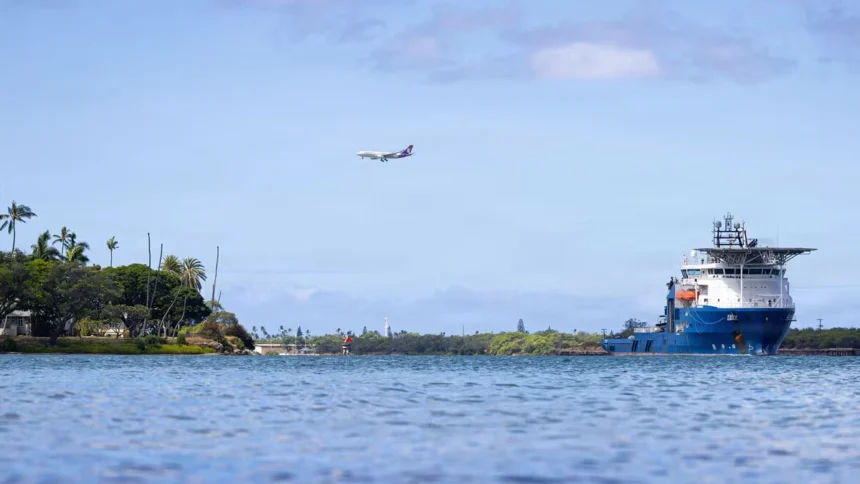
L3Harris Technologies has tested its Rock Lobster underwater acoustic communications relay alongside U.S. Navy capabilities during Exercise Rim of the Pacific 2026, demonstrating interoperability between Australian and U.S. underwater communications technologies.
The test took place off Hawaii in July as part of an AUKUS Pillar II undersea warfare activity. According to the Australian Department of Defence, the activity also involved Australia’s Lightfish uncrewed surface vessel, linking the Rock Lobster system to a wider effort to integrate allied autonomous maritime capabilities.
The trial addresses a practical challenge for modern naval forces: communicating with underwater systems without relying exclusively on conventional radio links or requiring an uncrewed vehicle to surface for every exchange of information.
Why underwater communications matter
Radio signals used by conventional military communications networks do not travel efficiently through seawater. Underwater platforms therefore rely heavily on acoustic communications, which transmit information using sound.
These links can support communication between underwater vehicles, sensors and other maritime assets. However, acoustic communications face limitations involving available bandwidth, transmission conditions, range and data throughput. Performance depends on the equipment, environment and operating conditions.
For navies developing autonomous underwater vehicles and seabed surveillance capabilities, the challenge extends beyond building a vehicle that can navigate independently. Operators also need ways to exchange mission information and coordinate activities among systems produced by different organizations.
Rock Lobster is intended to support that connection.
L3Harris describes the system as a deployable underwater acoustic communications relay. The company developed it through its Australian maritime team in collaboration with the Royal Australian Navy and the Defence Science and Technology Group, Australia’s defense research organization.
The publicly available announcements do not disclose the relay’s transmission range, data rate, operating depth or endurance. Those details would be necessary to assess how the system performs against specific operational requirements.
What the RIMPAC 2026 test demonstrated
The exercise provided an opportunity to test whether Australian and U.S. underwater communications technologies could operate together in a shared maritime environment.
The Australian Department of Defence confirmed that Rock Lobster and the Lightfish uncrewed surface vessel participated in the AUKUS activity. U.S. Navy subsea capabilities were also deployed and tested alongside Australian underwater systems during the exercise.
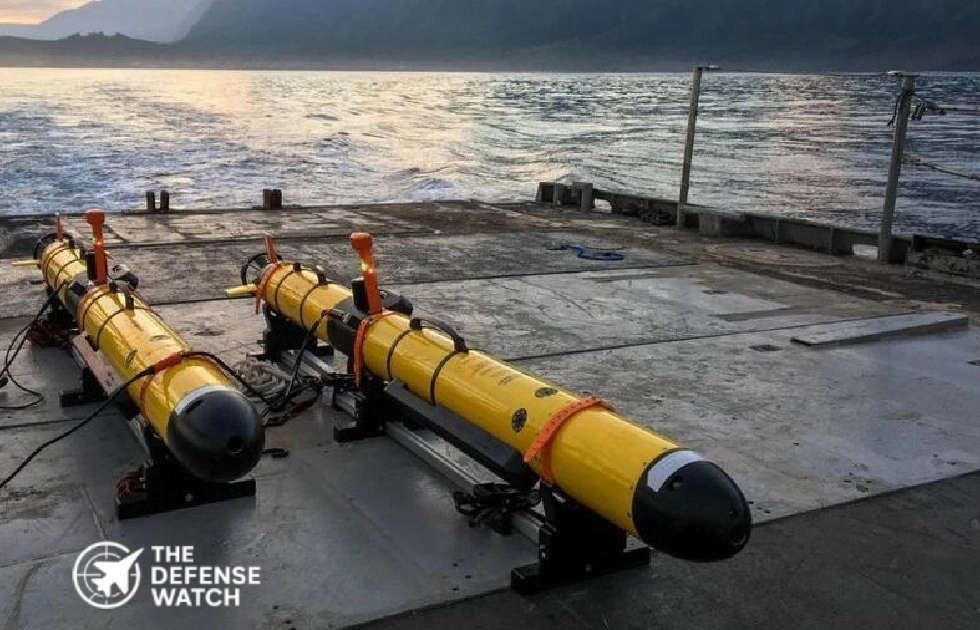
Rock Lobster acoustic relay
An Australian-developed system designed to relay underwater acoustic communications. Its RIMPAC role focused on interoperability with allied underwater communications capabilities.
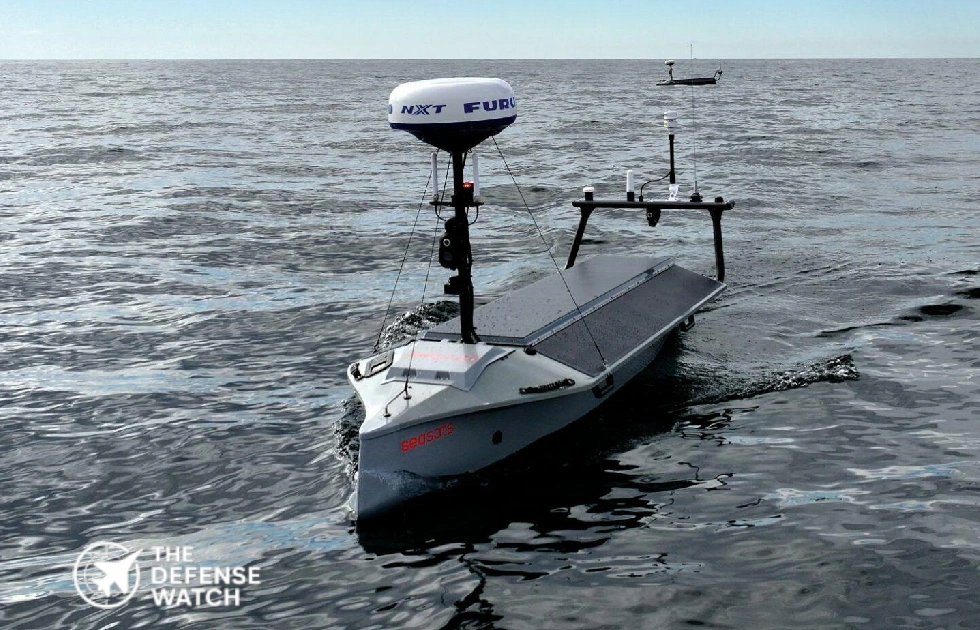
Lightfish uncrewed surface vessel
A surface platform from Seasats that participated alongside Rock Lobster, bringing an uncrewed surface asset into the wider communications and maritime integration activity.
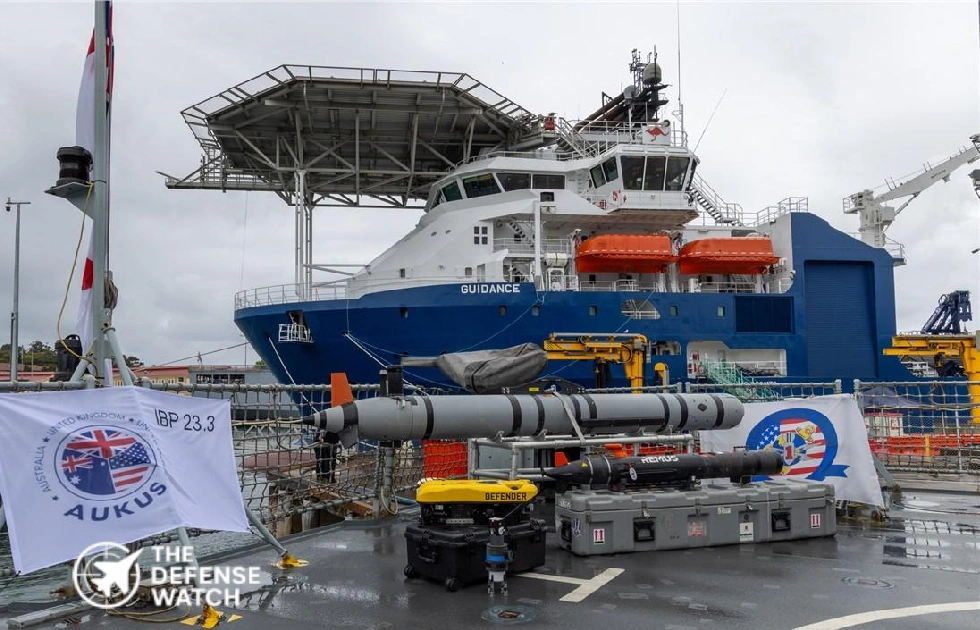
Australian Defence Vessel Guidance
The support vessel used during the broader AUKUS activity to deploy and test robotic, autonomous and remotely operated underwater capabilities.
The distinction between interoperability testing and operational deployment is important. The published accounts establish that the system was tested during a multinational exercise, but they do not establish that Rock Lobster has entered operational service or achieved a particular level of fleet-wide integration.
Nor do the announcements provide quantitative test results that would allow independent assessment of its performance.
AUKUS Pillar II and the move toward connected autonomous systems
AUKUS is the security partnership between Australia, the United Kingdom and the United States. Its two pillars address different areas of cooperation.
Pillar I centers on Australia’s acquisition of conventionally armed, nuclear-powered submarines. Pillar II focuses on advanced capabilities, including autonomous systems, undersea warfare, artificial intelligence, cyber capabilities and other technologies intended to improve cooperation among the partners.
Rock Lobster falls within the second pillar’s effort to develop and integrate advanced maritime technologies.
The Australian Department of Defence said the RIMPAC activity included underwater search and navigation tasks involving the Kongsberg HUGIN Superior autonomous underwater vehicle and a Schilling work-class remotely operated vehicle. The broader activity also focused on protecting critical undersea infrastructure.
Those missions illustrate why communication between systems matters. An autonomous underwater vehicle may collect information or conduct a search, but the operational value of that activity depends partly on how information can be shared, assessed and acted upon.
A relay system could help connect underwater assets with other elements of a maritime force. Its practical value would depend on how well it integrates with different platforms, communication protocols and command systems, as well as how reliably it operates in challenging underwater conditions.
For allied navies, compatibility across national systems can also reduce the need to build entirely separate technical arrangements for each partner.
However, the RIMPAC announcement does not establish that Rock Lobster provides a complete communications network, nor does it detail how information moves between every participating platform.
The remaining technical and operational questions
Rock Lobster’s significance will ultimately depend on its performance beyond a successful demonstration.
Several questions remain unanswered in the public information released by L3Harris and the Australian government:
- Communications performance: Neither source provides verified figures for transmission range, data rate or reliability under different underwater conditions.
- Platform compatibility: The test demonstrated interoperability with U.S. underwater communications capabilities, but the full list of supported systems and protocols has not been published.
- Operational endurance: Public announcements do not specify how long the relay can operate, whether it requires recovery or what maintenance arrangements are involved.
- Procurement and fielding: No production quantity, contract value, delivery schedule or formal operational service date was disclosed in the cited announcements.
These are meaningful gaps. A system that works during a controlled test may require further engineering, qualification and operational evaluation before it can be fielded at scale.
Underwater environments also introduce variables that do not affect conventional surface communications in the same way. Acoustic propagation can change with water conditions, background noise, depth and the geometry of the communications link.
Without published test data, it is not possible to determine Rock Lobster’s effective operating envelope or compare its performance directly with alternative acoustic relay systems.
What the development means for allied undersea operations
The most immediate value of the RIMPAC activity is evidence of continued work to integrate underwater communications and autonomous maritime systems across national boundaries.
For Australia, collaboration between industry, the Royal Australian Navy and the Defence Science and Technology Group provides a route for developing and testing locally developed technologies alongside allied capabilities. For the United States, successful integration can help expand the range of partner systems that can participate in shared maritime missions.
That matters as navies seek to monitor undersea infrastructure, conduct underwater surveys and coordinate crewed and uncrewed platforms. Subsea cables and other critical infrastructure have become an important concern for maritime security, although the RIMPAC announcement does not attribute any specific infrastructure-protection mission to Rock Lobster itself.
The system is also relevant to the wider shift toward distributed maritime operations, in which information may need to pass among multiple surface, underwater and shore-based assets rather than remain within a single platform.
For AUKUS, the challenge is not simply developing new technology. It is making technologies developed by different partners work together reliably, while establishing the training, procedures and support arrangements needed for sustained use.
The RIMPAC test is a step in that process. Further technical disclosures, qualification results and procurement decisions will be needed to establish how widely Rock Lobster can be used and what operational benefits it delivers.