USS Idaho Officially Joins the Fleet
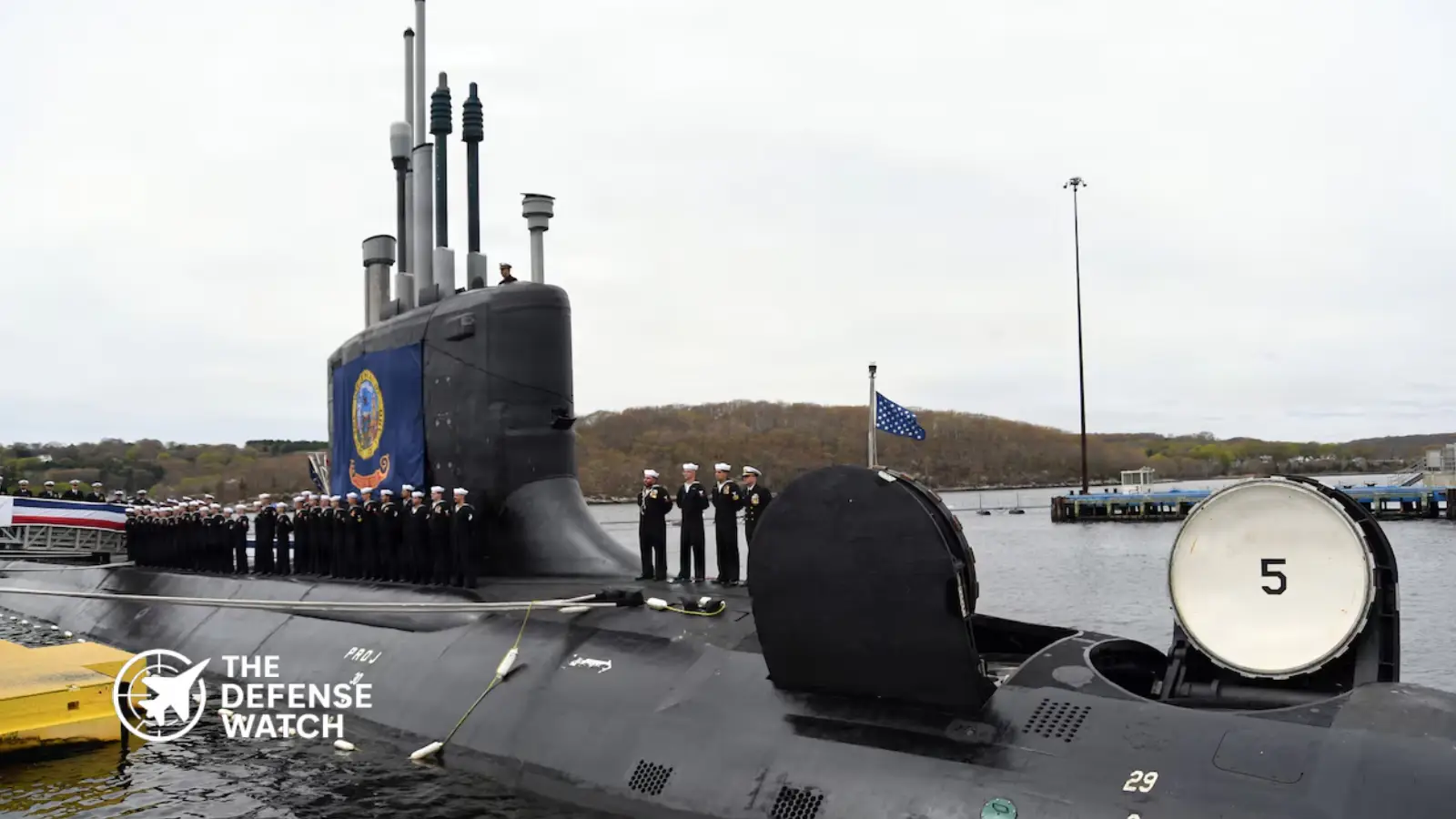
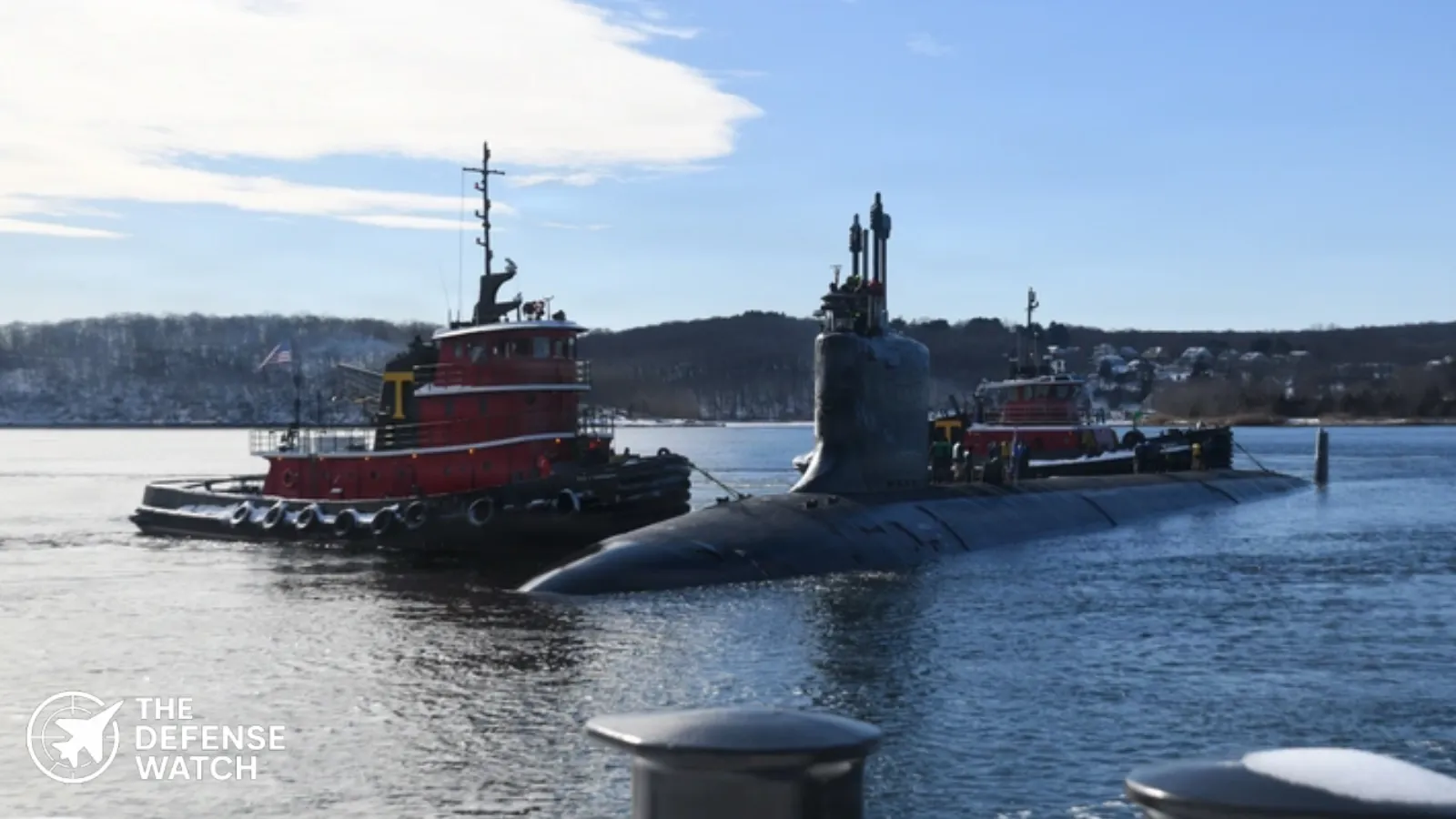
The USS Idaho submarine officially entered active U.S. Navy service during a commissioning ceremony at Naval Submarine Base New London in Groton, Connecticut, on April 25. The event marked the final step in a multi-year construction and testing process for one of America’s most important naval platforms.
USS Idaho (SSN 799) is the fifth U.S. Navy vessel to carry the name of the state of Idaho. Its predecessor was the battleship USS Idaho (BB-42), which earned seven battle stars during World War II.
- The U.S. Navy commissioned USS Idaho (SSN 799) on April 25, 2026, in Groton, Connecticut.
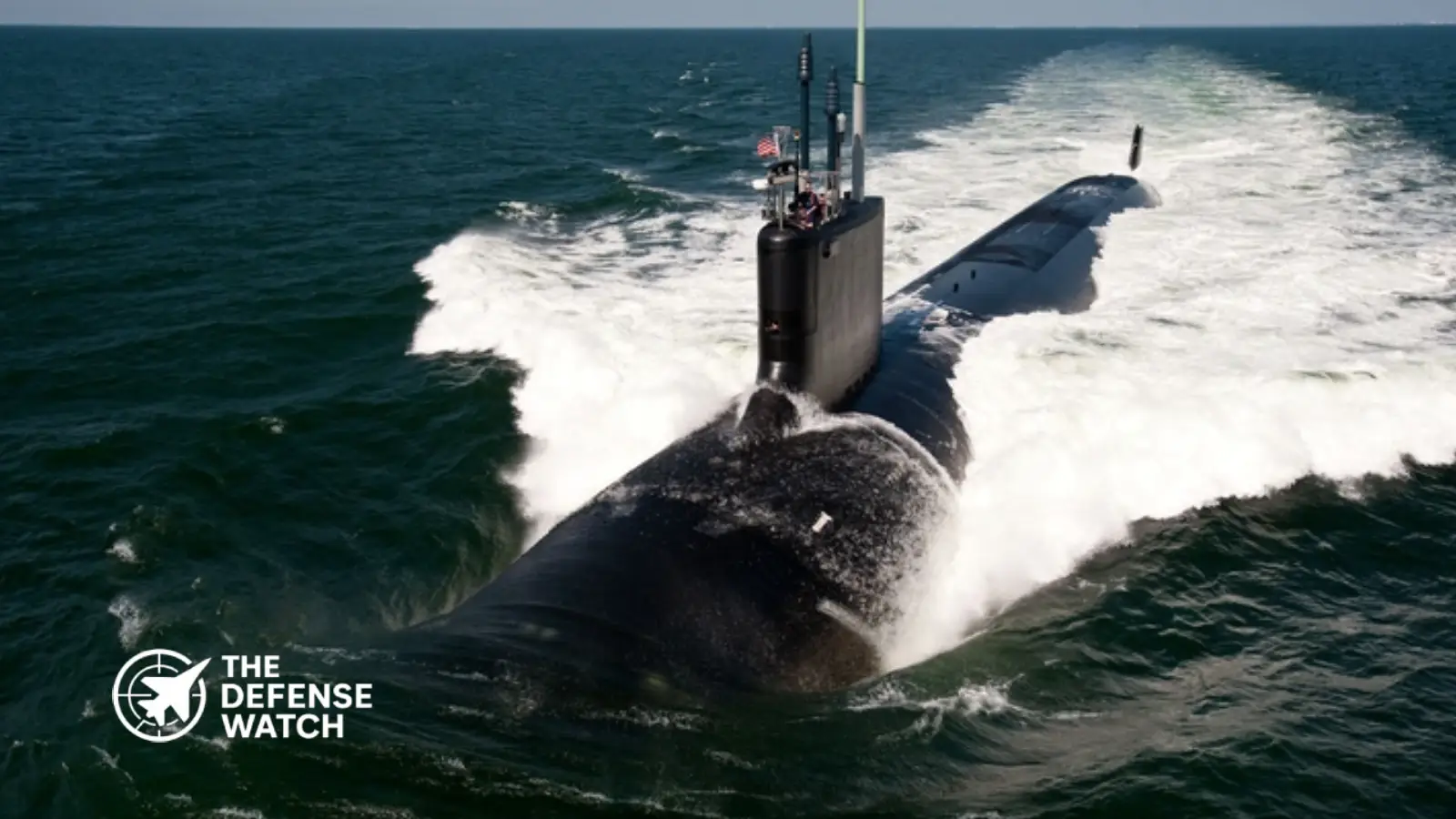
- USS Idaho is the 26th Virginia-class fast-attack submarine delivered to the Navy.
- The boat is the eighth submarine built to the advanced Block IV configuration.
- The submarine was jointly produced by General Dynamics Electric Boat and HII Newport News Shipbuilding.
- Virginia-class boats support anti-submarine warfare, intelligence collection, strike missions, and special operations.
The ship’s sponsor, Teresa Stackley, gave the traditional order to man our ship and bring her to life, after which the crew ceremonially boarded the submarine. Acting Secretary of the Navy Hung Cao formally placed the vessel into service.
Why USS Idaho Matters
The arrival of USS Idaho comes at a time when the United States is placing renewed emphasis on undersea deterrence and naval competition. Fast-attack submarines remain among the Navy’s most survivable and flexible assets, particularly in contested regions such as the Indo-Pacific and North Atlantic.
Virginia-class submarines are designed for multiple mission sets, including:
- Anti-submarine warfare
- Anti-surface warfare
- Intelligence, surveillance, and reconnaissance
- Land attack missions using cruise missiles
- Special operations support
That versatility gives commanders options short of deploying larger surface combatants or aircraft carriers. In modern conflict scenarios, submarines can often operate with lower visibility and greater persistence.
USS Idaho Specifications
USS Idaho is the 26th Virginia-class submarine and the eighth Block IV variant. According to the Navy, the submarine displaces about 7,800 tons, measures 377 feet long, and has a beam of 34 feet. It is powered by a nuclear reactor designed to last the planned service life of the vessel without refueling.
The Block IV design focuses heavily on reducing maintenance time and increasing deployment availability. That matters because submarine demand has consistently exceeded supply in several global theaters.
Industrial Base and Production Signal
USS Idaho was built through the long-running teaming arrangement between General Dynamics Electric Boat and HII Newport News Shipbuilding. The program remains central to sustaining the U.S. submarine industrial base while production also shifts toward the future Columbia-class ballistic missile submarine.
Commissioning another Virginia-class hull sends a wider signal that the Navy is trying to balance current readiness with long-term modernization, despite workforce and supply chain pressure across U.S. shipyards.
Strategic Outlook
The addition of USS Idaho strengthens a fleet that remains one of Washington’s most decisive military advantages. While surface fleets draw more public attention, submarines often carry the highest strategic value because of stealth, endurance, and strike reach.
As competition with China and Russia continues below the surface, new Virginia-class boats like USS Idaho are likely to remain in high demand for years ahead.
SeaShield Technologies Contract Strengthens Navy Undersea Warfare Testing
SeaShield Technologies contract activity highlights continued U.S. Navy investment in validating the readiness of next-generation maritime systems. SeaShield Technologies LLC, based in Suffolk, Virginia, has been awarded a $27,041,424 firm-fixed-price indefinite-delivery/indefinite-quantity contract to support the Navy’s Operational Test and Evaluation Force.
The contract specifically supports Undersea Warfare Division 40, which is responsible for analytical operational test and evaluation services tied to naval undersea capabilities.
- SeaShield Technologies LLC received a $27.04 million Navy IDIQ contract.
- Contract supports Operational Test and Evaluation Force Undersea Warfare Division 40.
- Work covers analytical operational test and evaluation support services.
- Ordering period runs from May 2026 through May 2031.
- Maximum potential value rises to $29.92 million if six-month option is exercised.
If the six-month extension option under Federal Acquisition Regulation 52.217-8 is exercised, the total estimated contract value could increase to $29,921,764.
What The Contract Covers
Under the award, SeaShield Technologies will provide technical and analytical services that help the Navy assess the performance, readiness, and effectiveness of undersea warfare systems.
That mission can include support for:
- Submarine combat systems
- Underwater sensors
- Anti-submarine warfare tools
- Unmanned undersea platforms
- Fleet integration testing
- Mission effectiveness analysis
Operational testing is a critical phase before systems are fully fielded. It helps the Navy determine whether equipment performs reliably in realistic operating environments.
Why Undersea Warfare Remains A Priority
The Navy’s focus on undersea warfare comes amid increasing strategic competition in the Atlantic, Indo-Pacific, and other contested maritime regions.
Submarines remain among the most survivable and strategically valuable military assets. They can conduct intelligence collection, strike missions, anti-ship operations, and deterrence patrols while remaining difficult to detect.
For that reason, the Pentagon continues investing not only in submarines themselves, but also in sonar networks, autonomous underwater vehicles, torpedoes, and data systems that improve undersea awareness.
The SeaShield Technologies contract supports this broader modernization effort by ensuring systems are rigorously tested before operational deployment.
Multi-Year Performance Window
The ordering period is expected to begin in May 2026 and continue through May 2031. If the optional six-month extension is exercised, the performance window would continue through November 2031.
Actual work locations will depend on task orders issued under the contract. The Navy said testing may occur across multiple U.S. sites and overseas locations depending on mission needs.
That flexible structure is common for evaluation contracts supporting fleet operations, where trials may need access to ranges, ports, shipyards, or deployed naval forces.
Competitive Award Process
The contract was competitively procured through the System for Award Management website as a service-disabled veteran-owned small business set-aside.
Four offers were received, indicating active competition for specialized naval support work.
The contracting activity is Naval Supply Systems Command Fleet Logistics Center Norfolk, Regional Directorate, Norfolk, Virginia.
Strategic Analysis
The SeaShield Technologies contract may appear modest compared with billion-dollar shipbuilding awards, but these support contracts often have outsized strategic value.
Testing and evaluation programs help reduce procurement risk, uncover system flaws early, and improve fleet readiness. In modern naval competition, reliable sensors, communications links, and undersea tracking tools can be as decisive as hull numbers.
As rival naval powers expand submarine fleets and underwater surveillance networks, the U.S. Navy’s emphasis on verification and performance testing reflects a practical readiness-first approach.
- â–º German Navy receives BlueWhale large autonomous underwater vehicle developed by IAI and TKMS.
- â–º BlueWhale designed for intelligence, surveillance, reconnaissance and anti submarine missions.
- â–º System supports extended endurance operations without onboard crew.
- â–º Collaboration reflects expanding Israeli German naval industrial cooperation.
- â–º Delivery strengthens European focus on unmanned undersea capabilities amid rising maritime threats.
German Navy Integrates BlueWhale Large Autonomous Underwater Vehicle
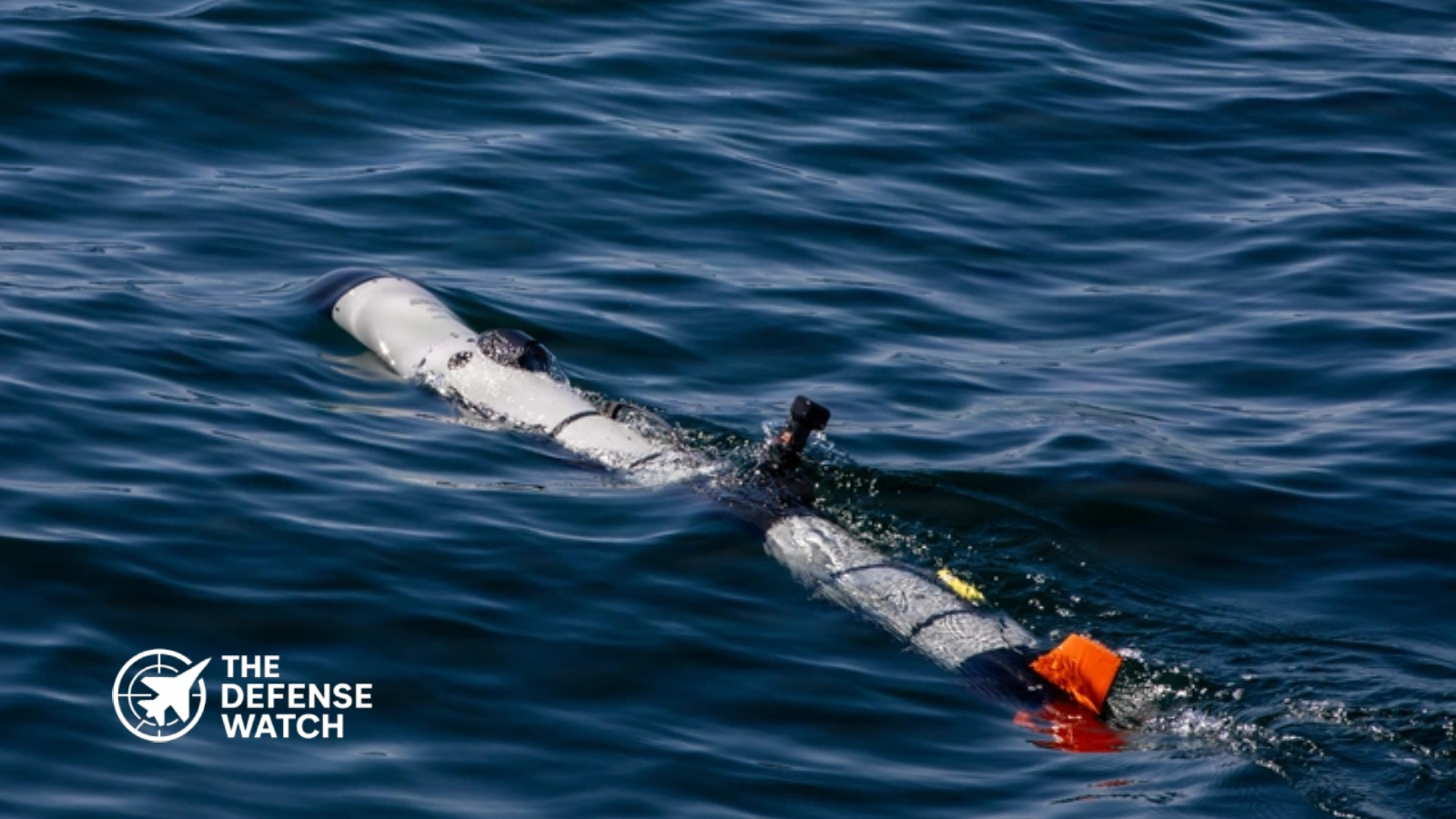
The BlueWhale large autonomous underwater vehicle has been delivered to the German Navy by Israel Aerospace Industries and Thyssenkrupp Marine Systems, marking a significant step in Berlin’s push to expand unmanned maritime capabilities.
The system, developed by IAI and integrated with support from TKMS, is designed to conduct long duration intelligence, surveillance, reconnaissance, and anti submarine warfare missions without a crew onboard. According to the companies, the delivery follows testing and evaluation activities aimed at adapting the platform for German naval requirements.
The German Navy has not disclosed full operational details. However, the BlueWhale large autonomous underwater vehicle is expected to complement existing submarine and surface fleet operations.
What Is BlueWhale
The BlueWhale large autonomous underwater vehicle is a large displacement unmanned submarine platform developed by IAI. The system is built for covert, persistent underwater operations. It can carry advanced sensor suites including sonar systems for submarine detection, intelligence collection payloads, and electronic support measures.
Unlike traditional submarines, BlueWhale operates without personnel onboard. This reduces operational risk and lowers life cycle costs compared to crewed vessels. It is capable of extended missions measured in weeks, depending on configuration.
IAI has previously stated that the platform was designed to perform missions typically carried out by manned submarines, but at lower cost and without exposing crews to danger.
Strategic Context For Germany
Germany has steadily expanded its investment in naval modernization since Russia’s 2022 invasion of Ukraine reshaped European defense planning. Berlin’s special defense fund and subsequent budget increases have prioritized air defense, land forces, and maritime capabilities.
Undersea infrastructure security has become a core concern for NATO members. Incidents involving pipelines and seabed cables in the Baltic Sea have underscored vulnerabilities in Europe’s maritime domain.
In this context, the BlueWhale large autonomous underwater vehicle offers a tool for persistent seabed monitoring, anti submarine surveillance, and maritime domain awareness.
From a strategic standpoint, unmanned underwater systems provide flexibility. They can operate in contested waters where risk to crews would be unacceptable. They also enable distributed sensing, which aligns with NATO’s evolving multi domain operational concepts.
Israeli German Defense Cooperation
The collaboration between IAI and TKMS builds on longstanding defense ties between Israel and Germany. TKMS is known for constructing advanced submarines for both the German Navy and Israel’s navy.
This joint effort reflects a growing trend in European procurement. Rather than developing entirely domestic unmanned systems from scratch, governments are partnering with established defense firms that already field operational platforms.
For Israel Aerospace Industries, the German delivery strengthens its position in the European unmanned maritime market. For TKMS, it expands its portfolio beyond conventional submarines into autonomous undersea systems.
Operational Implications
The BlueWhale large autonomous underwater vehicle is not a direct replacement for crewed submarines. Instead, it acts as a force multiplier.
It can conduct pre mission intelligence gathering, map the seabed, monitor chokepoints, or track submarine activity. These missions would otherwise tie up high value crewed platforms.
For the German Navy, which operates Type 212A submarines built by TKMS, integration of unmanned systems could enhance layered undersea operations.
The broader implication is doctrinal. As more NATO members adopt large autonomous underwater vehicles, command and control frameworks will need to adapt. Secure communications, data processing, and integration with surface and air assets will be critical.
European Naval Modernization Trend
Across Europe, navies are investing in unmanned surface and underwater systems. The United Kingdom, France, and Norway have all advanced programs focused on autonomous maritime platforms.
The delivery of the BlueWhale large autonomous underwater vehicle fits squarely into this trend. It signals that large autonomous platforms are moving from concept demonstrations to operational deployment.
For Germany, the decision reinforces its shift toward higher readiness and greater technological depth within NATO.
U.S. Navy Nuclear Attack Submarines Conduct Forward Deployment Exercise Near Guam
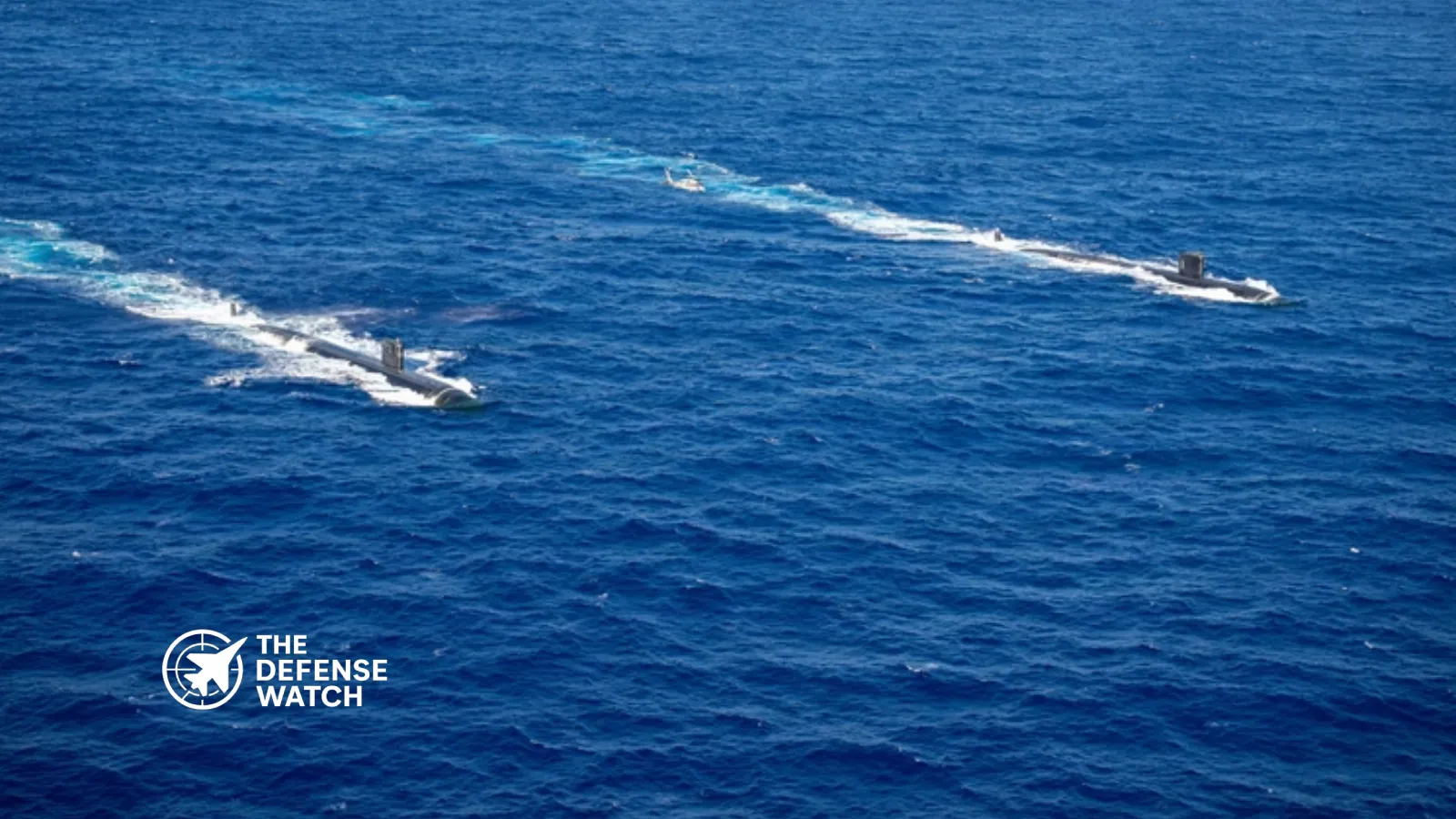
The U.S. Navy deployed two Los Angeles-class nuclear attack submarines near Guam in a rare coordinated surface exercise that underscores forward-deployed undersea capabilities in the Indo-Pacific theater. USS Asheville (SSN 758) and USS Annapolis (SSN 760) surfaced together on December 17, 2025, conducting a tightly controlled photo exercise with aviation support from Helicopter Sea Combat Squadron 25.
According to Commander, Submarine Squadron 15, the operation demonstrated coordination between forward-deployed undersea platforms and naval aviation assets stationed at Naval Base Guam. The exercise represents an uncommon operational posture for attack submarines designed for stealth operations, offering a deliberate signal of readiness in a region where military response timelines continue to compress.
Los Angeles-Class Submarines: Capabilities and Strategic Value
USS Asheville and USS Annapolis are improved Los Angeles-class attack submarines, representing late-production variants with enhanced acoustic quieting and upgraded combat systems. The class displaces approximately 6,900 tons submerged, measures 360 feet in length, and operates at speeds exceeding 25 knots with diving capabilities beyond 800 feet.
Strike and Sea Denial Capabilities
Each submarine carries 12 Vertical Launch System (VLS) tubes for Tomahawk cruise missiles, providing land-attack capabilities without consuming torpedo-room capacity. The Navy fields Tomahawk Block IV and Block V variants with ranges approaching 900 nautical miles, incorporating GPS guidance, terrain-matching navigation, and two-way satellite communications for in-flight retargeting.
-
The submarines retain full torpedo-tube launch capability for Mk 48 ADCAP heavyweight torpedoes, designed to defeat deep-diving nuclear submarines and surface combatants through wire-guided and active-passive acoustic homing. This dual-payload configuration enables mission flexibility across intelligence collection, sea denial, and precision strike operations.
Forward Deployment Advantages
Naval Base Guam’s strategic location provides critical forward positioning for submarine operations. The facility enables faster rearmament, maintenance, and deployment cycles compared to continental U.S. bases, maintaining persistent undersea presence across the Western Pacific’s vast operational areas.
Submarine Squadron 15 operates from Polaris Point as a forward-deployed force supporting free and open Indo-Pacific operations. The squadron includes multiple Los Angeles-class boats alongside newer Virginia-class submarines, providing layered undersea capabilities across anti-submarine warfare, intelligence gathering, and strike missions.
Coordinated Operations: Why Surface Two Submarines Together?
Submarine doctrine emphasizes stealth, separation, and operational ambiguity. Coordinated surface operations with two attack submarines represent exceptional circumstances, typically limited to permissive waters during training, transit coordination, or deliberate signaling.
Aviation Support and Safety
The MH-60S Sea Hawk from HSC-25 provided communications relay, search-and-rescue coverage, and airborne oversight during close-quarters maneuvering. While MH-60S helicopters lack the anti-submarine warfare capabilities of MH-60R variants, they maintain critical medical evacuation readiness and surface coordination functions for forward-deployed submarine operations.
Guam-based helicopter squadrons provide continuous SAR and medevac posture across the 7th Fleet area of operations, making them natural aviation partners when submarines conduct controlled evolutions near high-traffic sea lanes.
Operational Messaging
The exercise signals several operational realities. First, multiple attack submarines operate from forward bases with coordinated procedures and safety protocols. Second, submarine forces can surge from forward hubs rather than relying on trans-Pacific deployments. Third, even legacy improved Los Angeles-class boats maintain modern Tomahawk strike capabilities and credible sea denial effects.
Indo-Pacific Strategic Context
The deployment occurs against a backdrop of regional security challenges including territorial disputes, military modernization programs, and contested sea lanes across the South China Sea and Western Pacific. U.S. Navy leadership has consistently emphasized forward presence as central to deterrence strategy and alliance commitments.
Guam’s Strategic Position
Guam’s geographic location provides proximity to potential contingency areas while maintaining sufficient distance for sustained operations. The island serves as a critical logistics node, enabling faster maintenance cycles and reducing the visible logistics footprint that accompanies surface combatant operations.
Forward deployment from Guam allows submarines to maintain station times, conduct intelligence collection, and provide strike options across multiple operational arcs without revealing intent through trans-oceanic transits.
Deterrence Through Controlled Visibility
The exercise represents deterrence through limited transparency—using rare surface-level operations to communicate undersea readiness while submarines remain among the hardest targets to detect once submerged. In a region defined by long-range sensors, missile salvo exchanges, and contested logistics, the Navy demonstrated that forward undersea forces are armed, trained, and coordinated for rapid response.
Platform Evolution and Future Capabilities
While Los Angeles-class submarines represent mature technology, continuous modernization maintains combat relevance. Tomahawk Block V incorporates navigation upgrades and structures future variants including Maritime Strike Tomahawk with anti-ship seeker capabilities and Joint Multiple Effects Warhead Systems for harder target sets.
The submarines’ combat systems receive regular updates maintaining compatibility with fleet networks and enabling dynamic targeting against mobile threats. Combined with Mk 48 ADCAP torpedoes designed to defeat modern countermeasures, Los Angeles-class boats retain credible lethality against both undersea and surface threats.
Undersea Warfare in a Contested Environment
Modern undersea operations require coordination across multiple domains. Attack submarines work distributed across operational areas using deconfliction measures that preserve acoustic advantage while enabling synchronized effects. Surface exercises like the December event rehearse procedures, demonstrate capabilities, and validate coordination between undersea platforms and supporting aviation assets.
The Navy’s approach balances operational security with strategic messaging—submarines survive through stealth and ambiguity, but controlled visibility serves deterrence when adversaries need reminders of forward-deployed capabilities and operational readiness.
Conclusion
The deployment of USS Asheville and USS Annapolis near Guam demonstrates U.S. Navy undersea force posture in the Indo-Pacific. Through forward basing, coordinated training, and modern strike capabilities, attack submarines provide persistent deterrence and rapid-response options across the theater.
As regional security challenges evolve, forward-deployed submarine forces operating from strategically positioned bases like Guam represent critical elements of U.S. maritime strategy—maintaining presence, signaling commitment to allies, and deterring potential adversaries through demonstrated capability and readiness.
-
The US Navy submarine countermeasures program received a significant boost with a new $59.6 million contract awarded to Ultra Maritime for production of acoustic device countermeasures used on in-service submarines. The award supports continued modernization of undersea self defense systems as the Navy focuses on survivability in increasingly contested maritime environments.
The contract was awarded on January 26, 2026, by Naval Sea Systems Command, or NAVSEA, and covers production of MK3 and MK4 acoustic device countermeasures along with associated launch tubes.
Contract Details and Scope
Ultra Maritime, based in Braintree, Massachusetts, was awarded a mixed contract structure that includes firm fixed price, cost plus fixed fee, and cost indefinite delivery indefinite quantity elements. The total contract value is $59,603,232.
The work will be performed at Ultra Maritime facilities in Braintree and is scheduled for completion by January 2031. The long performance period reflects sustained production in support of the US Navy submarine fleet rather than a one time delivery.
Funding for the initial delivery order includes $8,500,333 from fiscal year 2026 other procurement Navy funds and $1,152,032 from fiscal year 2025 other procurement Navy funds. These funds will not expire at the end of the current fiscal year, allowing program stability across budget cycles.
The specific delivery order, N00024-26-F-6227, falls under the broader contract vehicle N00024-26-D-6214.
Competitive Procurement Process
According to the award notice, the requirement was competitively procured through full and open competition using the System for Award Management. One offer was received in response to the solicitation.
While only a single offer was submitted, the Navy followed federal acquisition regulations for competitive procurement, reinforcing transparency and compliance with defense contracting standards. NAVSEA, headquartered in Washington, DC, is the contracting activity.
Role of Acoustic Device Countermeasures
Acoustic device countermeasures play a critical role in submarine survivability. Systems such as the MK3 and MK4 are designed to confuse, decoy, or degrade the effectiveness of hostile torpedoes by emitting acoustic signals that divert threats away from the submarine.
As potential adversaries continue to invest in advanced undersea sensors and torpedo technologies, the importance of reliable acoustic countermeasures has grown. These systems are a key layer in the Navy’s undersea defensive architecture, complementing stealth, maneuvering tactics, and electronic warfare capabilities.
The US Navy submarine countermeasures portfolio is particularly relevant as near peer competitors expand their undersea warfare capabilities in both the Indo Pacific and Atlantic theaters.
Ultra Maritime and Undersea Warfare Expertise
Ultra Maritime is a long established supplier of undersea warfare systems to the US Navy and allied navies. The company specializes in sonar, anti submarine warfare, and acoustic solutions across surface ships, submarines, and unmanned platforms.
This latest award reinforces Ultra Maritime’s role as a trusted supplier in the US Navy submarine countermeasures ecosystem. By sustaining production through 2031, the Navy ensures continuity in support for existing submarine classes without introducing integration risk from new vendors.
The contract also supports domestic defense manufacturing, with all work performed in Massachusetts.
Strategic Context for the US Navy
The award aligns with broader US Navy priorities focused on maintaining undersea dominance. Submarines remain one of the most survivable and strategically valuable assets in the US military, supporting deterrence, intelligence collection, and power projection.
Recent Navy budget documents and statements from Department of Defense leadership have emphasized the growing importance of undersea warfare as rival navies invest heavily in anti submarine capabilities. Ensuring that in-service submarines are equipped with effective countermeasures is a cost effective way to maintain operational advantage.
Within this context, the US Navy submarine countermeasures program represents a relatively small but essential investment compared to major platform acquisition programs.
Budget and Program Stability
The use of other procurement Navy funds and the non expiring nature of the obligated amounts provide flexibility for program execution. This funding approach helps reduce disruptions caused by continuing resolutions or delayed appropriations.
Long term production contracts such as this also help stabilize the industrial base by allowing suppliers to plan workforce and supply chain requirements with greater confidence.
Outlook
With work extending through early 2031, the Ultra Maritime contract ensures continued availability of MK3 and MK4 acoustic device countermeasures for the US Navy submarine fleet. While the award does not introduce new capabilities, it reinforces the sustainment and readiness of critical defensive systems already in service.
As undersea competition intensifies, investments in systems that protect existing platforms remain a cornerstone of US naval strategy.
L3Harris Navy contract activity continued this week as the US Navy awarded the company a 22.9 million dollar deal for production of the Towed Body 34A sonar system, according to official contract documents released by Naval Sea Systems Command.
The award supports undersea warfare capabilities across the surface fleet and reflects sustained Navy investment in passive acoustic sensing systems designed to detect and track submarines in contested maritime environments.
Contract Overview and Scope
L3Harris Corp., based in Millersville, Maryland, received a fixed price incentive contract valued at 22,900,118 dollars for production, integration, and testing of the Towed Body 34A towed array system. The contract carries a firm target structure and includes options that could raise the total value to 65,470,348 dollars if fully exercised.
Naval Sea Systems Command in Washington, DC, is the contracting authority. The award was competitively procured through the System for Award Management platform, with two offers submitted.
Work under the contract will be spread across multiple L3Harris facilities. Production and support activities will take place in Millersville, Maryland at 25 percent, Liverpool, New York at 40 percent, and Ashaway, Rhode Island at 35 percent. Contract completion is expected by July 2028.
What Is the Towed Body 34A
The Towed Body 34A is a passive sonar system designed to be deployed behind surface ships to improve detection of submarines and other undersea threats. Towed array systems increase acoustic sensitivity by distancing sensors from ship noise, allowing improved performance in complex ocean conditions.
These systems play a central role in anti submarine warfare missions, especially for destroyers and other surface combatants tasked with protecting carrier strike groups and key sea lanes. While the Navy did not release platform specific details, Towed Body systems are commonly associated with fleet wide undersea surveillance upgrades.
Funding Breakdown and Budget Context
Funding for the L3Harris Navy contract comes from multiple fiscal year appropriations. At the time of award, the Navy obligated 1,964,476 dollars from fiscal year 2024 shipbuilding and conversion funds, representing 11 percent of the total. An additional 1,964,476 dollars from fiscal year 2025 shipbuilding and conversion funding also accounts for 11 percent.
The remaining 14,518,946 dollars, or 78 percent, comes from fiscal year 2026 other procurement Navy funding. All obligated funds will not expire at the end of the current fiscal year, allowing work to continue across multiple budget cycles.
This mix of shipbuilding and procurement accounts reflects how undersea warfare systems are integrated into both new construction and in service upgrades.
Competitive Award and Industry Context
The L3Harris Navy contract was awarded following a competitive process, underscoring continued competition in the naval sonar and undersea systems market. L3Harris has a long standing role as a supplier of acoustic sensors, electronic systems, and mission equipment for the US Navy and allied fleets.
The company supports a range of maritime programs including sonar arrays, electronic warfare systems, and integrated combat system components. Its distributed production footprint for the Towed Body 34A aligns with broader defense industrial base efforts to sustain skilled manufacturing across multiple states.
Importance for US Naval Strategy
Undersea warfare remains a core priority for the US Navy as peer competitors expand submarine fleets and invest in quieter, more capable platforms. Passive sonar systems such as the Towed Body 34A provide a key layer of situational awareness without revealing ship position through active emissions.
By continuing investment in towed array systems, the Navy aims to maintain an advantage in detection range and tracking accuracy, particularly in high traffic or acoustically challenging regions. Programs like this also support fleet readiness by ensuring legacy systems are refreshed with updated production and testing standards.
Authoritative Sources and Transparency
All contract details cited in this report are drawn from official US Department of Defense contract announcements and Navy procurement records. Naval Sea Systems Command oversees surface ship and undersea systems acquisition and serves as the primary authority for this program.
The System for Award Management is the US governments official platform for competitive federal contracting and provides transparency into award processes and vendor participation.
Closing
The L3Harris Navy contract for the Towed Body 34A highlights continued investment in undersea sensing as the service modernizes its surface fleet. With work scheduled through 2028 and options that could significantly increase contract value, the program reinforces the importance of acoustic dominance in future naval operations.
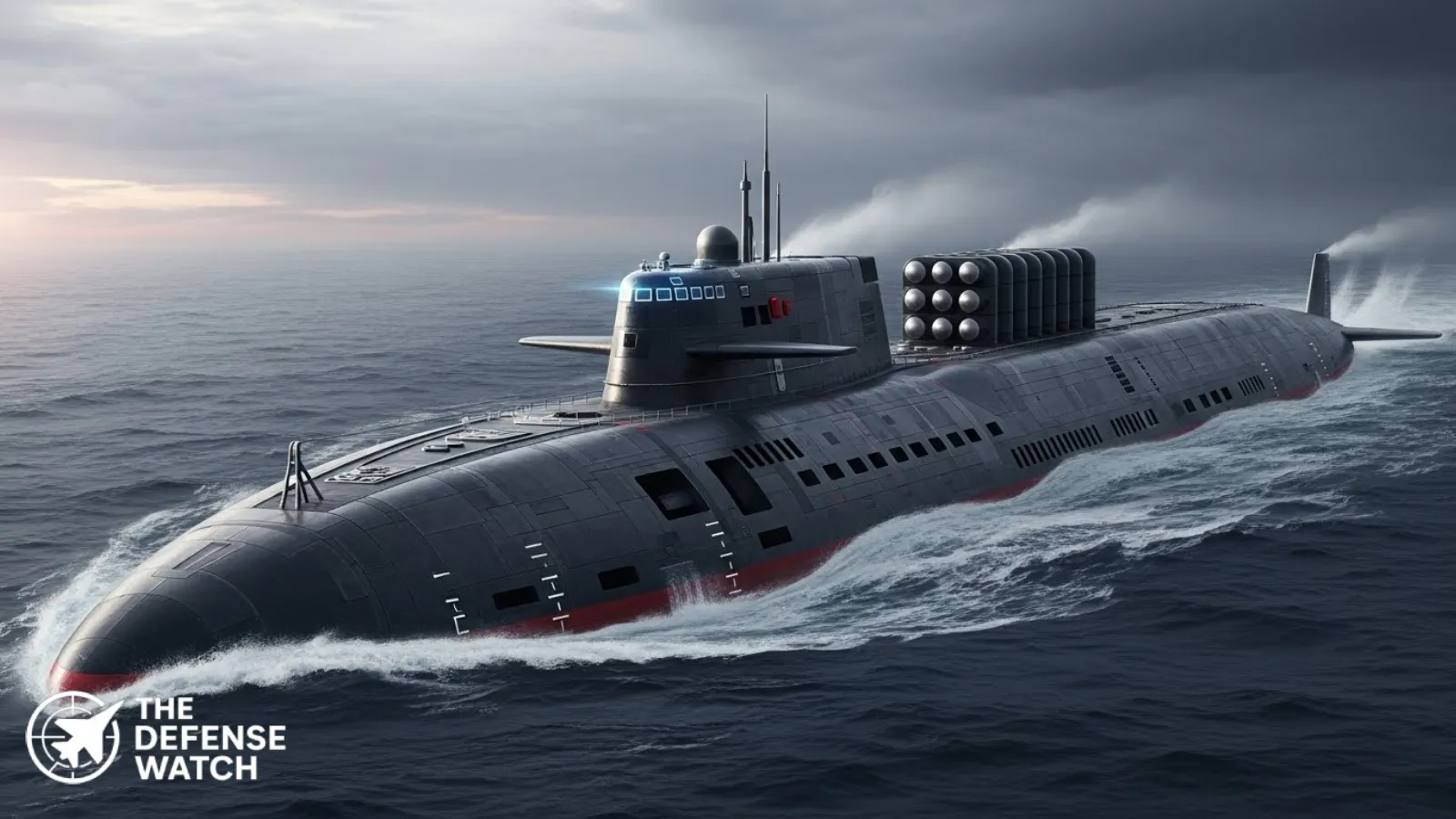
China Type 096 ballistic missile submarine is emerging as Beijing latest effort to strengthen sea based nuclear deterrence and narrow the undersea gap with the United States.
China Type 096 submarine development
The Type 096 ballistic missile submarine is designed to address long standing limitations in Chinese SSBN operations. Analysts cited by Army Recognition note that current Type 094 boats are noisier than U S and Russian counterparts, limiting survivability in contested waters.
The Type 096 is expected to incorporate improved hull design, quieter propulsion, and more advanced acoustic damping. These changes aim to reduce detectability and support continuous at sea deterrence patrols, a core requirement for credible nuclear deterrence.
Missile capability and strategic role
The submarine is expected to carry the JL 3 submarine launched ballistic missile, which has a significantly longer range than earlier Chinese systems. This would allow Chinese SSBNs to strike targets from protected bastions closer to home waters.
U S defense assessments, including those from the Pentagon annual China Military Power Report, have highlighted China focus on strengthening its nuclear triad. Sea based forces are seen as the most survivable leg of that triad.
Implications for U S and regional security
The development of the Type 096 ballistic missile submarine reflects broader shifts in the undersea balance in the Indo Pacific. While the United States retains a qualitative advantage with the Ohio class and future Columbia class submarines, Chinese advances could complicate U S and allied anti submarine warfare planning.
Regional security analysts note that a quieter and more capable Chinese SSBN force would increase the importance of undersea surveillance, allied cooperation, and deterrence stability measures.
Authoritative context
The U S Department of Defense and independent research bodies such as the Center for Strategic and International Studies have consistently assessed that China is moving toward a more mature and diversified nuclear posture. The Type 096 fits within this long term modernization trend rather than representing a sudden shift.
Saab Parallelizes Submarine Production to Meet 2026 Targets
Saab submarine production is being reorganized as the Swedish defense company moves to parallelize workstreams to meet key 2026 delivery milestones, according to Reuters.
The company said the shift is aimed at reducing bottlenecks and improving schedule certainty across its submarine portfolio, which includes the A26 Blekinge-class new-build submarines and the mid-life upgrade of Sweden’s Gotland-class boats. Both programs are central to Sweden’s naval modernization plans and are closely watched by European defense planners.
Saab has faced challenges similar to other naval shipbuilders, including supply chain constraints, workforce availability, and the complexity of integrating advanced combat systems. By running multiple production phases simultaneously rather than sequentially, Saab aims to shorten overall build times while maintaining quality and safety standards.
A26 Program Remains a Priority
The A26 submarine program is designed to deliver next-generation air-independent propulsion submarines optimized for operations in the Baltic Sea and beyond. The boats are expected to provide improved stealth, sensor integration, and special operations support compared to earlier Swedish designs.
Saab stated that parallel production will allow shipyard teams to work on hull sections, systems integration, and testing activities at the same time. This approach is intended to keep the first A26 submarines on track for delivery to the Swedish Navy around 2026.
Gotland-Class Upgrades Continue
In parallel, Saab is completing major upgrades to the Gotland-class submarines, extending their service life and improving combat capability. The Gotland-class is well known internationally, including for its role in U.S. Navy exercises, and remains a key asset for Sweden’s undersea deterrence.
Reuters reported that Saab views the restructured production model as essential to meeting contractual obligations while managing cost and schedule risk. The company emphasized that the changes do not alter program scope or performance requirements.
Broader Implications for European Naval Industry
Saab’s move reflects a wider trend across Europe, where defense manufacturers are under pressure to deliver complex naval platforms faster as regional security concerns grow. Submarine industrial capacity, in particular, has become a strategic issue for NATO and partner nations.
By parallelizing submarine production, Saab is signaling confidence in its shipyard processes while responding to increased demand for reliable delivery timelines.
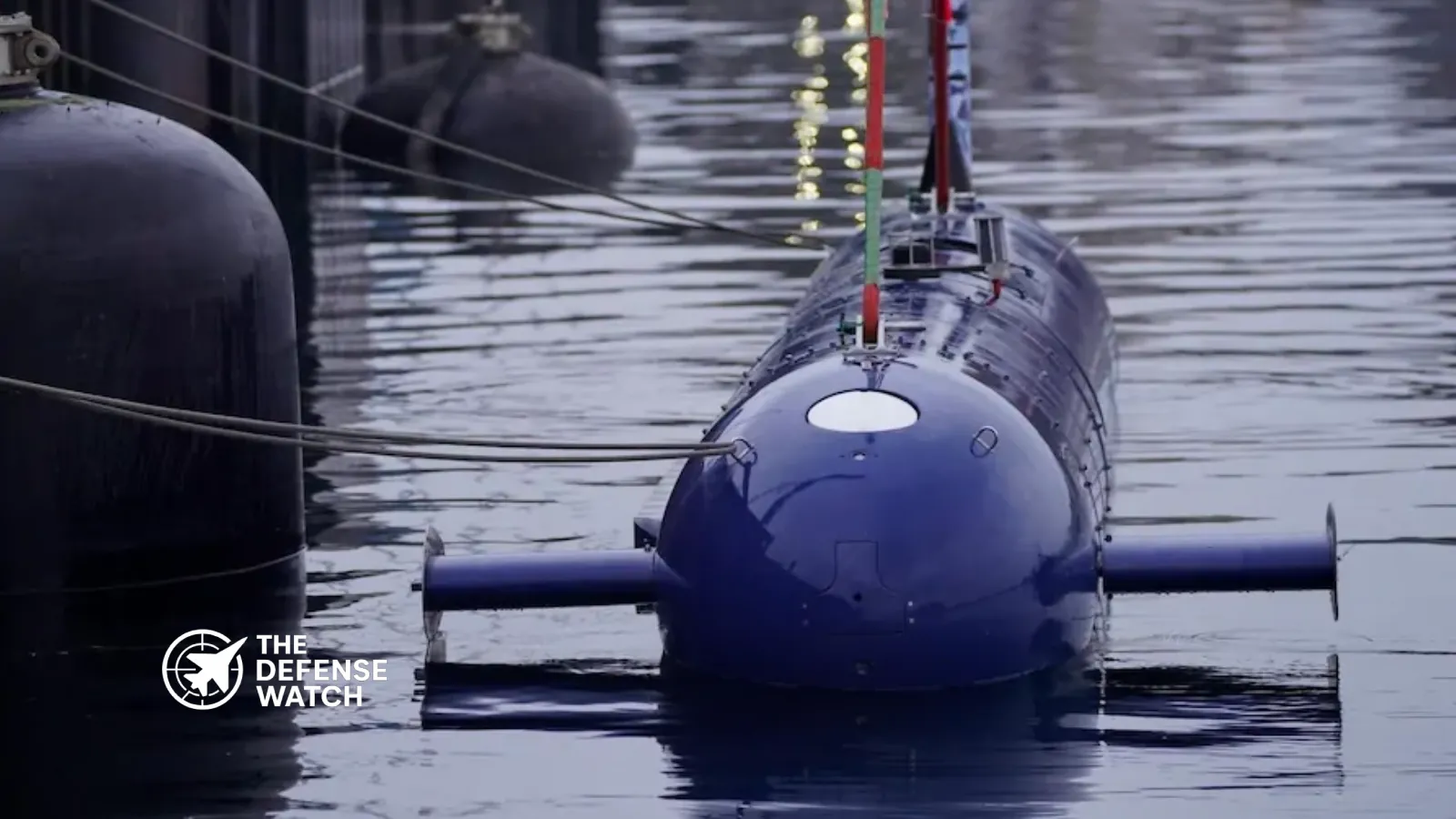
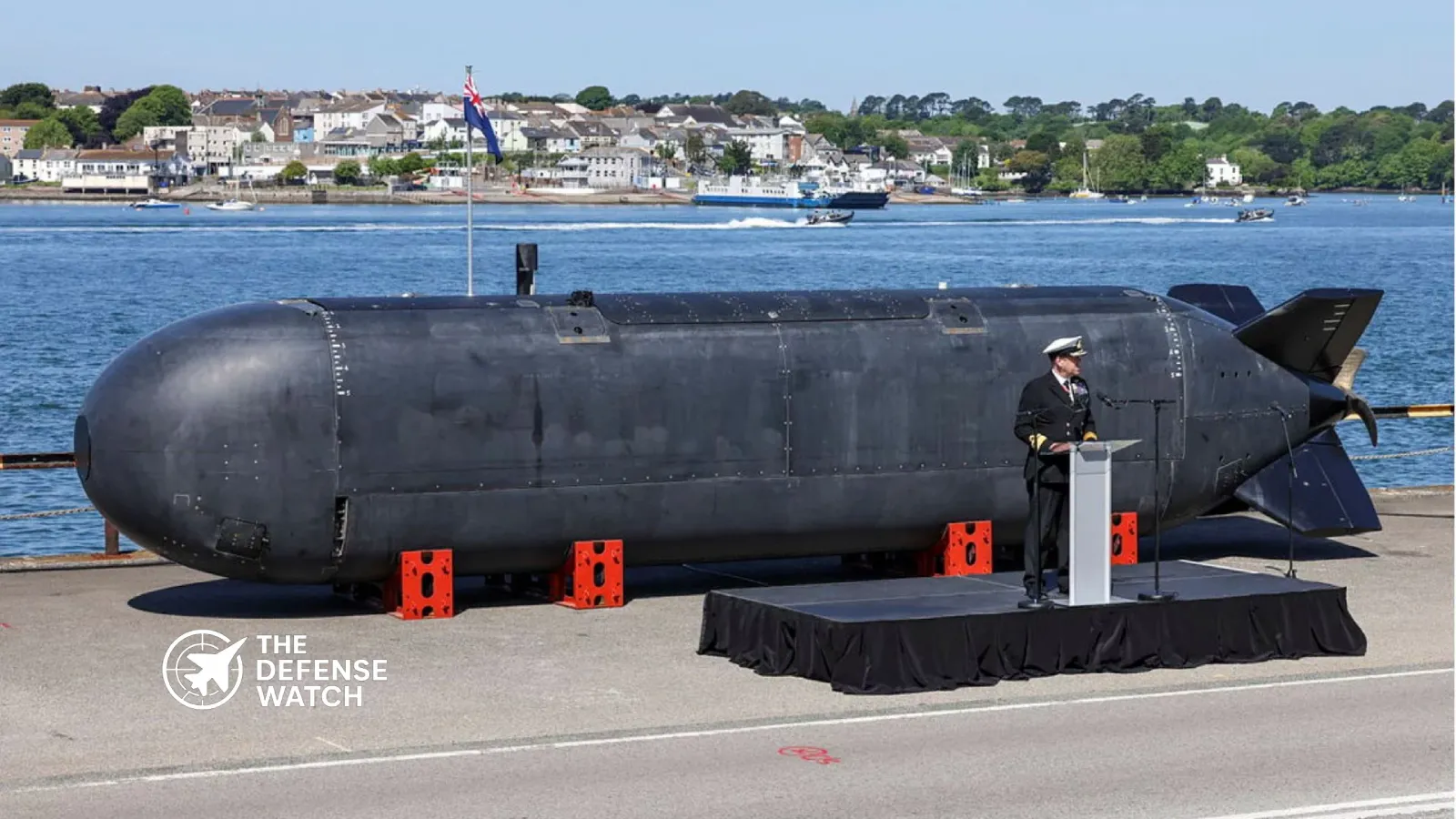
The XV Excalibur autonomous submarine has been delivered to the Royal Navy under the Atlantic Bastion program, marking a key step in UK undersea modernization. The platform is designed to support persistent surveillance, seabed awareness, and protection of critical undersea infrastructure.
What Was Delivered
XV Excalibur is a large autonomous underwater vehicle developed to operate without a crew for extended periods. It is intended to gather data, monitor activity, and support naval operations in the North Atlantic. The Royal Navy confirmed the delivery as part of a broader push to integrate uncrewed systems into frontline maritime missions.
The Atlantic Bastion program focuses on protecting sea lines of communication and subsea assets, including cables and pipelines that support NATO economies and military operations.
Why It Matters
Undersea infrastructure has become a growing security concern for the UK and its allies. Autonomous platforms like XV Excalibur allow navies to maintain presence and awareness at lower cost and risk than crewed submarines. UK defense planners have highlighted autonomy as central to future maritime operations.
See also: Royal Navy expands uncrewed surface and subsurface fleet
Broader Context
The delivery aligns with NATO efforts to improve undersea domain awareness amid rising competition in the Atlantic. Similar programs are underway in the United States and other allied navies, reflecting a shared focus on autonomous systems for surveillance and deterrence.
New Nuclear Attack Submarine for US Navy
A new nuclear attack submarine is set to join the US Navy fleet, marking another step in American undersea warfare modernization. According to reporting by UK Defence Journal, the submarine will strengthen the US Navy submarine force as demand grows for stealth, endurance, and advanced strike capability in contested waters.
The vessel is part of the ongoing effort to expand and modernize the US nuclear attack submarine fleet, which plays a central role in intelligence gathering, sea control, and deterrence missions worldwide. The US Navy continues to prioritize undersea dominance as peer competitors invest heavily in anti-submarine warfare and advanced naval platforms.
Expanding the US Nuclear Attack Submarine Fleet
The new submarine is expected to join the Virginia-class program, the backbone of the US Navy’s attack submarine force. Virginia-class boats are designed for multi-mission operations, including anti-submarine warfare, land-attack strikes, special operations support, and intelligence missions.
Equipped with nuclear propulsion, these submarines offer extended deployment endurance and high sustained speeds without refueling. Their stealth-focused design and advanced sonar systems allow them to operate effectively in both deep-ocean and littoral environments.
Strategic Importance for Undersea Warfare
US nuclear attack submarines remain a key component of American naval strategy. Defense officials have repeatedly highlighted undersea warfare as a decisive domain in future conflicts. The addition of a new attack submarine supports fleet readiness while offsetting the retirement of older Los Angeles-class boats.
Authoritative assessments from the US Navy and Congressional Research Service have emphasized the need to maintain attack submarine numbers to meet global operational demands.
Program Context
The submarine’s entry into service reflects broader US defense priorities focused on naval modernization, industrial capacity, and long-term deterrence. As maritime competition intensifies, the US Navy continues to invest heavily in its submarine force to preserve undersea superiority.