L3Harris has delivered 1,000 shipsets each of two major avionics components for the F-35 Lightning II, reaching a manufacturing milestone for the fighter’s Technology Refresh 3 (TR-3) modernization program, the company announced October 19.
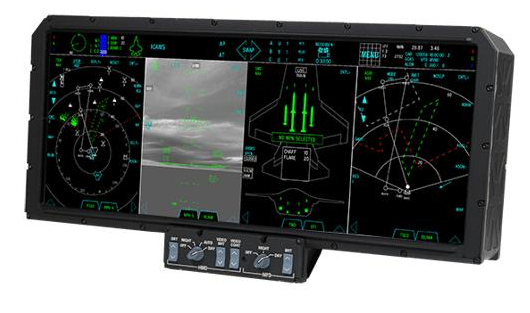
The milestone covers the Panoramic Cockpit Display Electronic Unit (PCD-EU) and Aircraft Memory System (AMS). L3Harris said deliveries of both systems began in 2022, with production now supporting new aircraft manufacturing and upgrades to aircraft already in service.
The achievement provides evidence of production progress for components central to the F-35’s upgraded computing architecture. It does not, by itself, establish that the wider modernization program has completed all planned capabilities or that every aircraft equipped with TR-3 is operating with the same software configuration.
Two avionics components, one modernization effort
TR-3 is a hardware and software modernization package designed to provide the computing foundation for future F-35 capability upgrades, including elements of the Block 4 program.
The PCD-EU supports the aircraft’s panoramic cockpit display electronics, while the AMS provides aircraft memory capability. Both contribute to the processing and information-handling infrastructure used by the fighter’s mission systems.
L3Harris said the two components collectively support a 37-fold increase in processing capability and 20 times the data storage compared with legacy systems. Those figures are company-reported comparisons, and the announcement does not provide the detailed test conditions or baseline configurations behind them.
The significance lies in the role these components play within a larger architecture. Modern combat aircraft must process information from onboard sensors, present it to pilots and support the integration of mission software. Greater computing capacity and storage can provide the foundation for more demanding functions, but the hardware alone does not determine the performance of the complete aircraft.
Software maturity, system integration, verification and the availability of compatible capabilities remain important factors.
Why the 1,000-shipset milestone matters
A production milestone of this scale is relevant to the F-35 program because the aircraft is manufactured for the U.S. military and a growing group of international operators. The supply chain must support both the delivery of new aircraft and the maintenance and modernization requirements of the existing fleet.
Reaching 1,000 deliveries of each component suggests that L3Harris has established sustained production for these two items. However, the company did not disclose the cumulative number of aircraft fitted with both components, the precise split between new-build installations and retrofits, or the rate at which future deliveries are planned.
A shipset count should also not be confused with a count of completed aircraft. It measures deliveries of the relevant equipment, not necessarily aircraft acceptance, operational availability or completion of every associated software upgrade.
L3Harris also produces the F-35’s Integrated Core Processor (ICP), the third TR-3 component identified in its announcement. The company said the ICP achieved full-rate production in 2025. Together, the three components form part of the processing infrastructure needed to support the aircraft’s evolving mission systems.
Production progress does not resolve every F-35 modernization challenge
The milestone comes against a history of schedule pressure surrounding TR-3 and the broader Block 4 modernization effort.
In a September 2025 report, the U.S. Government Accountability Office (GAO) identified TR-3 development delays as the primary driver of late F-35 aircraft deliveries in 2024. The watchdog also reported that the broader Block 4 effort was more than $6 billion above earlier cost estimates and at least five years behind its original schedule.
The program subsequently made progress. Lockheed Martin, the F-35’s prime contractor, reported in January 2026 that TR-3 development had been completed and that the program delivered 191 aircraft during 2025. Those are separate milestones: completion of development work and production of avionics components do not necessarily mean that every planned Block 4 capability has been delivered.
This distinction matters because TR-3 is an enabling upgrade rather than a standalone combat capability. It provides computing and storage capacity intended to support additional capabilities, while the broader modernization effort includes software, weapons integration and other changes that must be developed and tested.
The 1,000-shipset milestone therefore represents progress on the industrial and hardware side of the program. It should not be interpreted as proof that all modernization objectives have been met.
What the milestone means for the F-35 fleet
For the F-35 program, reliable production of avionics is necessary to sustain aircraft deliveries while supporting the modernization of existing jets. A shortfall in a critical electronic component can affect assembly schedules or delay planned upgrades, even when other parts of the aircraft are available.
L3Harris said its production supports both new aircraft and retrofits. That dual requirement places demands on manufacturing capacity, quality control and coordination across the supply chain.
The company also stated that its processing systems have demonstrated reliability exceeding program expectations. This remains a manufacturer claim; the announcement did not include independent reliability data, failure rates or detailed fleet-performance figures that would allow readers to assess the claim separately.
The next meaningful indicators will be whether production remains consistent, whether the wider F-35 supply chain can meet aircraft delivery schedules, and how quickly the program fields and validates additional modernization capabilities.
L3Harris’ latest milestone is a measurable achievement in avionics production. Its broader effect on operational capability will depend on how successfully these components are integrated into aircraft and used to support the F-35’s continuing modernization.