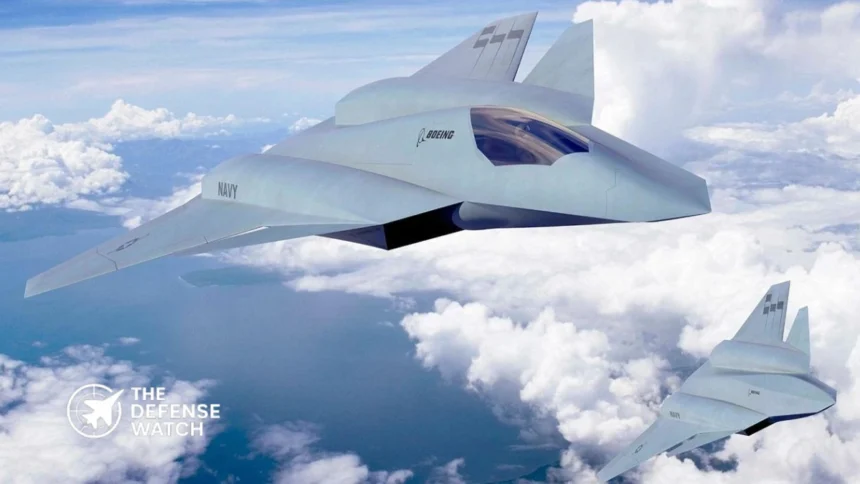
The U.S. Navy has selected Boeing to develop its F/A-XX sixth-generation fighter, awarding the company a contract worth more than $20 billion for the aircraft’s full-scale development phase. Announced on September 29, 2026, the decision ends a competition involving Boeing, Northrop Grumman and Lockheed Martin, and places Boeing at the center of the Navy’s next-generation carrier aviation program.
The F/A-XX is intended to replace the Navy’s F/A-18E/F Super Hornet fleet and extend the reach of carrier-based airpower. However, the development award is not the aircraft’s total lifetime cost, and the Navy has not publicly disclosed a production unit price, final procurement quantity or complete program cost.
The award also resolves the immediate question of which contractor will lead the program. The harder questions concern affordability, development risk and how quickly the Navy can introduce a new fighter while maintaining its existing carrier air wings.
Boeing vs. Northrop Grumman: Who Won F/A-XX?
Boeing prevailed over Northrop Grumman and Lockheed Martin, according to Reuters’ October 5 report. Reuters, citing people familiar with the competition, reported that Boeing’s experience building carrier-based aircraft and its approach to digital engineering and easier aircraft upgrades helped distinguish its proposal. The Pentagon has not released a detailed public scoring breakdown that would allow an independent comparison of the competing designs.
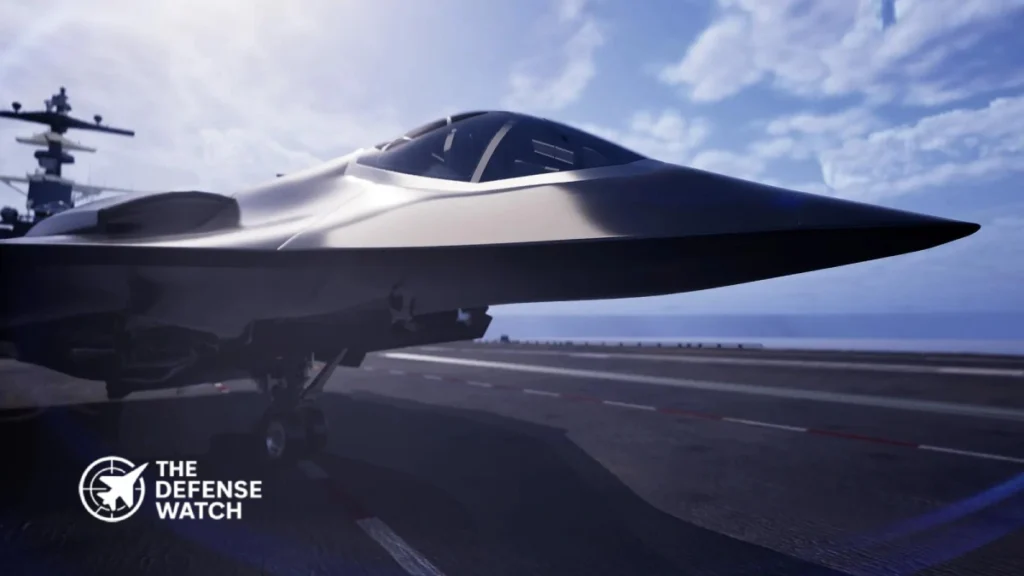
Northrop Grumman said it had offered a highly survivable, digitally advanced sixth-generation fighter and had requested a debriefing from the Navy. That request does not, by itself, establish that the company will challenge the award or that the selection process was flawed.
Boeing’s selection is important because the company will now lead the Navy’s development effort rather than continue competing for the program. The final aircraft’s design, flight-test results, manufacturing requirements and ability to meet carrier operating demands will determine whether the program delivers its intended capability.
How Much Will the F/A-XX Cost?
The most important publicly reported figure is the development contract value: more than $20 billion. The Department of War’s September 29 announcement described the award as covering full-scale development and multiple test aircraft for ground testing, airworthiness, systems integration and weapons integration.
That figure should not be confused with a confirmed aircraft price or the total cost of the program.
| Cost category | What is publicly known |
|---|---|
| Full-scale development | More than $20 billion |
| Test aircraft | Multiple aircraft included in the development contract |
| Production unit cost | Not publicly disclosed |
| Total procurement cost | Not established by the development award |
| Lifetime operating and support cost | Not publicly disclosed |
The development phase must cover more than designing an aircraft. It includes building and testing aircraft, validating flight safety, integrating mission systems and weapons, and resolving technical problems before production can expand.
Production would create a separate stream of costs involving aircraft procurement, engines, spare parts, maintenance equipment, training and long-term sustainment. The eventual bill will depend on how many aircraft the Navy buys, how development progresses and what capabilities enter the production configuration.
Reuters reported that the initial development phase is worth more than $20 billion and that production could generate substantially larger business over the aircraft’s lifetime. Those potential production revenues are not a current contract award or a confirmed government spending commitment.
Why the F/A-XX Matters to the U.S. Navy
The F/A-XX is being developed for carrier operations, where aircraft must operate from ships, recover on flight decks and carry out missions across large maritime distances. Those requirements distinguish it from the U.S. Air Force’s F-47 next-generation fighter, even though both programs aim to strengthen future U.S. air combat capabilities.
The Navy needs a successor to the F/A-18E/F Super Hornet as it plans for operations against advanced air defenses and increasingly capable aircraft. Carrier forces operating in the Indo-Pacific may have to conduct missions from greater distances, particularly where an adversary’s missiles and surveillance systems complicate access to forward bases.
The Navy’s future fighter will therefore need to combine survivability, range, mission-system integration and carrier compatibility. The exact balance among those requirements remains uncertain because the aircraft’s detailed configuration and performance specifications have not been publicly released.
The F/A-XX is also expected to operate within a wider combat network rather than function only as a standalone fighter. Potential integration with uncrewed aircraft is an important part of the broader next-generation air combat concept, but the Navy has not publicly established the precise mix of autonomous aircraft or weapons that will accompany the F/A-XX in operational service.
The distinction matters for cost. A fighter’s effectiveness will depend not only on its individual performance but also on the sensors, communications, weapons, support aircraft and networks available to it. Those elements can affect both procurement costs and the demands placed on carrier air wings.
The Budget Question Behind the Contract
The F/A-XX award follows a difficult funding period. The Navy’s next-generation fighter faced pressure in the fiscal 2026 budget process, when the administration’s request proposed substantially less discretionary funding than some congressional proposals favored.
The Congressional Research Service’s July 2, 2026, update to its FY2026 Defense Budget: Funding for Selected Weapon Systems report documents the differences between the administration’s request, congressional authorization and enacted appropriations. The final defense appropriations law provided more funding for F/A-XX than the administration had requested.
That history is relevant because awarding a development contract does not remove the need for sustained funding over multiple budget cycles. The Navy must finance testing, resolve design issues and eventually request production funding while meeting other priorities, including shipbuilding, submarines, weapons and maintenance.
A program of this scale also creates pressure to control requirements. Adding new sensors, software functions or weapons late in development can increase engineering work and delay testing. Conversely, reducing requirements to contain costs could affect the capability the Navy ultimately receives.
The challenge will be to maintain a stable design and testing schedule without committing to production before the aircraft has demonstrated that it meets the Navy’s operational requirements.
What the Boeing Selection Means for Northrop Grumman
Northrop Grumman’s loss removes it from the lead role on the Navy’s F/A-XX development contract, but it does not remove the company from the wider U.S. military aviation sector.
Northrop has experience developing advanced military aircraft and remains involved in other major programs, including the B-21 Raider bomber. Its F/A-XX proposal also gave the company an opportunity to compete for a major long-term naval aviation program, which Boeing will now lead.
For Boeing, the award adds a second next-generation fighter program to its portfolio after the U.S. Air Force selected the company for the F-47 in 2025. Boeing says its investments in digital design, engineering and manufacturing facilities support work on both aircraft.
Running two advanced fighter programs in parallel could allow Boeing to share selected engineering methods and manufacturing practices. It does not mean the aircraft can use identical designs or that savings are guaranteed. The Navy and Air Force have different operational requirements, and each program will face its own development and testing challenges.
Financial risk is also significant. Reuters reported that Boeing had incurred $20.5 billion in losses across five fixed-price development programs, including the KC-46 tanker, T-7 trainer, MQ-25 refueling drone, Air Force One replacement and Starliner programs. The contract terms for F/A-XX are therefore important to Boeing’s ability to manage costs, although the publicly available information cited here does not establish all the financial terms of the award.
When Will the F/A-XX Enter Service?
The Navy’s fighter is expected to enter service during the 2030s, according to Reuters’ reporting, but a firm initial operational capability date has not been publicly established in the sources cited here.
Several steps must occur before operational service. Boeing will need to develop and build test aircraft, demonstrate flight safety, integrate mission systems and weapons, and support the Navy’s evaluation of the aircraft. Testing may identify technical problems that require design changes or additional work.
The transition also involves the carrier fleet. The Navy will need to prepare maintainers, aircrew, support equipment and shipboard facilities for the new aircraft while continuing to operate its existing fighters. The pace of replacement will depend on production funding, delivery schedules and the service’s force-structure decisions.
The public record does not yet establish a final F/A-XX production quantity, a confirmed unit price or a detailed delivery schedule. Those figures will be necessary to assess how quickly the aircraft can replace older fighters and how much of the Navy’s future aviation budget it will consume.
What to Watch in the Next Phase
The next meaningful indicators will be the release of additional program details, evidence of progress in development and the Navy’s future budget requests.
Three issues will be particularly important:
- Development schedule: Whether Boeing can move from design work to testing without major delays.
- Program affordability: Whether the Navy can sustain development and fund production without disrupting other fleet priorities.
- Operational integration: How the F/A-XX will work with existing carrier aircraft, uncrewed platforms and the Navy’s wider combat network.
Boeing has won the competition, but the selection is the start of the main development effort, not proof that the aircraft will meet every performance or cost target. The program’s success will depend on what the Navy receives, how much it costs and whether the fighter can enter service on a schedule that supports the carrier fleet’s long-term needs.