B-21 Raider: Specs, Payload, Cost and Stealth
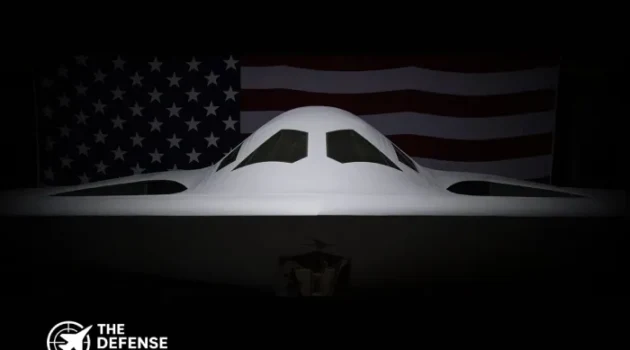
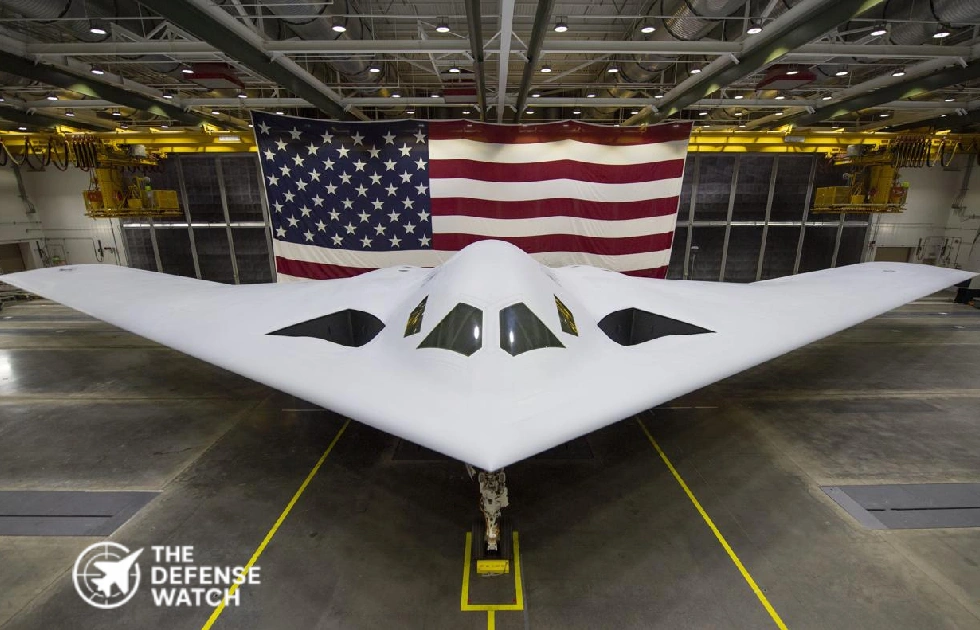
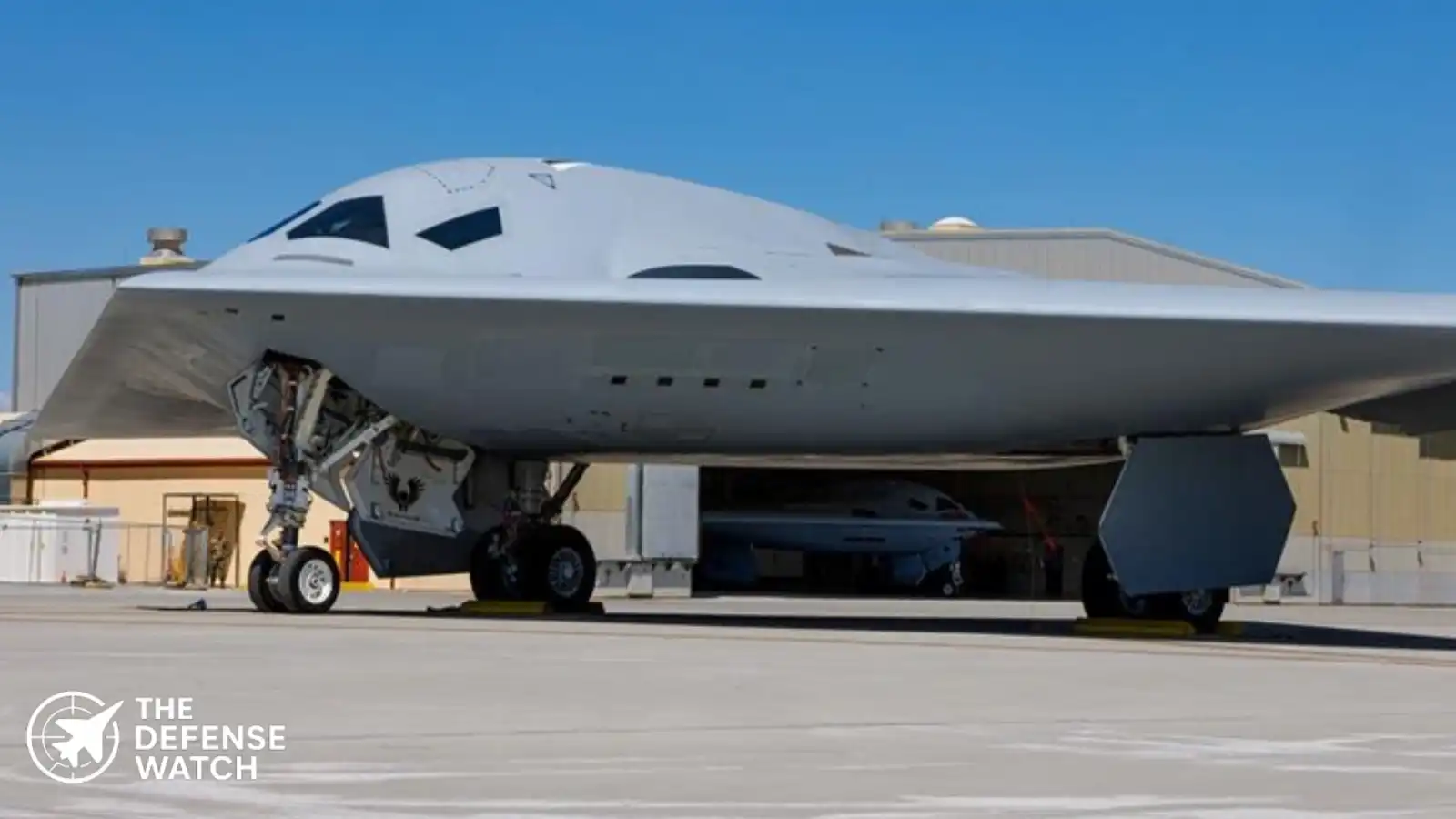
The B-21 Raider is a U.S. Air Force long-range stealth bomber designed to deliver conventional and nuclear weapons against heavily defended targets. Developed by Northrop Grumman, the aircraft is intended to form the core of the future U.S. bomber fleet alongside the B-52 Stratofortress.
- B-21 Raider: Specs, Payload, Cost and Stealth
- What is the B-21 Raider?
- B-21 Raider specifications
- How the B-21’s stealth technology is designed to work
- 1. Low-observable airframe
- 2. Advanced materials and surface treatments
- 3. Sensor integration and electronic warfare
- 4. Open systems architecture
- B-21 Raider payload and weapons
- Why the U.S. Air Force needs the B-21
- Who manufactures the B-21 Raider?
- B-21 Raider cost and procurement plans
- B-21 Raider development timeline
- Development contract awarded
- Public unveiling
- First flight
- Second test aircraft
- Development and fielding remain key questions
- Operation Epic Fury: What the bomber timeline tells us
- February 28, 2026: Operation begins
- March 2026: Strike operations expand
- April 6, 2026: CENTCOM releases an updated fact sheet
- October 18, 2026: B-21 participation remains unestablished in the cited sources
- Which platforms were involved?
- What Operation Epic Fury says about the B-21’s future role
- B-21 Raider vs. B-2 Spirit
- What remains undisclosed about the B-21?
- Frequently asked questions about the B-21 Raider
The B-21 combines a low-observable airframe, advanced mission systems, long-range strike capability and an architecture intended to support future upgrades. Its detailed performance remains classified, including its maximum payload, combat radius, radar cross-section and many of its sensor capabilities.
The program is also relevant to understanding U.S. long-range strike operations. During Operation Epic Fury against Iran, U.S. Central Command publicly identified the B-2 Spirit, rather than the B-21 Raider, among the bombers employed. The operation therefore provides a useful example of the existing stealth bomber capability that the B-21 is intended to complement and eventually succeed.
What is the B-21 Raider?
The B-21 Raider is a penetrating strategic bomber developed under the U.S. Air Force’s Long Range Strike Bomber program. Its primary purpose is to reach targets at long distances, including those protected by sophisticated air defense networks, and deliver precision conventional or nuclear weapons.
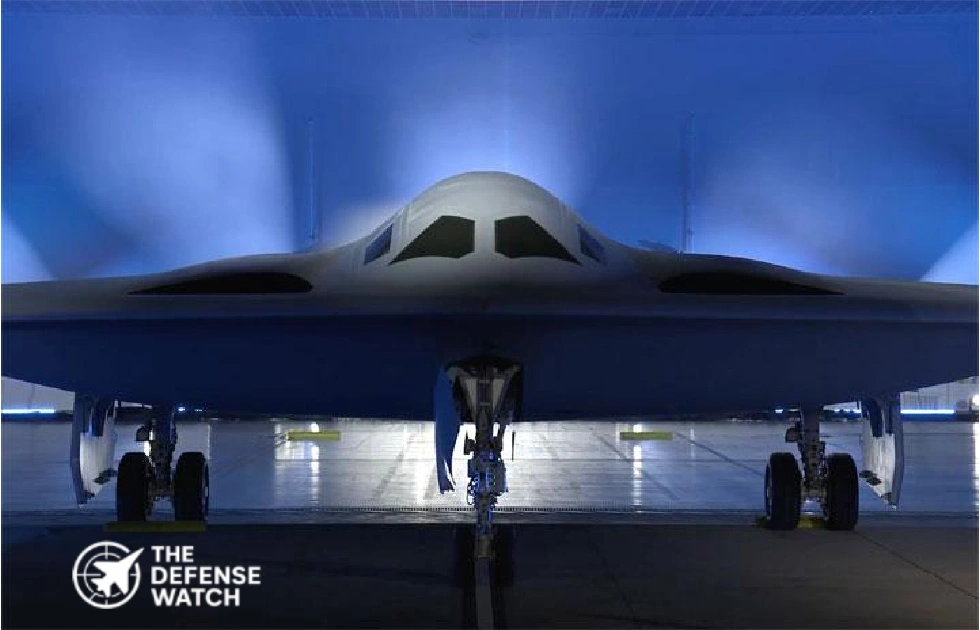
The aircraft was publicly unveiled at Northrop Grumman’s facility in Palmdale, California, on December 2, 2022. Its designation reflects its role as a bomber designed for the 21st century, while its name honors the Doolittle Raiders, the U.S. Army Air Forces crews who attacked Japan in April 1942.
Unlike a tactical fighter, the B-21 is designed around long-range strike missions, payload flexibility and the ability to operate in contested airspace. Its intended mission set extends beyond delivering weapons to include participation in a wider network of intelligence, surveillance, reconnaissance, communications and electronic attack capabilities.
The U.S. Air Force’s stated plan is to procure at least 100 aircraft. The Raider is expected to replace the B-1B Lancer and B-2 Spirit over time, while the B-52 remains part of the future bomber force.
B-21 Raider specifications
The Air Force has released a limited set of program details, but it has not published a complete technical specification sheet. Several commonly repeated figures for range, payload and stealth performance are estimates rather than confirmed specifications.
Attribute Publicly available information Aircraft designation B-21 Raider Manufacturer Northrop Grumman Primary operator U.S. Air Force Aircraft type Long-range penetrating stealth bomber Propulsion Jet-powered, detailed engine specifications undisclosed Crew Designed for manned operations, with provision for unmanned operation in the broader design concept Weapons Conventional and nuclear munitions Payload capacity Exact maximum payload not publicly disclosed Combat radius Not publicly disclosed Maximum speed Not publicly disclosed Stealth technology Advanced low-observable design Minimum planned fleet At least 100 aircraft First flight November 10, 2023 First public unveiling December 2, 2022 Initial operating timeline Not confirmed by a public declaration of operational capability in the sources cited here The B-21’s first flight took place on November 10, 2023, beginning its flight-test program. A second test aircraft arrived at Edwards Air Force Base in September 2025, expanding the Air Force’s test activity. In its September 18, 2025, report, the Air Force Test Center described the second aircraft’s arrival as an expansion of testing capabilities.
These milestones should not be confused with operational service. Flight testing, production, delivery to a unit, weapons integration and initial operational capability are separate stages.
How the B-21’s stealth technology is designed to work

The B-21’s most important feature is its low-observable design. Stealth does not make an aircraft literally invisible. It reduces the effectiveness of an adversary’s ability to detect, track and engage it, increasing the difficulty of building a reliable firing solution.
1. Low-observable airframe
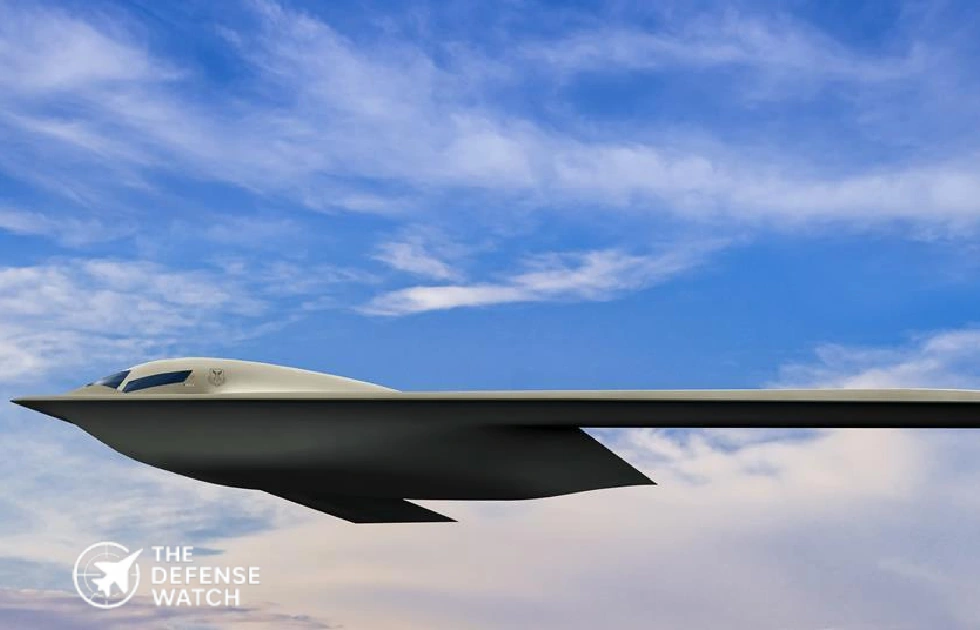
The B-21’s flying-wing configuration and carefully shaped surfaces are intended to reduce radar reflections. Its external form is consistent with the approach used on the B-2 Spirit, although the Raider incorporates newer design and manufacturing methods.
The Air Force and Northrop Grumman have not released a complete description of the aircraft’s radar signature. Exact detection distances would depend on the radar, operating conditions, aircraft aspect, frequency and other factors, and cannot be established from the public silhouette alone.
2. Advanced materials and surface treatments
Low-observable aircraft rely on a combination of shaping, materials, surface treatments and careful management of features that can produce radar reflections.
Northrop Grumman says the B-21 incorporates newer low-observable technologies and maintenance processes intended to make stealth sustainment easier than on earlier aircraft. That is a manufacturer claim about design objectives, not a publicly established figure for maintenance savings or operational availability.
Maintaining a low-observable aircraft is a continuing task. Surface condition, repairs, inspection procedures and environmental exposure can affect how the aircraft is maintained and returned to service.
3. Sensor integration and electronic warfare
The B-21 is intended to operate as part of a connected force rather than as an isolated bomber. Its mission systems will need to support navigation, target identification, communications, threat awareness and weapon employment.
Electronic warfare and intelligence support can help a strike package understand and respond to enemy air defenses. However, the Air Force has not publicly disclosed the B-21’s complete sensor suite, electronic warfare performance or ability to counter specific radar systems.
4. Open systems architecture
The Air Force identifies open systems architecture as an important feature of the program. This approach is intended to reduce the risk of integrating future technologies and allow upgrades without redesigning the entire aircraft for every new requirement.
That matters because the bomber is expected to remain in service for decades. Threat radars, interceptors, command networks and electronic warfare systems will continue to change, requiring regular software and hardware updates.
B-21 Raider payload and weapons
The B-21 is designed to carry both conventional and nuclear weapons. The Air Force also states that the aircraft will support a broad mix of stand-off and direct-attack munitions.
A stand-off weapon allows an aircraft to attack from a distance rather than approach the target directly. A direct-attack weapon is employed against the target itself, often requiring a different approach to route planning, target data and weapon release.
The exact number and type of weapons the B-21 can carry on a particular mission have not been publicly established. The aircraft’s internal payload capacity, individual weapon loadouts and full list of certified munitions should not be inferred from its external shape or from the capabilities of the B-2.
The planned conventional mission set supports attacks against military infrastructure, command facilities, air defense systems and other targets designated for strike operations. Nuclear capability provides a separate strategic role, with employment governed by U.S. national command authority and applicable nuclear policy.
The B-21 is therefore not simply a replacement aircraft for delivering a larger bomb load. Its intended value lies in combining weapon flexibility, survivability, range and the ability to operate within a modern strike network.
Why the U.S. Air Force needs the B-21
The Raider addresses a long-term challenge for the U.S. bomber force: maintaining the ability to reach and attack targets when an adversary has modern integrated air defenses, long-range interceptors and electronic warfare capabilities.
The B-1B Lancer and B-2 Spirit provide different capabilities, but both fleets face the practical challenges of aging aircraft, maintenance demands and modernization. The B-52 remains valuable for long-range strike, particularly when operating with suitable stand-off weapons, but it does not offer the same low-observable design as the B-2 or B-21.
The Air Force plans to combine the B-21’s penetrating strike capability with the B-52’s continued role in the bomber fleet. This mix allows different aircraft to perform different tasks according to target defenses, weapon requirements and mission conditions.
The B-21 is also part of a broader modernization effort involving command and control, intelligence collection, aerial refueling, communications and weapons development. A stealth bomber’s effectiveness depends not only on the aircraft itself but also on the information and support available before, during and after a mission.
Who manufactures the B-21 Raider?
Northrop Grumman is the B-21’s prime contractor and lead manufacturer. The Air Force awarded the company’s engineering and manufacturing development contract on October 27, 2015.
The program includes a network of industrial partners. The Air Force’s published fact sheet identifies Pratt & Whitney, Janicki Industries, Collins Aerospace, GKN Aerospace, BAE Systems and Spirit AeroSystems among the program partners.
Northrop Grumman’s responsibilities include aircraft design, production and integration work in cooperation with the Air Force and its suppliers. The service retains responsibility for operational requirements, testing, acceptance and the eventual use of the bomber.
Production capacity is a major consideration. A fleet of at least 100 aircraft requires not only manufacturing facilities but also trained crews, maintainers, spare parts, secure infrastructure, weapons integration and a long-term sustainment system.
The speed at which the fleet becomes operational will depend on testing results, manufacturing performance, budget decisions and the Air Force’s ability to establish the necessary units and support structure.
B-21 Raider cost and procurement plans
The Air Force’s published B-21 fact sheet lists an average unit procurement cost of $550 million in fiscal 2010 dollars, $639 million in fiscal 2019 dollars and $692 million in fiscal 2022 dollars. Those figures use different inflation bases and should not be treated as three separate current prices.
Average unit procurement cost is also not the same as the flyaway price of a single aircraft. The Air Force’s definition includes procurement funding for aircraft, support equipment, training, spares and engineering change orders, divided across a planned fleet of at least 100 aircraft.
The total program cost includes more than aircraft procurement. Development, testing, infrastructure, weapons integration, personnel and long-term sustainment also affect the financial commitment.
For this reason, claims that the B-21 costs a specific amount per aircraft should identify the fiscal-year dollar basis and explain what the figure includes. Comparisons with the B-2 are meaningful only when the figures use comparable cost definitions and accounting periods.
The planned fleet size is important to affordability. A smaller fleet can increase average costs and reduce the number of aircraft available for simultaneous missions, while expanding production introduces additional manufacturing and sustainment demands.
B-21 Raider development timeline
2015Development contract awarded
The Air Force selected Northrop Grumman for the engineering and manufacturing development phase on October 27.
2022Public unveiling
The B-21 was unveiled in Palmdale, California, on December 2.
2023First flight
The first B-21 flew on November 10, beginning flight testing.
2025Second test aircraft
A second Raider arrived at Edwards Air Force Base on September 11, broadening the flight-test effort.
2026Development and fielding remain key questions
The latest public program status should be checked against current Air Force budget documents and official program announcements. A confirmed initial operational capability date should not be inferred from flight-test milestones alone.
The timeline above distinguishes confirmed historical milestones from the status that needs current official verification. The Air Force’s September 2025 reporting confirms the second aircraft’s first flight and arrival at Edwards, but those events alone do not establish that the bomber has entered combat service.
Operation Epic Fury: What the bomber timeline tells us
Operation Epic Fury provides relevant context for the U.S. military’s existing long-range strike capabilities, but it should not be presented as a B-21 combat deployment.
According to U.S. Central Command, the operation began on February 28, 2026, at 1:15 a.m. The April 6, 2026, CENTCOM fact sheet listed B-1, B-2 and B-52 bombers among the aircraft employed, alongside fighter aircraft, electronic warfare platforms, reconnaissance aircraft, tankers, naval forces and ground-based air defense systems.
The B-2 is the relevant stealth bomber in the publicly identified aircraft list. The available official material cited here does not establish that the B-21 took part in the operation.
1February 28, 2026: Operation begins
CENTCOM said U.S. forces began striking targets in Iran under presidential direction. The stated objectives included targeting Iranian military and security infrastructure.
2March 2026: Strike operations expand
CENTCOM published successive operational updates and fact sheets documenting the campaign. Its public reporting identified a mix of bombers, fighters, electronic warfare aircraft, reconnaissance platforms, tankers, naval forces and defensive systems.
3April 6, 2026: CENTCOM releases an updated fact sheet
The official summary listed more than 13,000 targets struck and more than 155 Iranian vessels damaged or destroyed as figures reported by the command at that date. These are official operational claims, not independently verified totals.
4October 18, 2026: B-21 participation remains unestablished in the cited sources
The official records cited for this article document the operation’s start and identify the B-2 among the bombers employed. They do not establish B-21 participation or provide a verified B-21 combat record.
Which platforms were involved?
The CENTCOM fact sheet identified several categories of U.S. military assets.
Platform or system Publicly identified role or relevance B-1, B-2 and B-52 bombers Long-range strike missions F-15, F-16, F-18, F-22 and F-35 aircraft Fighter and strike support EA-18G, EC-130H and EA-37B Electronic warfare capabilities E-2D, U-2 and RC-135 Airborne surveillance, command support and reconnaissance KC-135, KC-46 and KC-130 tankers Aerial refueling MQ-9 and LUCAS one-way attack drones Uncrewed surveillance or strike capabilities Aircraft carriers, submarines and guided-missile destroyers Maritime strike and supporting naval operations Patriot and THAAD systems Air and missile defense The table summarizes categories listed in CENTCOM’s April 6 fact sheet. It does not establish that every platform participated in every strike or operated at the same time.
What Operation Epic Fury says about the B-21’s future role
The B-2’s publicly documented inclusion in the campaign demonstrates the continuing operational relevance of a stealth bomber capable of carrying conventional weapons. It does not, by itself, prove how the B-21 would perform in the same environment.
The B-21 is intended to build on the penetrating strike role while offering a newer aircraft architecture and a longer-term path for modernization. Its planned combination of conventional and nuclear capability would allow it to support both regional strike operations and strategic deterrence.
A future assessment of the Raider’s contribution would need evidence about its weapons integration, mission availability, targeting support, maintenance demands and ability to operate against specific air defense systems. Without those details, comparisons between the B-21 and the B-2 remain assessments of intended design and role, not verified combat performance.
For TheDefenseWatch’s separate Operation Epic Fury coverage, the B-21 can be linked as a related strategic bomber program. The article should make clear that the connection is analytical unless an official operational record establishes direct participation.
B-21 Raider vs. B-2 Spirit
The B-21 and B-2 share a penetrating stealth bomber role, but they belong to different stages of U.S. bomber modernization.
Attribute B-21 Raider B-2 Spirit Manufacturer Northrop Grumman Northrop Grumman Program status Development, testing and planned fielding Operational bomber Conventional weapons Designed to carry Capable of carrying Nuclear weapons Designed to carry Capable of carrying Stealth design Newer low-observable design Earlier generation of low-observable bomber Fleet plan At least 100 planned Existing fleet of 20 aircraft built Future role Gradually replace B-1B and B-2 Expected to be replaced by B-21 over time The B-2’s operational status and the B-21’s developmental status are important distinctions. A newer aircraft may offer advantages in maintenance, mission systems and future upgrades, but public information does not support assigning an exact combat advantage or detection probability to either platform.
The Air Force’s intended transition is toward a bomber force built around the B-21 and B-52, with the Raider taking over the penetrating role currently associated with the B-2.
What remains undisclosed about the B-21?
The lack of public technical detail is significant. Readers looking for a definitive specification sheet should be aware that several of the most frequently searched figures are not officially available.
The Air Force has not publicly disclosed a complete set of figures for:
- Maximum internal weapons payload.
- Combat radius and unrefueled mission range.
- Maximum speed and operating altitude.
- Radar cross-section or detection distance.
- Complete sensor and electronic warfare capabilities.
- Detailed unit flyaway price under current production conditions.
- A verified combat record or confirmed participation in Operation Epic Fury.
These gaps do not mean the aircraft lacks those capabilities. They mean the available public evidence is insufficient to state exact values confidently.
As the program progresses, official budget documents, test announcements, procurement decisions and operational declarations will provide the most reliable basis for updating this article.
Frequently asked questions about the B-21 Raider
What is the B-21 Raider?The B-21 Raider is a U.S. Air Force long-range stealth bomber developed by Northrop Grumman. It is designed to deliver conventional and nuclear weapons against targets defended by advanced air defense systems.
How much does the B-21 Raider cost?The Air Force’s published average unit procurement cost is $692 million in fiscal 2022 dollars. This figure includes more than the aircraft itself and should not be confused with a current flyaway price.
What is the B-21 Raider’s payload?The B-21 is designed to carry conventional and nuclear munitions, including stand-off and direct-attack weapons. Its maximum payload weight and complete weapons loadout have not been publicly disclosed.
Is the B-21 Raider operational?The B-21 has entered flight testing, and a second test aircraft joined the program in September 2025. The milestones cited here do not establish an officially declared initial operational capability date.
Did the B-21 Raider participate in Operation Epic Fury?The cited CENTCOM fact sheet identifies the B-2 Spirit, B-1 and B-52 among the bombers used during Operation Epic Fury. It does not establish that the B-21 participated in the operation.
How fast can the B-21 Raider fly?The B-21’s maximum speed has not been officially disclosed in the sources cited here. Specific speed figures published elsewhere should be treated as estimates unless supported by authoritative documentation.
How many B-21 Raiders will the U.S. Air Force buy?The Air Force’s stated plan is to procure at least 100 B-21 bombers. The final fleet size and delivery schedule may depend on future budget and procurement decisions.