• Home
  • About
  • Defense Systems
  • Manufacturer
  • Comparisons
  • Compare 
  • Tools
TheDefenseWatch.com
  • Aerospace & Aviation
  • Military & Ordnance
  • Naval & Maritime
  • Cyber & Space Defense
  • Policy & Strategy
  • Global News
  • Tools Library
    • Smart Calculator
    • Drone Flight Time Calculator
    • Drone Range Calculator
    • Counter-Drone Jammer Effective Range Calculator
    • Counter-Battery Radar Detection Calculator
    • Artillery Fire Correction Calculator
    • Thermal Camera Detection Range Calculator
    • Missile Range & Time-of-Flight Calculator
    • Radar Detection Range Calculator
    • FPV Strike Drone Payload vs Range Calculator
    • Loitering Munition Endurance Calculator
    • Sniper Ballistic Drop & Windage Calculator
    • Bullet Drop Calculator
    • U.S. Army Combat Fitness Test (ACFT) Calculator
    • Military Pension Calculator
    • Military Retirement Calculator
    • Military Pension Calculator
    • Large Number Calculator
Font ResizerAa

TheDefenseWatch.com

The Defense Watch | U.S. & Global Defense News, Analysis & Military Updates

Search
  • Home
  • About
  • Defense Systems
  • Manufacturer
  • Comparisons
  • Compare 
  • Tools

Stay Updated

Get the latest update

Subscribe

Explore

  • Drone
  • Fighter Jets & Military Aircraft
  • Hypersonic Weapons
  • Aircraft Carriers
  • Strategic History & Missions
  • Tools Library
Home » Hypersonic Missiles Explained: Why These Next-Generation Weapons Are So Dangerous
Hypersonic WeaponsMilitary & Ordnance

Hypersonic Missiles Explained: Why These Next-Generation Weapons Are So Dangerous

TeamDefenseWatch
Last updated: September 8, 2026 4:40 am
TeamDefenseWatch
Share
2 Min Read
hypersonic missiles explained
SHARE

Hypersonic Missiles Explained: The Future of Strategic Warfare

Hypersonic missiles — capable of flying at speeds exceeding Mach 5 (over 6,000 km/h) — are transforming global military strategy. Their unmatched speed, maneuverability, and unpredictable flight paths make them one of the most dangerous and destabilizing weapons in modern arsenals.

Contents
  • Hypersonic Missiles Explained: The Future of Strategic Warfare
  • What Are Hypersonic Missiles?
  • Why Are Hypersonic Missiles So Dangerous?
    • 1. Speed and Reaction Time
    • 2. Maneuverability
    • 3. Low Flight Path
    • 4. Nuclear and Conventional Capability
  • The Hypersonic Arms Race: U.S., China, and Russia
    • Russia
    • China
    • United States
  • Can Hypersonic Missiles Be Stopped?
  • Strategic Implications
  • Analysis: The Next Frontier in Deterrence
  • FAQs

While ballistic missiles have existed since the Cold War, hypersonic weapons represent a new class of strategic capability — one that threatens to upend decades of missile defense planning.

What Are Hypersonic Missiles?

In simplest terms, hypersonic missiles are projectiles that travel at five times the speed of sound or faster. There are two primary types:

  • Hypersonic Glide Vehicles (HGVs): Launched atop a rocket, they glide through the upper atmosphere before descending unpredictably toward their target.
  • Hypersonic Cruise Missiles (HCMs): Powered by scramjet engines, these missiles sustain hypersonic speeds within the atmosphere for their entire flight.

Unlike traditional ballistic missiles, which follow a fixed parabolic path, hypersonic systems can maneuver mid-flight, making them extremely difficult to detect and intercept.

- Advertisement -

Learn more from the U.S. Congressional Research Service on hypersonic weapon development.

Why Are Hypersonic Missiles So Dangerous?

1. Speed and Reaction Time

At speeds above Mach 5, a hypersonic weapon can strike targets within minutes, leaving defenders with virtually no time to respond. For instance, a missile launched from 1,000 miles away could reach its target in under 10 minutes.

2. Maneuverability

Unlike ballistic missiles, hypersonic weapons can change course mid-flight, evading radar tracking and missile interceptors designed for predictable trajectories.

3. Low Flight Path

Hypersonic cruise missiles fly within the atmosphere, at altitudes too low for early-warning satellites to track effectively, yet too high for traditional air defense systems to engage.

4. Nuclear and Conventional Capability

These weapons can carry either nuclear or conventional warheads, making it difficult for adversaries to determine intent — a key risk for escalation in crisis scenarios.
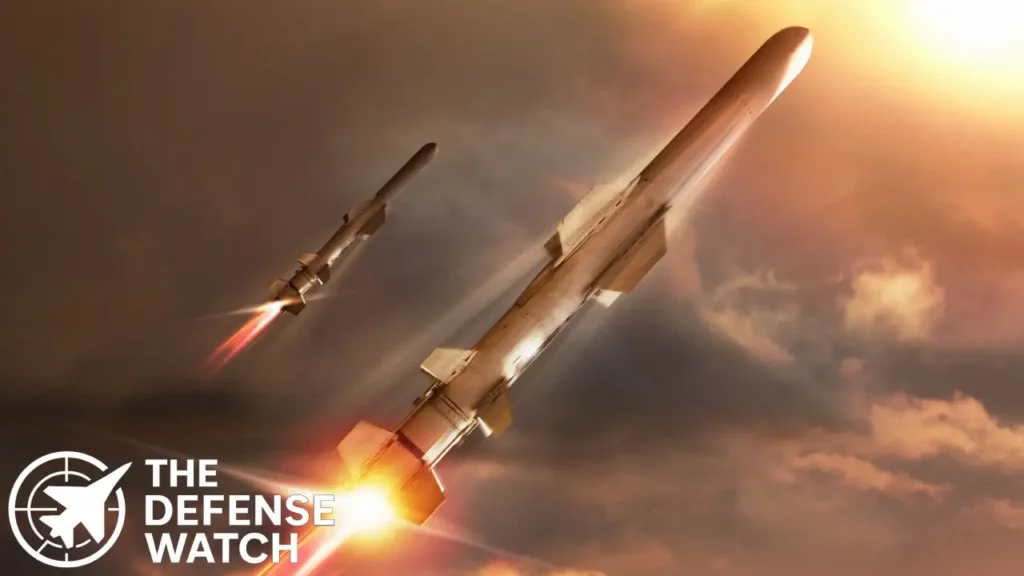
hypersonic weapons
Image courtesy of popularmechanics

The Hypersonic Arms Race: U.S., China, and Russia

Russia

Moscow has fielded several operational systems, including the Avangard (a nuclear-capable HGV) and the Kinzhal air-launched missile, reportedly used in Ukraine.

China

Beijing’s DF-ZF hypersonic glide vehicle, mounted on the DF-17 missile, is now operational, giving China a strategic edge in the Indo-Pacific.

United States

The U.S. is investing heavily in programs such as the ARRW (Air-launched Rapid Response Weapon) and the Hypersonic Attack Cruise Missile (HACM). However, delays and testing challenges have kept American hypersonic weapons largely in development rather than deployment stages.

- Advertisement -

Recent Pentagon reports emphasize the need for a comprehensive hypersonic defense network, including satellite tracking, interceptor systems, and advanced radar.

Can Hypersonic Missiles Be Stopped?

Currently, no existing missile defense system — including the U.S. THAAD, Aegis, or Patriot — can reliably intercept hypersonic weapons. Their speed and erratic flight paths make them nearly invisible to current early-warning and interception systems.

To counter this, the U.S. and allies are developing next-generation tracking satellites under the Hypersonic and Ballistic Tracking Space Sensor (HBTSS) program. Meanwhile, defense contractors are working on directed-energy weapons and interceptor prototypes capable of engaging hypersonic threats mid-flight.

Strategic Implications

Hypersonic weapons blur the line between strategic deterrence and conventional warfare. Their rapid strike capability and dual-use potential (nuclear/conventional) increase the risk of miscalculation or pre-emptive escalation during conflicts.
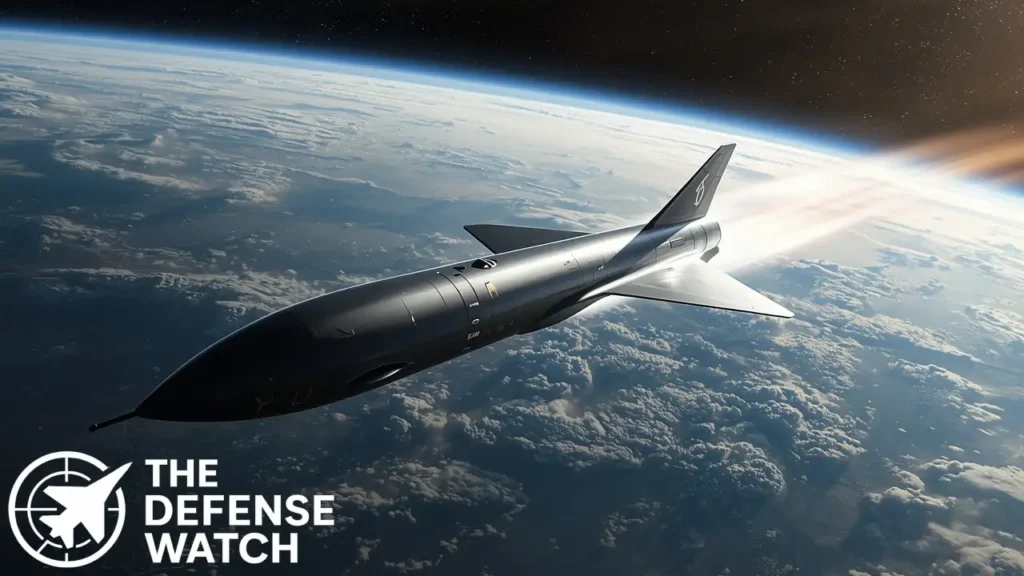
hypersonic missiles explained

Analysts warn that unless clear communication channels and arms control measures are established, hypersonic weapons could destabilize global deterrence frameworks similar to the early nuclear age.

As the technology spreads — with India, Japan, and North Korea also pursuing hypersonic programs — the race to master these systems is becoming the defining competition of 21st-century warfare.

Analysis: The Next Frontier in Deterrence

The emergence of hypersonic weapons represents not just a leap in engineering, but a strategic shift in global power dynamics. Nations are no longer only competing for nuclear supremacy but for speed and precision dominance.

However, experts argue that the most dangerous aspect of hypersonic weapons isn’t just their speed — it’s the lack of transparency and arms control dialogue around them. Without international agreements, the world could soon enter a new era of hypersonic instability, where minutes determine peace or war.

FAQs

How fast is a hypersonic missile?

Hypersonic missiles travel at speeds exceeding Mach 5 — five times the speed of sound, or roughly 6,100 km/h.

Can current missile defense systems stop hypersonic weapons?

No. Current systems like Patriot and THAAD are not optimized for hypersonic interception, though new defense programs are in development.

Which countries have hypersonic missiles?

Russia and China have operational systems, while the U.S., India, Japan, and North Korea are actively developing theirs.

What’s the main difference between ballistic and hypersonic missiles?

Ballistic missiles follow a fixed arc; hypersonic missiles can maneuver unpredictably, making them harder to track and intercept.

Are hypersonic weapons nuclear?

They can carry either nuclear or conventional warheads, adding ambiguity to their strategic use.

TAGGED:hypersonic glide vehiclehypersonic missiles explainedHypersonic weaponsMilitary TechnologyMissile Defense Systems
Share This Article
Facebook Copy Link Print
ByTeamDefenseWatch
TeamDefenseWatch is the official editorial byline of TheDefenseWatch.com. Working under one umbrella, TheDefenseWatch.com, the team delivers verified, factual reporting on global defense, military technology, aerospace systems, and security developments. Articles are sourced from official statements, defense industry releases, and trusted media, with editorial review to ensure accuracy and clarity.Contact: info@TheDefenseWtach.com
8 Comments
  • Pingback: China Unveils YJ-1000 Precision-Guided 1-Ton Bomb for Advanced Fighter Fleet
  • Pingback: Reviving Air Superiority: Why the U.S. Air Force Must Prioritize a ‘Super’ F-22 Raptor Upgrade Now
  • Pingback: Ukraine Uses Music to Jam Russia’s Mach 10 Kinzhal Hypersonic Missiles
  • Pingback: China’s Hypersonic Missile Expansion and the Race for Hypersonic Speed
  • Pingback: Boeing to Triple PAC-3 Missile Seeker Production as European Demand Surges
  • Pingback: Iran's Fattah-1 Hypersonic Missile: How Hypersonic Flight Changes Warfare
  • Pingback: U.S. Accuses China of Secret Nuclear Weapons Testing, Covering Tracks with Decoupling Methods | TheDefenseWatch.com
  • Pingback: Pakistan Unveils SMASH Hypersonic Missile System at World Defense Show 2026 | TheDefenseWatch.com

Leave a Reply Cancel reply

Your email address will not be published. Required fields are marked *

Latest Defense Systems

  • RUTA B1 Cruise Missile RUTA B1 Cruise Missile
  • XQ-67A Drone XQ-67A Drone
  • B-25 Mitchell Bomber B-25 Mitchell Bomber
  • F-100 Super Sabre F-100 Super Sabre
  • North American F-86 Sabre North American F-86 Sabre
  • North American XB-70 Valkyrie North American XB-70 Valkyrie
  • Northrop YF-23 Fighter Northrop YF-23 Fighter
  • P-51 Mustang Fighter Aircraft P-51 Mustang Fighter Aircraft
  • Rafale F5 Fighter Rafale F5 Fighter

Recent Compares

  • J-10C vs JF-17 Thunder: Which Fighter Is More Capable? J-10C vs JF-17 Thunder: Which Fighter Is More Capable? View Comparison →
  • Tejas vs Gripen: Key Differences and Capabilities Tejas vs Gripen: Key Differences and Capabilities View Comparison →
  • Tejas vs MiG-21 Bison: How India Replaced Its Iconic Supersonic Fighter Tejas vs MiG-21 Bison: How India Replaced Its Iconic Supersonic Fighter View Comparison →
  • F-35 vs F-16: Stealth, Sensors and Combat Roles F-35 vs F-16: Stealth, Sensors and Combat Roles View Comparison →
  • Tejas Fighter Jet vs F-16 Fighting Falcon: Capability Compared Tejas Fighter Jet vs F-16 Fighting Falcon: Capability Compared View Comparison →
  • Rafale Fighter Jet vs F-16 Fighting Falcon : Which Fighter Has the Edge? Rafale Fighter Jet vs F-16 Fighting Falcon : Which Fighter Has the Edge? View Comparison →
  • Su-57 Fighter Jet vs J-20 Fighter Jet: Stealth and Air Combat Compared Su-57 Fighter Jet vs J-20 Fighter Jet: Stealth and Air Combat Compared View Comparison →
  • Mirage 2000 vs Tejas Mk1A: Legacy Combat Power vs Indigenous Modernization Mirage 2000 vs Tejas Mk1A: Legacy Combat Power vs Indigenous Modernization View Comparison →
  • Rafale Fighter Jet vs F-22 Raptor: Which Air Dominance Fighter Has the Edge? Rafale Fighter Jet vs F-22 Raptor: Which Air Dominance Fighter Has the Edge? View Comparison →
  • Tejas Fighter Jet vs. Rafale Fighter Jet: India’s Indigenous Fighter Meets France’s Proven Multirole Combat Aircraft Tejas Fighter Jet vs. Rafale Fighter Jet: India’s Indigenous Fighter Meets France’s Proven Multirole Combat Aircraft View Comparison →

Recent Posts

  • Iran Releases Footage of Underground Missile Tunnels Amid Rising US Military Tensions
  • China Says HQ Missile Systems Intercepted Two New Missile Types in PLA Drill
  • Phoenix Defense Ventures Wins $310.5 Million HH-60W Training Contract
  • Rolls-Royce Showcases Naval Engines and Automation Systems at Euronaval 2026
  • North Korea Tests Cruise Missile With Dispersal Warhead, KCNA Says

You Might Also Like

Rheinmetall MBDA laser weapon systems
Artillery & Missile SystemsMilitary & Ordnance

Rheinmetall and MBDA Move to Form Joint Venture for Advanced Laser Weapon Systems

January 6, 2026
Northrop Grumman RangeHawk high-altitude airborne test platform designed for hypersonic weapons and sensor testing.
Hypersonic WeaponsMilitary & Ordnance

Northrop Grumman Wins $325.5M RangeHawk Contract for High-Altitude Hypersonic Test Platform

May 16, 2026
AGM-181 LRSO
Artillery & Missile SystemsMilitary & Ordnance

US Tests Stealth AGM-181 LRSO Nuclear Cruise Missile on B-52

September 10, 2026
Patria XA 203 Armored Vehicle
Military & OrdnanceTanks & Armored Vehicles

Sweden Upgrades Patria XA-203 Armored Vehicles With Remote Weapon Readiness

September 12, 2026

Logo

Copyright © 2026 TheDefenseWatch.com

Helpful Links

  • Home
  • About Us
  • Privacy Policy
  • Terms of Use / Disclaimer
  • U.S. Privacy Notice – CCPA Compliance

Defense Systems

  • Defense Systems
  • Comparisons 
  • Manufacturer
  • Tactical Calculators

Popuplar

Which 5 Air Forces Possess the Costliest Fighter Jet Fleets in the World
Evolving Strategic Value: Carrier Strike Groups in the Indo-Pacific’s Future Security Architecture
Autonomous Weapon Systems Spark U.S. Ethics Debate Amid Rapid Military AI Integration

We report on developments involving military forces, governments, defense companies, research organizations, and security institutions around the world. 

Welcome Back!

Sign in to your account

Username or Email Address
Password

Lost your password?