• Home
  • About
  • Defense Systems
  • Manufacturer
  • Comparisons
  • Compare 
  • Tools
TheDefenseWatch.com
  • Aerospace & Aviation
  • Military & Ordnance
  • Naval & Maritime
  • Cyber & Space Defense
  • Policy & Strategy
  • Global News
  • Tools Library
    • Smart Calculator
    • Drone Flight Time Calculator
    • Drone Range Calculator
    • Counter-Drone Jammer Effective Range Calculator
    • Counter-Battery Radar Detection Calculator
    • Artillery Fire Correction Calculator
    • Thermal Camera Detection Range Calculator
    • Missile Range & Time-of-Flight Calculator
    • Radar Detection Range Calculator
    • FPV Strike Drone Payload vs Range Calculator
    • Loitering Munition Endurance Calculator
    • Sniper Ballistic Drop & Windage Calculator
    • Bullet Drop Calculator
    • U.S. Army Combat Fitness Test (ACFT) Calculator
    • Military Pension Calculator
    • Military Retirement Calculator
    • Military Pension Calculator
    • Large Number Calculator
Font ResizerAa

TheDefenseWatch.com

The Defense Watch | U.S. & Global Defense News, Analysis & Military Updates

Search
  • Home
  • About
  • Defense Systems
  • Manufacturer
  • Comparisons
  • Compare 
  • Tools

Stay Updated

Get the latest update

Subscribe

Explore

  • Drone
  • Fighter Jets & Military Aircraft
  • Hypersonic Weapons
  • Aircraft Carriers
  • Strategic History & Missions
  • Tools Library
Home » NATO vs China-Russia Alliance: Is the World Entering a New Cold War?
Alliances & DoctrinesPolicy & Strategy

NATO vs China-Russia Alliance: Is the World Entering a New Cold War?

TeamDefenseWatch
Last updated: September 8, 2026 4:40 am
TeamDefenseWatch
Share
3 Min Read
NATO vs China Russia
SHARE

NATO vs China-Russia: Strategic Rivalry in a Multipolar Age

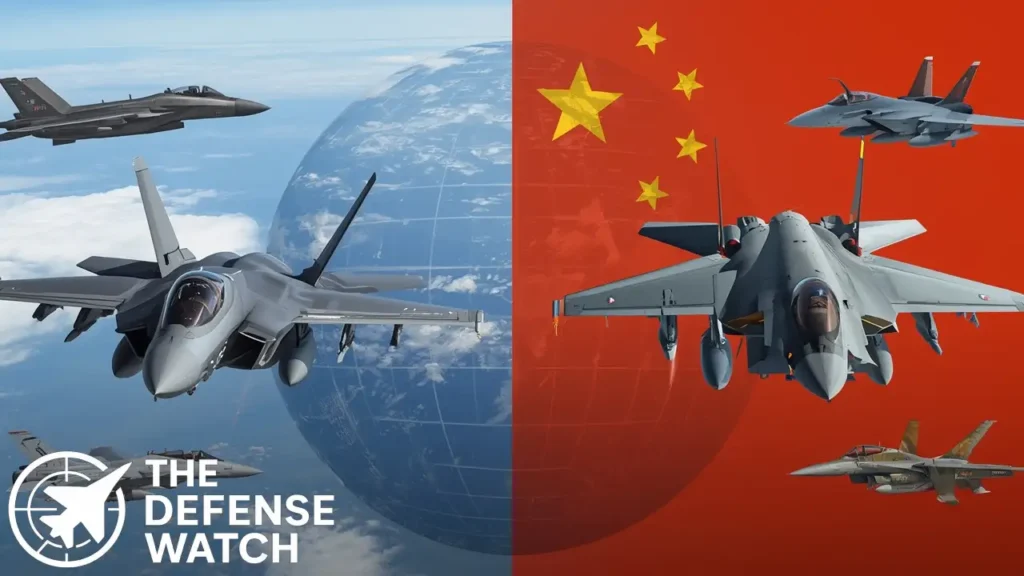
In recent years, discussions about a “new Cold War” have proliferated — but the current dynamic between NATO and a rising China-Russia alignment is far more complex than a simple replay of the U.S.–Soviet standoff. At its core, the contest now centers on a blend of geopolitical influence, military posturing, economic interdependence, and technological competition. In this evolving context, the “NATO vs China-Russia” narrative captures a central axis of twenty-first century strategic rivalry.

Contents
  • NATO vs China-Russia: Strategic Rivalry in a Multipolar Age
  • Historical Foundations and the “No Limits” Declaration
    • Russia as the Primary NATO Adversary
  • Areas of Strategic Competition
    • Military & Technological Rivalry
    • Economic Leverage & Supply Chains
    • Diplomatic & Institutional Contest
  • So, Is This a New Cold War?
  • Strategic Implications & Outlook
  • FAQs

Historical Foundations and the “No Limits” Declaration

The idea of a Sino-Russian bloc dates back before the 2022 Russian invasion of Ukraine, but the war accelerated perceptions of a deepening partnership. In February 2022, Vladimir Putin and Xi Jinping announced a “no limits” strategic partnership, signaling intent to strengthen cooperation across economics, diplomacy, and defense.

Yet, Beijing and Moscow stop short of a formal military alliance. Analysts note that much of the relationship is built on pragmatic alignment of interests rather than doctrine or treaty binding. That said, the degree of coordination on trade, supply chains, arms transfers, and intelligence sharing increasingly raises alarms in NATO capitals.
NATO vs China Russia

Russia as the Primary NATO Adversary

NATO’s official posture places Russia at the forefront of the alliance’s threat assessment. In NATO’s Strategic Concept and related documents, Russia is framed as “the most significant and direct threat” to Euro-Atlantic security. Since Russia’s full-scale invasion of Ukraine in 2022, NATO has ramped up deterrence and defense posture across its eastern flank.

- Advertisement -

Russia counters not only with conventional force, but hybrid tools — cyber operations, disinformation campaigns, coercive diplomacy, gray zone incursions — all aimed at fracturing alliance cohesion.

Areas of Strategic Competition

Military & Technological Rivalry

China and Russia are both investing heavily in high-end military capabilities: hypersonic weapons, space systems, drones, and cyberwarfare. For NATO, staying ahead in defense technology is critical. But even among allies, debates persist about procurement speed, industrial capacity, and interoperability.

NATO commanders warn that the pace of innovation is not fast enough to counter the combined challenge posed by adversaries. The new domains of warfare — autonomous systems, space, electronic warfare — will likely decide the trajectory of the confrontation.

Economic Leverage & Supply Chains

Unlike the rigid blocs of the Cold War, today’s powers are deeply interlinked economically. Russia depends heavily on Chinese imports; China absorbs Russian resources. Yet this dependency is asymmetric. China holds more leverage, particularly in critical technologies, trade, and manufacturing.

Meanwhile, NATO and its members are working to decouple where necessary — reshoring critical supplies, diversifying partners, and reducing strategic vulnerabilities.

Diplomatic & Institutional Contest

At the diplomatic level, China and Russia push for a new system less centered on U.S.-led institutions. They aim to reshape norms on sovereignty, cybersecurity, and economic governance.

NATO counters through alliance diplomacy, engagement with the Indo-Pacific, strengthening ties with Asia-Pacific democracies, and reinforcing the idea of a “rules-based order” as central to collective security.

So, Is This a New Cold War?

While many analysts use the “new Cold War” label, the analogy has limits. The original Cold War was built on bipolar rivalry, ideological confrontation, nuclear standoffs, and rigid blocs. Today’s global system is multipolar, highly connected, and dynamic.

- Advertisement -

The China-Russia relationship is not a mirror of the Soviet bloc: it is looser, more transactional, and vulnerable to strains. The “NATO vs China-Russia” framing captures only one dimension of global friction — it does not account for rising powers like India, ASEAN, or states that oscillate between blocs.
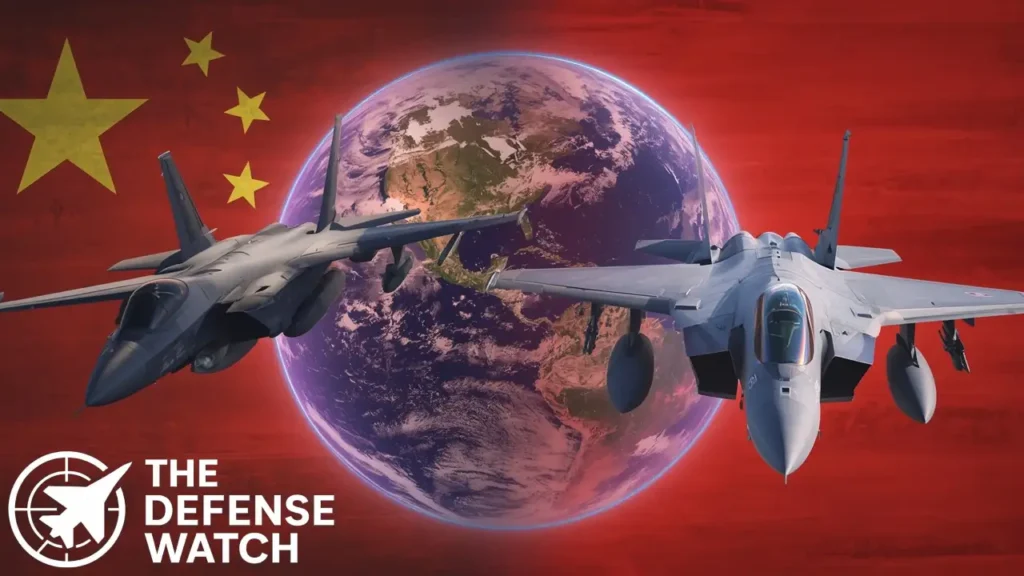
NATO vs China Russia

That said, the present rivalry does resemble a Cold War in some respects: persistent competition across domains, constrained direct conflict, and ideological undertones regarding international order.

Strategic Implications & Outlook

  • Alliance Unity Will Be Tested — NATO must manage internal divisions, burden-sharing, and divergent threat perceptions among members.
  • Escalation Risks Are Real — With multiple flashpoints — Ukraine, Taiwan, the Baltics — miscalculations could trigger regional wars.
  • Technological Race Becomes Central — Whoever dominates AI, space, quantum, unmanned systems holds strategic advantage.
  • Alternative Partners Matter — Countries in Africa, Latin America, and Asia may become battlegrounds for influence between NATO and the Sino-Russian axis.

The global order is tilting into an era of sustained great power competition. But it is not a replay — it’s a more complex, interconnected, and multidimensional rivalry. NATO’s challenge is to adapt its strategies and posture to a world where the lines between war and peace, alliance and autonomy, are increasingly fluid.

FAQs

Are China and Russia formally allied militarily?

No. Their relationship is a strategic partnership with coordination rather than a treaty-bound alliance.

Is NATO shifting strategy to face China, or still focused on Russia?

NATO’s core focus remains Russia in the Euro-Atlantic theater, but in recent summits it has acknowledged

Could this rivalry become a hot war?

Direct conflict remains unlikely in the near term, but proxy wars, regional confrontations, and flashpoint escalation (e.g. in Ukraine, Taiwan) pose real risks.

How do other powers (India, ASEAN, Africa) factor in?

Many states aim to hedge — not fully align with either side — making them critical pivots in the great power competition.

How should NATO adapt?

By investing in innovation, reinforcing alliance cohesion, expanding geopolitical partnerships (e.g. Indo-Pacific ties), and shoring up strategic resilience across domains.


Source 1 | Source 2 | Source 3 | Source 4

TAGGED:China-Russia relationsdefense strategygeopolitical rivalrygreat power competitionNATO
Share This Article
Facebook Copy Link Print
ByTeamDefenseWatch
TeamDefenseWatch is the official editorial byline of TheDefenseWatch.com. Working under one umbrella, TheDefenseWatch.com, the team delivers verified, factual reporting on global defense, military technology, aerospace systems, and security developments. Articles are sourced from official statements, defense industry releases, and trusted media, with editorial review to ensure accuracy and clarity.Contact: info@TheDefenseWtach.com
16 Comments
  • Pingback: 6 Fighter Jets With the Most Advanced Radar Systems in Service Today 2025
  • Pingback: US vs China Military Spending & Capabilities: Who Holds the Edge?
  • Pingback: Saab JAS 39 Gripen: Sweden’s Lightweight Multirole Fighter Redefining Airpower
  • Pingback: U.S. Airpower Edge Eroding as China Accelerates Air Force Modernization
  • Pingback: Europe Risks Perpetual War in Ukraine — Why Washington May Pull Back
  • Pingback: Poland’s Next‑Gen IFV: First Borsuk IFV Enters Service with Polish Army | TheDefenseWatch.com
  • Pingback: Trump’s 2025 National Security Strategy Sends Shockwaves Through NATO Allies | TheDefenseWatch.com
  • Pingback: Cuban Missile Crisis Explained, Nuclear Brinkmanship Revisited | TheDefenseWatch.com
  • Pingback: History of U.S. Battleships and Why They Were Retired | TheDefenseWatch.com
  • Pingback: USS Midway Legacy and F-22 Fighter Jet Deployments Today | TheDefenseWatch.com
  • Pingback: Doomsday Planes: E-6B & E-4B Nuclear Command Jets | TheDefenseWatch.com
  • Pingback: Iran Revolutionary Guard “Finger on the Trigger” Warning as US Fleet Heads to Region | TheDefenseWatch.com
  • Pingback: U.S. Air Force Dragon Shield Exercise Tests U-2 Intelligence Aircraft Launch Readiness in Contested Conditions at Beale AFB | TheDefenseWatch.com
  • Pingback: NATO Joint Warfare Centre Unveils Five-Year Campaign Plan Through 2030 | TheDefenseWatch.com
  • Pingback: Swedish Gripen Fighters Lead First NATO Iceland Air Policing Mission in 2026 | TheDefenseWatch.com
  • Pingback: Royal Marines Launch Arctic Mortar Exercises As UK Doubles Norway Deployment Ahead Of Major NATO Drills | TheDefenseWatch.com

Leave a Reply Cancel reply

Your email address will not be published. Required fields are marked *

F-22 Reptor

Latest Defense Systems

  • B61 Nuclear Bomb B61 Nuclear Bomb
  • Japan E-767 Airborne Japan E-767 Airborne
  • Remington 870 Shotgun Remington 870 Shotgun
  • RUTA B1 Cruise Missile RUTA B1 Cruise Missile
  • XQ-67A Drone XQ-67A Drone
  • B-25 Mitchell Bomber B-25 Mitchell Bomber
  • F-100 Super Sabre F-100 Super Sabre
  • North American F-86 Sabre North American F-86 Sabre
  • North American XB-70 Valkyrie North American XB-70 Valkyrie

Recent Compares

  • J-10C vs JF-17 Thunder: Which Fighter Is More Capable? J-10C vs JF-17 Thunder: Which Fighter Is More Capable? View Comparison →
  • Tejas vs Gripen: Key Differences and Capabilities Tejas vs Gripen: Key Differences and Capabilities View Comparison →
  • Tejas vs MiG-21 Bison: How India Replaced Its Iconic Supersonic Fighter Tejas vs MiG-21 Bison: How India Replaced Its Iconic Supersonic Fighter View Comparison →
  • F-35 vs F-16: Stealth, Sensors and Combat Roles F-35 vs F-16: Stealth, Sensors and Combat Roles View Comparison →
  • Tejas Fighter Jet vs F-16 Fighting Falcon: Capability Compared Tejas Fighter Jet vs F-16 Fighting Falcon: Capability Compared View Comparison →
  • Rafale Fighter Jet vs F-16 Fighting Falcon : Which Fighter Has the Edge? Rafale Fighter Jet vs F-16 Fighting Falcon : Which Fighter Has the Edge? View Comparison →
  • Su-57 Fighter Jet vs J-20 Fighter Jet: Stealth and Air Combat Compared Su-57 Fighter Jet vs J-20 Fighter Jet: Stealth and Air Combat Compared View Comparison →
  • Mirage 2000 vs Tejas Mk1A: Legacy Combat Power vs Indigenous Modernization Mirage 2000 vs Tejas Mk1A: Legacy Combat Power vs Indigenous Modernization View Comparison →
  • Rafale Fighter Jet vs F-22 Raptor: Which Air Dominance Fighter Has the Edge? Rafale Fighter Jet vs F-22 Raptor: Which Air Dominance Fighter Has the Edge? View Comparison →
  • Tejas Fighter Jet vs. Rafale Fighter Jet: India’s Indigenous Fighter Meets France’s Proven Multirole Combat Aircraft Tejas Fighter Jet vs. Rafale Fighter Jet: India’s Indigenous Fighter Meets France’s Proven Multirole Combat Aircraft View Comparison →

Recent Posts

  • Remington 870 in Military Service: Mark 1 to MCS
  • Boeing Receives $16.9 Million Contract Modification for Japan’s E-767 AWACS Support
  • Lockheed Martin Wins $80 Million Air Force Mission Planning Software Contract
  • Pakistan Tests Indigenous Fa’az Air-to-Air Missile for First Time
  • Operation Unified Resolve Reports 70% Drop in Rio Grande Valley Border Crossings

You Might Also Like

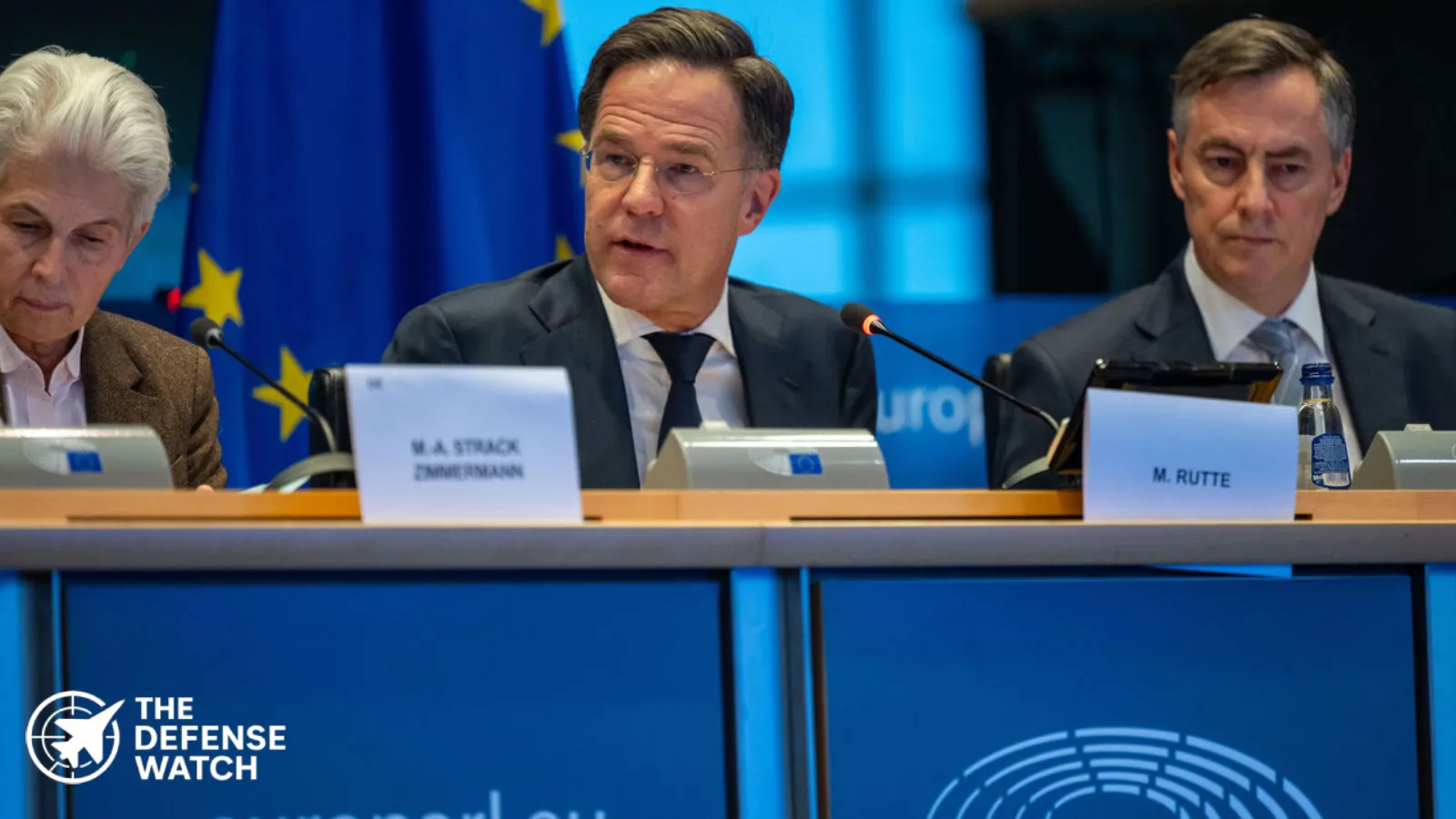
NATO Secretary General Europe defence
Global News

NATO Chief Warns Europe Cannot Defend Itself Without U.S Support, Reaffirms Ukraine Aid

January 26, 2026
US military strikes under Trump
Geopolitical & Strategic DoctrinesPolicy & Strategy

U.S. Military Operations Surge Under Trump: A Year of Strikes Redefines Global Force Posture

September 8, 2026
finland f 35 fighters arrival
Aerospace & AviationFighter Jets & Military Aircraft

Finland F-35 Fighters Arrival: Finnish Air Force Prepares For Fifth-Generation Transition

September 7, 2026
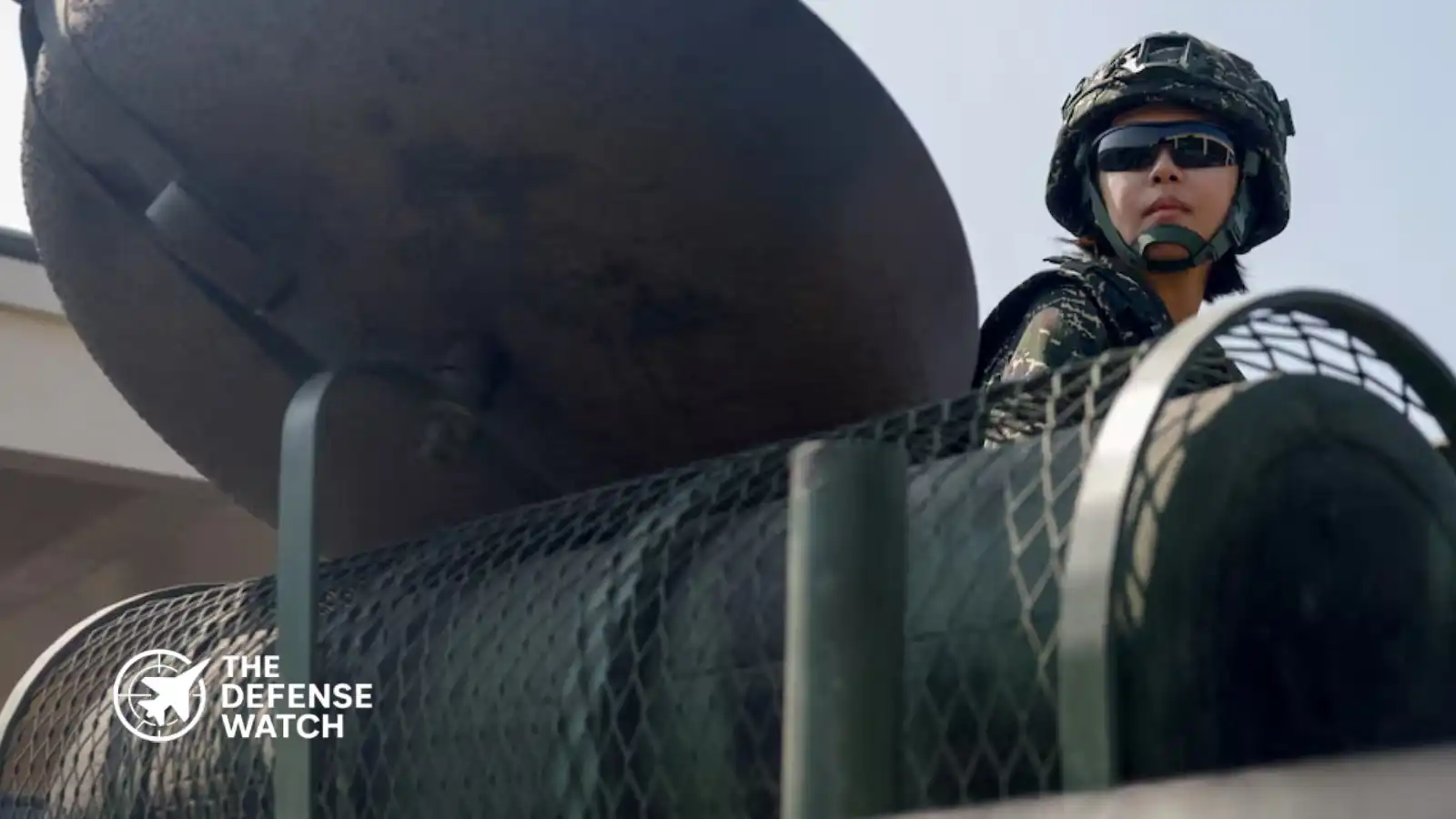
Taiwanese military forces conduct coastal defense drills as the United States raises concerns over delayed defense reforms amid growing Chinese military pressure.
Geopolitical & Strategic DoctrinesPolicy & Strategy

US Moves To Bolster Taiwan Defense As Washington Warns Against Delays Amid China Pressure

May 10, 2026

Logo

Copyright © 2026 TheDefenseWatch.com

Helpful Links

  • Home
  • About Us
  • Privacy Policy
  • Terms of Use / Disclaimer
  • U.S. Privacy Notice – CCPA Compliance

Defense Systems

  • Defense Systems
  • Comparisons 
  • Manufacturer
  • Tactical Calculators

Popuplar

Which 5 Air Forces Possess the Costliest Fighter Jet Fleets in the World
Evolving Strategic Value: Carrier Strike Groups in the Indo-Pacific’s Future Security Architecture
Autonomous Weapon Systems Spark U.S. Ethics Debate Amid Rapid Military AI Integration

We report on developments involving military forces, governments, defense companies, research organizations, and security institutions around the world. 

Welcome Back!

Sign in to your account

Username or Email Address
Password

Lost your password?