• Home
  • About
  • Defense Systems
  • Manufacturer
  • Comparisons
  • Compare 
  • Tools
TheDefenseWatch.com
  • Aerospace & Aviation
  • Military & Ordnance
  • Naval & Maritime
  • Cyber & Space Defense
  • Policy & Strategy
  • Global News
  • Tools Library
    • Smart Calculator
    • Drone Flight Time Calculator
    • Drone Range Calculator
    • Counter-Drone Jammer Effective Range Calculator
    • Counter-Battery Radar Detection Calculator
    • Artillery Fire Correction Calculator
    • Thermal Camera Detection Range Calculator
    • Missile Range & Time-of-Flight Calculator
    • Radar Detection Range Calculator
    • FPV Strike Drone Payload vs Range Calculator
    • Loitering Munition Endurance Calculator
    • Sniper Ballistic Drop & Windage Calculator
    • Bullet Drop Calculator
    • U.S. Army Combat Fitness Test (ACFT) Calculator
    • Military Pension Calculator
    • Military Retirement Calculator
    • Military Pension Calculator
    • Large Number Calculator
Font ResizerAa

TheDefenseWatch.com

The Defense Watch | U.S. & Global Defense News, Analysis & Military Updates

Search
  • Home
  • About
  • Defense Systems
  • Manufacturer
  • Comparisons
  • Compare 
  • Tools

Stay Updated

Get the latest update

Subscribe

Explore

  • Drone
  • Fighter Jets & Military Aircraft
  • Hypersonic Weapons
  • Aircraft Carriers
  • Strategic History & Missions
  • Tools Library
Home » US Navy Trump-Class Battleship Plan Could Cost $700 Billion Amid Push For Nuclear-Powered Fleet
Naval & MaritimeNaval Strategy & Maritime Security

US Navy Trump-Class Battleship Plan Could Cost $700 Billion Amid Push For Nuclear-Powered Fleet

Samuel Drake | Defense Analyst
Last updated: September 7, 2026 10:40 am
Samuel Drake | Defense Analyst
Share
2 Min Read
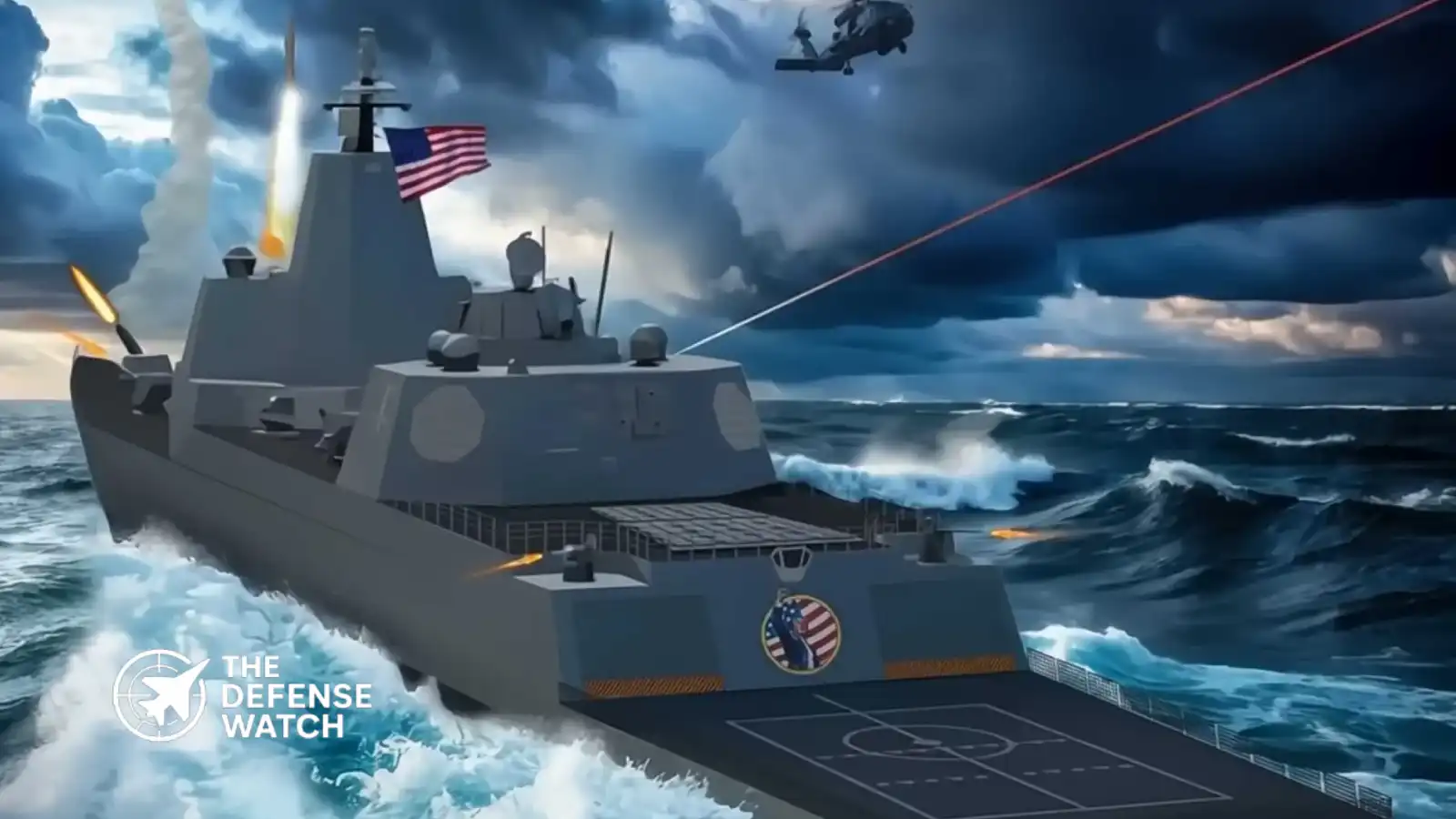
Concept artwork of a future US Navy Trump-class nuclear-powered battleship operating in the Pacific Ocean.
Picture Source: US Navy
SHARE

Executive Summary:
A proposed US Navy Trump-class battleship concept is generating debate after estimates suggested the program could cost up to $700 billion. The proposal highlights growing discussions inside the defense community over future naval firepower, survivability, and nuclear-powered surface combatants.

Trump-Class Battleship Concept Revives Debate Over Future Naval Warfare

The proposed Trump-class battleship concept has reignited discussion about the future direction of US naval modernization. The speculative program could require as much as $700 billion if developed into a full operational fleet.

Contents
Trump-Class Battleship Concept Revives Debate Over Future Naval WarfareNuclear Power And Heavy Firepower At The Center Of The ProposalBudget Concerns Could Limit Any Future Battleship RevivalStrategic Messaging Reflects Broader US-China Naval CompetitionFuture Of The Concept Remains Unclear

The concept reportedly envisions a new generation of heavily armed, nuclear-powered surface combatants designed for long-range strike operations, missile defense, and sustained maritime presence in contested regions such as the Indo-Pacific.

While the idea remains conceptual and outside the official US Navy shipbuilding plan, it reflects broader debates within Washington over how the Navy should adapt to increasingly capable Chinese and Russian anti-ship missile threats.

Nuclear Power And Heavy Firepower At The Center Of The Proposal

The Trump-class battleship proposal reportedly combines characteristics of legacy battleships with modern naval warfare technologies. Concepts discussed in defense circles include advanced radar systems, integrated missile launch cells, directed-energy weapons, and large-scale power generation for future combat systems.

- Advertisement -

Nuclear propulsion is viewed as central to the idea because it would allow sustained deployments without traditional fuel limitations. Similar advantages already exist aboard the Nimitz-class aircraft carrier and Gerald R. Ford-class aircraft carrier fleets.

Supporters of large nuclear-powered surface combatants argue that future naval warfare may require ships capable of carrying significantly larger missile inventories and power-intensive defensive systems. These include high-energy lasers and electronic warfare systems designed to counter hypersonic missiles and drone swarms.

However, critics question whether such massive warships would remain survivable in modern combat environments dominated by precision-guided munitions, long-range anti-ship missiles, and satellite tracking capabilities.

Budget Concerns Could Limit Any Future Battleship Revival

The estimated $700 billion figure has become a central point of criticism. Analysts note that the US Navy is already facing pressure from rising shipbuilding costs, submarine production delays, and maintenance demands across the existing fleet.

Programs such as the Columbia-class submarine, the Virginia-class submarine, and the Constellation-class frigate are already consuming substantial portions of future naval procurement budgets.

At the same time, the Navy continues investing in unmanned systems, distributed maritime operations, and long-range missile integration. Defense planners increasingly favor dispersing combat power across larger numbers of platforms instead of concentrating capability into a small number of extremely expensive ships.

This strategic shift has become especially important as the Pentagon evaluates potential conflict scenarios in the Pacific, where survivability, logistics, and operational flexibility are viewed as critical factors.

Strategic Messaging Reflects Broader US-China Naval Competition

Even though the Trump-class battleship remains hypothetical, the attention surrounding the proposal underscores how rapidly naval competition is evolving.

- Advertisement -

China continues expanding the fleet of the Type 055 destroyer while also increasing aircraft carrier production and anti-ship missile capabilities. Meanwhile, the US Navy is pursuing a combination of submarines, carrier strike groups, unmanned platforms, and next-generation destroyers to maintain maritime superiority.

The discussion around heavily armed nuclear-powered battleships also reflects concerns about missile magazine depth. Recent conflicts and war games have highlighted how quickly modern naval forces can exhaust missile inventories during high-intensity operations.

Some defense analysts argue that larger surface combatants with expanded vertical launch capacity could help address that challenge. Others contend that survivability concerns make distributed fleets and autonomous systems a more realistic long-term solution.

Future Of The Concept Remains Unclear

No official US Navy acquisition program currently exists for a Trump-class battleship. The concept instead appears to function as a broader discussion point within defense media and strategic commentary regarding the future balance between survivability, firepower, and procurement costs.

Still, the scale of the projected investment and the symbolic return of the battleship concept have ensured continued debate across defense policy circles.

As naval competition intensifies in the Indo-Pacific and global maritime security environments become more contested, discussions surrounding the next generation of American sea power are likely to continue.


TAGGED:battleshipsdefense budgetNaval ModernizationNaval StrategyUS Navy
Share This Article
Facebook Copy Link Print
BySamuel Drake | Defense Analyst
Follow:
Samuel Drake is a defense analyst at TheDefenseWatch.com covering naval warfare, military ordnance, maritime technology, fleet modernization, and defense procurement. His reporting focuses on documented capabilities, procurement programs, and military technology.
Leave a Comment

Leave a Reply Cancel reply

Your email address will not be published. Required fields are marked *

Search Defense Systems

Latest Defense Systems

  • F-47A Fighter Jet F-47A Fighter Jet
  • China DF-61 Missile China DF-61 Missile
  • B61 Nuclear Bomb B61 Nuclear Bomb
  • Japan E-767 Airborne Japan E-767 Airborne
  • Remington 870 Shotgun Remington 870 Shotgun
  • RUTA B1 Cruise Missile RUTA B1 Cruise Missile
  • XQ-67A Drone XQ-67A Drone
  • B-25 Mitchell Bomber B-25 Mitchell Bomber
  • F-100 Super Sabre F-100 Super Sabre

Recent Compares

  • J-10C vs JF-17 Thunder: Which Fighter Is More Capable? J-10C vs JF-17 Thunder: Which Fighter Is More Capable? View Comparison →
  • Tejas vs Gripen: Key Differences and Capabilities Tejas vs Gripen: Key Differences and Capabilities View Comparison →
  • Tejas vs MiG-21 Bison: How India Replaced Its Iconic Supersonic Fighter Tejas vs MiG-21 Bison: How India Replaced Its Iconic Supersonic Fighter View Comparison →
  • F-35 vs F-16: Stealth, Sensors and Combat Roles F-35 vs F-16: Stealth, Sensors and Combat Roles View Comparison →
  • Tejas Fighter Jet vs F-16 Fighting Falcon: Capability Compared Tejas Fighter Jet vs F-16 Fighting Falcon: Capability Compared View Comparison →
  • Rafale Fighter Jet vs F-16 Fighting Falcon : Which Fighter Has the Edge? Rafale Fighter Jet vs F-16 Fighting Falcon : Which Fighter Has the Edge? View Comparison →
  • Su-57 Fighter Jet vs J-20 Fighter Jet: Stealth and Air Combat Compared Su-57 Fighter Jet vs J-20 Fighter Jet: Stealth and Air Combat Compared View Comparison →
  • Mirage 2000 vs Tejas Mk1A: Legacy Combat Power vs Indigenous Modernization Mirage 2000 vs Tejas Mk1A: Legacy Combat Power vs Indigenous Modernization View Comparison →
  • Rafale Fighter Jet vs F-22 Raptor: Which Air Dominance Fighter Has the Edge? Rafale Fighter Jet vs F-22 Raptor: Which Air Dominance Fighter Has the Edge? View Comparison →
  • Tejas Fighter Jet vs. Rafale Fighter Jet: India’s Indigenous Fighter Meets France’s Proven Multirole Combat Aircraft Tejas Fighter Jet vs. Rafale Fighter Jet: India’s Indigenous Fighter Meets France’s Proven Multirole Combat Aircraft View Comparison →

Recent Posts

  • Marine One Explained: The Presidential Helicopter, Its Fleet and the VH-92A Transition
  • Sikorsky Wins South Korea Contract for Four S-92A+ Presidential Helicopters
  • Saudi Arabia Intercepts Missiles Targeting Riyadh as Aramco Building Is Damaged
  • US Approves Potential $1.08 Billion Black Hawk Helicopter Sale to Mexico
  • NASA Completes Final ISS Solar Array Installation, Raising Station Power Capacity by 30%

You Might Also Like

F-35C fighter jet undergoing carrier suitability testing with advanced flight instrumentation systems installed
Defense Contracts

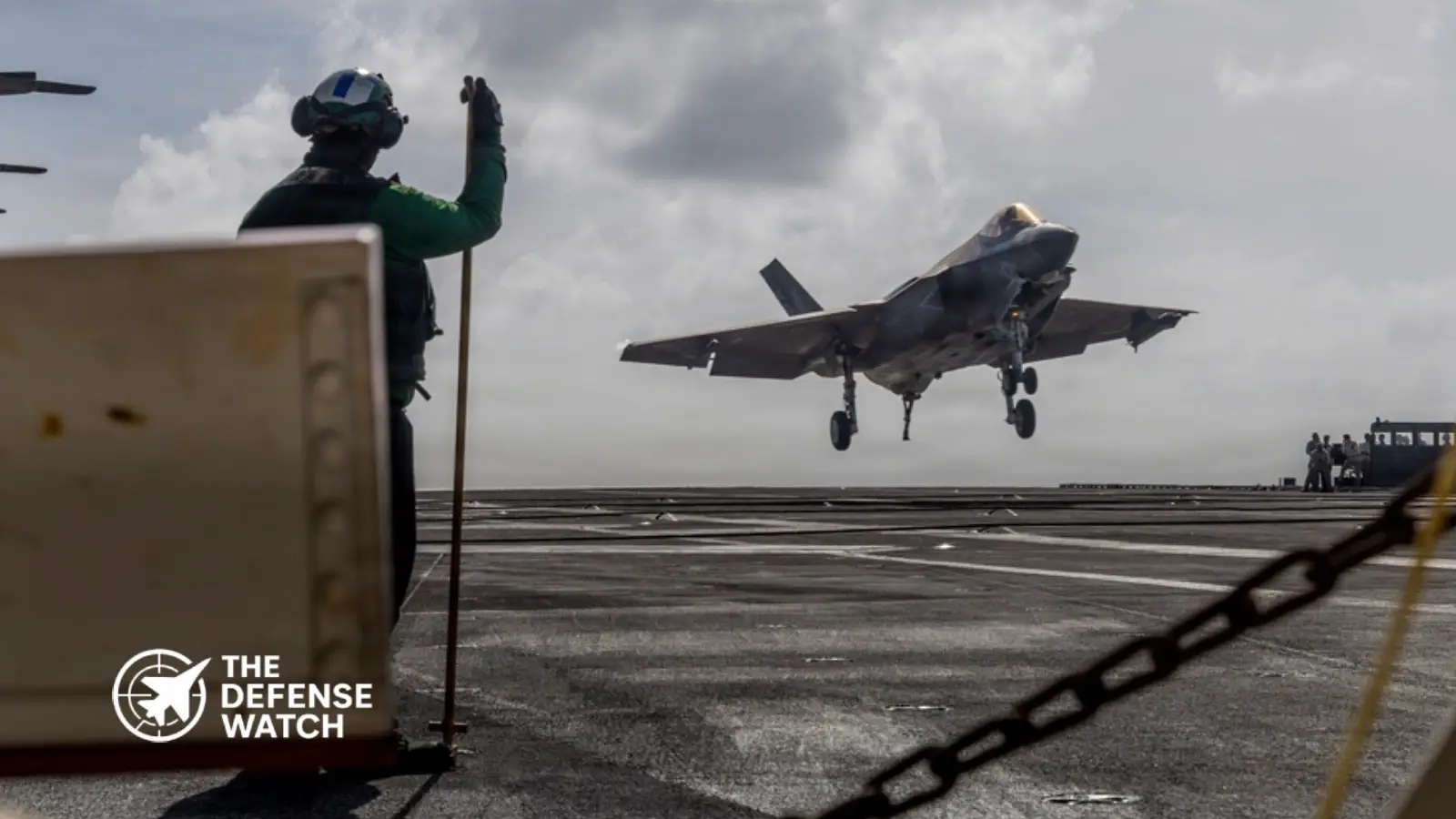
Lockheed Martin Secures $14.5M Deal To Close F-35 Carrier Testing Gap

September 12, 2026
UK nuclear submarine production
Naval & MaritimeSubmarines

Britain Invests £6 Billion to Double Nuclear Submarine Production Capacity

September 23, 2026
Saab 9LV naval combat system
Naval & MaritimeNaval Strategy & Maritime Security

Saab Unveils Next-Generation 9LV Naval Combat System

November 3, 2026
SRV-F Mk3 submarine rescue vehicle
Naval & MaritimeSubmarines

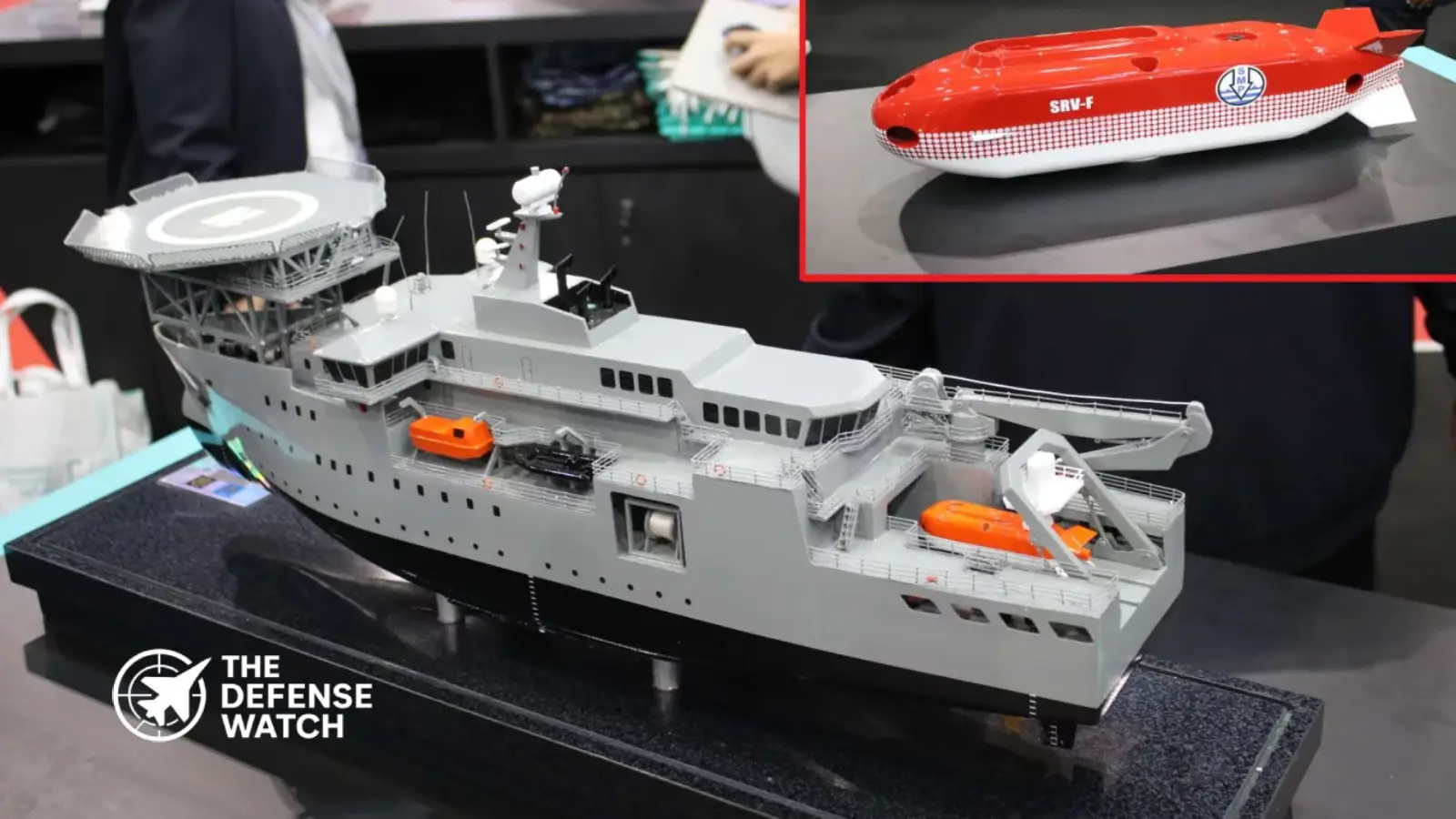
UK Unveils SRV-F Mk3 Submarine Rescue Vehicle To Expand 50-Crew Recovery Capability

April 22, 2026

Logo

Copyright © 2026 TheDefenseWatch.com

Helpful Links

  • Home
  • About Us
  • Privacy Policy
  • Terms of Use / Disclaimer
  • U.S. Privacy Notice – CCPA Compliance

Defense Systems

  • Defense Systems
  • Comparisons 
  • Manufacturer
  • Tactical Calculators

Popuplar

Which 5 Air Forces Possess the Costliest Fighter Jet Fleets in the World
Evolving Strategic Value: Carrier Strike Groups in the Indo-Pacific’s Future Security Architecture
Autonomous Weapon Systems Spark U.S. Ethics Debate Amid Rapid Military AI Integration

We report on developments involving military forces, governments, defense companies, research organizations, and security institutions around the world. 

Welcome Back!

Sign in to your account

Username or Email Address
Password

Lost your password?