• Home
  • About
  • Defense Systems
  • Manufacturer
  • Comparisons
  • Compare 
  • Tools
TheDefenseWatch.com
  • Aerospace & Aviation
  • Military & Ordnance
  • Naval & Maritime
  • Cyber & Space Defense
  • Policy & Strategy
  • Global News
  • Tools Library
    • Smart Calculator
    • Drone Flight Time Calculator
    • Drone Range Calculator
    • Counter-Drone Jammer Effective Range Calculator
    • Counter-Battery Radar Detection Calculator
    • Artillery Fire Correction Calculator
    • Thermal Camera Detection Range Calculator
    • Missile Range & Time-of-Flight Calculator
    • Radar Detection Range Calculator
    • FPV Strike Drone Payload vs Range Calculator
    • Loitering Munition Endurance Calculator
    • Sniper Ballistic Drop & Windage Calculator
    • Bullet Drop Calculator
    • U.S. Army Combat Fitness Test (ACFT) Calculator
    • Military Pension Calculator
    • Military Retirement Calculator
    • Military Pension Calculator
    • Large Number Calculator
Font ResizerAa

TheDefenseWatch.com

The Defense Watch | U.S. & Global Defense News, Analysis & Military Updates

Search
  • Home
  • About
  • Defense Systems
  • Manufacturer
  • Comparisons
  • Compare 
  • Tools

Stay Updated

Get the latest update

Subscribe

Explore

  • Drone
  • Fighter Jets & Military Aircraft
  • Hypersonic Weapons
  • Aircraft Carriers
  • Strategic History & Missions
  • Tools Library
Home » US Navy Moves To Nuclear-Powered Trump-Class Battleships As Fleet Modernization Accelerates
Naval & MaritimeNaval Strategy & Maritime Security

US Navy Moves To Nuclear-Powered Trump-Class Battleships As Fleet Modernization Accelerates

Samuel Drake | Defense Analyst
Last updated: May 12, 2026 7:11 am
Samuel Drake | Defense Analyst
Share
2 Min Read
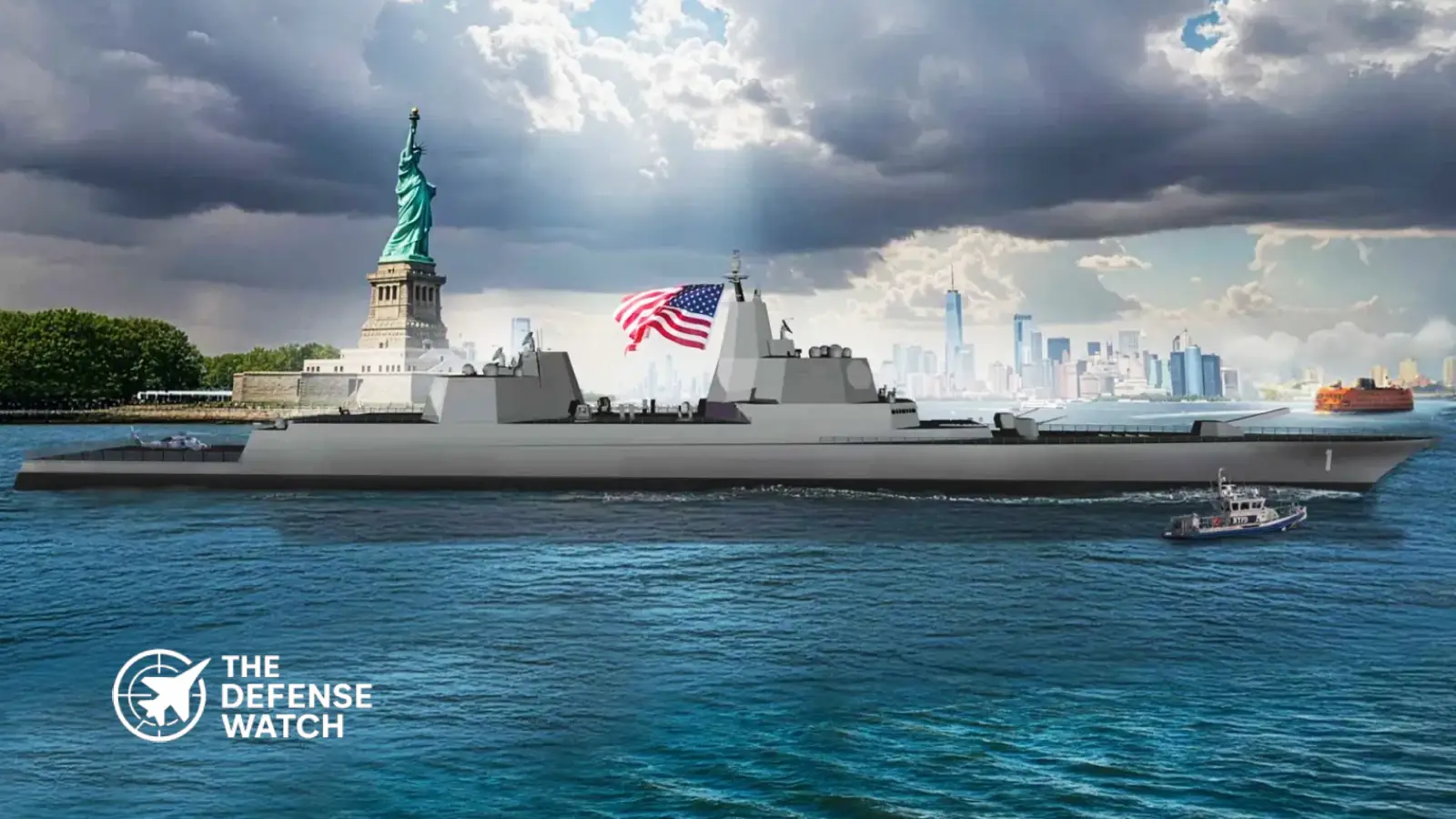
Concept artwork of the future US Navy Trump-class nuclear-powered battleship designed for long-range strike and advanced naval warfare
SHARE
Follow The Defense Watch on Google:

Executive Summary:
The U.S. Navy has confirmed that the future Trump-class battleships will use nuclear propulsion under its latest 30-year shipbuilding plan. The move is intended to support greater endurance, higher speed, and advanced weapons systems as Washington pushes to expand high-end naval combat capabilities.

Trump-Class Battleships To Use Nuclear Propulsion

The U.S. Navy’s future Trump-class battleships will be powered by nuclear reactors, marking a major shift in the service’s next-generation surface warfare strategy. The confirmation appeared in the Navy’s newly released 30-year shipbuilding plan.

Contents
Trump-Class Battleships To Use Nuclear PropulsionWhy Nuclear Power Matters For The ProgramProgram Cost And Industrial ChallengesStrategic Context Behind The Battleship PlanBroader Implications For US Naval Strategy

The Trump-class program, also referred to as BBG(X), is designed as a large surface combatant focused on long-range offensive fires, command-and-control operations, and survivability in high-threat environments. Navy planning documents state the vessels are not intended to replace the existing Arleigh Burke-class destroyers.

According to the Navy, nuclear propulsion would provide the future warships with greater operational endurance, sustained high-speed deployment capability, and enough onboard power generation to support emerging systems such as directed-energy weapons and electromagnetic railguns.

Why Nuclear Power Matters For The Program

The decision is significant because the U.S. Navy has not operated nuclear-powered surface combatants outside aircraft carriers since retiring its nuclear cruisers in the 1990s.

- Advertisement -

The planned Trump-class battleships are expected to displace between 30,000 and 40,000 tons, making them substantially larger than current destroyers and among the biggest surface combatants envisioned in decades. Earlier Navy statements described the ships as capable of carrying hypersonic missiles, sea-launched nuclear cruise missiles, laser weapons, and advanced command-and-control systems.

From an operational standpoint, nuclear propulsion aligns with the Navy’s broader push toward power-intensive combat systems. Future directed-energy defenses, high-capacity radar arrays, and railgun technologies are all expected to require far greater electrical generation than conventional propulsion systems can easily provide.

The Navy’s shipbuilding blueprint specifically states the battleship is intended to deliver “high-volume, long-range offensive fires” while acting as a survivable command platform for fleet operations.

Program Cost And Industrial Challenges

Despite the ambitious vision, the Trump-class battleship program faces major industrial and budgetary hurdles.

Reports indicate the first three ships could cost more than $43 billion combined, with individual vessels potentially exceeding the cost of many existing surface combatants.

The Navy is currently working with major shipbuilders including Huntington Ingalls Industries and General Dynamics Bath Iron Works on preliminary design efforts.

Analysts have also pointed to limitations within America’s nuclear shipbuilding infrastructure. At present, only a small number of U.S. shipyards possess the facilities and workforce needed to construct and maintain nuclear-powered warships. Expanding production capacity for a new class of nuclear surface combatants would likely require significant investment across the industrial base.

Another challenge is timing. The Navy has already indicated that construction of the first Trump-class ships is unlikely to begin before the early 2030s.

- Advertisement -

Strategic Context Behind The Battleship Plan

The Trump-class battleship initiative emerged as part of the broader “Golden Fleet” naval expansion strategy announced in late 2025. The concept reflects growing Pentagon concern over the pace of Chinese naval modernization and the need for more survivable long-range strike platforms in contested maritime regions.

While the program has generated debate inside defense circles, the Navy appears determined to frame the battleship as part of a future high-low fleet mix rather than a revival of traditional battleship doctrine.

Supporters argue that larger, heavily armed surface combatants could improve distributed strike capability and fleet command resilience during high-end conflict. Critics, however, question whether such expensive ships would remain survivable in an era increasingly shaped by drones, hypersonic weapons, and long-range anti-ship missiles.

The Navy’s latest shipbuilding plan nevertheless indicates that the service views the platform as central to future maritime deterrence and long-range combat operations.

Broader Implications For US Naval Strategy

The confirmation of nuclear propulsion signals that the Trump-class battleship program is evolving from a political concept into a more technically defined naval modernization effort.

If fully funded, the ships would represent the first new U.S. battleship-type vessels since World War II and one of the most ambitious surface combatant programs attempted in recent decades.

The program also highlights a broader shift within U.S. naval strategy toward larger, more power-intensive platforms capable of integrating next-generation weapons systems for operations across the Indo-Pacific and other contested theaters.

Enjoying our coverage?

Make The Defense Watch a preferred source on Google to see more of our geopolitical and defense insights when relevant to you.

TAGGED:BBG(X)Naval ModernizationNuclear PropulsionTrump-class battleshipUS Navy
Share This Article
Facebook Copy Link Print
BySamuel Drake | Defense Analyst
Follow:
Samuel Drake is a defense analyst at TheDefenseWatch.com covering naval warfare, military ordnance, maritime technology, fleet modernization, and defense procurement. His reporting focuses on documented capabilities, procurement programs, and military technology.
Leave a Comment

Leave a Reply Cancel reply

Your email address will not be published. Required fields are marked *

Search Defense Systems

Latest Defense Systems

  • F-104 Starfighter F-104 Starfighter
  • F-15J Eagle Fighter Jet F-15J Eagle Fighter Jet
  • China’s GJ-21 Stealth Drone China’s GJ-21 Stealth Drone
  • China’s GJ-11 Stealth Drone China’s GJ-11 Stealth Drone
  • F-15EX Eagle Fighter Jet F-15EX Eagle Fighter Jet
  • TRML-4D Radar TRML-4D Radar
  • F-47A Fighter Jet F-47A Fighter Jet
  • China DF-61 Missile China DF-61 Missile
  • B61 Nuclear Bomb B61 Nuclear Bomb

Recent Compares

  • J-10C vs JF-17 Thunder: Which Fighter Is More Capable? J-10C vs JF-17 Thunder: Which Fighter Is More Capable? View Comparison →
  • Tejas vs Gripen: Key Differences and Capabilities Tejas vs Gripen: Key Differences and Capabilities View Comparison →
  • Tejas vs MiG-21 Bison: How India Replaced Its Iconic Supersonic Fighter Tejas vs MiG-21 Bison: How India Replaced Its Iconic Supersonic Fighter View Comparison →
  • F-35 vs F-16: Stealth, Sensors and Combat Roles F-35 vs F-16: Stealth, Sensors and Combat Roles View Comparison →
  • Tejas Fighter Jet vs F-16 Fighting Falcon: Capability Compared Tejas Fighter Jet vs F-16 Fighting Falcon: Capability Compared View Comparison →
  • Rafale Fighter Jet vs F-16 Fighting Falcon : Which Fighter Has the Edge? Rafale Fighter Jet vs F-16 Fighting Falcon : Which Fighter Has the Edge? View Comparison →
  • Su-57 Fighter Jet vs J-20 Fighter Jet: Stealth and Air Combat Compared Su-57 Fighter Jet vs J-20 Fighter Jet: Stealth and Air Combat Compared View Comparison →
  • Mirage 2000 vs Tejas Mk1A: Legacy Combat Power vs Indigenous Modernization Mirage 2000 vs Tejas Mk1A: Legacy Combat Power vs Indigenous Modernization View Comparison →
  • Rafale Fighter Jet vs F-22 Raptor: Which Air Dominance Fighter Has the Edge? Rafale Fighter Jet vs F-22 Raptor: Which Air Dominance Fighter Has the Edge? View Comparison →
  • Tejas Fighter Jet vs. Rafale Fighter Jet: India’s Indigenous Fighter Meets France’s Proven Multirole Combat Aircraft Tejas Fighter Jet vs. Rafale Fighter Jet: India’s Indigenous Fighter Meets France’s Proven Multirole Combat Aircraft View Comparison →

Recent Posts

  • Saab and Poland’s Dezamet Sign MAPAM Mortar Ammunition Production Deal
  • Nordic Air Defence to Send K200 Drone Interceptor to Ukraine for Trials
  • Türkiye Inducts First Three Bayraktar Kızılelma Unmanned Fighter Aircraft
  • U.S. Army Tests SIG Sauer M7 Rifle in Indo-Pacific Jungle Training
  • India’s Rafale Fleet Listed at 32 Aircraft After 2025 Pakistan Conflict

You Might Also Like

USS Delbert D Black port visit
Naval & MaritimeNaval Strategy & Maritime Security

U.S. Navy Destroyer USS Delbert D. Black Leaves Israel After Scheduled Eilat Visit

February 6, 2026
Eurofighter Typhoon vs Rafale vs F-35 Comparison
Naval & MaritimeNaval Strategy & Maritime Security

UK Moves To Secure Strait Of Hormuz As Iran Crisis Threatens Global Shipping

September 7, 2026
Faslane nuclear base tugboats
Naval & MaritimeNaval Strategy & Maritime Security

UK May See Faslane Nuclear Base Tugboats Built in China Under New Support Vessel Contract

January 12, 2026
HMS Medway Falklands patrol
Naval & MaritimeNaval Strategy & Maritime Security

British Warship Conducts Live-Fire Drill Near Falklands Amid Argentina Tensions

August 12, 2026

Logo

Copyright © 2026 TheDefenseWatch.com

Helpful Links

  • Home
  • About Us
  • Privacy Policy
  • Terms of Use / Disclaimer
  • U.S. Privacy Notice – CCPA Compliance

Defense Systems

  • Defense Systems
  • Comparisons 
  • Manufacturer
  • Tactical Calculators

Popuplar

Which 5 Air Forces Possess the Costliest Fighter Jet Fleets in the World
Evolving Strategic Value: Carrier Strike Groups in the Indo-Pacific’s Future Security Architecture
Autonomous Weapon Systems Spark U.S. Ethics Debate Amid Rapid Military AI Integration

We report on developments involving military forces, governments, defense companies, research organizations, and security institutions around the world. 

Welcome Back!

Sign in to your account

Username or Email Address
Password

Lost your password?

Enjoying our coverage?

Make The Defense Watch a preferred source on Google to see more insights.