Pakistan Coast Guards Attack Signals Escalation In Coastal Threat Environment
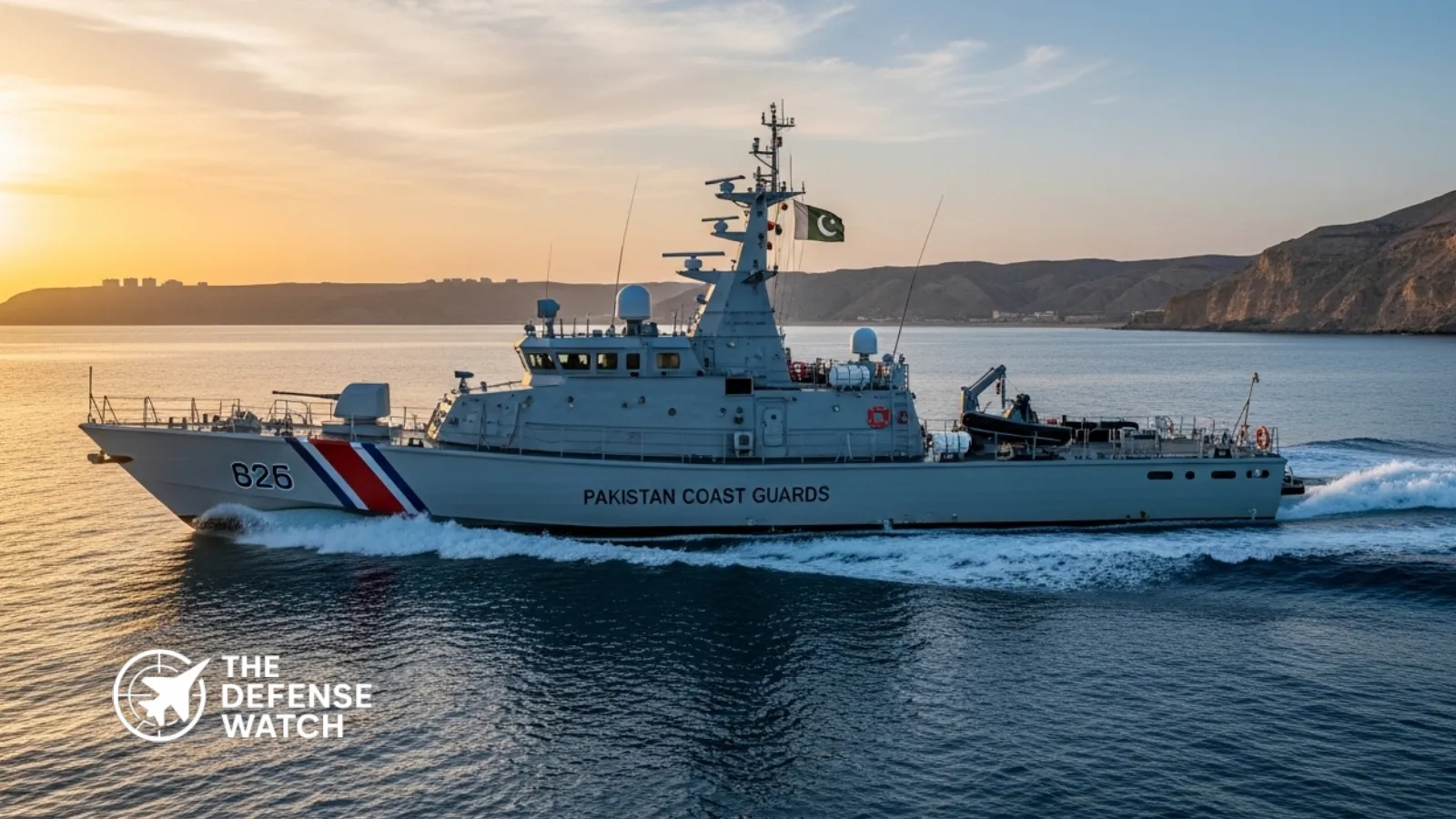
The Pakistan Coast Guards attack near the Iran border marks a rare and significant escalation in maritime security threats along the country’s western coastline, with early reports indicating casualties following a direct assault at sea.
- Pakistan Coast Guards Attack Signals Escalation In Coastal Threat Environment
- A Rare Maritime Engagement In A Volatile Region
- Casualties And Limited Official Disclosure
- Strategic Implications For Pakistan’s Coastal Defense
- Iran Border Dynamics And Security Overlap
- Operational Response And Likely Next Steps
- Broader Security Context
The incident occurred in waters close to Pakistan’s border with Iran, an area historically associated with smuggling networks and intermittent militant activity. Officials have yet to release a full operational account, but initial details suggest that Coast Guard personnel were targeted during an active patrol.
While attacks on land-based security forces in Balochistan are not uncommon, a direct maritime engagement of this nature represents a notable shift in tactics.
- Pakistan Coast Guards reportedly came under direct attack at sea near the Iran border.
- Casualties have been reported, though official confirmation remains limited.
- The incident marks the first known direct maritime assault on the force in this region.
- The attack occurred in a sensitive zone known for smuggling and militant activity.
- Authorities have launched an investigation while increasing coastal security measures.
A Rare Maritime Engagement In A Volatile Region
The Pakistan Coast Guards attack stands out due to its location and method. The coastal belt near Gwadar and the Iran border serves as a strategic corridor for both legal maritime trade and illicit trafficking routes, including fuel smuggling and human movement.
Security analysts note that hostile actors operating in the region have historically avoided direct confrontation at sea, preferring ambushes on land or improvised explosive device (IED) attacks. This incident suggests a potential expansion of operational capability or intent.
Pakistan’s maritime security architecture in the region typically involves coordination between the Pakistan Coast Guards, Pakistan Navy, and Maritime Security Agency. However, the dispersed and rugged coastline presents persistent surveillance and response challenges.
Casualties And Limited Official Disclosure
Reports indicate that the Pakistan Coast Guards attack resulted in casualties, though the exact number of injured or killed personnel has not been officially confirmed. Pakistani authorities have so far maintained a cautious approach in public statements, likely due to ongoing investigations.
This limited disclosure is consistent with previous security incidents in sensitive border regions, where operational details are often withheld to avoid compromising follow-on actions.
Independent verification of the scale and perpetrators of the attack remains pending.
Strategic Implications For Pakistan’s Coastal Defense
From a defense perspective, the Pakistan Coast Guards attack raises concerns about potential gaps in maritime domain awareness and force protection in nearshore environments.
Unlike blue-water naval operations, coastal security relies heavily on smaller patrol units, limited radar coverage, and coordination with land-based intelligence networks. These conditions can create vulnerabilities, especially in areas with complex geography and cross-border dynamics.
If confirmed as a coordinated militant action, the attack could signal an evolution in asymmetric maritime tactics, possibly influenced by regional instability or external support networks.
Iran Border Dynamics And Security Overlap
The Pakistan-Iran border region has long posed challenges for both countries, including smuggling, insurgent movement, and limited state control in remote areas. While both Islamabad and Tehran have conducted joint efforts to improve border security, coordination at sea remains less developed compared to land-based mechanisms.
The Pakistan Coast Guards attack may prompt renewed bilateral engagement focused on maritime surveillance and intelligence sharing.
Analysts point out that any sustained threat in this corridor could have broader implications for regional trade routes, including traffic linked to Gwadar Port, a key node in China-Pakistan Economic Corridor (CPEC) infrastructure.
Operational Response And Likely Next Steps
In response to the Pakistan Coast Guards attack, authorities are expected to increase patrol frequency, enhance surveillance coverage, and potentially deploy additional naval assets to the affected sector.
Short-term measures may include:
- Expanded aerial reconnaissance along the coastline
- Reinforced patrol patterns near high-risk zones
- Intelligence-led interdiction operations targeting suspected networks
Longer-term, the incident may drive investment in coastal radar systems, unmanned surveillance platforms, and improved inter-agency coordination.
Broader Security Context
The Pakistan Coast Guards attack comes amid a broader pattern of security challenges in southwestern Pakistan, particularly in Balochistan province. While most incidents remain land-centric, this development suggests that maritime domains are increasingly part of the threat landscape.
For defense planners, the incident underscores the need to treat coastal security as an integrated component of national defense rather than a secondary layer.