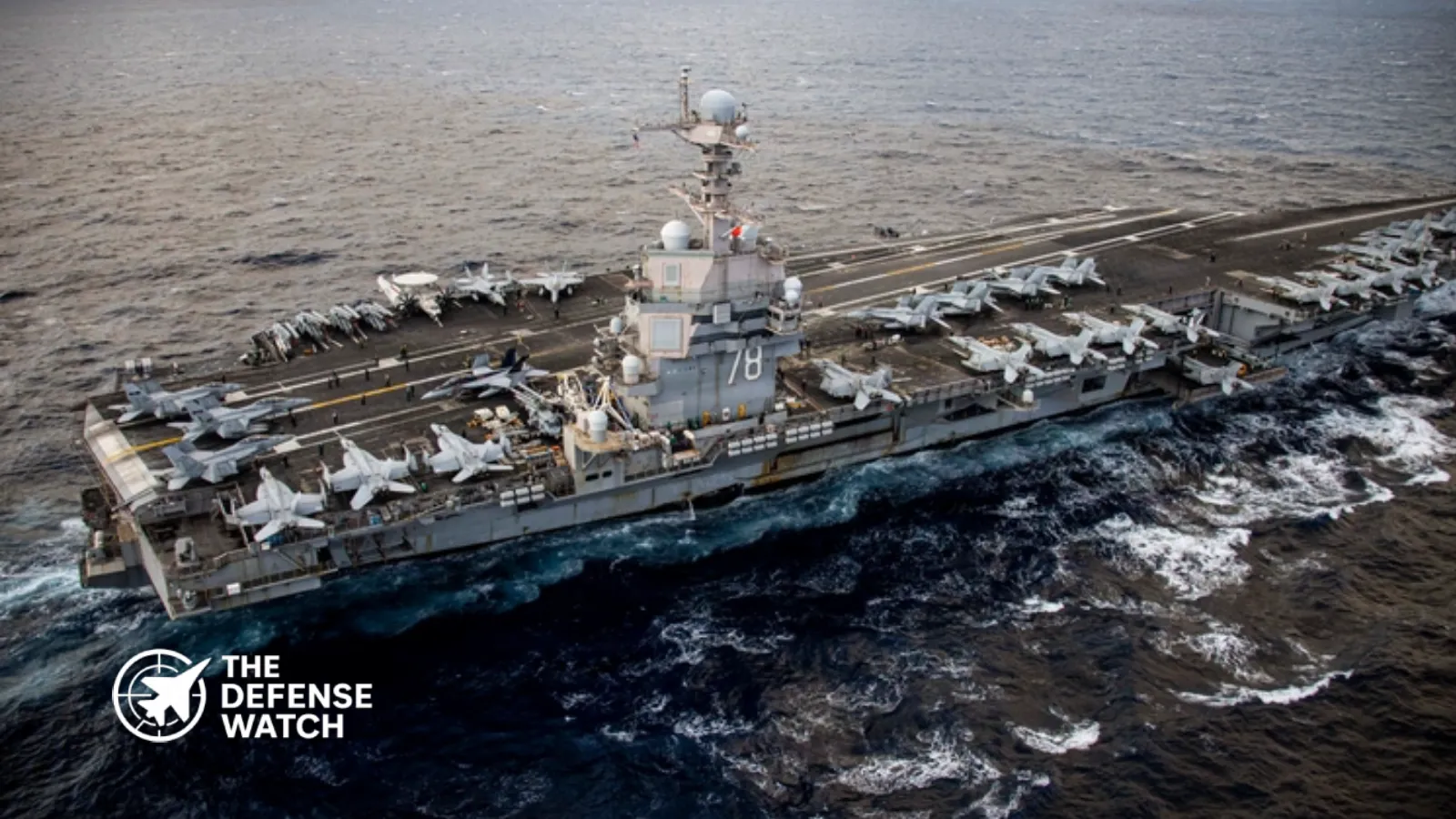
USS Gerald R. Ford Departs Croatia, Continues European Operations
The USS Gerald R. Ford deployment in Europe entered its next phase as USS Gerald R. Ford departed Croatia following a scheduled port visit, reinforcing U.S. naval presence in the region.
The port call, conducted in the Adriatic Sea, formed part of ongoing U.S. Navy efforts to strengthen cooperation with NATO allies and regional partners. According to defense reporting from Defence Industry Europe, the visit provided an opportunity for logistical resupply, crew rest, and diplomatic engagement.
- USS Gerald R. Ford departed Croatia following a scheduled port visit in early April 2026.
- The visit supported U.S. Navy engagement with regional allies and partners in the Adriatic Sea.
- The carrier continues its deployment in the U.S. Sixth Fleet area of responsibility.
- USS Gerald R. Ford is the lead ship of the Ford-class, featuring advanced electromagnetic launch systems.
- The deployment underscores sustained U.S. naval presence in Europe amid evolving security conditions.
Strategic Role In European Theater
The USS Gerald R. Ford deployment remains central to U.S. maritime strategy in Europe. Operating under the U.S. Sixth Fleet, the carrier strike group supports deterrence, joint exercises, and rapid response capabilities across the region.
Port visits such as the one in Croatia serve more than logistical purposes. They signal sustained U.S. commitment to European security, particularly along NATO’s southern flank. The Adriatic Sea, while less contested than the Baltic or Black Sea, plays a supporting role in alliance mobility and maritime security.
From an operational standpoint, the Ford-class carrier offers increased sortie generation rates and reduced crew requirements compared to legacy Nimitz-class carriers. These features enable more efficient power projection during extended deployments.
Advanced Capabilities Of Ford-Class Carrier
The USS Gerald R. Ford deployment highlights the capabilities of the Navy’s newest carrier class. Key systems include the Electromagnetic Aircraft Launch System (EMALS) and Advanced Arresting Gear, both designed to improve aircraft launch efficiency and reduce maintenance demands.
These technologies allow the carrier to support a broader range of aircraft operations while maintaining a higher operational tempo. The ship also integrates improved radar systems and enhanced survivability features, reflecting evolving requirements for high-end naval warfare.
In practical terms, these upgrades translate into greater flexibility for commanders operating in complex maritime environments, including contested regions near Eastern Europe and the Mediterranean.
Regional Security Context
The USS Gerald R. Ford deployment comes at a time when European security dynamics remain fluid. While the Adriatic region is relatively stable, broader tensions across the continent continue to shape NATO force posture.
U.S. carrier presence in Europe provides a visible and flexible deterrent. Unlike land-based forces, a carrier strike group can reposition quickly, offering policymakers options across multiple theaters without permanent basing requirements.
The departure from Croatia does not mark a reduction in activity. Instead, it reflects the mobility inherent in carrier operations. The Ford and its strike group are expected to continue exercises and patrols across the Sixth Fleet area.
Operational Impact And Analysis
The USS Gerald R. Ford deployment underscores a shift toward sustained, high-readiness naval operations in Europe. Rather than short-duration deployments, the U.S. Navy is increasingly maintaining continuous presence through rotational carrier strike groups.
This approach enhances interoperability with allies while ensuring rapid response capability. It also aligns with broader U.S. defense strategy, which prioritizes forward presence and integrated deterrence.
Importantly, port visits like the one in Croatia contribute to soft power alongside military capability. Engagement with local authorities and allied navies reinforces diplomatic ties that underpin NATO cohesion.
Looking Ahead
As the USS Gerald R. Ford deployment continues, its movements will likely focus on joint exercises, maritime security operations, and deterrence missions. The carrier’s advanced systems and operational flexibility position it as a key asset in U.S. naval strategy.
With evolving security challenges across Europe, the presence of a Ford-class carrier provides both reassurance to allies and a credible deterrent to potential adversaries.