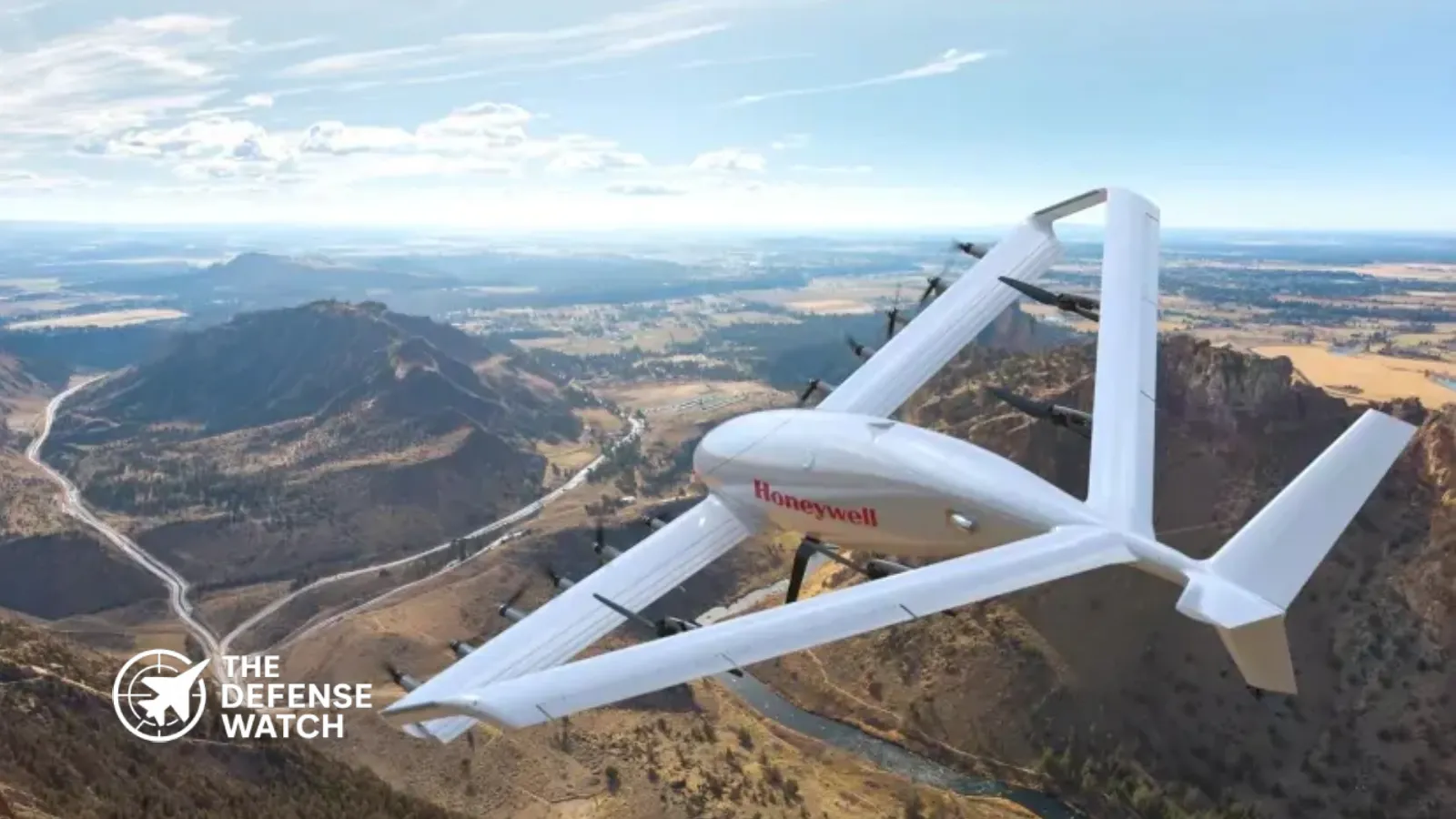
- Honeywell Aerospace and Odys Aviation are jointly developing an airborne counter-UAS system.
- The system is designed to detect, track, and neutralize drones from an airborne platform.
- Integration will focus on Odys Aviation hybrid-electric aircraft concepts.
- The solution aims to extend counter-drone coverage beyond ground-based systems.
- Development reflects growing demand for layered air defense against small UAS threats.
Honeywell Airborne Counter-UAS System Targets Expanding Drone Threat
The Honeywell airborne counter UAS system is at the center of a new collaboration between Honeywell Aerospace and Odys Aviation, aimed at addressing the rapid proliferation of unmanned aerial systems across modern battlefields.
Announced via industry sources, the partnership focuses on integrating advanced counter-drone capabilities into an airborne platform, marking a shift away from traditional ground-based defenses. The move comes as military forces increasingly face low-cost, highly maneuverable drone threats in contested environments.
Unlike static counter-UAS systems, the airborne approach is designed to provide extended range, improved detection angles, and greater operational flexibility.
Expanding Counter-Drone Coverage Into The Air Domain
The Honeywell airborne counter UAS system is expected to combine detection, tracking, and mitigation technologies into a single airborne architecture. While detailed specifications remain limited, Honeywell’s expertise in avionics, sensors, and electronic warfare systems is likely to form the backbone of the solution.
Odys Aviation, known for its hybrid-electric vertical takeoff and landing concepts, will provide the aircraft integration platform. This suggests a system designed for endurance, lower acoustic signatures, and flexible deployment.
From an operational standpoint, airborne counter-UAS platforms offer several advantages:
- Wider surveillance coverage compared to ground systems
- Ability to track low-flying drones in complex terrain
- Faster response times against dynamic threats
- Reduced dependence on fixed infrastructure
This aligns with evolving military requirements, particularly in environments where drones are used for reconnaissance, targeting, and strike missions.
Strategic Context: Rising Demand For Counter-UAS Capabilities
The development of the Honeywell airborne counter UAS system reflects a broader shift in defense priorities. Conflicts in Eastern Europe and the Middle East have highlighted how small drones can overwhelm traditional air defenses.
According to multiple defense analyses, including reports from organizations such as the Center for Strategic and International Studies (CSIS), layered counter-UAS strategies are becoming essential. These typically combine:
- Electronic warfare systems
- Kinetic interceptors
- Directed energy solutions
- Airborne surveillance platforms
The Honeywell-Odys effort appears to address a key gap in this layered approach, namely persistent airborne coverage against low-altitude threats.
Integration With Hybrid-Electric Aviation Concepts
A notable aspect of the program is its integration with hybrid-electric aircraft technology. Odys Aviation’s platform is designed to support long-endurance missions while reducing fuel consumption and operational costs.
This could have several implications for military users:
- Extended loiter time for counter-drone patrols
- Lower thermal and acoustic signatures
- Reduced logistics footprint in forward areas
While hybrid-electric propulsion is still emerging in defense applications, its pairing with counter-UAS missions suggests a focus on sustainability and operational efficiency alongside combat capability.
Operational Impact And Future Use Cases
If successfully developed, the Honeywell airborne counter UAS system could support a wide range of missions, including:
- Protection of forward operating bases
- Maritime security and fleet defense
- Border surveillance and homeland security
- Urban counter-drone operations
The airborne nature of the system also makes it suitable for expeditionary forces, where rapid deployment and mobility are critical.
From a U.S. perspective, such capabilities could complement existing counter-UAS programs across the Department of Defense, particularly in scenarios involving near-peer adversaries or asymmetric threats.
Analysis: Closing A Critical Capability Gap
The Honeywell airborne counter UAS system highlights a growing recognition that ground-based defenses alone are insufficient against modern drone threats.
Airborne systems can bridge coverage gaps, especially in complex terrain or urban environments where line-of-sight limitations hinder traditional radars and jammers. By elevating sensors and effectors, these platforms can detect and engage threats earlier.
However, challenges remain. Integrating counter-UAS payloads onto airborne platforms requires balancing power, weight, and endurance constraints. Additionally, rules of engagement and airspace deconfliction will play a critical role in operational deployment.
Despite these hurdles, the direction is clear. Defense forces are moving toward multi-domain counter-drone architectures, and airborne systems are becoming a key component of that strategy.