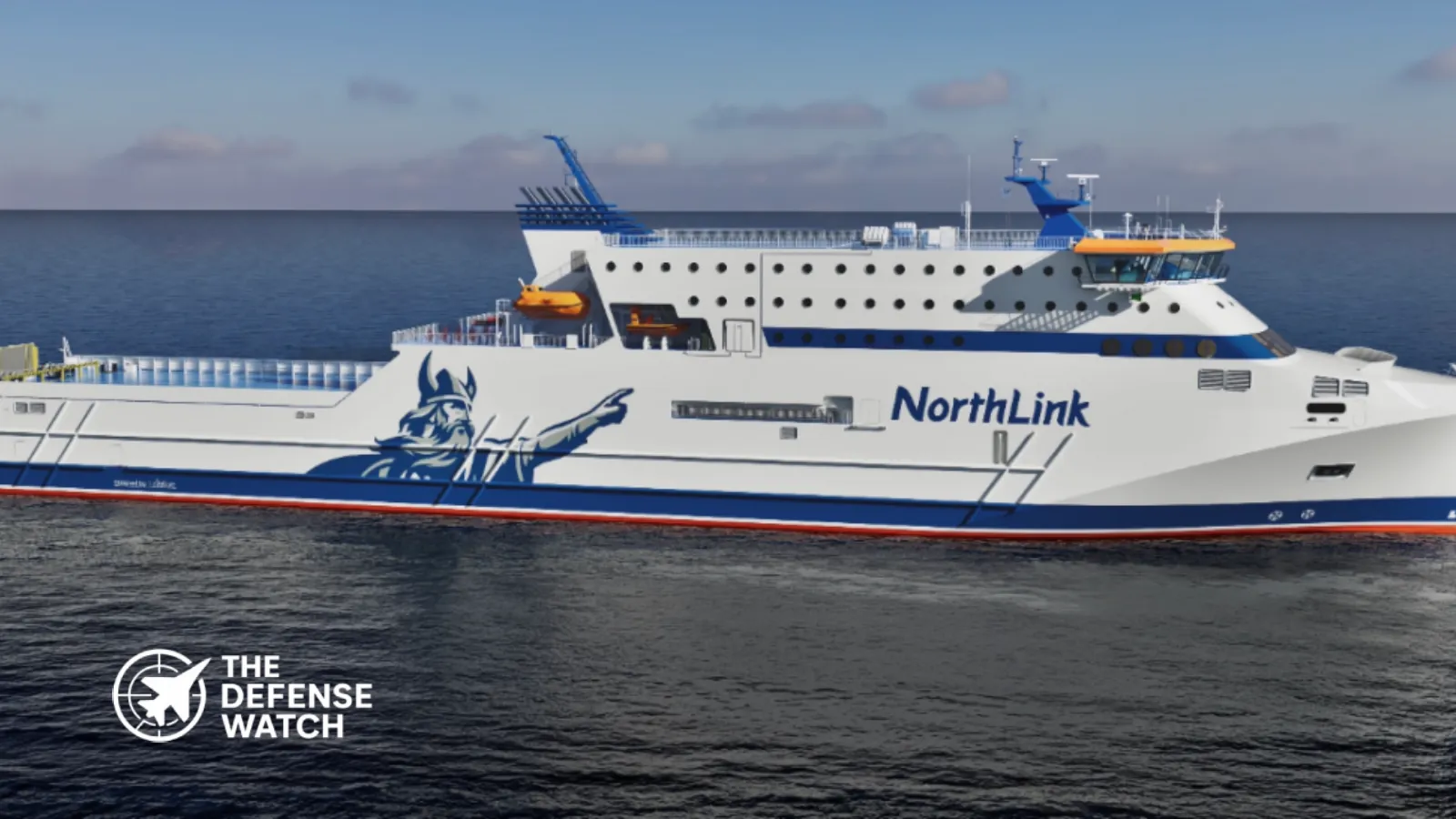
- A Scottish freight ferry contract has been awarded to a Chinese shipyard.
- The vessel will support lifeline ferry services connecting Scottish islands.
- The deal raises concerns over reliance on foreign shipbuilding capacity.
- Contract selection reflects cost competitiveness and delivery timelines.
- The decision highlights tension between economic efficiency and strategic resilience.
Scottish Freight Ferry Contract Chinese Shipyard Deal Draws Scrutiny
The Scottish freight ferry contract Chinese shipyard decision has triggered debate in the United Kingdom, as authorities awarded a key maritime procurement project to an overseas builder despite growing concerns over industrial resilience and national security.
The contract covers the construction of a new freight ferry intended to support critical transport links between mainland Scotland and its island communities. Officials selected a Chinese shipyard based on cost efficiency and delivery certainty,
The Big Picture
Western governments are reassessing supply chain dependencies across critical infrastructure sectors, including maritime transport. The UK has placed renewed emphasis on sovereign industrial capacity following disruptions linked to global crises and geopolitical tensions.
Shipbuilding holds both economic and strategic value. While commercial ferry construction is not a military program, it intersects with national resilience, logistics continuity, and industrial base sustainability. NATO allies increasingly view maritime infrastructure through a dual use lens.
The decision to outsource construction to China comes as the UK government promotes domestic shipbuilding through initiatives such as the National Shipbuilding Strategy. This creates a clear tension between policy ambition and procurement outcomes.
What’s Happening
Scottish authorities awarded the freight ferry contract to a Chinese shipyard after a competitive process that evaluated bids on cost, technical compliance, and delivery schedule.
The vessel will operate on routes that serve remote island communities, making it a critical component of Scotland’s transport network. These ferries carry goods, vehicles, and essential supplies, supporting local economies and public services.
The contract reportedly favored the Chinese bidder due to lower costs and faster delivery timelines compared to UK or European shipyards. Domestic shipbuilders have faced financial and capacity constraints, which affected their competitiveness in the tender.
Why It Matters
Cost driven procurement decisions often deliver short term savings, but they can introduce long term strategic risks. The Scottish freight ferry contract Chinese shipyard outcome reflects this tradeoff.
Reliance on foreign shipyards reduces domestic industrial activity and weakens the local supply chain. Over time, this can erode workforce skills and limit surge capacity during crises.
Maritime platforms, even civilian ones, contribute to national resilience. Ferries ensure continuity of logistics in remote regions. Any disruption in maintenance, spare parts, or technical support could have downstream operational impacts.
The deal also highlights a broader issue. Western shipyards struggle to compete with Chinese state supported firms that benefit from scale, subsidies, and integrated supply chains.
Strategic Implications
The contract underscores a structural gap in the UK’s maritime industrial base. While the Royal Navy maintains advanced warship programs, commercial shipbuilding capacity remains uneven.
Dependence on external suppliers for critical infrastructure creates vulnerabilities in times of geopolitical tension. Even if the vessel itself poses no security risk, the procurement pattern signals reliance that could expand over time.
The decision may also influence future defense adjacent procurement. If cost pressures consistently favor foreign builders, domestic yards may lose the ability to scale production for auxiliary or support vessels.
From a NATO perspective, allied industrial capacity is a collective asset. Reduced domestic output in one member state can affect broader alliance readiness in logistics and sealift.
Competitor View
China is likely to view the Scottish freight ferry contract Chinese shipyard award as validation of its global shipbuilding competitiveness. Chinese yards dominate commercial ship production and continue to expand market share.
Beijing promotes its shipbuilding sector as part of a wider industrial strategy that integrates civilian and military capabilities. Increased exports strengthen its economic leverage and technological base.
Russia and other competitors may interpret the decision as evidence of Western dependence on external manufacturing, particularly in non defense sectors that still hold strategic relevance.
At the same time, the deal does not indicate a shift in UK defense alignment. It reflects economic realities in commercial procurement rather than a change in security policy.
What To Watch Next
Delivery timelines and construction milestones will offer insight into whether the cost advantage translates into reliable execution.
Future UK ferry procurements will serve as a key indicator. Policymakers may adjust tender criteria to include strategic weighting for domestic industry participation.
Government reviews of the National Shipbuilding Strategy could also address gaps in commercial vessel construction capacity.
Parliamentary scrutiny is likely to increase, particularly regarding supply chain security and long term industrial planning.
Capability Gap
The contract highlights a capability gap in competitive commercial shipbuilding within the UK. Domestic yards struggle to match the pricing and production scale offered by major Chinese shipbuilders.
This gap limits the UK’s ability to independently deliver non military vessels that still play a role in national infrastructure.
However, relying on foreign construction introduces constraints. Maintenance, refits, and lifecycle support may still depend on international supply chains, which can create operational friction.
The challenge for policymakers is balancing affordability with strategic autonomy.
The Bottom Line
The Scottish freight ferry contract Chinese shipyard decision shows how cost driven procurement can clash with long term strategic resilience in critical maritime infrastructure.
Get real time update about this post category directly on your device, subscribe now.