
- ► Lockheed Martin unveiled its “Integrated Shield” concept to connect U.S. air and missile defense systems across domains.
- ► The approach links sensors, shooters, and command networks for faster threat detection and interception.
- ► Designed to counter ballistic, cruise, and hypersonic threats facing the U.S. homeland and forward forces.
- ► Builds on existing systems including Aegis, THAAD, Patriot, and space-based sensors.
- ► Supports Pentagon efforts to create a layered, joint, and networked missile defense architecture.
Lockheed Martin Building The Nation’s Integrated Shield
Lockheed Martin’s Integrated Shield concept aims to unify U.S. missile defense capabilities into a single, connected architecture capable of countering modern threats.
In a recent feature published by Lockheed Martin, the company detailed how it plans to integrate sensors, interceptors, command systems, and data networks across land, sea, air, and space domains. The goal is to create a more responsive and resilient shield against increasingly complex missile threats.
The Integrated Shield strategy reflects a broader Pentagon push toward joint, all domain operations, where data flows seamlessly between services and platforms.
Connecting Sensors To Shooters
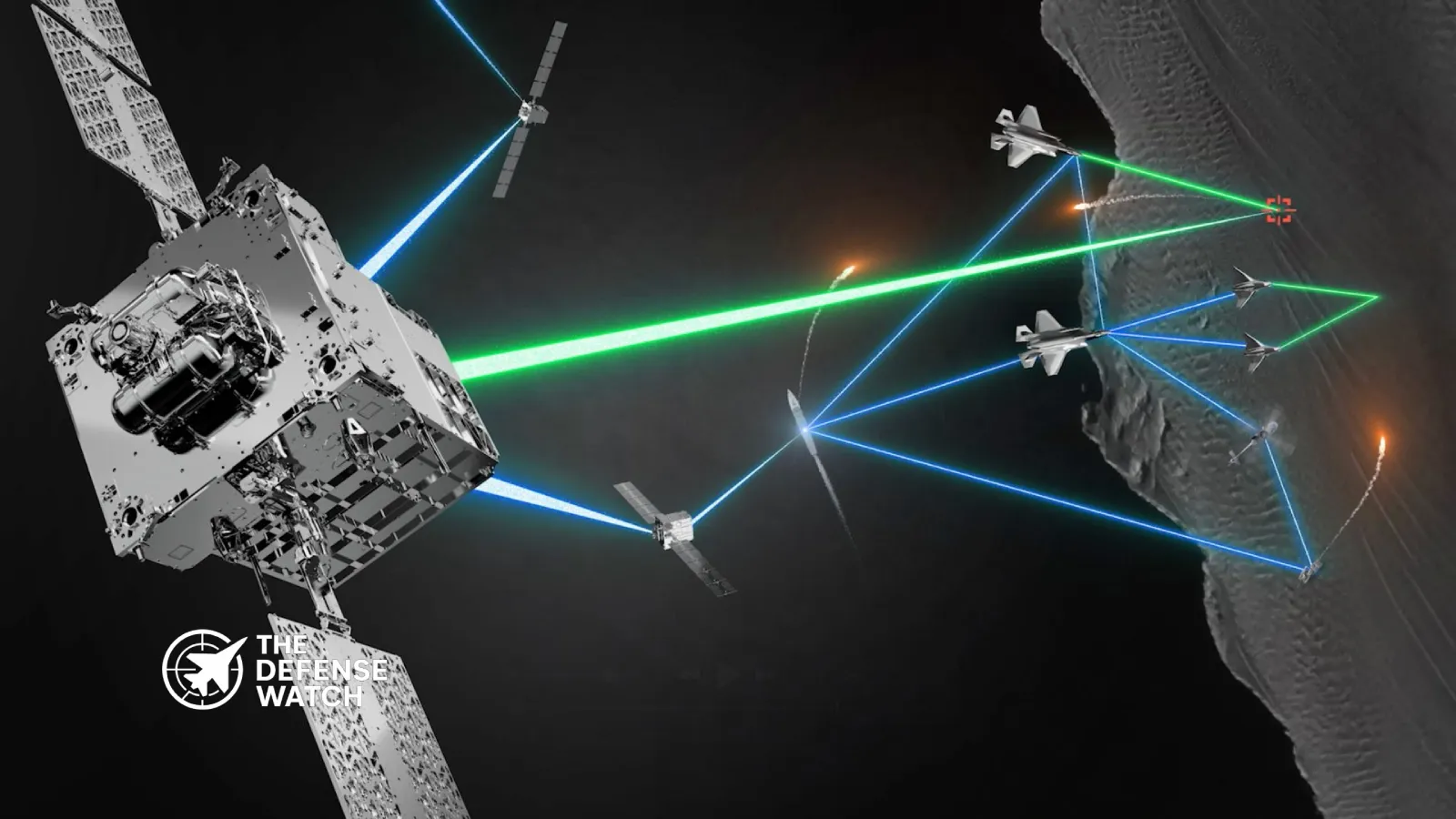
At the core of the Integrated Shield approach is integration. Rather than relying on isolated defense systems, the concept links radar systems, satellites, command centers, and interceptors into one coordinated network.
Lockheed Martin is a prime contractor behind several cornerstone systems in U.S. missile defense, including the Aegis Combat System, the Terminal High Altitude Area Defense, and the Patriot air defense system. Each plays a distinct role in layered defense, from exo atmospheric interception to terminal phase engagements.

Under the Integrated Shield framework, these systems would share targeting data in near real time. A radar tracking a ballistic missile in one region could cue an interceptor in another. A satellite sensor detecting a hypersonic glide vehicle could pass data directly to a ground based or sea based shooter.
This type of networked defense aligns with the U.S. Department of Defense Joint All Domain Command and Control effort, known as Joint All-Domain Command and Control.
Addressing Evolving Threats
The Integrated Shield concept comes as adversaries expand their missile arsenals. Russia and China continue testing hypersonic glide vehicles and maneuverable reentry vehicles. North Korea advances its intercontinental ballistic missile program. Iran fields increasingly capable regional missile systems.
According to the U.S. Missile Defense Agency, the threat environment now includes ballistic, cruise, and hypersonic missiles operating across multiple trajectories and speeds. Traditional point defense systems alone are no longer sufficient.
Integrated Shield seeks to address that challenge through layered defense. Space based sensors detect launches early. Long range interceptors engage in midcourse. Terminal systems provide final layer protection for critical assets and population centers.
This layered architecture reduces reliance on any single system and improves redundancy if one layer fails.
Homeland And Forward Defense
While much of the discussion centers on homeland protection, the Integrated Shield concept also supports forward deployed U.S. forces and allied networks.

The Missile Defense Agency continues to modernize homeland defense through upgrades to Ground based Midcourse Defense and next generation interceptors. Meanwhile, Aegis equipped ships and land based Aegis Ashore installations extend coverage to Europe and the Indo Pacific.
Lockheed Martin’s approach ties these elements together rather than treating them as separate silos. That integration is critical for coalition operations, where interoperability between U.S. and allied systems can determine response time during a crisis.
Industrial And Strategic Implications
From an industrial perspective, Integrated Shield positions Lockheed Martin as a central systems integrator in the evolving missile defense market. As the Pentagon increases funding for integrated battle management systems and sensor networks, companies able to bridge legacy platforms with new digital architectures stand to gain.
But integration also brings technical and policy challenges. Data security, cyber resilience, and cross service interoperability remain ongoing concerns. The Department of Defense has repeatedly stressed the need for open architecture standards to prevent vendor lock and ensure flexibility.
Integrated Shield appears designed to align with that open architecture approach, though long term success will depend on sustained government funding and multi service coordination.
Strategic Significance
The Integrated Shield strategy underscores a shift in U.S. defense planning. Missile defense is no longer viewed as a collection of separate programs. It is becoming a unified enterprise spanning space, cyber, air, land, and maritime domains.
For policymakers, the key question is whether integration can keep pace with rapidly evolving threats. Hypersonic weapons compress decision timelines. Saturation attacks complicate targeting. Electronic warfare threatens sensor reliability.
A networked, layered defense increases resilience, but it also increases system complexity.
Lockheed Martin’s Integrated Shield proposal reflects that reality. It acknowledges that future missile defense will depend as much on software, data fusion, and connectivity as on interceptors and radars.
As the Pentagon refines its missile defense strategy and Congress debates funding priorities, Integrated Shield will likely shape industry discussions around how to build a credible, layered deterrent for the coming decade.