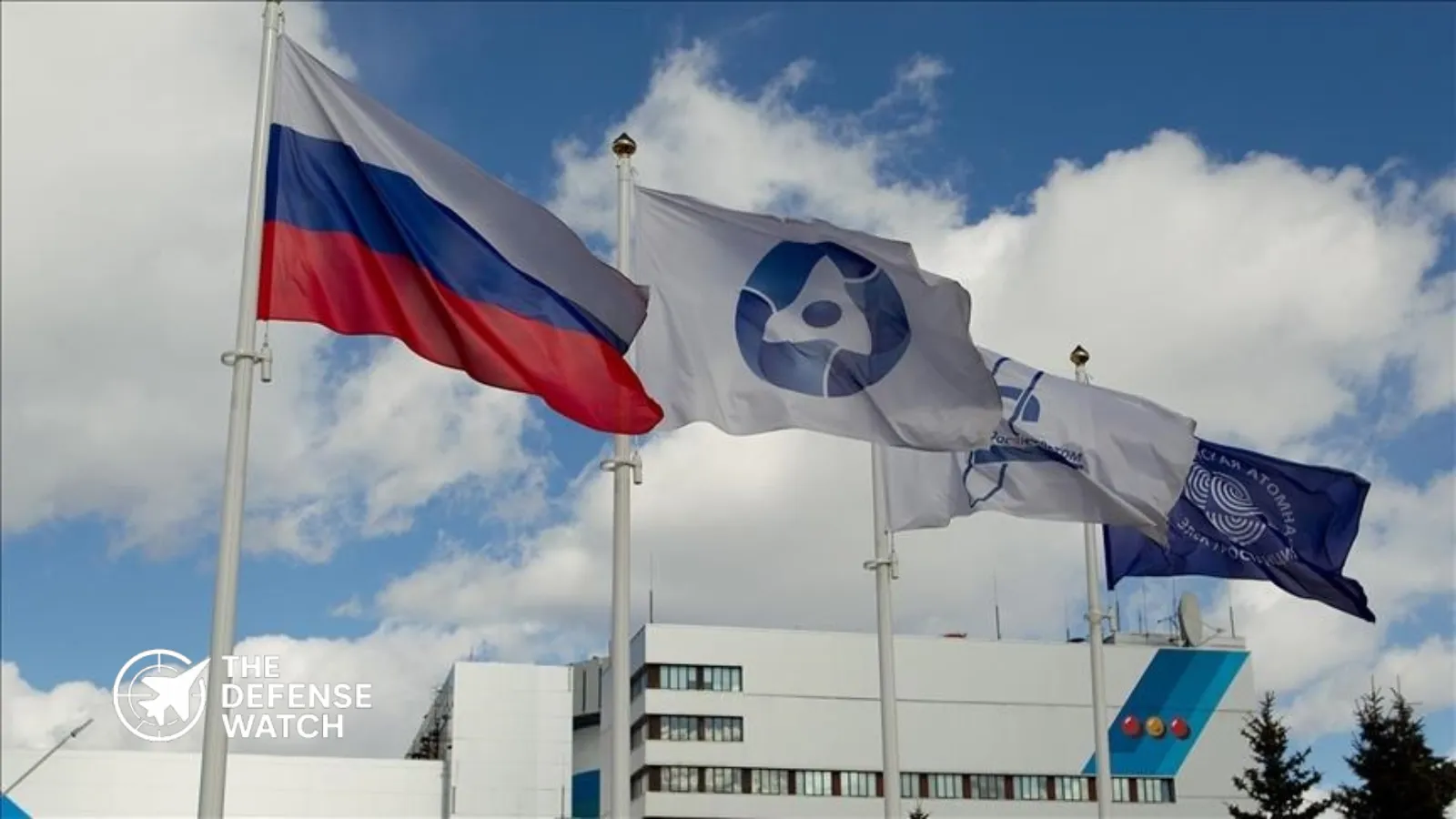
- ► The Arab Atomic Energy Agency signed a strategic nuclear cooperation agreement with Rosatom.
- ► The partnership focuses on peaceful nuclear energy use, scientific research, personnel training, and infrastructure development.
- ► Arab states will participate in the MBIR Multipurpose Fast Neutron Research Reactor project in Russia.
- ► MBIR is designed for advanced reactor physics research, fuel cycle testing, and materials experimentation.
- ► The agreement strengthens Russia’s nuclear diplomacy and long-term scientific influence in the Middle East.
- ► Arab participation may influence future nuclear reactor procurement decisions and regulatory standards.
- ► International safeguards and IAEA oversight will monitor research activities to ensure peaceful use.
AAEA Rosatom Nuclear Energy Agreement Deepens Scientific Cooperation
The AAEA Rosatom nuclear energy agreement formalizes cooperation between the Arab Atomic Energy Agency and Russia’s state nuclear corporation, Rosatom, on the peaceful use of nuclear energy, including participation in the MBIR Multipurpose Fast Neutron Research Reactor project.
On the surface, the agreement centers on research, training, and infrastructure development. However, its timing and structure point to a broader strategic dimension. Russia is reinforcing its long-term nuclear partnerships in the Middle East at a time when global energy supply chains are under pressure and geopolitical alignments are evolving.
The agreement expands collaboration in advanced reactor science through MBIR, a next-generation fast neutron research reactor designed to support fuel cycle innovation, materials testing, and advanced reactor development. For Arab states seeking to expand civil nuclear capabilities, this offers access to a high-end research ecosystem that few countries can provide.
For Moscow, it strengthens a tool it has used effectively for two decades: nuclear diplomacy.
What the MBIR Project Represents
The MBIR reactor, under construction in Dimitrovgrad, is designed as one of the world’s most powerful multipurpose fast neutron research reactors. Fast neutron reactors differ from conventional thermal reactors in their ability to test advanced fuels and materials under intense neutron flux, making them central to next-generation nuclear technology, including closed fuel cycles and advanced safety systems.
Russia has positioned MBIR as an international research platform. By inviting foreign participation, Rosatom seeks to anchor long-term scientific cooperation, attract foreign investment, and lock in partnerships that can extend for decades.
For Arab states, access to MBIR offers:
- Advanced reactor physics research
- Training for nuclear engineers and scientists
- Participation in fuel cycle experimentation
- Data and materials testing that would be costly to replicate domestically
For Russia, it consolidates its position as one of the few countries capable of delivering the full nuclear value chain, from research to construction to fuel supply and waste management.
Why This Matters Now
The agreement comes at a time when Middle Eastern governments are revisiting energy security strategies. Several states in the region are pursuing nuclear power to diversify away from hydrocarbons while maintaining export revenues. At the same time, global competition in civil nuclear exports has intensified.
The United States, through frameworks such as Section 123 agreements under the Atomic Energy Act, maintains strict nonproliferation conditions. France, through EDF, and South Korea, through KEPCO, compete aggressively in reactor exports. China has expanded nuclear cooperation in Asia and Africa.
Russia remains one of the most active nuclear exporters globally. According to Rosatom public data and assessments from the World Nuclear Association, Russia has built or is constructing dozens of reactors abroad. The company’s integrated financing model, often supported by state loans, makes it an attractive partner for countries seeking turnkey solutions.
(adsbygoogle = window.adsbygoogle || []).push({});The AAEA Rosatom nuclear energy agreement must be seen in this competitive landscape. It strengthens Moscow’s technical footprint in the Arab world beyond individual bilateral reactor deals, extending influence into multilateral institutional frameworks.
Operational Impact on Regional Nuclear Programs
From an operational standpoint, the agreement enhances human capital development in participating Arab states.
Nuclear energy programs require decades of investment in training, regulatory oversight, safety culture, and technical infrastructure. By embedding Arab researchers and engineers in the MBIR ecosystem, Rosatom effectively shapes future technical standards and professional networks.
This has practical implications:
- Reactor design familiarity may favor Russian technology in future procurement decisions.
- Regulatory approaches could align more closely with Russian methodologies.
- Fuel supply and back-end services may gravitate toward Rosatom-linked arrangements.
For countries at early stages of nuclear development, this type of institutional alignment often precedes large-scale procurement decisions.
The U.S. Department of Energy and the Nuclear Regulatory Commission emphasize that long-term technical engagement influences regulatory culture. In this sense, scientific cooperation is not politically neutral. It shapes pathways.
Industrial and Financial Dimensions
Rosatom’s model differs from Western competitors in one key area: vertical integration.
The corporation controls uranium mining, fuel fabrication, reactor construction, engineering services, and decommissioning. This end-to-end model reduces fragmentation and simplifies contract structures for partner states.
(adsbygoogle = window.adsbygoogle || []).push({});By connecting the Arab Atomic Energy Agency to MBIR research activities, Rosatom expands the upstream portion of that value chain. Research cooperation often translates into commercial opportunities down the line.
The financial implications are significant. Nuclear projects can exceed $10 billion per plant. Research cooperation may appear modest compared to reactor construction contracts, but it builds the technical confidence required for such investments.
In a region where sovereign wealth funds actively pursue strategic technology partnerships, research-level integration can be a precursor to large capital flows.
Regional Security Context
The Middle East remains a region where nuclear energy development is closely scrutinized for proliferation risks. The International Atomic Energy Agency maintains safeguards across regional programs, and the Non-Proliferation Treaty remains the governing framework.
Fast neutron research reactors attract particular attention because they are central to advanced fuel cycles, including plutonium management. While the MBIR project is framed for peaceful use, the technical expertise associated with fast reactor research has dual-use characteristics.
This does not imply violations. However, it underscores why external actors, particularly the United States and European Union, monitor such agreements closely.
(adsbygoogle = window.adsbygoogle || []).push({});Russia’s expanded nuclear engagement in the Arab world intersects with broader geopolitical trends:
- Gulf states balancing relations between Washington, Moscow, and Beijing
- Energy market coordination through OPEC+
- Regional hedging strategies amid U.S. force posture adjustments
In this context, civil nuclear cooperation is part of a larger diplomatic architecture.
Comparison With Western and Asian Competitors
The United States traditionally conditions nuclear cooperation on strict nonproliferation commitments. South Korea’s APR-1400 export model emphasizes safety track records and alliance-backed credibility. France leverages decades of operational expertise and EU regulatory integration.
Russia’s competitive advantages include:
- State-backed financing
- Rapid construction timelines
- Fuel supply guarantees
- Willingness to localize elements of production
China is also expanding research reactor exports and has invested in fast reactor development. However, Russia’s experience with fast neutron technology remains more mature in operational terms.
The AAEA Rosatom nuclear energy agreement strengthens Moscow’s comparative advantage in advanced reactor science, a niche area where few competitors operate at scale.
Strategic Assessment
The agreement’s broader impact lies in influence rather than immediate hardware deployment.
Regional Power Balance:
The deal reinforces Russia’s scientific presence in the Middle East. While it does not alter military balances directly, it expands Moscow’s leverage in energy diplomacy. Over time, countries aligned with Russian nuclear ecosystems may demonstrate greater policy flexibility toward Moscow in international forums.
Deterrence Implications:
There is no direct military deterrence shift. However, advanced nuclear research capabilities contribute to national prestige and technological autonomy. States investing in nuclear science often gain broader industrial capacity that can spill into defense sectors.
Budget and Procurement Signals:
Engagement in MBIR suggests participating states are considering long-term nuclear investments. This may precede reactor procurement decisions. For Western suppliers, it signals heightened competition in upcoming tenders.
Alliance Dynamics:
The agreement reflects ongoing diversification by Arab states. Many continue strong defense ties with the United States while expanding economic and scientific links with Russia and China. This multipolar engagement reduces exclusive dependence on any single partner.
Escalation Risks:
The primary risk lies in perception. Advanced nuclear cooperation in a sensitive region can trigger political scrutiny, particularly if geopolitical tensions intensify. Transparency and adherence to International Atomic Energy Agency safeguards will be critical to prevent misinterpretation.
What Happens Next
Several developments are likely in the coming years:
- Expanded training programs and researcher exchanges tied to MBIR.
- Potential memoranda of understanding between individual Arab states and Rosatom for reactor feasibility studies.
- Increased Western diplomatic engagement aimed at preserving influence in regional nuclear sectors.
- Greater scrutiny from nonproliferation bodies to ensure safeguards compliance.
The AAEA Rosatom nuclear energy agreement is not a dramatic shift. It is a steady, structural move. Russia is embedding itself deeper into the scientific and institutional architecture of Middle Eastern nuclear development.