U.S. Army Tests Next Generation Rocket Assisted Projectile
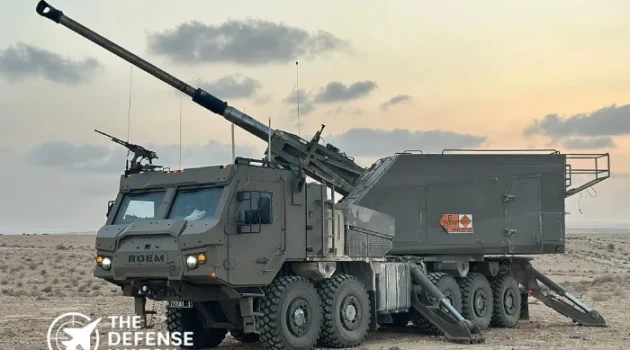
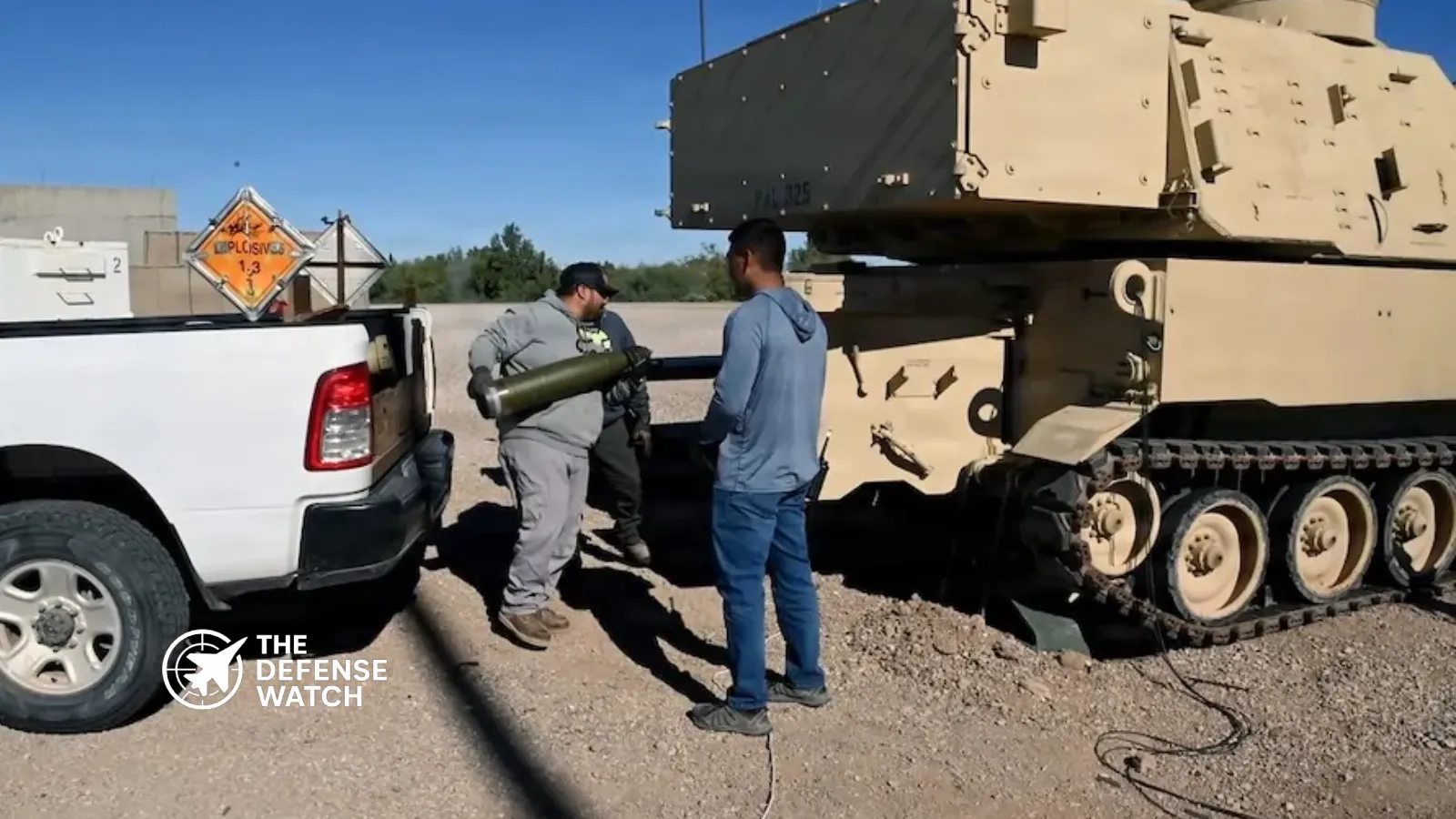
The U.S. Army has tested a next generation rocket assisted projectile at Yuma Proving Ground as part of its broader effort to extend the range of conventional tube artillery.
According to official Army information and reporting from defense industry sources, the live-fire event evaluated performance, stability, propulsion, and accuracy of the rocket assisted projectile under desert conditions. The trials form part of the service’s long range fires modernization strategy, which remains a core priority within Army transformation plans.
The test focused on increasing effective range while maintaining compatibility with existing 155mm artillery platforms.
Extending The Reach Of 155mm Artillery
The next generation rocket assisted projectile is designed to travel significantly farther than standard high explosive 155mm rounds. By incorporating a rocket motor that ignites after launch, the projectile sustains propulsion beyond the initial gun launch phase.
Traditional artillery shells rely solely on the force generated by the propellant charge in the howitzer. In contrast, a rocket assisted projectile uses that initial impulse to exit the barrel before activating a secondary propulsion system mid-flight. This design extends maximum range without requiring entirely new artillery platforms.
The U.S. Army has been pursuing several parallel efforts to increase cannon artillery reach, including extended range cannon artillery concepts and improved precision munitions. The rocket assisted projectile complements those efforts by offering a potentially more cost-effective range enhancement option compared to entirely new weapon systems.
Army officials have consistently identified long range precision fires as a key modernization priority, particularly in the context of large scale combat operations.
Testing At Yuma Proving Ground
Yuma Proving Ground, located in Arizona, is one of the Army’s primary locations for artillery, missile, and ground system testing. Its expansive desert terrain allows for long distance firing evaluations under controlled conditions.
During the recent event, the Army assessed multiple parameters, including projectile trajectory, motor ignition timing, aerodynamic stability, and impact accuracy. Data collected during the firing will inform further design refinements and validation steps.
The test also evaluated integration with standard 155mm howitzer systems currently fielded across U.S. Army units. Maintaining backward compatibility with existing platforms reduces logistical complexity and accelerates potential fielding timelines.
Defense analysts note that range extension for cannon artillery is increasingly relevant in contested environments where forces must operate beyond the reach of adversary counter battery systems.
Long Range Fires Modernization Effort
The U.S. Army’s modernization strategy has emphasized long range precision fires as one of its top priorities. This includes upgrades to cannon artillery, precision guided munitions, and missile systems.
The rocket assisted projectile initiative aligns with broader programs intended to ensure U.S. ground forces can strike targets at greater distances while reducing exposure to enemy fire.
Extended range artillery offers several operational advantages:
- Increased standoff distance
- Expanded coverage area from a single firing position
- Reduced need for forward repositioning
- Improved survivability against counter battery threats
As near peer competitors invest in longer range artillery and precision strike capabilities, the Army has sought to close potential gaps through incremental upgrades and new munitions development.
The rocket assisted projectile represents one approach that enhances existing systems rather than replacing them outright.
Operational And Strategic Implications
Improving artillery range affects not only tactical engagements but also broader operational planning. Longer range 155mm projectiles can support maneuver forces from deeper rear positions, complicating adversary targeting efforts.
In large scale ground combat scenarios, extended range cannon artillery can provide sustained fires without relying exclusively on higher cost missile systems. This layered approach allows commanders to match munitions to mission requirements.
The U.S. Army has highlighted the importance of scalable and cost conscious modernization. Rocket assisted projectiles may offer a balance between affordability and performance, particularly if production leverages existing supply chains.
While additional testing and validation will be required before fielding decisions, the Yuma trial marks a concrete step in advancing artillery capability.
Integration With Future Artillery Systems
The rocket assisted projectile effort may also support future cannon upgrades, including extended range barrels and improved fire control systems.
By combining improved projectiles with advanced targeting data, digital fire control networks, and sensor integration, the Army aims to enhance overall strike effectiveness.
See also: Extended Range Cannon Artillery modernization coverage at TheDefenseWatch.com.
Continued testing will determine final performance parameters, including maximum range, accuracy metrics, and reliability under varied environmental conditions.
What Comes Next
Following the Yuma Proving Ground evaluation, the Army is expected to analyze collected telemetry and impact data to refine projectile design.
Further developmental and operational testing could include:
- Additional live-fire events
- Environmental stress testing
- Compatibility assessments with multiple howitzer variants
- Production readiness evaluations
The timeline for potential fielding has not been formally announced. However, long range fires modernization remains central to Army force design updates.
Conclusion
The U.S. Army’s test of a next generation rocket assisted projectile at Yuma Proving Ground reflects continued investment in extending artillery range without overhauling existing systems.
As ground forces adapt to evolving threat environments, incremental improvements to conventional artillery may provide practical gains in reach, survivability, and operational flexibility.
The results of ongoing testing will determine how quickly the rocket assisted projectile moves from development to operational deployment.