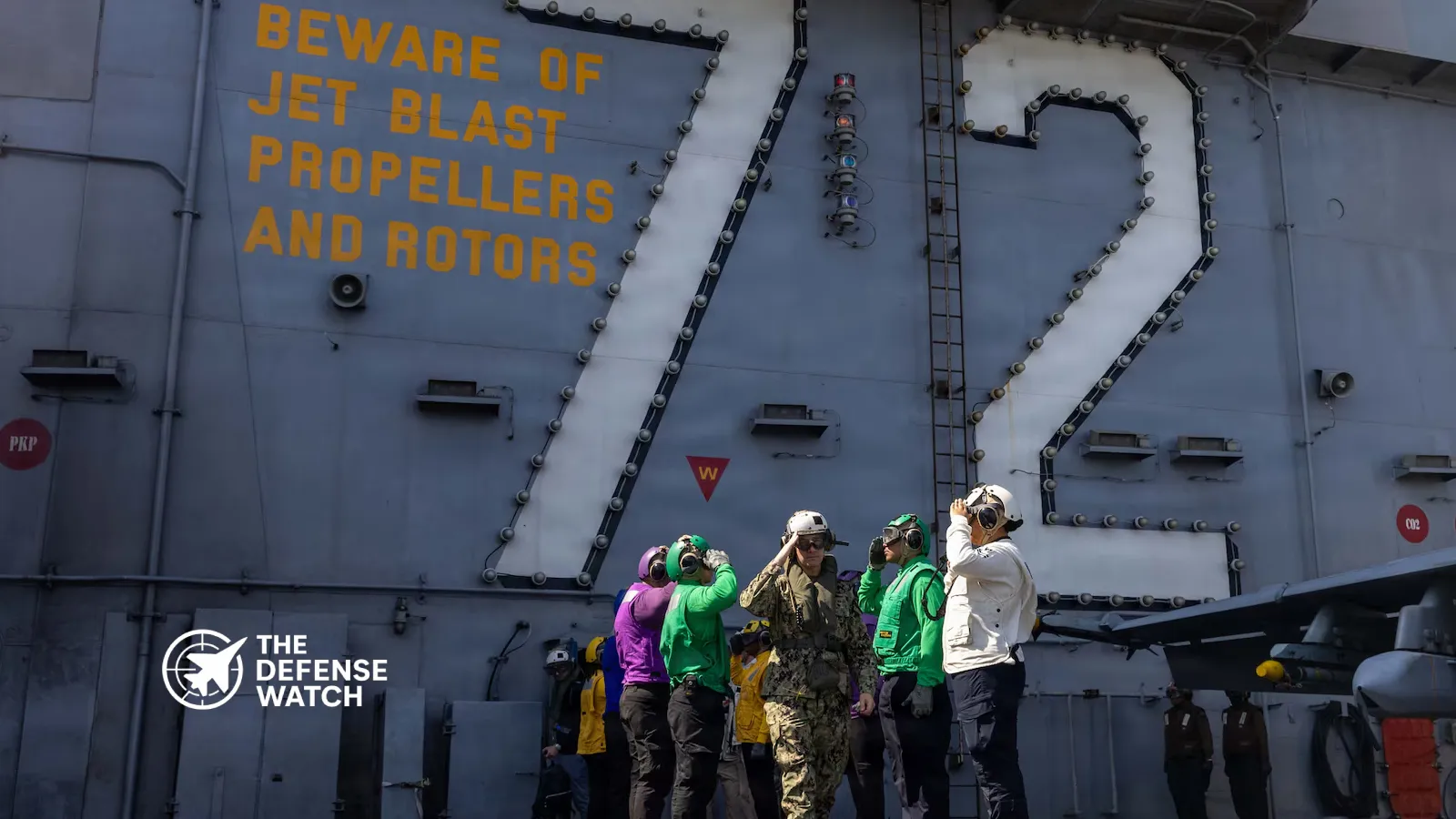
U.S. Central Command Chief Visits USS Abraham Lincoln
The U.S. Central Command chief visited USS Abraham Lincoln during its ongoing deployment in the Arabian Sea, underscoring the carrier strike group’s role in U.S. military operations across the Middle East.
According to U.S. Navy and Central Command reporting, the visit took place while the Nimitz class aircraft carrier was transiting the Arabian Sea in support of regional maritime security and air operations. The engagement included meetings with ship leadership, air wing commanders, and enlisted sailors supporting the mission.
USS Abraham Lincoln is operating under U.S. Fifth Fleet and Central Command tasking, a key element of Washington’s forward deployed naval presence in a region marked by ongoing security challenges, freedom of navigation concerns, and air and maritime operations tied to deterrence and crisis response.
Leadership Engagement Aboard a Deployed Carrier
During the visit, the CENTCOM commander received operational briefings on current carrier air wing sorties, maritime security patrols, and sustainment efforts supporting extended deployment operations. Navy officials said the discussions focused on readiness, force protection, and the carrier’s integration with joint and coalition partners operating in the region.
Senior leaders also met with sailors from across the ship’s departments, including flight deck crews, engineering teams, and command staff. Such visits are standard practice during major deployments and are intended to reinforce command priorities, assess conditions firsthand, and maintain direct engagement with deployed forces.
The U.S. Navy has emphasized that aircraft carriers remain central to U.S. power projection in the Middle East, providing flexible options ranging from strike operations to intelligence, surveillance, and reconnaissance support.
USS Abraham Lincoln and Carrier Strike Group Operations
USS Abraham Lincoln is one of the U.S. Navy’s nuclear powered Nimitz class aircraft carriers and embarks a full carrier air wing composed of strike fighters, electronic attack aircraft, airborne early warning platforms, helicopters, and support aircraft.
(adsbygoogle = window.adsbygoogle || []).push({});Operating in the Arabian Sea allows the carrier strike group to support missions across the U.S. Central Command area of responsibility while maintaining access to key maritime routes linking the Red Sea, Gulf of Oman, and Indian Ocean.
Carrier strike groups typically operate with guided missile cruisers and destroyers equipped with the Aegis combat system, providing layered air and missile defense. These escorts also contribute to maritime security operations and regional deterrence.
Strategic Context in the Arabian Sea
The Arabian Sea remains a strategically important operating area due to its proximity to major shipping lanes and ongoing regional tensions. U.S. naval deployments in the area are intended to reassure partners, deter state and non state threats, and ensure the free flow of commerce.
Central Command has stated that carrier deployments provide commanders with scalable options that do not rely on host nation basing, a factor that continues to shape U.S. force posture decisions in the Middle East.
The visit by the CENTCOM chief signals continued senior level attention to naval operations, even as the U.S. military balances global commitments across Europe and the Indo Pacific.
Carrier Air Power and Joint Operations
Carrier air wings embarked aboard USS Abraham Lincoln are capable of conducting a wide range of missions, including precision strike, close air support, maritime interdiction, and airborne command and control.
Officials note that carrier based aviation remains closely integrated with U.S. Air Force, allied, and partner nation forces operating in the region. Joint and combined operations are a routine part of Central Command missions, particularly for intelligence sharing and coordinated air tasking.
(adsbygoogle = window.adsbygoogle || []).push({});The presence of a carrier strike group also provides rapid response capability during emerging crises, allowing U.S. leaders to adjust force posture without requiring new deployments from the continental United States.
Sailor Welfare and Readiness
In addition to operational briefings, leadership visits often address sailor welfare, maintenance status, and sustainment challenges associated with long deployments. Navy leadership has acknowledged the strain placed on crews during extended operations, particularly in high tempo regions like the Middle East.
USS Abraham Lincoln’s deployment reflects ongoing efforts by the U.S. Navy to maintain readiness while managing maintenance cycles and personnel demands across the carrier fleet.