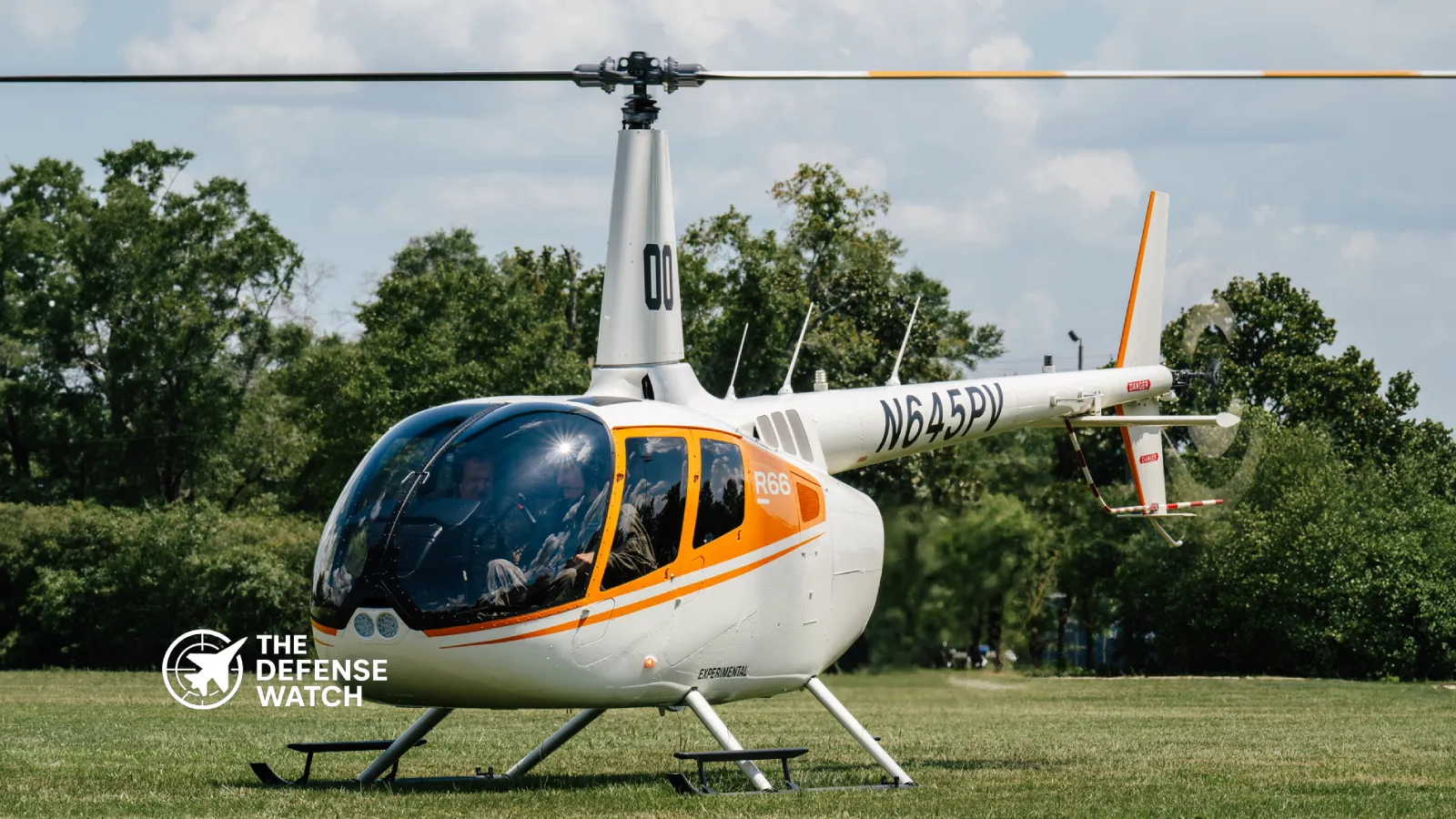
Lockheed Martin has been selected to advance to Phase III of the U.S. Army’s Flight School Next competition, marking a significant milestone in the service’s effort to modernize its Initial Entry Rotary-Wing training program. The defense contractor announced February 4 that it has partnered with Robinson Helicopter Company to provide the R66 NxG helicopter as the primary training platform for the Army’s next-generation aviator pipeline. The move positions Lockheed Martin as a frontrunner in reshaping how the Army trains its helicopter pilots, leveraging proven commercial aviation technology adapted for military instruction.
Phase III Selection Validates Training System Approach
The Army’s decision to move Lockheed Martin forward in the Flight School Next competition reflects confidence in the company’s comprehensive training solution. According to company officials, Lockheed Martin is competing as the prime training systems integrator, responsible for designing, delivering, and operating the entire IERW Flight School Next enterprise.
We are grateful for the Army’s confidence in our Flight School Next solution to move on to Phase III,” said Todd Morar, vice president of Air and Commercial Solutions at Lockheed Martin. “For years we have been refining a comprehensive solution that aligns with the Army’s vision for a modern, affordable and high-quality training pipeline that will produce fundamentally better aviators.”
The Flight School Next program represents the Army’s initiative to overhaul its rotary-wing pilot training system, which has remained largely unchanged for decades. The service seeks to modernize training methods, reduce costs, and increase throughput while maintaining or improving aviator quality.
Robinson R66 NxG Selected as Training Platform
Lockheed Martin’s selection of the Robinson R66 NxG helicopter represents a departure from traditional military training aircraft. Robinson Helicopter Company, recognized as the world’s leading manufacturer of civil helicopters, will provide a fleet of R66 NxG aircraft along with spare parts, technical support, and dedicated training services.
The R66 NxG builds on Robinson’s proven commercial R66 airframe while incorporating modern upgrades specifically tailored for Army aviator training requirements. The selection emphasizes cost-effectiveness and reliability—two critical factors as the Army seeks to expand its pilot production capacity within budget constraints.
“Our selection of Robinson brings a safe, proven and innovative platform to the table,” Morar stated. “We are fully committed to getting this right for the Army—investing the time, expertise and technology needed to accelerate IERW training and ensure aviators are prepared for their next mission.”
David Smith, president and CEO of Robinson Helicopter Company, emphasized the platform’s alignment with Army requirements. “The R66 offers a modern, American-made solution that ensures readiness at a fraction of the current cost,” Smith said. “Its simple, responsive flight characteristics are crucial for mastering the fundamental stick-and-rudder skills necessary for any situation, ensuring we can support the Army’s stringent criteria for Flight School Next.”
Comprehensive Training System Integration
Lockheed Martin’s Flight School Next proposal extends beyond aircraft provision to encompass a complete training ecosystem. The company’s responsibilities include training system architecture, performance monitoring, supply-chain management, and delivery of advanced modeling and simulation supporting both live-flight and synthetic training environments.
This approach mirrors successful international programs Lockheed Martin has delivered, including the U.K. Military Flight Training System, Australia’s AIR5428 Pilot Training System, and Singapore’s Basic Wings Course. These programs demonstrate the company’s capability to produce proficient aviators in required quantities at controlled costs—objectives that align directly with the Army’s Flight School Next goals.
The integration of advanced simulation technology represents a key component of the modernized training pipeline. By blending live-flight instruction with high-fidelity synthetic environments, the Army aims to maximize training efficiency while reducing operational costs and environmental impacts associated with traditional flight training.
Industry Context and Competition
The Flight School Next competition has attracted significant industry attention as the Army seeks to address pilot production challenges. Current training systems face capacity constraints and aging infrastructure that limit the service’s ability to meet growing demand for rotary-wing aviators across multiple platforms, including the UH-60 Black Hawk, AH-64 Apache, and future vertical lift aircraft.
Phase III of the competition represents a critical juncture where competing contractors must demonstrate their ability to deliver comprehensive training solutions that meet rigorous Army performance standards. The selection process evaluates factors including training effectiveness, cost, schedule, and industrial base sustainability.
Lockheed Martin’s advancement to Phase III, combined with its Robinson partnership announcement, signals the company’s readiness to move forward with detailed system development and demonstration activities. The contractor’s existing portfolio of training systems provides a foundation of relevant experience that may prove advantageous as the competition progresses.
Strategic Implications for Army Aviation
The Flight School Next program carries strategic importance for Army aviation readiness. Efficient, effective pilot training directly impacts the service’s ability to maintain operational capability across its rotary-wing fleet. Modernizing the training pipeline could enable the Army to increase pilot production, reduce training timelines, and improve aviator proficiency entering operational units.
The selection of a commercial helicopter derivative as the training platform reflects broader trends in military aviation toward leveraging mature civil technologies where appropriate. This approach can reduce development risk, lower acquisition costs, and benefit from established supply chains and maintenance infrastructure.
Industry analysts note that successful implementation of Flight School Next could serve as a model for other aviation training modernization efforts across the Department of Defense. The program’s emphasis on simulation integration, performance-based contracting, and comprehensive systems integration represents contemporary approaches to military training transformation.
Next Steps in Competition
With Phase III selection confirmed, Lockheed Martin will proceed with detailed demonstration and validation activities under Army oversight. The service will evaluate competitor proposals across multiple criteria before making final source selection decisions.
The timeline for final contract award remains subject to Army program office decisions and budgetary considerations. However, the urgency of addressing pilot production shortfalls suggests the service will maintain momentum toward implementation.
For Lockheed Martin and Robinson Helicopter, Phase III represents an opportunity to prove their integrated solution can meet Army requirements while delivering promised cost and performance benefits. The partnership between a major defense prime and a leading commercial helicopter manufacturer creates a unique value proposition emphasizing proven technology, affordability, and industrial capability.