
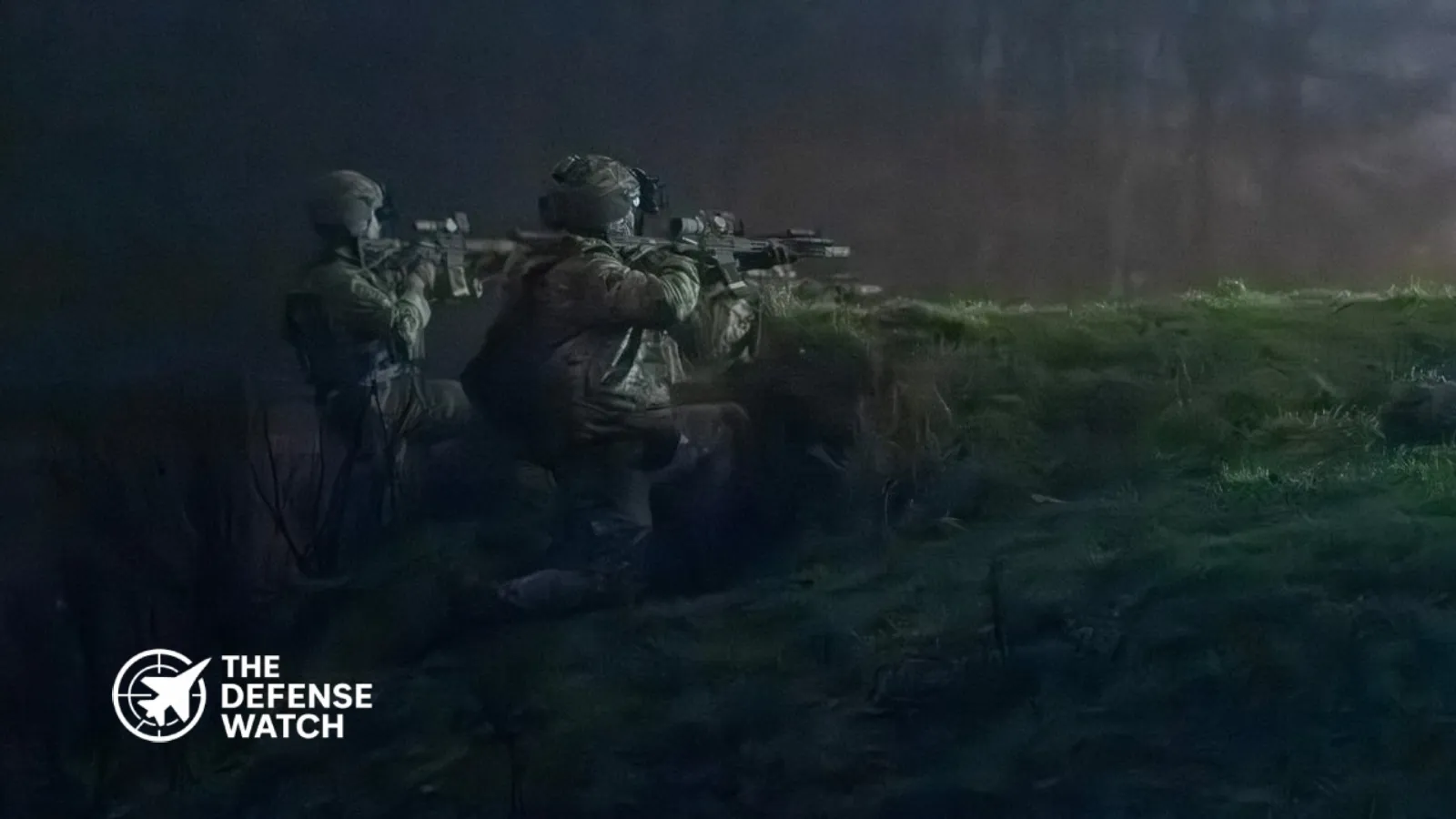
UK NATO Allied Reaction Force Leadership Confirmed
The UK NATO Allied Reaction Force role took a major step forward after the United Kingdom was formally validated to serve as the NATO Allied Reaction Force Special Operations Component Command, or SOCC. The certification followed Exercise Hyperion Storm, which concluded two years of structured preparation, training, and multinational integration.
The validation confirms that the UK can command joint NATO special operations forces at high readiness, capable of rapid deployment across multiple domains. The announcement was supported by NATO and the UK Ministry of Defence, underscoring Allied confidence in British command and control structures.
What the NATO Allied Reaction Force SOCC Role Means
The Allied Reaction Force is NATO’s high-readiness force designed to respond rapidly to emerging crises. Within this structure, the SOCC provides command and control of allied special operations forces, integrating air, land, and maritime task groups under a single operational headquarters.
As the designated SOCC, the UK is responsible for planning, coordinating, and directing NATO special operations missions, including:
- Special Reconnaissance operations to provide intelligence and situational awareness
- Direct Action missions against high-value or time-sensitive targets
- Military Assistance activities focused on advising and supporting partner forces
This role places the UK at the center of NATO’s special operations response architecture during periods of heightened tension or crisis.
Exercise Hyperion Storm and Validation Process
Exercise Hyperion Storm served as the final validation event for the UK NATO Allied Reaction Force SOCC role. The exercise tested command readiness under demanding operational conditions, including joint planning, multinational interoperability, and rapid decision-making.

According to NATO and UK defence officials, the exercise demonstrated the UK’s ability to integrate allied special operations forces from multiple nations, operate across domains, and maintain effective command and control in complex scenarios. The validation process assessed staffing, communications, intelligence integration, and coordination with conventional NATO forces.
Hyperion Storm built on a broader NATO effort to enhance readiness following the Alliance’s shift toward deterrence and defense after Russia’s invasion of Ukraine.
Strategic Significance for NATO and the UK
The UK NATO Allied Reaction Force leadership role strengthens NATO’s ability to respond quickly to threats on its eastern and southern flanks. Special operations forces play a critical role in early crisis response, shaping operations, and supporting deterrence without large-scale force deployments.
For the UK, the SOCC designation reinforces London’s position as one of NATO’s leading military contributors. British special operations forces have decades of operational experience, and the UK has consistently invested in joint command structures, secure communications, and interoperability with allies.
The appointment also aligns with NATO’s broader modernization efforts, which emphasize multi-domain operations, rapid deployment, and integrated command across national boundaries.
Interoperability and Allied Integration
A key focus of the UK NATO Allied Reaction Force mission is interoperability. As SOCC, the UK must ensure that allied special operations units can operate seamlessly despite differences in national doctrine, equipment, and procedures.
Exercise Hyperion Storm included participation from multiple NATO members and partner nations, testing shared planning tools, intelligence sharing mechanisms, and combined command processes. NATO officials highlighted that interoperability at the special operations level is essential for credibility and speed in crisis response.
Looking Ahead
With validation complete, the UK will be available to assume the NATO Allied Reaction Force SOCC role when activated by the Alliance. This does not imply continuous deployment, but rather standing readiness to lead special operations forces at short notice.
The certification comes as NATO continues to adapt its force posture, expand high-readiness elements, and improve its ability to deter and respond to state and non-state threats.
Get real time update about this post category directly on your device, subscribe now.
