- UK political leaders are debating the development of UK built nuclear missiles to reduce reliance on U.S. technology.
- Britain currently uses U.S. supplied Trident II D5 submarine launched ballistic missiles for its nuclear deterrent.
- Advocates argue domestic missile production would strengthen national sovereignty and strategic autonomy.
- Developing an independent missile system could take decades and cost billions of pounds.
- The debate reflects broader concerns about NATO security and future reliability of U.S. defense guarantees.
UK Built Nuclear Missiles Debate Highlights Britain’s Strategic Dependence
The proposal to develop UK built nuclear missiles has reignited debate over Britain’s long standing reliance on U.S. technology for its nuclear deterrent, raising questions about sovereignty, alliance structures, and the future of the country’s strategic forces.
Calls for a domestically produced missile capability emerged during a speech by Liberal Democrat leader Ed Davey at the party’s spring conference in York. Davey argued that Britain should move toward a fully independent nuclear deterrent rather than relying on American supplied Trident missiles.
He warned that changing geopolitical dynamics and uncertainty about long term U.S. security commitments could create risks for the United Kingdom if its deterrent infrastructure remains partially dependent on foreign support.
The Big Picture
Britain’s nuclear deterrent has remained a central pillar of NATO’s strategic posture for decades. The United Kingdom is one of the alliance’s three nuclear powers alongside the United States and France.
The British deterrent operates through a continuous at sea posture maintained by the Royal Navy’s ballistic missile submarines. At least one submarine is always deployed on patrol carrying nuclear armed missiles.
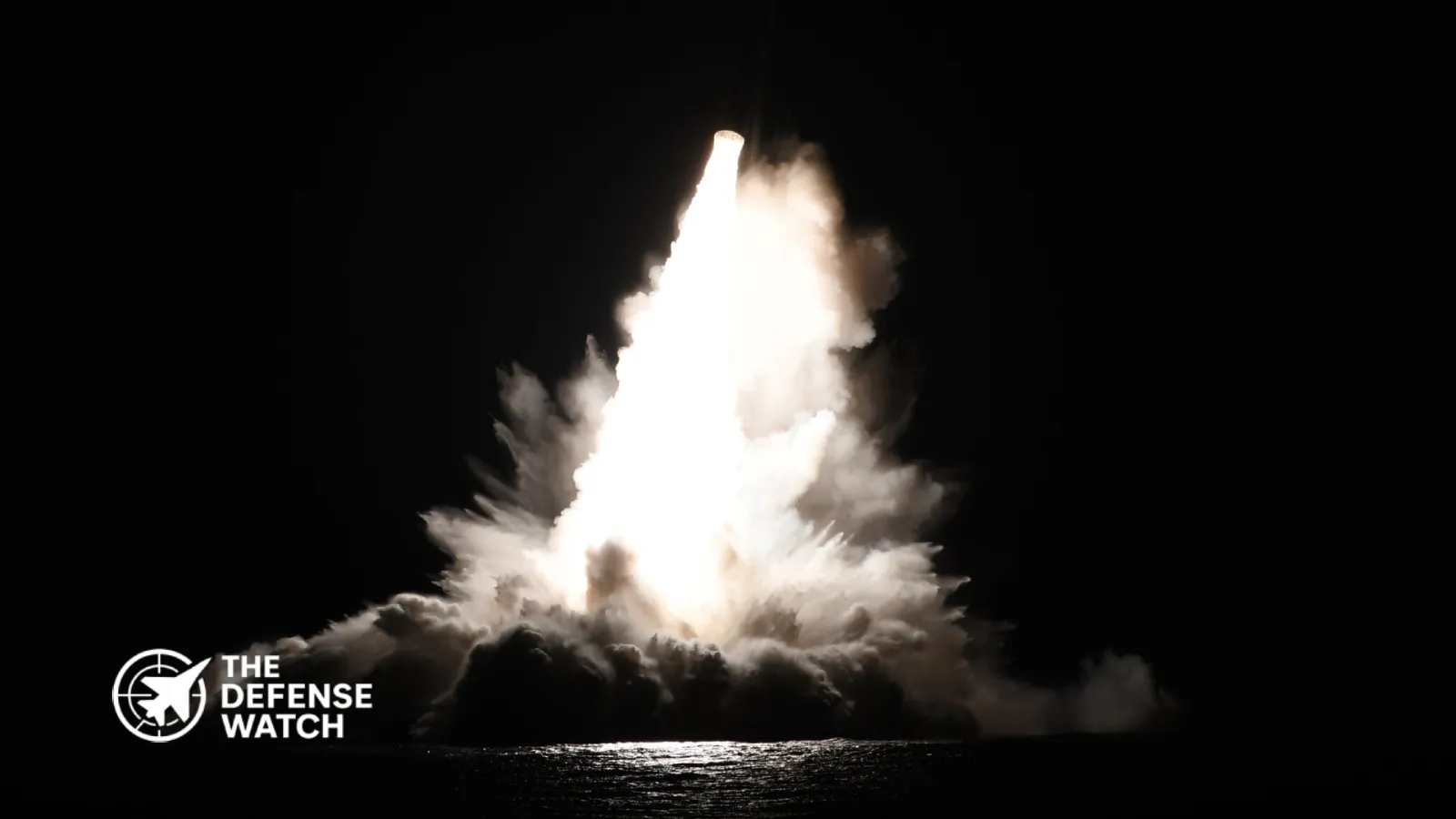
While the warheads are designed and manufactured in the United Kingdom, the missile delivery system tells a different story. Britain currently relies on the U.S. built Trident II D5 submarine launched ballistic missile system. These missiles are maintained in cooperation with the United States and are drawn from a shared missile pool managed by the U.S. Navy.
This arrangement reflects decades of deep nuclear cooperation between London and Washington under the 1958 U.S. UK Mutual Defence Agreement.
However, shifting political dynamics and rising great power competition have triggered renewed discussion about strategic autonomy among European NATO members.
What’s Happening
Ed Davey’s proposal centers on building a sovereign British missile capability that would eventually replace reliance on the American supplied Trident system.
Speaking at the Liberal Democrats conference, he argued that Britain must not depend entirely on the United States for the core component of its nuclear deterrent. The proposal calls for investment over the next two decades to develop a domestic missile production and maintenance capability.
Under the current system, Britain maintains operational control over its nuclear weapons and submarines. However, the Trident missiles themselves are produced and maintained with U.S. support.
Supporters of the proposal argue that this dependence could become strategically problematic if future U.S. administrations adopt a more conditional approach to NATO commitments.
Davey suggested that a fully sovereign deterrent would strengthen Britain’s ability to act independently while still supporting NATO’s overall nuclear posture.
Why It Matters
Nuclear deterrence remains one of the most sensitive and consequential areas of defense policy.
Britain’s current deterrent structure is built around four Vanguard class submarines and will eventually transition to the next generation Dreadnought class fleet, which is scheduled to enter service in the early 2030s.
The credibility of the deterrent depends not only on warhead design but also on the reliability of the delivery system. If Britain were to develop UK built nuclear missiles, it would gain full control over every component of the nuclear triad it currently operates.
Advocates argue this would enhance national resilience and reduce potential vulnerabilities in times of political friction between allies.
Critics counter that the existing system already provides strong operational independence while benefiting from cost sharing and technological cooperation with the United States.
Strategic Implications
Developing UK built nuclear missiles would represent one of the most significant shifts in Britain’s defense strategy since the Cold War.
The United Kingdom has historically balanced two priorities in nuclear policy. First, maintaining a credible independent deterrent. Second, preserving deep nuclear cooperation with the United States.
A fully domestic missile system could alter this balance.
Strategically, it would move Britain closer to the model used by France, which operates a fully sovereign nuclear force including domestically produced submarine launched ballistic missiles.
Such a shift could reinforce European strategic autonomy within NATO while still maintaining alliance coordination.
However, it could also increase costs and complicate industrial planning across Britain’s defense sector.
Competitor View
Russia and China closely monitor NATO nuclear posture and modernization efforts.
Moscow already cites NATO nuclear modernization as justification for its own expansion of strategic forces. A British move toward UK built nuclear missiles could therefore become part of broader strategic messaging between nuclear powers.
At the same time, adversaries may view increased European nuclear autonomy as strengthening NATO resilience by reducing single points of dependency.
Strategic competition among nuclear powers increasingly involves not only warhead counts but also delivery systems, command structures, and survivability.
What To Watch Next
Several factors will determine whether the idea gains traction in British defense policy.
First, the ongoing modernization of the UK nuclear deterrent through the Dreadnought class submarine program will shape long term planning for missile systems.
Second, Britain’s next Strategic Defence Review could examine options for strengthening sovereign defense industrial capabilities, including missile technology.
Third, defense spending levels will play a decisive role. Developing a new submarine launched ballistic missile system from scratch would require sustained investment over decades.
For now, the proposal remains a political debate rather than a formal government program.
Capability Gap
The core issue behind the push for UK built nuclear missiles is strategic dependency.
Britain controls its nuclear warheads, submarine platforms, and operational decision making. However, the delivery missile itself comes from a U.S. managed system.
Supporters argue that this gap creates potential vulnerability if political relations between London and Washington were ever to deteriorate.
Yet the current arrangement also provides advantages. Shared missile infrastructure reduces development costs and benefits from decades of American research and testing.
Building a completely independent system would require major industrial investment and technical development across propulsion, guidance systems, and re entry vehicles.
The Bottom Line
The debate over UK built nuclear missiles reflects a broader strategic question facing Britain: whether the future of its nuclear deterrent should prioritize alliance integration or full national autonomy.
Get real time update about this post category directly on your device, subscribe now.