
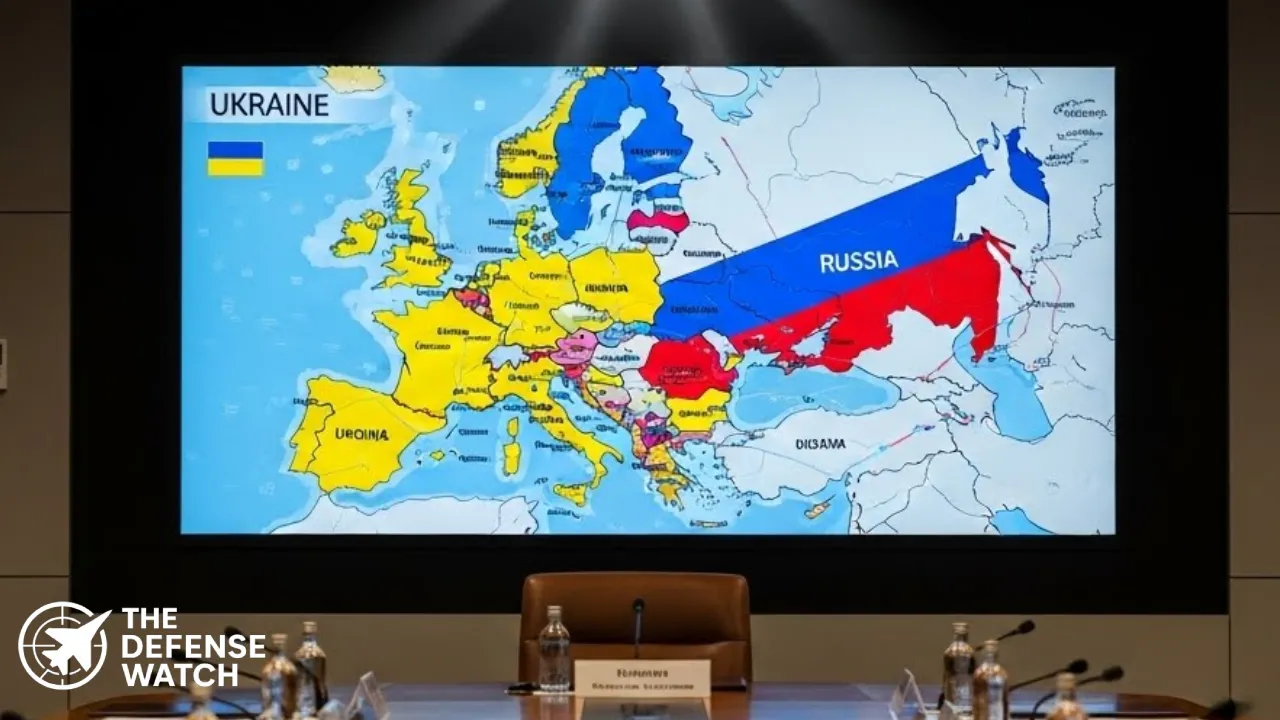
Russia Rejects Proposal as Europe Evaluates Strategic Implications
Russia has strongly criticized former U.S. President Donald Trump’s newly outlined 19-point Ukraine plan, while European governments voiced concern over its potential impact on regional security and long-term support structures for Kyiv. The plan, published this week and widely circulated in policy and diplomatic circles, proposes a framework aimed at ending the conflict through negotiated conditions affecting military aid, territorial arrangements, and future security guarantees.
The Ukraine plan has quickly become a focal point in transatlantic discussions, with Moscow openly rejecting the proposal and European Union officials suggesting that several elements could undermine NATO cohesion and Ukraine’s battlefield position. The debate reflects ongoing uncertainty surrounding Western strategy and the future of international backing for Kyiv.
Background: A Growing Debate Over War Termination Strategies
As the war in Ukraine approaches another year, policymakers across Europe and North America have been evaluating scenarios for diplomacy, sustained military aid, and potential settlement terms. The Ukraine plan proposes a series of steps involving ceasefire arrangements, limits on certain weapons provisions, and renewed negotiations under U.S. mediation.
The proposal arrives at a time when European defense ministries are reassessing stockpiles, industrial capacity, and NATO readiness benchmarks. The United States remains the largest provider of military assistance to Ukraine, meaning any shift in Washington’s position carries significant consequences for Kyiv and the wider security environment.
Russia Calls Plan Unacceptable
Russian officials dismissed the Ukraine plan in state media and foreign policy statements, arguing that it imposes terms unfavorable to Moscow and fails to recognize what the Kremlin describes as territorial realities. The government reiterated that any agreement must acknowledge its position on annexed regions and address Russian security demands regarding NATO presence.
Kremlin spokespersons stated that proposals conditioning Ukraine’s military capabilities while maintaining Western influence would not be tolerated. Russian analysts described the Ukraine plan as another attempt to pressure Moscow through diplomatic leverage paired with continued defense support to Kyiv.
European Governments Signal Caution
European leaders, diplomats, and defense policy experts expressed concern over the Ukraine plan’s implications. Officials in Brussels and key NATO capitals said the document could weaken unity if interpreted as limiting future commitments to Ukraine or encouraging territorial concessions.
Security strategists in Europe emphasized three primary concerns:
- The Ukraine plan could create uncertainty about long-term support.
- NATO cohesion might be strained if member states interpret conditions differently.
- Russia could exploit perceived policy divisions to influence battlefield or diplomatic outcomes.
EU officials stressed that any settlement must be driven by Ukraine’s decision-making, not imposed externally. Analysts noted that the plan introduces questions about U.S. reliability at a time when Europe is attempting to expand defense production and burden-sharing.
Policy Perspectives and Strategic Interpretation
Defense scholars highlighted that the Ukraine plan represents a significant policy marker, even outside formal government adoption. The proposal signals potential shifts in strategic emphasis, including faster negotiation pathways, recalibrated military aid, and adjusted expectations for Ukraine’s eventual security guarantees.
Experts noted that Moscow’s immediate rejection indicates that Russia interprets the Ukraine plan as strengthening Western leverage rather than relaxing pressure. Meanwhile, European concern reflects broader anxieties over energy security, deterrence postures, and the future structure of the European security order.
The Ukraine plan also raises questions about NATO enlargement policies, bilateral security agreements, and long-term commitments to Ukraine’s defense modernization and territorial sovereignty.
Next Steps and Outlook
Diplomatic observers expect continued discussion within European institutions, NATO working groups, and U.S. political forums. The Ukraine plan has triggered debate on how the conflict could eventually be resolved and what role Washington will play in shaping the end state.
European policymakers are preparing for multiple scenarios, including:
- sustained high-level military aid to Kyiv,
- increased European industrial and financial responsibility,
- negotiations contingent on battlefield developments, and
- evolving U.S. strategic priorities.
For Ukraine, the proposal underscores the importance of maintaining international backing while continuing defense operations and modernization programs.
The Ukraine plan is expected to remain a topic of strategic analysis as governments evaluate the long-term trajectory of the war, regional stability, and the balance of power in Europe.
Get real time update about this post category directly on your device, subscribe now.

14 comments
[…] suggests the only realistic way out is for Washington to walk away, leaving Europe and Ukraine to decide their own fate. Otherwise, he argues, the U.S. risks indefinitely funding a devastating […]
[…] Russian leader’s comments responded to European concerns, particularly those voiced by Hungarian Foreign Minister Peter Szijjarto, who noted Europe’s […]
[…] 2022, the security landscape in Eastern Europe has shifted significantly following Russia’s large-scale invasion of Ukraine. In response, the alliance has bolstered its eastern and south-eastern flank by deploying […]
[…] Estimated between 3,000 and 5,500 kilometers, enough to reach deep into Europe and western Russia’s Western Hemisphere targets from forward […]
[…] Cohere noted that its AI models are designed for secure, deployable environments, including defense and government applications where sensitive data handling is critical. […]
[…] President Ursula von der Leyen described the moment as a seismic shift, calling for greater European strategic […]
[…] Allied Commander Europe and NATO operational leaders have underscored that this year’s exercise builds on previous iterations and […]
[…] data on industry expenditure, showing regional distribution of procurement and reinforcing the government’s strategic intent to maintain sovereign defence capabilities while leveraging UK-based […]
[…] Russia’s government expressed surprise, saying it had not been notified prior to the interception and is seeking information on the crew’s nationality through its consulate. […]
[…] European governments, the UN provides a predictable framework for crisis management, peacekeeping, and sanctions […]
[…] tension between enforcing sanctions and managing maritime freedoms under international law. The UK government has emphasized its commitment to safeguarding its waters and critical infrastructure while adhering […]
[…] to defence markets. The company also plans to shift its stock market listing from Australia to Europe by late 2026 or early 2027. This strategy is designed to align EOS more closely with European […]
[…] at operational and strategic levels offers enduring benefits to the Alliance. The JWC functions as NATO’s transformational hub in Europe, executing the Alliance’s largest-scale, multi-domain computer-assisted command post exercises […]
[…] Naval Group and Spain’s Navantia are among other contenders with adapted designs. The Swedish government signalled plans to select a supplier by early 2026 as part of its program […]