
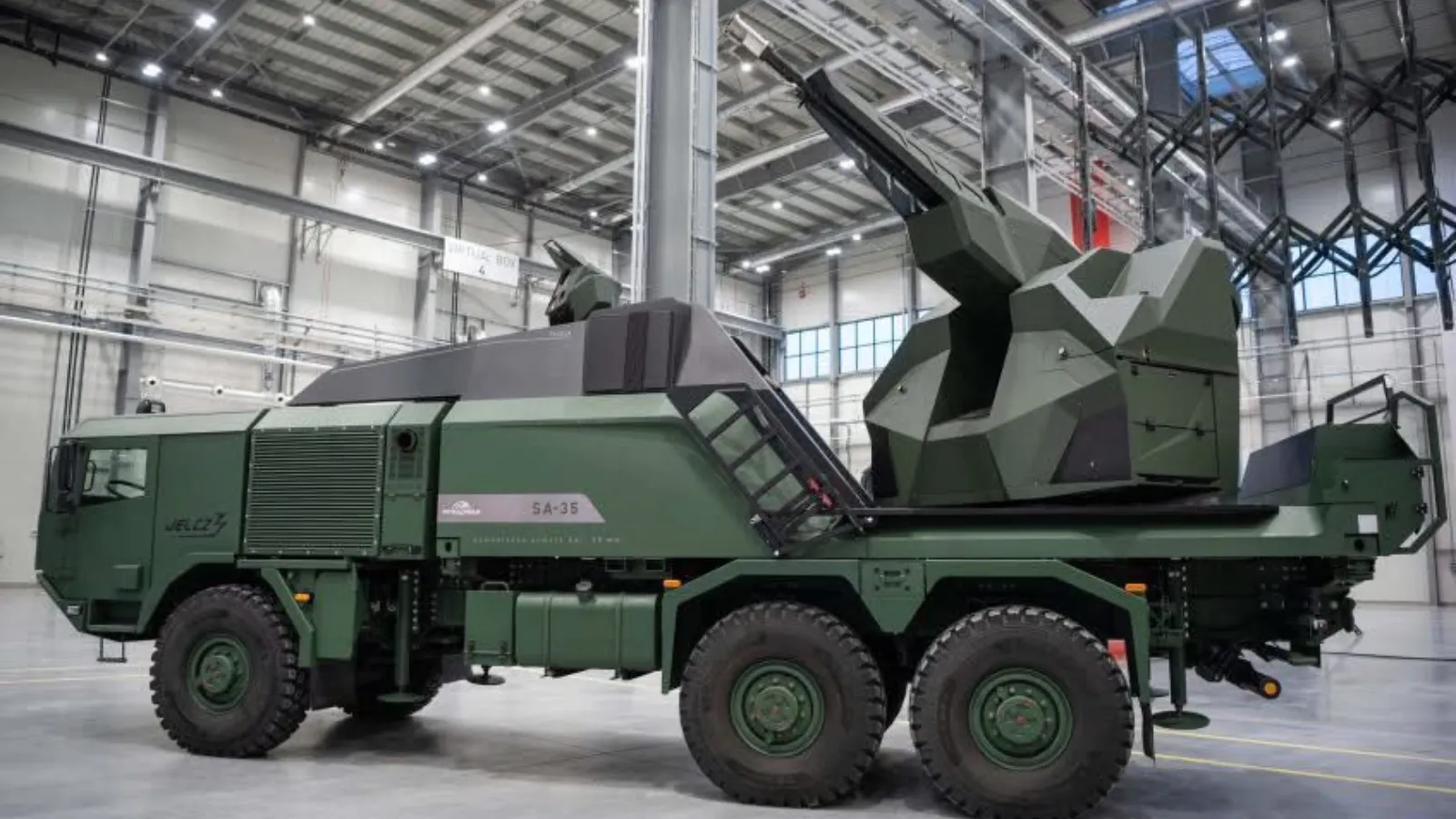
- ► Polish defense companies issued a joint statement backing the EU SAFE mechanism.
- ► The Council of the European Union approved Poland’s investment plan under the SAFE instrument.
- ► The PGZ Group, employing 23,000 people, formally adopted the position.
- ► Industry leaders say SAFE will significantly increase defense production and supplier activity.
- ► Companies highlight local content, jobs, exports, and R&D as key benefits.
Polish Defense Industry Backs EU SAFE Mechanism To Expand Production Capacity
The Polish defense industry SAFE mechanism has received unified backing from the country’s largest armaments firms, following approval of Poland’s investment plan under the European Union’s SAFE instrument.
In a joint position adopted after a February 25 meeting, leading defense companies stressed that the SAFE program represents an unprecedented opportunity to accelerate domestic production, expand industrial capacity, and strengthen Poland’s security posture.
The statement was endorsed by dozens of major companies within the Polska Grupa Zbrojeniowa, or PGZ Group, which employs roughly 23,000 people.
Industry Coalition Signals Unified Strategy
Signatories include state owned and private sector firms such as GRUPA WB, ICEYE, Wielton S.A., AMZ-KUTNO S.A., and Lubawa S.A., among others.
The coalition emphasized that implementation of the SAFE mechanism would not only raise output at prime contractors, but also energize Poland’s broader defense supply chain, including subcontractors and logistics providers.
According to the statement, the SAFE program will drive a “radical increase” in defense production. That expansion is expected to extend beyond individual firms to the entire domestic industrial network.
What The SAFE Mechanism Means For Poland
The SAFE instrument, approved by the Council of the European Union, is designed to strengthen European defense capabilities through coordinated investment and industrial support.
For Poland, one of NATO’s fastest growing defense spenders, the SAFE mechanism arrives at a pivotal moment. Warsaw has already committed to spending more than 4 percent of GDP on defense, according to official Polish government data and NATO estimates. The country is pursuing major procurement programs across land, air, missile defense, and space domains.
The Polish defense industry SAFE mechanism alignment signals that domestic manufacturers intend to position themselves at the center of this modernization push.
Industry leaders argue that SAFE backed investments will generate jobs across manufacturing, engineering, and logistics sectors. They also highlight the importance of local content requirements, noting that funds spent domestically translate into tax revenue and economic activity within Poland.
Export Potential And European Demand
The joint statement points to growing European interest in Polish made defense systems. Over the past several years, Poland has expanded exports in areas such as unmanned systems, armored vehicles, communications equipment, and space based capabilities.
Companies such as GRUPA WB have supplied loitering munitions and battlefield systems to multiple European clients. ICEYE has developed radar imaging satellites used for intelligence and reconnaissance missions across NATO aligned states.
By aligning with the Polish defense industry SAFE mechanism, firms aim to scale production to meet both domestic demand and export opportunities within Europe.
The European security environment, shaped by Russia’s war in Ukraine and increased NATO readiness requirements, has driven sustained demand for munitions, air defense systems, and surveillance assets. EU level funding tools like SAFE are designed to reduce fragmentation and accelerate output across member states.
Industrial Depth And Strategic Autonomy
Beyond immediate production gains, the statement underscores research and development as a strategic priority. SAFE funded investments could help Polish firms expand capabilities in advanced manufacturing, digital systems integration, and dual use technologies.
This approach aligns with broader EU objectives of strengthening strategic autonomy in defense manufacturing. European Commission policy documents emphasize reducing reliance on non EU suppliers for critical defense components.
For Poland, which sits on NATO’s eastern flank, industrial resilience is closely linked to national security planning. Increasing domestic output of ammunition, armored platforms, electronics, and support systems reduces vulnerability to supply disruptions during crises.
The Polish defense industry SAFE mechanism therefore carries both economic and strategic weight.
A Coordinated National Position
The joint declaration closes with a clear message. Industry leaders view SAFE as a rare opportunity that Poland cannot afford to miss.
“As co responsible for shaping it, we act together so that Poland does not waste this opportunity,” the signatories state.
That unified stance matters. Defense industrial policy often requires alignment between government funding mechanisms and private sector execution capacity. The public endorsement by PGZ Group companies and private manufacturers signals readiness to absorb and deploy SAFE related investments at scale.
As EU member states continue refining defense industrial cooperation, Poland’s coordinated industry position may serve as a model for linking national priorities with European level funding instruments.
Analysis: Why This Matters For European Defense
The Polish defense industry SAFE mechanism alignment reflects a broader trend across Europe. Governments are shifting from emergency procurement to structured industrial expansion.
Poland’s case is significant for three reasons.
First, scale. With 23,000 employees in the PGZ Group alone, Poland has one of the largest state anchored defense industrial bases in Central Europe.
Second, geography. Positioned on NATO’s eastern flank, Poland is a frontline state in alliance planning. Increased domestic production directly supports deterrence objectives.
Third, integration. By linking national investment plans to EU instruments, Warsaw is tying its defense growth to broader European frameworks, rather than acting in isolation.
If SAFE funding is executed efficiently, it could reduce bottlenecks in munitions production and expand Europe’s collective manufacturing capacity. However, implementation will determine impact. Industrial expansion requires supply chain coordination, skilled labor, and long term procurement visibility.
For now, the Polish defense industry SAFE mechanism endorsement signals strong domestic alignment behind European defense industrial integration.
Get real time update about this post category directly on your device, subscribe now.
