USS Fitzgerald Replenishment At Sea Demonstrates Allied Naval Reach
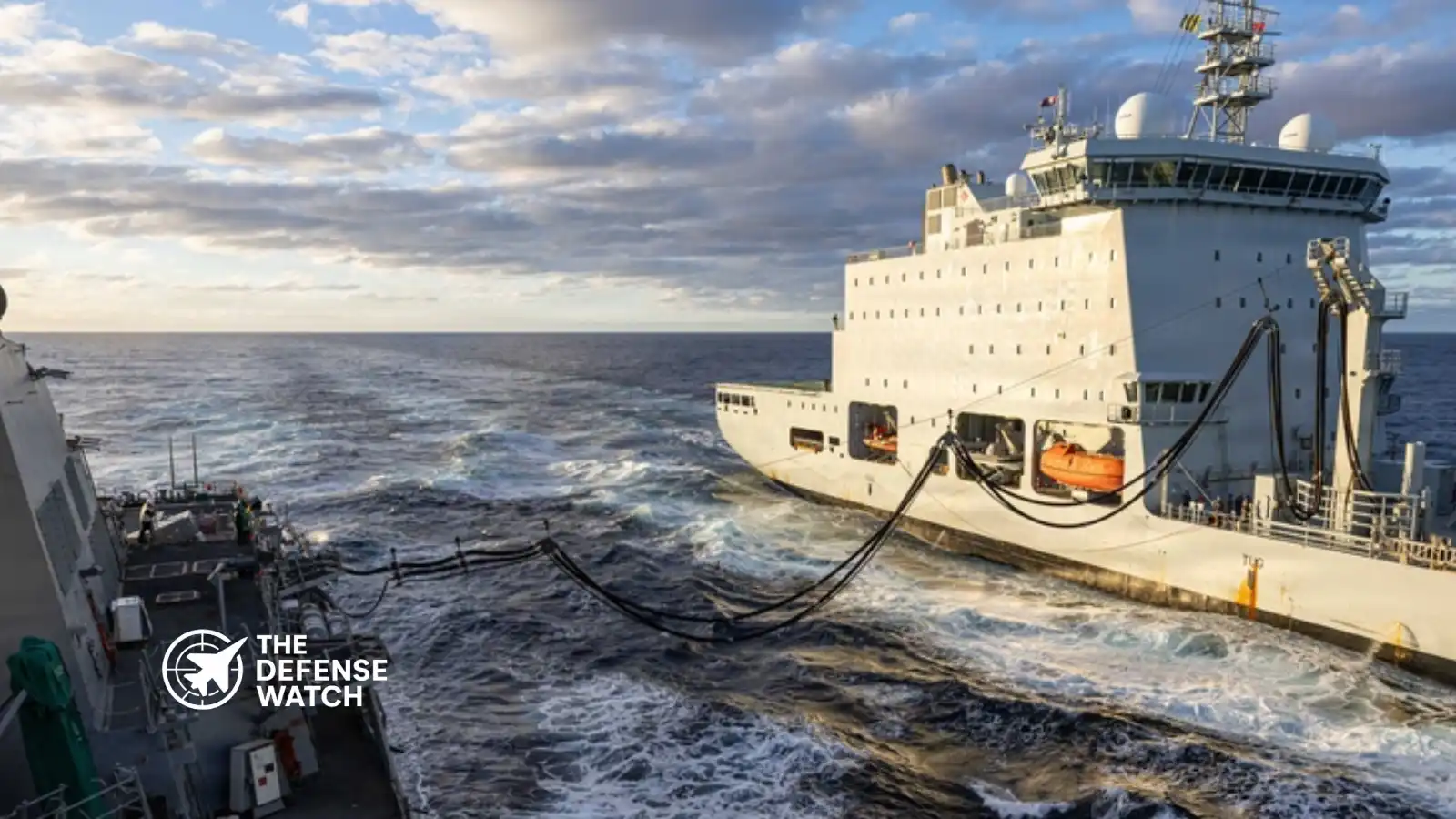
The USS Fitzgerald replenishment at sea operation during Exercise Kakadu underscores growing interoperability between Indo-Pacific naval forces, as the U.S. destroyer conducted logistics integration with Canada’s MV Asterix in the Tasman Sea on March 30, 2026.
The USS Fitzgerald, operated by the United States Navy, successfully completed a replenishment-at-sea (RAS) maneuver before breaking away from the Canadian vessel. The operation highlights the ability of allied navies to sustain combat operations far from home ports, a critical requirement in the Indo-Pacific theater.
- USS Fitzgerald conducted a replenishment-at-sea with MV Asterix on March 30, 2026, in the Tasman Sea.
- The operation took place during the Australian-led multinational Exercise Kakadu.
- MV Asterix is a Royal Canadian Navy support vessel designed for underway replenishment operations.
- The exercise focuses on maritime interoperability among Indo-Pacific partner nations.
- Replenishment-at-sea operations extend operational reach and endurance of deployed naval forces.
Operational Significance Of Replenishment At Sea
Replenishment-at-sea remains one of the most demanding and strategically important naval logistics operations. It enables warships to receive fuel, ammunition, and supplies without returning to port, maintaining operational tempo during extended deployments.
In this case, the USS Fitzgerald replenishment at sea reflects a broader push by allied forces to refine interoperability in contested maritime environments. The involvement of Royal Canadian Navy assets demonstrates how non-U.S. logistics platforms can support U.S. surface combatants, reducing dependence on a single nation’s supply chain.
This capability becomes increasingly relevant as naval operations shift toward distributed maritime operations, where smaller, dispersed units must remain sustained across vast ocean spaces.
Exercise Kakadu And Indo-Pacific Security
Exercise Kakadu, hosted by Australia, is one of the region’s key maritime drills, bringing together naval forces from across the Indo-Pacific and beyond. The exercise focuses on cooperative security, maritime surveillance, anti-submarine warfare, and logistics integration.
The USS Fitzgerald replenishment at sea event fits directly into these objectives. By conducting real-world logistics operations with partner navies, participating forces test both technical compatibility and operational coordination.
According to official exercise briefs and defense releases, Kakadu provides a platform for partner nations to improve readiness while reinforcing shared commitments to freedom of navigation and regional stability.
MV Asterix And Allied Logistics Capabilities
The MV Asterix plays a central role in this operation. As an interim auxiliary oiler replenishment vessel, Asterix is designed to deliver fuel, dry cargo, and aviation support to allied ships at sea.
Its participation in the USS Fitzgerald replenishment at sea highlights a growing trend, allied navies are increasingly pooling logistics capabilities to enhance collective endurance. This reduces operational strain on U.S. logistics fleets and improves redundancy in contested environments.
From a strategic perspective, such integration also signals to potential adversaries that coalition forces can sustain prolonged operations without relying on fixed infrastructure, which may be vulnerable in high-end conflict scenarios.
Broader Strategic Context
The Indo-Pacific remains a focal point for naval competition, with increasing emphasis on presence operations, deterrence, and rapid response capability. Logistics, often overlooked compared to combat systems, is a decisive factor in sustaining these efforts.
The USS Fitzgerald replenishment at sea demonstrates that allied navies are not only operating together but are also building the infrastructure and procedures needed for long-duration, high-tempo operations.
Defense analysts note that such exercises serve a dual purpose. They enhance tactical proficiency while also reinforcing political and military alignment among partner nations.
Analysis: Why This Matters Now
While routine on the surface, the USS Fitzgerald replenishment at sea reflects deeper shifts in naval strategy. Modern maritime operations depend less on static bases and more on flexible, mobile logistics networks.
This evolution is driven by several factors:
- Increased operational distances in the Indo-Pacific
- Growing vulnerability of fixed bases to precision strikes
- The need for rapid force projection across multiple theaters
By integrating platforms like MV Asterix into U.S. operations, allied forces are effectively building a distributed logistics architecture. This reduces risk, improves resilience, and enhances overall mission effectiveness.
Moreover, multinational exercises such as Kakadu are becoming testing grounds for these concepts, moving beyond symbolic cooperation to practical, operational integration.
Get real time update about this post category directly on your device, subscribe now.