
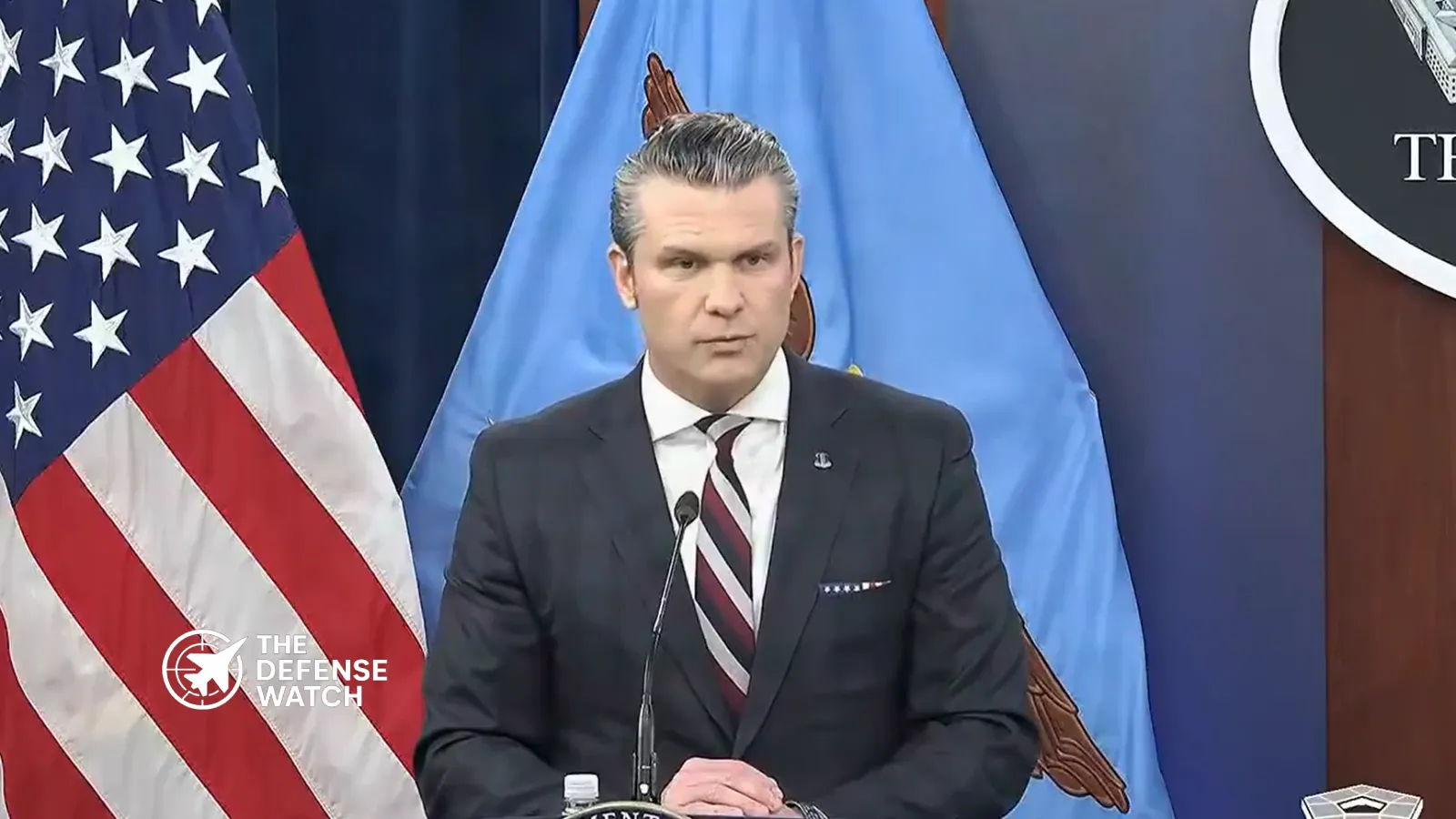
- ► US Defense Secretary confirms an American submarine sank an Iranian warship in the Indian Ocean.
- ► Attack conducted with a torpedo, described as the first sinking of an enemy ship by torpedo since World War II.
- ► Incident marks a significant escalation in ongoing US Iran maritime conflict.
- ► Engagement occurred in international waters of the Indian Ocean.
- ► Highlights renewed role of submarine warfare in high intensity naval operations.
US Submarine Sinks Iranian Warship In Indian Ocean
The US submarine sinks Iranian warship in the Indian Ocean in what the Pentagon describes as the first confirmed torpedo sinking of an enemy ship since World War II, according to remarks made by US Defense Secretary Pete Hegseth.
Speaking publicly, Hegseth said an American submarine engaged and destroyed an Iranian naval vessel operating in international waters. He described the torpedo strike as a decisive action and called it the first such sinking since the era when the US Department of Defense was still known as the War Department.
The Pentagon has not yet released the name of the US submarine or the class of the Iranian warship involved. Officials also have not disclosed the precise location beyond confirming the Indian Ocean.
Confirmed Torpedo Engagement
According to the Defense Secretary, the Iranian vessel believed it was operating safely in international waters before being struck by a torpedo fired from a submerged US submarine. The engagement underscores the continued lethality and stealth of modern US Navy attack submarines.
The US Navy has long maintained forward deployed submarine forces in the broader Middle East and Indian Ocean region, often under the operational umbrella of United States Central Command. Submarines provide covert intelligence collection, strike capability, and sea denial functions in contested waters.
While US submarines have conducted cruise missile strikes in past conflicts, confirmed torpedo attacks resulting in the sinking of an enemy warship have been absent from public record since World War II. During that conflict, US submarines played a decisive role in crippling Imperial Japanese maritime logistics across the Pacific.
Strategic Context In The Indian Ocean
The US submarine sinks Iranian warship at a time of expanding maritime confrontation between Washington and Tehran. Recent weeks have seen strikes, counter strikes, and increased naval deployments across key sea lanes connecting the Persian Gulf, Arabian Sea, and the wider Indian Ocean.
Iran has invested heavily in asymmetric naval tactics, including fast attack craft, mines, and anti ship missile systems. Its naval forces, divided between the regular navy and the Islamic Revolutionary Guard Corps Navy, routinely operate beyond the Strait of Hormuz.
From an operational standpoint, the use of a torpedo suggests a close range, high confidence engagement. Modern heavyweight torpedoes such as the US Navy Mark 48 are designed to destroy large surface combatants with a single strike, detonating beneath the keel to break a ship’s structural integrity.
Although officials did not specify the munition used, US attack submarines are equipped with advanced torpedo systems capable of engaging both submarines and surface ships.
Escalation And Naval Doctrine Implications
The US submarine sinks Iranian warship incident represents more than a tactical event. It signals a shift from limited maritime harassment to high intensity naval combat.
Submarines are among the most survivable assets in the US Navy inventory. Their employment in direct ship killing roles suggests confidence in sea control and escalation dominance. At the same time, it raises the risk of retaliatory actions against US naval or commercial vessels in the region.
Naval analysts note that torpedo use is significant. Cruise missile strikes are often visible and politically calibrated. A submerged torpedo attack is different. It reflects classic undersea warfare doctrine, prioritizing stealth and decisive lethality.
The Indian Ocean remains a critical artery for global trade and energy shipments. Any sustained naval conflict in these waters could disrupt shipping lanes and affect global markets.
Historical First Since World War II
The Defense Secretary’s reference to World War II places the incident in historical perspective. During that war, US submarines sank more than 1,300 Japanese merchant ships and numerous warships, according to historical records maintained by the US Navy and the Naval History and Heritage Command.
Since then, submarine operations have largely focused on deterrence, intelligence gathering, and land attack missile strikes. Direct torpedo sinkings of enemy surface warships have not been publicly confirmed in modern conflicts.
If verified through additional Pentagon briefings, this event marks a return of traditional submarine warfare to the forefront of naval combat.
What Comes Next
The Pentagon is expected to provide further operational details in upcoming briefings. Iranian authorities have not yet issued a detailed public statement confirming the loss of a warship.
The US submarine sinks Iranian warship episode is likely to influence naval force posture decisions across the region. Allied navies operating alongside US forces may increase undersea coordination, while Iran could accelerate efforts to expand anti submarine warfare capabilities.
For now, the engagement stands as a clear signal that undersea warfare has reemerged as a central feature of modern great power and regional conflict dynamics.
Get real time update about this post category directly on your device, subscribe now.
