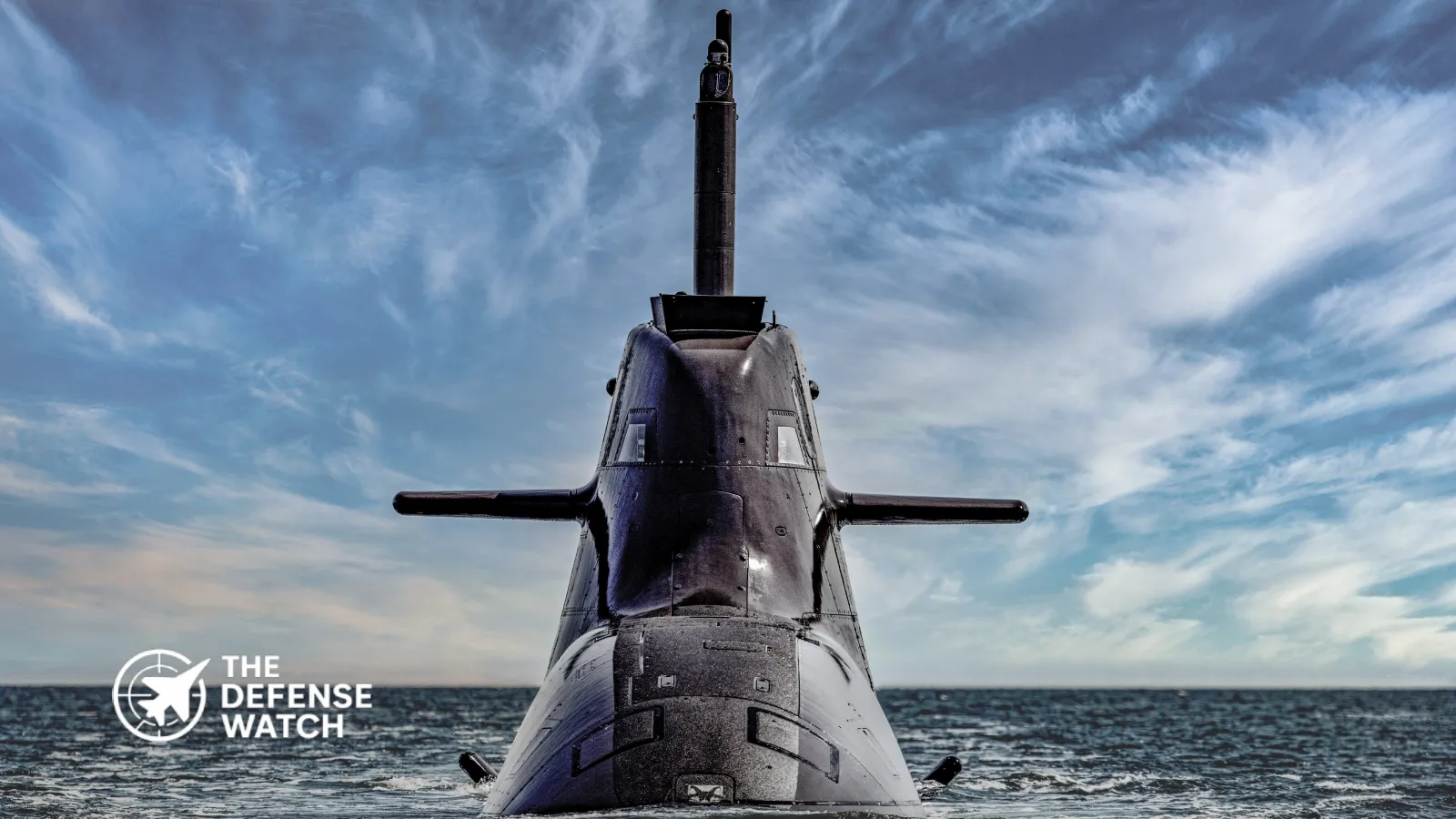
- ► TKMS signed pan Canadian Indigenous agreements to support its bid under the Canadian Patrol Submarine Project.
- ► The agreements aim to ensure long term Indigenous participation in submarine construction and sustainment.
- ► Canada plans to replace its Victoria class submarines with a new fleet under a major modernization effort.
- ► The project is expected to be one of the largest defense procurements in Canadian history.
- ► Industrial and regional benefits are central to Ottawa’s submarine acquisition strategy.
Canadian Patrol Submarine Project Moves Into Industrial Partnership Phase
The Canadian Patrol Submarine Project is entering a critical industrial phase as Thyssenkrupp Marine Systems, known as TKMS, signed a series of pan Canadian Indigenous agreements to support its bid for Canada’s future submarine fleet.
The agreements are designed to ensure Indigenous communities and businesses have structured participation in construction, supply chain work, and long term sustainment activities if TKMS is selected.
The move aligns with Ottawa’s broader defense procurement framework, which emphasizes industrial and technological benefits alongside operational capability.
Strategic Context For Canada’s Submarine Replacement
Canada is seeking to replace the aging Victoria class submarines operated by the Royal Canadian Navy. The effort falls under the Canadian Patrol Submarine Project, a program widely viewed as one of the largest and most strategically significant defense procurements in the country’s history.
Ottawa has signaled that its next submarine fleet must provide greater endurance, under ice capability, and enhanced surveillance capacity, particularly in the Arctic and North Atlantic. The evolving security environment, including increased naval activity by Russia and growing Indo Pacific competition, has reinforced the urgency of a credible undersea deterrent.
In this context, bidders are not competing solely on platform performance. They must also demonstrate meaningful domestic industrial participation and long term economic impact.
Indigenous Participation As A Core Requirement
TKMS said the pan Canadian Indigenous agreements establish a framework for collaboration in workforce development, technology transfer, and supply chain integration. While financial details were not disclosed, the company framed the agreements as foundational rather than symbolic.
Canada’s federal procurement policy requires bidders to meet strict industrial and regional benefit obligations. Indigenous economic participation has become a growing priority within that framework.
For a submarine program expected to span decades, sustainment will likely account for a substantial portion of lifecycle costs. That creates space for long term partnerships in maintenance, repair, training, and logistics support.
From an industrial perspective, early agreements can strengthen a bidder’s credibility. They demonstrate local engagement before a contract is awarded and signal readiness to scale operations inside Canada.
Competitive Landscape And Capability Implications
TKMS is a major global submarine builder, known for conventional submarine designs exported to multiple navies. While the company has not publicly detailed its exact offer under the Canadian Patrol Submarine Project, analysts expect proposals to include advanced air independent propulsion systems and modular design features suited for extended deployments.
The Canadian requirement is unusually demanding. Submarines must operate across vast distances, in harsh climates, and potentially under Arctic ice. That raises technical questions about hull strength, sensor integration, and crew sustainability.
At the same time, political considerations carry weight. Ottawa has consistently tied large defense procurements to domestic job creation and skills development. The Indigenous agreements are therefore not peripheral. They address a key decision factor.
Industrial Strategy And Long Term Impact
The Canadian Patrol Submarine Project will shape Canada’s naval industrial base for decades. Beyond ship construction, the program could influence training pipelines, digital engineering capacity, and advanced manufacturing sectors.
For TKMS, securing structured Indigenous partnerships early in the process may improve its standing with policymakers focused on reconciliation and inclusive economic growth.
For Canada, the challenge is balancing capability, cost, and sovereign control. Submarines are among the most complex defense systems a nation can operate. They require sustained funding, technical depth, and political continuity.
The Indigenous agreements underscore that the competition is as much about long term national strategy as it is about platform selection.
As the Canadian Patrol Submarine Project advances, further clarity on timelines, budget envelopes, and shortlisted bidders will determine how quickly Ottawa can transition from legacy submarines to a modern undersea fleet.
Get real time update about this post category directly on your device, subscribe now.