
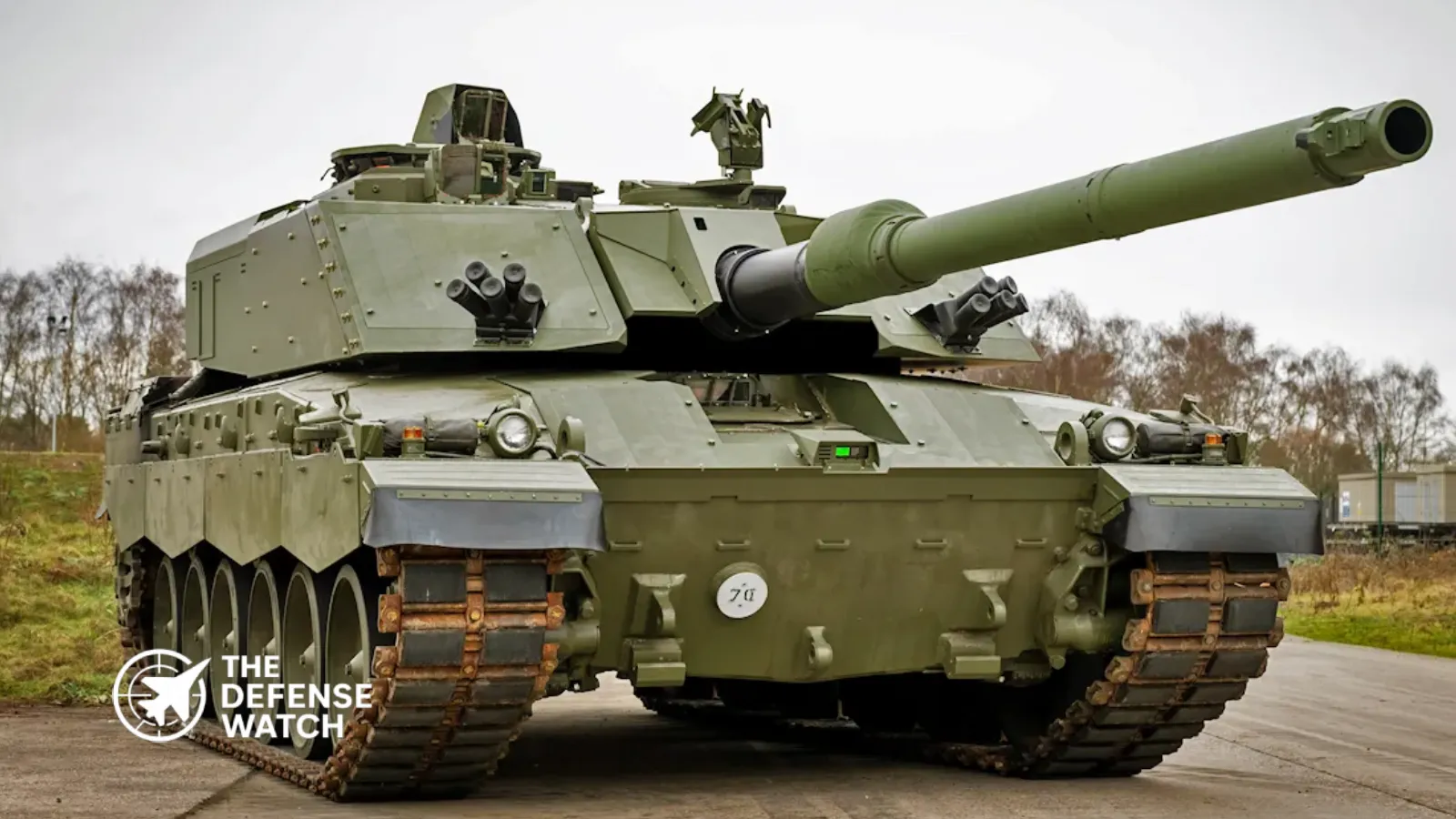
Export Talks Gain Momentum For Challenger 3 Main Battle Tank
The Challenger 3 export talks are progressing, the United Kingdom Ministry of Defence has confirmed, though officials have offered few details on who might buy the upgraded main battle tank. Defence Minister Luke Pollard told the UK Parliament that the department has made “significant progress” exploring international interest in the British Army’s next-generation armored vehicle.
In a written response to a question from Conservative MP Ben Obese-Jecty, Pollard said the export efforts remain underway, but the MoD declined to disclose specific countries or buyers, saying that revealing details would risk “commercial sensitivities.”
What UK Officials Are Saying
Pollard’s written answer did not name any prospective customers. Officials reiterated that the department continues to probe export opportunities while developing Challenger 3 as the British Army’s new main battle tank.
Industry analysts note that the lack of named buyers could mean the export push is still in preliminary stages rather than formal negotiations. No export contracts have been publicly announced.
Challenger 3 Program In Context
The Challenger 3 programme is an extensive modernisation of the British Army’s Challenger 2 fleet. It replaces the older turret with a new design, upgrades electronics and fire control systems, and fields a NATO-standard 120 mm smoothbore cannon. The upgrade aims to extend the tank’s operational life and align it with modern battlefield requirements.
Rheinmetall BAE Systems Land, a UK-German joint venture, is building the vehicle under a contract worth more than £800 million. The plan is to upgrade 148 Challenger 2 tanks to the Challenger 3 standard, with initial operating capability expected in 2027 and full capability by 2030.
Export Challenge And Market Factors
The Challenger 3 export push comes as European and NATO countries renew focus on heavy armour capabilities. Main battle tanks remain central to deterrence and ground combat doctrine, but international demand is uneven and depends on interoperability with existing fleets, logistics support, and industrial sustainment. Industry sources have also highlighted the emerging European Main Armoured Tank of Europe (MARTE) programme as a long-term alternative platform that could affect export dynamics.
Some analysts say that potential buyers for Challenger 3 could include nations that already operate Challenger 2 tanks or are looking to modernise existing armour fleets. Official UK statements so far offer no confirmation.
Industry And Strategic Implications
For the UK defence industry, securing export contracts could help sustain domestic production lines and broader industrial capacity tied to armoured vehicles. Export deals can also spread development costs and strengthen long-term support networks for complex platforms like main battle tanks.
However, without named customers or formal agreements, it is too early to assess which markets might commit to Challenger 3 purchases. UK officials continue to emphasise exploration rather than concluded sales.
Get real time update about this post category directly on your device, subscribe now.

