
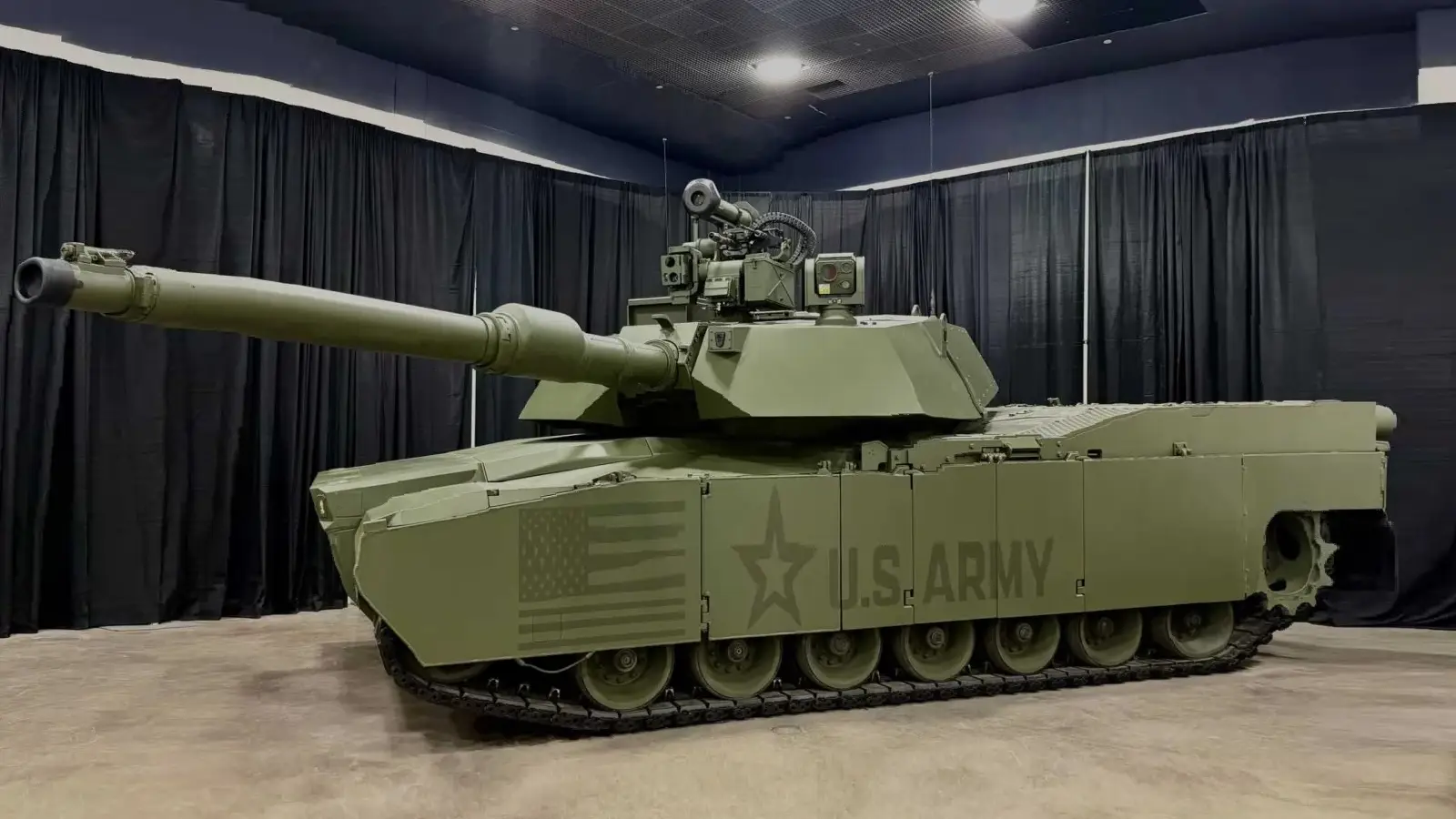
U.S. Army Presents New M1E3 Abrams Tank With Key Design Updates
The U.S. Army has officially presented the new M1E3 Abrams main battle tank, highlighting significant design changes from prior Abrams models. The appearance follows delivery of the first prototype late last year and a public display at the Detroit Auto Show this month.
Prototype Highlights and Structural Changes
The new M1E3 Abrams prototype features several visible changes compared with legacy Abrams tanks. The frontal armor plates on both the upper and lower hull have been reinforced. The vehicle also appears to adopt an unmanned turret configuration and has a bustle added at the rear of the turret, consistent with a move toward an autoloader system that would reduce crew size.
At Detroit, the Army described the prototype as an early demonstrator, meant to test crew layout, digital systems, and automation rather than representing a final design. The prototype is intended to influence the future M1A3 Abrams that could enter service later in the decade.
Crew and System Layout Changes
The M1E3 prototype’s design shifts the crew into the hull and removes traditional turret crew stations. External cameras and sensors help provide situational awareness in place of legacy vision blocks. These changes align with broader efforts to reduce weight and improve survivability against modern threats.
A modular remote weapon station and updated optoelectronic sights are integrated on the turret for counter-drone and close-range defense. The Army has emphasized that the unit on display is a technology integration vehicle and many systems remain subject to change.
Power, Protection, and Future Capability Path
While the prototype shown retains an older turbine engine, Army planning documents and industry coverage indicate the M1E3 will ultimately transition to a hybrid-electric propulsion system. This approach aims to improve fuel efficiency, reduce heat and acoustic signatures, and lower logistical demands.
The program follows the Army’s decision to discontinue the M1A2 System Enhancement Package version 4 effort and pivot to the M1E3 modernization path, driven by a need for lighter, more adaptable main battle tanks.
Development Timeline and Prototypes
The Army has taken delivery of at least one M1E3 prototype from General Dynamics Land Systems and expects additional units to support early testing and soldier evaluation in 2026. Leadership has linked the prototype deliveries to an accelerated development timeline that aims to inform requirements and refine design through iterative soldier feedback.
Strategic Context
The M1E3 Abrams program reflects lessons from recent conflicts where drone threats, guided weapons, and electronic warfare have challenged traditional armor approaches. The Army’s modernization strategy positions the M1E3 as a platform that can adapt more rapidly through modular systems and open-architecture sstandards.
Get real time update about this post category directly on your device, subscribe now.
