
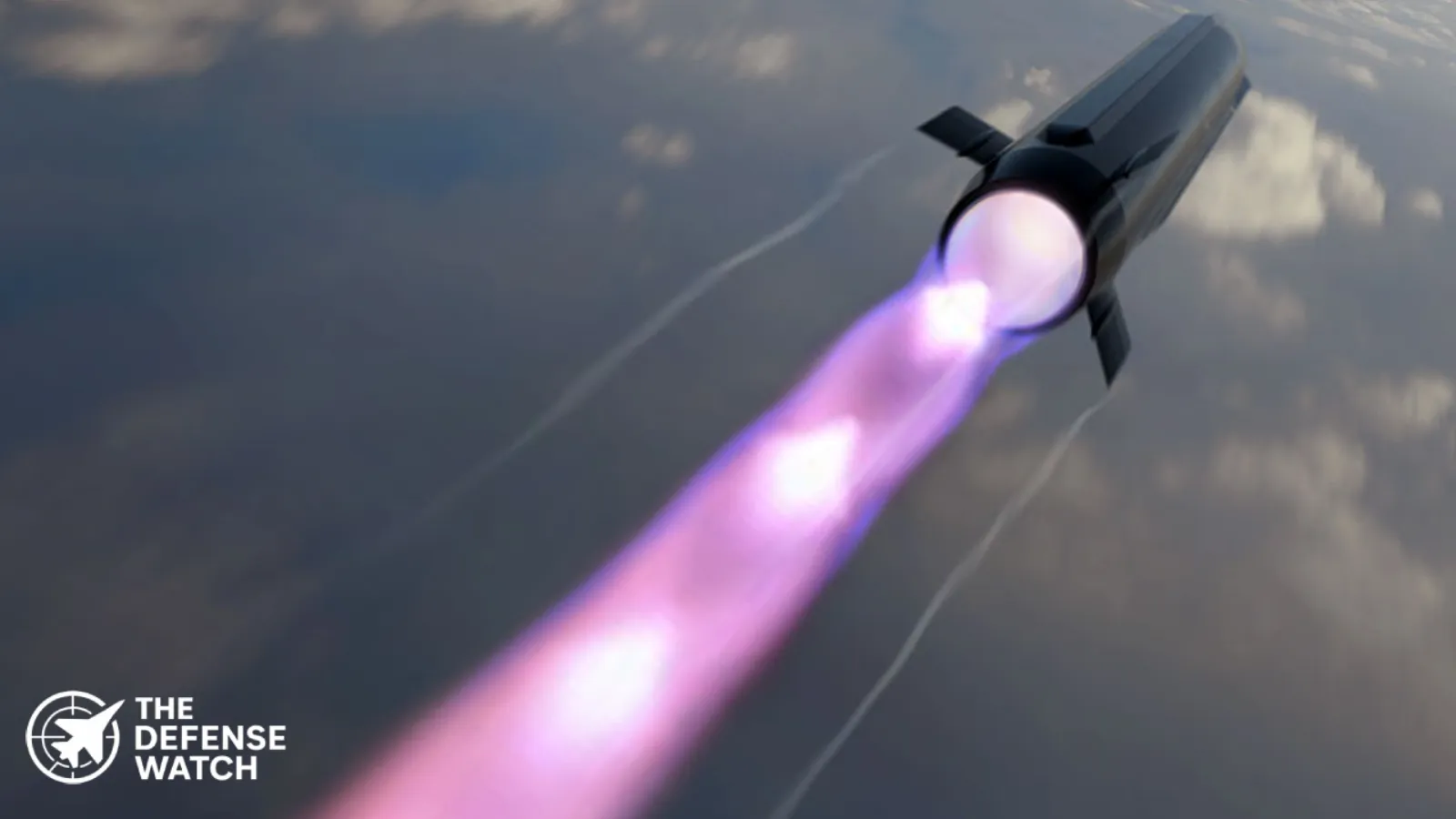
Lockheed Martin and GE Aerospace Advance Hypersonic Missile Propulsion
Lockheed Martin and GE Aerospace have successfully demonstrated a rotating detonation ramjet as part of ongoing work to mature propulsion technologies for future hypersonic missiles, the companies announced on Jan. 14. The test marks a step forward in U.S. efforts to develop faster, longer-range hypersonic weapons with improved efficiency and survivability.
According to Lockheed Martin, the demonstration validated key aspects of a rotating detonation-based air-breathing engine, a concept designed to deliver higher performance than conventional ramjets while reducing size and complexity. The work was conducted under a collaborative research effort between the two companies, drawing on GE Aerospace propulsion expertise and Lockheed Martin missile system integration experience.
What Is a Rotating Detonation Ramjet
A rotating detonation ramjet uses continuous detonation waves that travel in a circular path within the combustor, rather than relying on steady deflagration as in traditional ramjets. This approach can increase thermal efficiency and thrust while lowering fuel consumption, which are critical factors for hypersonic missiles operating at speeds above Mach 5.
Lockheed Martin said the test demonstrated stable detonation behavior under relevant conditions, confirming analytical models and previous subscale work. GE Aerospace highlighted that the results support the feasibility of integrating rotating detonation technology into future air-breathing hypersonic propulsion systems.
Implications for Hypersonic Missiles
The U.S. military continues to prioritize hypersonic weapons as part of its broader modernization strategy, viewing them as a means to penetrate advanced air and missile defenses. Air-breathing propulsion, including ramjets and scramjets, is seen as essential for sustained hypersonic flight over long distances.
By improving efficiency and thrust-to-weight performance, a rotating detonation ramjet could enable hypersonic missiles with greater range, higher speed margins, or more flexible flight profiles. Lockheed Martin noted that the technology could support multiple mission sets, including strike and time-sensitive targets, depending on future program requirements.
While the companies did not link the demonstration to a specific weapon program, the work aligns with ongoing Pentagon investment in hypersonic research and development across the Air Force, Army, and Navy.
Industry Roles and Collaboration
GE Aerospace brings decades of experience in high-speed propulsion, including work on ramjet and scramjet concepts for both military and space applications. Lockheed Martin, as a leading U.S. missile developer, has been heavily involved in hypersonic weapon programs and advanced strike systems.
In a statement, the companies emphasized that the demonstration reflects a broader trend toward closer collaboration between prime contractors and propulsion specialists to accelerate technology readiness. The test also supports digital engineering and rapid prototyping approaches increasingly adopted across the U.S. defense industrial base.
Next Steps in Development
Lockheed Martin and GE Aerospace indicated that additional testing is planned to further mature the rotating detonation ramjet, including expanded operating conditions and potential integration studies. Future work is expected to focus on scalability, manufacturability, and compatibility with missile system constraints.
Defense analysts note that while rotating detonation engines have shown promise in laboratory settings, transitioning them into operational hypersonic weapons will require sustained investment and rigorous testing. Key challenges include thermal management, structural durability, and reliable ignition and control at extreme speeds.
Broader Hypersonic Context
The United States faces growing competition in hypersonic weapons development from China and Russia, both of which have fielded or tested hypersonic systems in recent years. As a result, the Department of Defense has emphasized propulsion innovation as a critical enabler for maintaining technological advantage.
Demonstrations like the rotating detonation ramjet test underscore continued progress in foundational technologies that could shape the next generation of U.S. hypersonic missiles, even as operational deployment timelines remain program-dependent.
Get real time update about this post category directly on your device, subscribe now.
