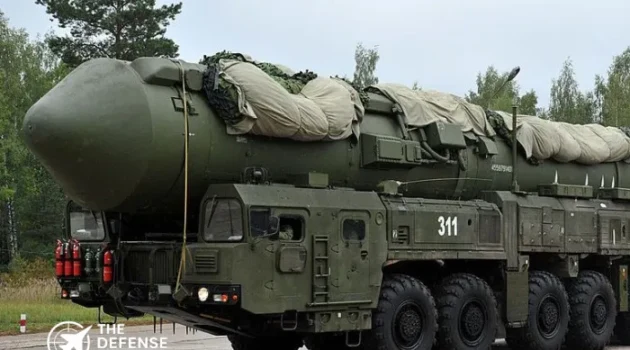
Belarusian President Alexander Lukashenko confirmed on December 18, 2025, that Russia has deployed its latest nuclear-capable Oreshnik missile system in Belarus. The intermediate-range ballistic missile, first tested in 2024, is designed to carry multiple warheads and can reach targets up to several thousand kilometers away, including NATO facilities in Europe.
How It Works
The Oreshnik missile system, named after the hazelnut tree, can carry conventional or nuclear warheads and reportedly reaches speeds up to Mach 10, making interception extremely difficult. Russia claims the missile could strike Poland in 11 minutes and NATO headquarters in Brussels in 17 minutes. While conventional strikes have already been tested in Ukraine, the nuclear-capable version raises concerns about escalation and ambiguity over its payload.
Why It Matters
This deployment strengthens Russia’s strategic footprint in Eastern Europe and extends its nuclear umbrella to Belarus. Analysts note it increases military and political dependence of Minsk on Moscow, while turning Belarus into a potential target in any conflict involving NATO. The timing coincides with stalled peace talks in Ukraine and reflects Russia’s broader efforts to pressure Kyiv and Western allies.
Strategic Implications
The Oreshnik in Belarus complicates NATO’s defense planning and underscores Moscow’s willingness to project power through nuclear-capable intermediate-range missiles. It mirrors Cold War-era deployments but with hypersonic speed and modern targeting capabilities. For Washington, Brussels, and Kyiv, the system highlights the risk of rapid escalation and the limits of deterrence in Eastern Europe.
Get real time update about this post category directly on your device, subscribe now.