
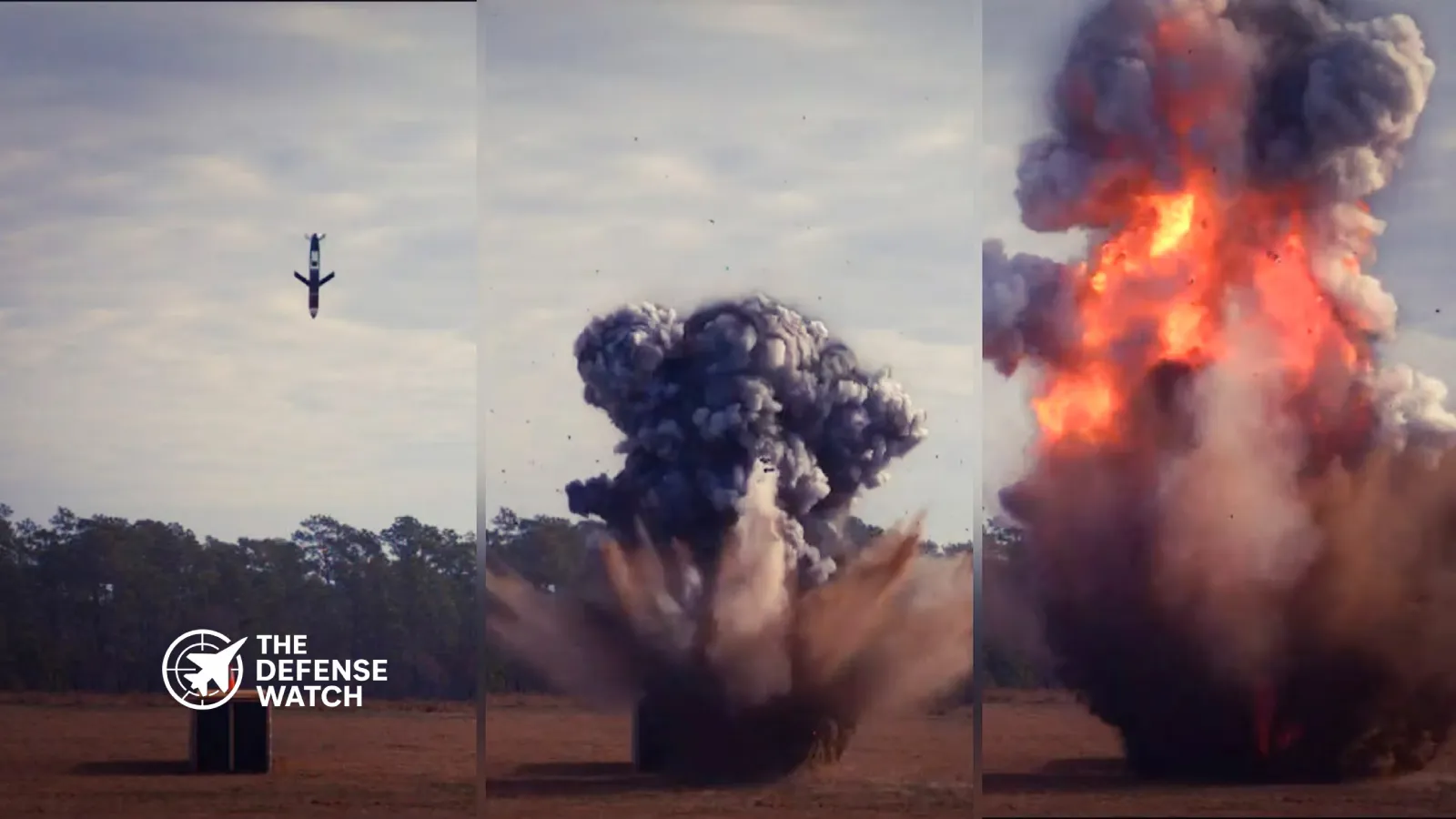
Air Force Demonstrates Rapid Cruise Missile Development With ERAM Test
The U.S. Air Force has successfully conducted a live-warhead test of the Extended Range Attack Munition (ERAM), a next-generation standoff cruise missile designed to provide affordable mass strike capability, according to an official announcement from Eglin Air Force Base. The January 21, 2026 test at the Eglin Test and Training Range in Florida achieved all primary objectives, including full warhead detonation, marking a significant milestone in the service’s efforts to field cost-effective long-range weapons.
The test occurred less than 16 months after the initial contract award, demonstrating what Air Force officials characterize as an accelerated acquisition timeline focused on delivering capability at operationally relevant speeds.
Program Meets All Test Objectives
ERAM is an air-launched cruise missile engineered to strike high-value fixed targets from standoff ranges, reducing aircraft exposure to enemy air defenses. The weapon is designed for rapid production in large quantities, addressing operational requirements for mass in potential high-intensity conflicts.
Brig. Gen. Robert Lyons III, Portfolio Acquisition Executive for Weapons, stated the program demonstrates the ability to “deliver lethal, cost-effective capability at the speed of relevance,” af emphasizing the compressed development timeline from contract to live-fire demonstration.
The test gathered critical performance data necessary to mature the weapon system before operational fielding. Engineers from the Air Force Life Cycle Management Center’s Armament Directorate and the 96th Test Wing conducted the mission from Eglin’s Central Control Facility, utilizing the range’s instrumentation capabilities to collect high-fidelity telemetry.
Cost-Effective Mass Production Focus
Unlike traditional cruise missiles optimized for individual performance, ERAM emphasizes affordability and producibility. The weapon is categorized as an “attritable” system—designed to be effective yet inexpensive enough to employ in large numbers without prohibitive cost constraints.
This approach reflects evolving military doctrine that prioritizes volume alongside precision. Brig. Gen. Mark Massaro, 96th Test Wing commander, noted that “the future fight demands we create an asymmetric advantage by developing cost-effective, attritable systems like ERAM that give commanders the ability to generate mass.” af
The weapon addresses a capability gap identified by combatant commanders seeking long-range strike options that can be employed in sufficient quantities to overwhelm adversary defenses or prosecute multiple target sets simultaneously.
Accelerated Development Timeline
The ERAM program timeline represents a departure from traditional defense acquisition processes, which typically require years between contract award and live-fire testing. The 16-month span from contract to warhead detonation test reflects streamlined development practices and reduced bureaucratic overhead.
Air Force officials have emphasized acquisition reform as a strategic priority, particularly for weapons programs intended to counter near-peer adversaries. The service has implemented various initiatives aimed at reducing development timelines and fielding capabilities before technological advantages erode.
The test involved collaboration between the Air Force Life Cycle Management Center, the 96th Test Wing at Eglin AFB, and unnamed industry contractors. Specific details regarding the prime contractor, weapon specifications, and unit costs have not been publicly disclosed.
Strategic Context and Deterrence
ERAM development occurs within the broader context of U.S. military modernization efforts focused on long-range strike capabilities. The Department of Defense has identified standoff weapons as critical enablers for operations in contested environments where adversary integrated air defense systems threaten manned aircraft.
The weapon’s precision-guidance system enables engagement of fixed targets while maintaining aircraft at safe distances from threat envelopes. This standoff capability is considered essential for operations against technologically advanced adversaries with sophisticated air defense networks.
The emphasis on “affordable mass” reflects military planning scenarios that anticipate high munitions consumption rates in potential large-scale combat operations. Traditional precision-guided munitions, while highly effective, carry unit costs that limit procurement quantities and employment rates.
Next Steps for ERAM Program
Following the successful live-fire test, the ERAM program will proceed through additional developmental testing phases before transitioning to operational testing and evaluation. Air Force officials have not announced specific fielding timelines or initial operational capability dates.
The data collected during the January test will inform design refinements and validate performance models used in mission planning systems. Additional testing will likely examine weapon performance across various employment conditions, target types, and defensive scenarios.
Production decisions and acquisition quantities remain subject to congressional appropriations and evolving operational requirements. The Air Force will need to balance ERAM procurement against competing modernization priorities including next-generation fighters, bombers, and other munitions programs.
Industry Partnership and Manufacturing
While the Air Force announcement did not identify specific contractors, ERAM development involves collaboration between government engineers and defense industry partners. The program structure and contractor selection process have not been publicly detailed.
Manufacturing scalability represents a critical program requirement, as the weapon’s operational concept depends on the ability to produce large quantities rapidly. Defense industrial base capacity for cruise missile production will influence ultimate procurement volumes and deployment timelines.
The Air Force has emphasized the importance of maintaining domestic manufacturing capabilities for critical munitions, particularly amid concerns about production capacity during sustained military operations.
Get real time update about this post category directly on your device, subscribe now.
