
Rise of the Challenge: China Gains Momentum
A recent warning from retired Air Force Colonel John Venable — formerly a U.S. fighter pilot — has put a spotlight on the growing concern that the United States Air Force (USAF) may be losing its longstanding air dominance edge. In remarks delivered at the Air & Space Forces Association conference in September, he argued that in terms of capacity, capability and readiness, the U.S. now “falls short, woefully short.”
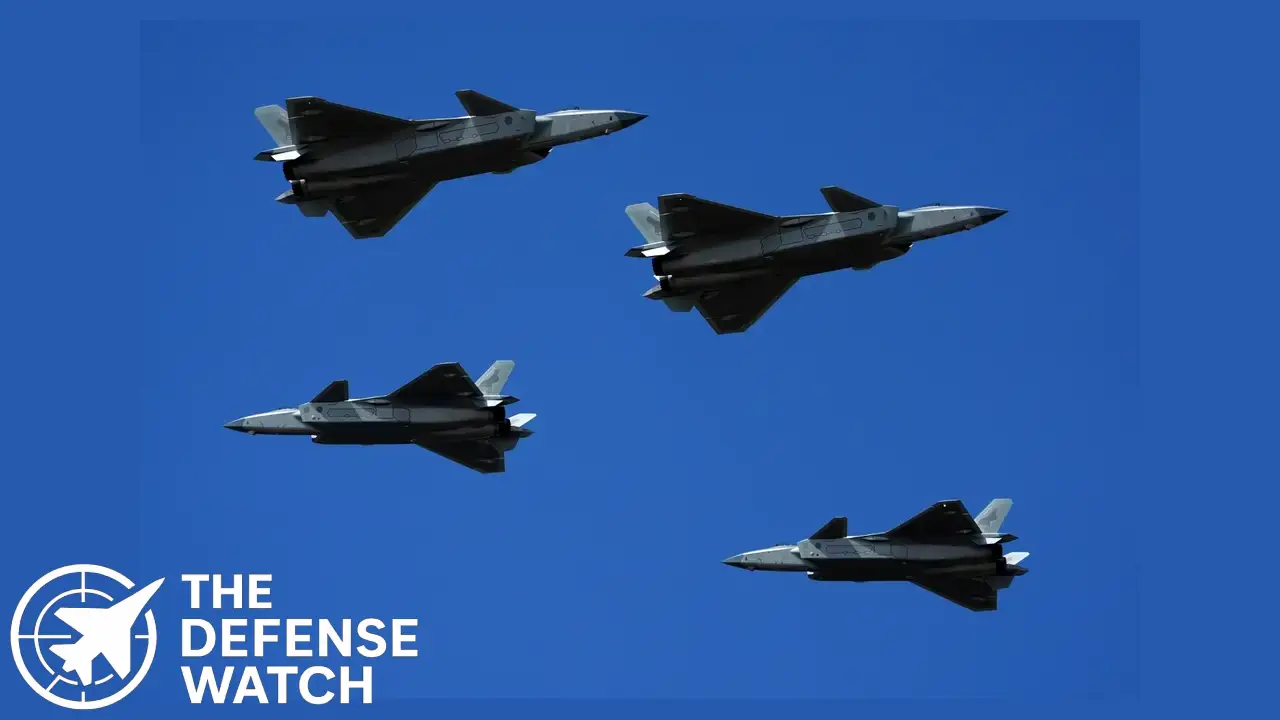
While the USAF still fields more than 2,000 fighters, only a fraction are considered mission-capable, and readiness metrics are lagging. Meanwhile, the People’s Liberation Army Air Force (PLAAF) is rapidly reequipping with fourth- and fifth-generation platforms, expanding pilot training hours and increasing production rates of airframes.
Key Metrics: Where the Gap Is Widest
Shrinking U.S. Fleet and Aging Airframes
The USAF’s fighter and bomber fleet has decreased sharply since the Cold War. A recent report by the Mitchell Institute for Aerospace Studies found that the force is now the smallest, arguably the oldest, and least ready in its history. For example, USAF pilot flying hours have dropped from 18-20 hours/month to 6-8 hours/month in some units.
China’s Production and Training Advantage
China is reportedly producing fighters at a rate of roughly 1.2 for every 1 made by the U.S. Venable noted the PLAAF now has some 1,100 fighters able to sortie over Taiwan without aerial refueling. Meanwhile, Chinese pilots average around 200 flight hours per year, compared with approximately 110 for U.S. counterparts.
Strategic Geography: Indo-Pacific Pressure
One of the greatest vulnerabilities is geography. In a conflict scenario over the Taiwan Strait, U.S. forces would operate over extended distances, while China can exploit near-home advantage. U.S. fleets based farther from the battle zone face longer sortie times, more logistic strain and potentially diminished readiness.
Analysis: What This Means for U.S. Defense
The shift in balance carries significant strategic implications:
1. Reduced margin for error. The U.S. has long relied on its air superiority as a foundational enabler for joint operations, expeditionary warfare, and deterrence. As that margin narrows, operational risk rises — miscalculations or initial setbacks could prove more costly.
2. Peer-competition era demands new readiness. The era of counter-insurgency and low-intensity conflict allowed force structures tuned to irregular operations. But the emerging competition with China demands near-peer readiness — high sortie rates, survivable dispersed basing, resilient logistics and integrated multi-domain operations. Venable highlighted the mismatch: “we have not 4,000 fighters but 2,000… They average not 8 years old but 28 years old.”
3. Indo-Pacific and allied posture under stress. The PLAAF’s growing capacity and readiness puts additional pressure on U.S. forward posture, allied basing and regional deterrence. If China can deny or delay U.S. access in the first island chain, the whole campaign dynamic changes.
4. Modernization and industry tempo become critical. The USAF’s “divest to invest” strategy, which retires older systems to fund advanced platforms, may succeed only if new systems arrive at the promised scale and on schedule. Delays and reductions—such as planning to buy only 24 F-35s in FY2026—erode future capacity.
5. Allies and partners matter more than ever. As capacity tightens, the U.S. will rely increasingly on the integration of allied air forces, distributed basing and cooperative logistics. Delays in readiness across the force multiply risk.
Conclusion & Forward Outlook
The warning from Colonel Venable is clear: America’s historic airpower edge is no longer assured. If China continues its aircraft production, pilot training and readiness surge — while the U.S. fleet shrinks and ages — the balance of air power in the Indo-Pacific may shift.
Looking ahead, we should expect the U.S. Air Force to accelerate initiatives around distributed operations, increased sortie generation, advanced unmanned systems, enhanced training tempo and closer coordination with allies. Whether these reforms can close the gap in time remains the central question. The coming decade will reveal whether the U.S. can re-establish its overmatch or whether the air superiority margin becomes contested.
Get real time update about this post category directly on your device, subscribe now.

13 comments
[…] U.S. Air Force’s CCA program aims to deploy thousands of affordable, semi-autonomous combat drones capable of […]
[…] remains a cornerstone of expeditionary military logistics. Western heavy-lift platforms such as the U.S. Air Force’s C-5M (with a payload around 127 tons but a more limited range) or the Ukrainian-origin An‑124 […]
[…] the T4 shock tunnel and participated in 11 sub-orbital flights via the HIFiRE initiative with the U.S. Air Force. These efforts addressed core challenges in hypersonic flight, such as extreme heat management and […]
[…] B-21 Raider, produced by Northrop Grumman under the U.S. Air Force’s Long Range Strike Bomber (LRS-B) initiative, is intended as a dual-capable stealth bomber capable […]
[…] are central to several major U.S. military procurement programs. Any prolonged delay risked slowing U.S. Air Force modernization timelines, Navy carrier air wing sustainment, and foreign military sales […]
[…] decision also comes amid intensified European debate over defense readiness, ammunition shortages, and production gaps that became more visible after sustained support to […]
[…] satellite links, GPS-based navigation, and encrypted tactical communications—capabilities that modern force structures rely […]
[…] The DSCA added that no additional US government or contractor personnel will be stationed in Pakistan for implementation, and the sale will not affect US defense readiness. […]
[…] acquisition aligns with Sweden’s broader push to modernize its ground and littoral forces under initiatives like the Amphibious Battalion 2030 effort. The program aims to enhance the […]
[…] delivery schedules have not been publicly disclosed, the acquisition aligns with Norway’s broader force modernization roadmap through the late […]
[…] Major General Nicola Mandolesi, deputy chief of staff support at NATO’s Joint Force Command Brunssum, described the deployment as visible proof of alliance cohesion, unity, and defensive readiness. […]
[…] continuation of work at both sites reflects the Air Force’s emphasis on maintaining resilient and secure intelligence networks amid growing operational […]
[…] Persian Gulf region remains a central area for US maritime and air force presence due to ongoing security challenges and the importance of key shipping lanes. These drills contribute to readiness for a […]