
Breaking: State Department Reveals Chinese Nuclear Testing Activities
The U.S. government has accused China of conducting at least one “yield-producing nuclear test” in recent years despite Beijing’s stated moratorium on such activities, according to senior State Department officials speaking at the Conference on Disarmament in Geneva.
Under Secretary of State for Arms Control and International Security Thomas DiNanno disclosed Thursday that China’s People’s Liberation Army conducted nuclear explosive tests, including preparations for tests with designated yields in the hundreds of tons. The revelation comes amid deteriorating nuclear arms control frameworks globally and heightened tensions over China’s rapid nuclear modernization.
“The PLA sought to conceal testing by obfuscating the nuclear explosions because it recognized these tests violate test ban commitments,” DiNanno stated during his address to international arms control officials.
Details of Alleged Chinese Nuclear Testing
According to DiNanno, China employed decoupling techniques—methods designed to reduce seismic signatures and defeat monitoring systems—to hide nuclear testing activities from international detection networks. He specifically cited June 22, 2020, as the date of one such yield-producing nuclear test.
China is a signatory to the Comprehensive Nuclear-Test-Ban Treaty but has never ratified the agreement. Both the United States and China maintain self-imposed moratoriums on yield-producing nuclear testing. China’s last publicly acknowledged critical-level nuclear test occurred in 1996, while the United States last conducted such testing in 1992.
The CTBT’s primary verification mechanism relies on a global network of hundreds of seismic monitoring stations operated by the Comprehensive Nuclear-Test-Ban Treaty Organization. These stations are designed to detect nuclear detonations based on seismic activity patterns.
CTBTO Response and Technical Assessment
Following DiNanno’s allegations, CTBTO Executive Secretary Robert Floyd issued a statement addressing the organization’s technical capabilities and findings.
“The CTBTO’s International Monitoring System is capable of detecting nuclear test explosions with a yield equivalent to or greater than approximately 500 tonnes of TNT,” Floyd stated. Regarding reports of possible nuclear tests with yields in the hundreds of tonnes, on 22 June 2020, the CTBTO’s IMS did not detect any event consistent with the characteristics of a nuclear weapon test explosion at that time.
Floyd emphasized that mechanisms to address smaller explosions exist within the treaty framework but can only be fully utilized once the CTBT enters into force.
Context: China’s Nuclear Modernization Program
The testing allegations coincide with China’s massive expansion of its nuclear arsenal. U.S. intelligence assessments indicate China possesses approximately 600 nuclear warheads currently, with projections suggesting growth to 1,000 warheads by 2030 and 1,500 by 2035.
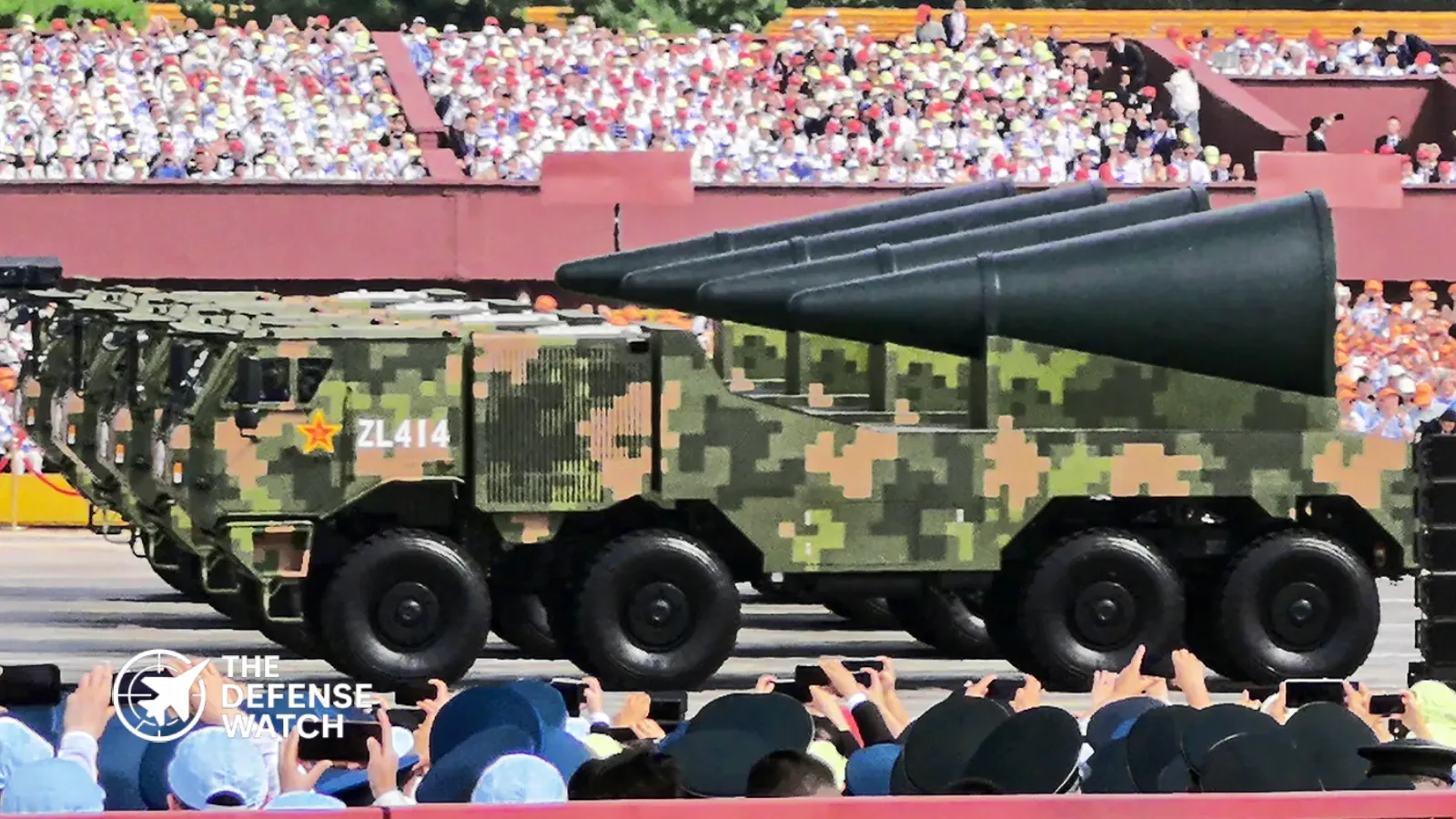
This expansion includes construction of extensive new intercontinental ballistic missile silo fields, development of nuclear-capable hypersonic glide vehicles, and deployment of advanced delivery systems showcased during Beijing’s September 2025 military parade. The parade featured the DF-61 ICBM alongside other strategic nuclear systems including the JL-1 air-launched ballistic missile and JL-3 submarine-launched ballistic missile.
China’s nuclear buildup represents the most significant expansion by any nuclear power in decades, fundamentally altering the strategic balance that has historically focused on U.S.-Russian bilateral arms control.
Arms Control Implications and New START Expiration
The allegations emerge at a critical juncture for global nuclear arms control. The New START treaty between the United States and Russia expired February 5, 2026, leaving no legally binding limits on either nation’s strategic nuclear forces.
DiNanno’s remarks emphasized the inadequacy of bilateral arms control frameworks in addressing contemporary nuclear threats. New START was signed in 2010 and its limits on warheads and launchers are no longer relevant in 2026, when one nuclear power is expanding its arsenal at a scale and pace not seen in over half a century,” he stated.
The Trump administration has consistently advocated for trilateral nuclear arms control negotiations that include China, Russia, and the United States. Chinese officials have repeatedly rejected participation in such talks, arguing their arsenal remains significantly smaller than U.S. and Russian stockpiles.
Current estimates place U.S. and Russian nuclear arsenals at approximately 4,000 warheads each, according to the Federation of American Scientists. The U.S. stockpile has been declining while Russia’s has grown in recent years.
Previous U.S. Concerns About Chinese Testing Activities
The State Department’s June 2020 arms control compliance report raised concerns about Chinese activities at the Lop Nur nuclear test site, noting year-round operational preparations, explosive containment chambers, extensive excavation work, and frequent data blocking from International Monitoring System stations.
China’s possible preparation to operate its Lop Nur test site year-round… and lack of transparency on its nuclear testing activities raise concerns regarding its adherence to the ‘zero yield’ standard,” the 2020 report stated.
Notably, the most recent State Department compliance report published in April 2025 made no mention of Chinese nuclear testing, nor did the Pentagon’s December 2025 annual report on Chinese military developments address the issue.
Chinese Government Response
Chinese Ambassador Shen Jian, Deputy Permanent Representative to the UN Office at Geneva, dismissed the U.S. allegations following DiNanno’s speech.
China notes that the U.S. continues in its statement to hype up the so-called China nuclear threat. China firmly opposes such false narratives,” Shen stated. “It [the United States] is the culprit for the aggravation of the arms race.”
Beijing has consistently maintained its commitment to the nuclear testing moratorium and rejected characterizations of its modernization program as destabilizing.
U.S. Nuclear Testing Policy Under Trump Administration
President Trump announced in November 2025 his intention to conduct nuclear testing “on an equal basis” with China and Russia, though specifics remain unclear. Energy Secretary Chris Wright subsequently downplayed the likelihood of resuming yield-producing tests.
DiNanno’s Geneva remarks acknowledged widespread questions about the president’s testing statement but did not explicitly confirm whether the United States intends to resume critical-level nuclear testing. He emphasized U.S. commitment to “restore responsible behavior when it comes to nuclear testing.”
Resuming U.S. nuclear testing would require significant technical preparations, infrastructure reactivation at the Nevada Test Site, and potentially years of advance work, according to nuclear weapons experts.
Strategic Analysis and Future Implications
The allegations against China carry significant implications for nuclear deterrence, arms control architecture, and strategic stability. Key considerations include:
Verification Challenges: China’s alleged use of decoupling techniques highlights limitations in current monitoring capabilities, particularly for low-yield tests below CTBTO detection thresholds.
Arms Race Dynamics: Without binding arms control agreements, the three major nuclear powers face potential unconstrained expansion of their arsenals, increasing costs and strategic instability.
Alliance Implications: U.S. allies relying on extended nuclear deterrence—including NATO members, Japan, South Korea, and Australia—will closely monitor developments affecting American nuclear credibility.
Technical Development: If China is conducting yield-producing tests while the United States maintains its moratorium, potential disparities in warhead modernization and confidence in stockpile reliability could emerge.
Secretary of State Marco Rubio emphasized the Trump administration’s position Wednesday: “The President has been clear that in order to have true arms control in the 21st century, it’s impossible to do something that doesn’t include China because of their vast and rapidly growing stockpile.
The State Department has not provided classified evidence supporting the testing allegations, and additional details may emerge through congressional briefings or intelligence community assessments.
Conclusion
The U.S. accusations against China represent a significant escalation in nuclear-related tensions between the world’s two largest economies. Whether these allegations will prompt changes in U.S. nuclear policy, accelerate China’s willingness to engage in arms control negotiations, or trigger a renewed nuclear arms race remains uncertain.
As the international community grapples with the expiration of New START and the absence of multilateral nuclear agreements, the alleged Chinese testing activities underscore the urgent need for new frameworks addressing 21st-century nuclear challenges.
Get real time update about this post category directly on your device, subscribe now.
